
 Luxury hospitality in Santorini has always depended on a careful balance of spectacle and restraint. The caldera views, Cycladic architecture and volcanic geography create one of the most visually powerful destinations in the world. But sustaining that allure requires discipline in how hotels are designed, operated and expanded. It’s one of the most unique islands in the world – both geographically and culturally – and yet it’s enduring charm is that it’s never overbuilt and is brimming with soulful hospitality.
In a recent conversation with Markos Chaidemenos, the Owner and Managing Director of the family-owned and operated, Canaves Collection, he explained how the small group has built its reputation by aligning family leadership, local stewardship and operational precision into a cohesive philosophy of place-based luxury. That core mission has allowed the brand to both attract incredible guests from all over as well as stay on the forefront of industry trends.

As background, Canaves Collection is a portfolio of luxury boutique hotels with all its hotels in Santorini (with an expansion to Naxos opening soon!), blending Cycladic architecture and hyperlocal experiences. The collection includes the romantic cave-styled retreat Canaves Ena, the historic Canaves Oia Suites, the iconic cliffside Canaves Sunday with its private plunge pools, the intimate eight-suite, adults-oriented suites, and the more contemporary Canaves Epitome.
Heart throughout, Canaves is about authenticity and emotional connection to the land that has given the founding family (Markos Chaidemenos’s parents and grandparents) so much. And to experience Santorini from the water, Canaves can facilitate yachting experiences for any property through their partnership with Sunset Oia. Thirdly, to never rest on their laurels, Canaves is unveiling new tactile experiences this summer to further deepen each property’s sense of place, including hands-on clay workshops with a fourth-generation artisan, a guided sea-to-table culinary journey, field-to-table cooking classes set within a working vineyard, private photography lessons and exclusive tours of archaeological sites that are off the beaten path.
Advertisements

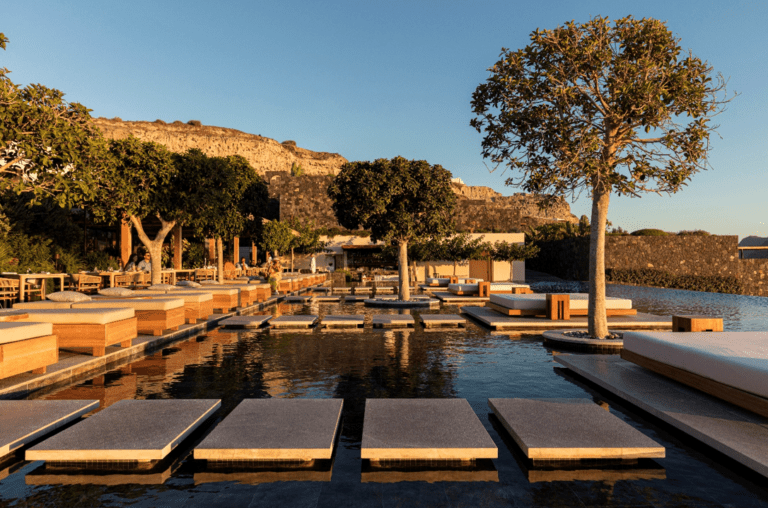
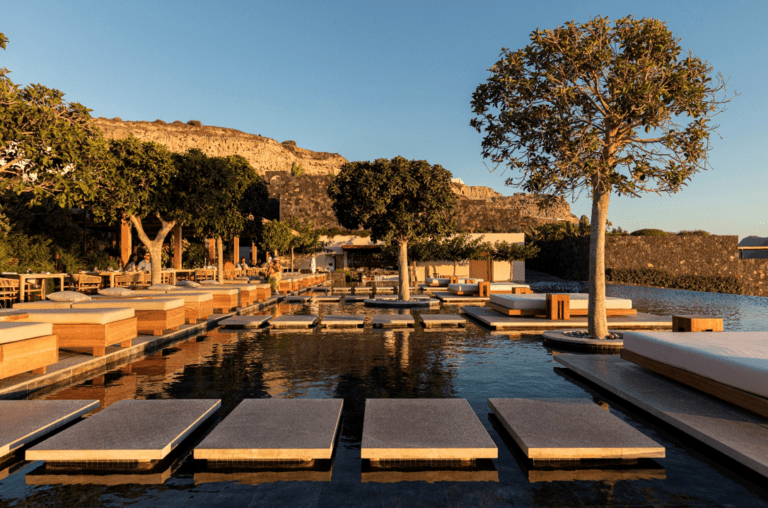
As Chaidemenos remarked on the importance of design, true luxury in Santorini is inseparable from the environment itself. Rather than imposing design onto the island, the goal is to allow architecture to blend naturally into the landscape. This approach is particularly visible at Canaves Epitome, where volcanic stone, earthy tones and understated landscaping were selected to create what he describes as ‘optical silence’ – a hospitality experience that complements the scenery instead of competing with it.
That sense of restraint has become increasingly important as Santorini grapples with overtourism pressures and the risk of homogenized luxury. Many destinations across the Mediterranean now face a ‘sea of sameness’, where luxury hotels rely on interchangeable aesthetics and standardized experiences. Canaves Collection has intentionally moved in the opposite direction by emphasizing local identity and human connection.
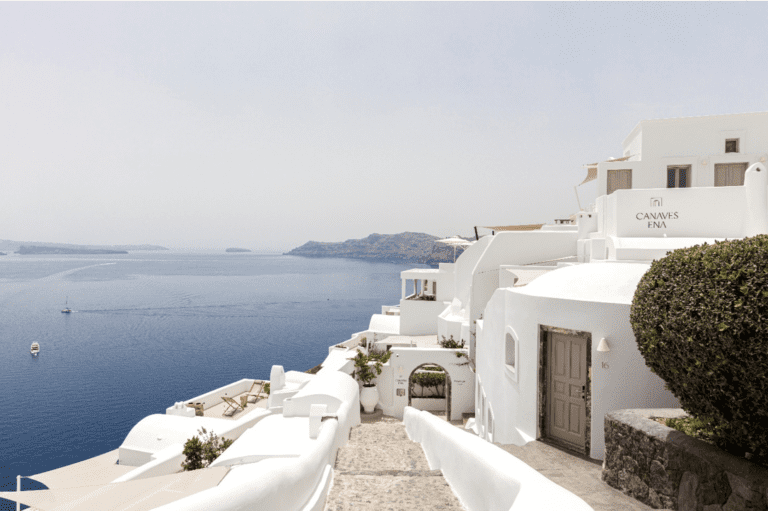
The classical Santorini design with luxury aesthetic at Canaves Ena
Somewhat ironically, it was Markos’s father, Ioannis Chaidemenos, who introduced strict planning measures limiting signage, preserving Cycladic design standards and controlling commercial licensing in order to protect the long-term character of the destination. At the time in the 1970s, those restrictions were controversial. In retrospect, they helped preserve the island’s authenticity and avoid the over-commercialization seen elsewhere.
That long-view mentality continues to shape how the company operates today. It is not scripted service or overly formal luxury, but rather an expression of personality, warmth and Greek culture. Because Canaves remains a family-owned and family-operated business, decisions are often guided less by short-term KPIs and more by protecting the destination and ensuring consistency over decades.
Boutique scale plays a major role in enabling that consistency. Chaidemenos argues that emotional connection in hospitality is largely determined by proximity. This proximity exists between teams and guests, and between leadership and operations. Smaller properties allow accountability to remain visible and immediate, ensuring that service does not become diluted through excessive scale.
This mirrors a broader trend already explored in the previous article: modern luxury travelers increasingly value intimacy, personalization and flexible social experiences over sheer room count. Canaves anticipated this ultraluxury shift years ago by prioritizing villas and multi-bedroom accommodations that cater to multigenerational travel and small-group experiences. Rather than maximizing density, the company focused on creating spaces where families and friends could bond privately while still enjoying communal resort amenities.
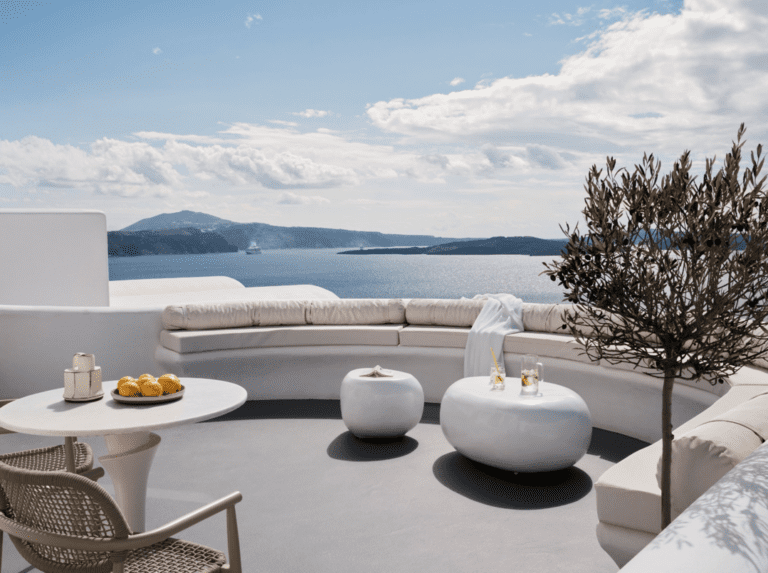
Sweeping panoramas and exquisite design at Canaves Sunday
Sustainability, meanwhile, operates on two levels within the Canaves philosophy. The first is visible sustainability: architecture that feels calm, integrated and respectful of the surrounding landscape. The second is the invisible operations and equipment that guests may never consciously notice but nonetheless experience through comfort and reliability.
During our interview to this end, Chaidemenos highlighted investments in energy systems, water management, advanced coatings and efficient pool heating technologies as examples of infrastructure that supports sustainability without disrupting the guest experience. Reductions in plastics and stronger waste-management practices further reinforce the operational discipline underpinning the brand.
This distinction between visible and invisible luxury echoes a recurring theme across many leading hospitality brands today: guests increasingly care less about overt extravagance and more about how a property makes them feel. In Santorini, that feeling comes not only from panoramic views and elegant suites, but also from the seamless alignment between architecture, service, environmental stewardship and local culture.
The throughline connecting every aspect of the Canaves Collection story is restraint. Restraint in scale; restraint in design; restraint in development, and discipline in the operational systems that allow an island stay to feel effortless despite the immense complexity behind the scenes.
Adam and Larry Mogelonsky
2026-05-27 01:45:00