
:max_bytes(150000):strip_icc():format(jpeg)/Roses-for-Turkey-Day-FT-DGTL1125-e5969c5031164d8994d24403fb46f113.jpg)
Rosé is often typecast as a pale, pink, poolside wine from Provence meant for summer picnics and sunshine. But beyond that image lies a world of rosés with real depth, texture, and structure — the kind that deserve a place on the holiday table.
Of course, there’s nothing wrong with light, red-fruited versions (turkey’s best friend is, after all, cranberry sauce), but this category of wine encompasses so much more. For bottlings that are not your everyday rosés, and that will pair perfectly with this year’s feast, we suggest looking to the dark side.
A deeper shade of rosé
For the most striking departure from the classic Provence style, reach for something dark pink, like the wines from Tavel, France.
Located in the southern Rhône just west of Châteauneuf-du-Pape, Tavel uses similar grapes (mainly Grenache, Syrah, and Mourvèdre). Its winemaking roots go back 2,000 years, and it was known as a lighter style than its neighbor, called a vin de plaisir — meaning quaffable or ready to drink right now. That was a valued quality in French gastronomy then and remains so for Thanksgiving. Its rich strawberry and cranberry flavors have just the right amount of tannins to complement turkey and stuffing.
Tavel became one of France’s very first AOCs — and notably, the only appellation dedicated exclusively to rosé. Fun fact to share at the dinner table: The wines have been endorsed by French King Philippe le Bel, Pope Innocent VI during his Avignon papacy, and writer Ernest Hemingway.
Another source for interesting, deep rosés is Valle de Guadalupe, Mexico. Because it’s a relatively young wine region without strict appellation rules, its rosés are often experimental, texturally interesting, and food-friendly. Here, richly structured red grapes like Tempranillo and Nebbiolo are popular, adding depth and concentration to the wines. A similar thing happens in Rioja, Spain, where Tempranillo-based rosados offer a darker, fuller style.
Choose the saignée method
One of rosé’s greatest strengths is its versatility — it can be made from any red grape in any region. If you love Cabernet Sauvignon, you can find rosé versions from Cab-focused regions like Napa or the Columbia Valley. Many of these producers use the saignée method, which in French means “to bleed.” After a few hours of skin contact, winemakers drain off some of the juice. This not only produces a richer, more structured rosé but also concentrates the remaining juice that will become red wine.
This approach is more common in regions known for powerful reds. In contrast, Provence rosé is typically made with much shorter macerations, where the juice is pressed off quickly and finished like a white wine. Grapes like Cabernet or Syrah naturally have thicker skins, so their rosés often feel more structured and substantial.
Skin-contact wines
Producers are often looking to push the envelope and create something fresh and new. With the growing popularity of orange wine (where white wines are aged on their skins — not made from actual oranges), some rosé producers are borrowing the technique to develop unique flavors and a slightly gritty, more tactile mouthfeel — possible since grape skins contain tannins, which create that astringent feeling in your mouth.
If you spot the term en tirage on a label, it means the wine has been aged in bottle on its lees — the natural sediment of spent yeast cells and grape solids that settle after fermentation. Lees aging builds creaminess and can add subtle brioche or pastry notes. It’s most common in sparkling wines, especially méthode ancestrale (or ancestral method), where lees are left in the bottle. Some still rosés also use this technique.
Bottles to try
Here are some of the best versions of these rosé styles, arranged from lightest to darkest, to try on Thanksgiving Day.
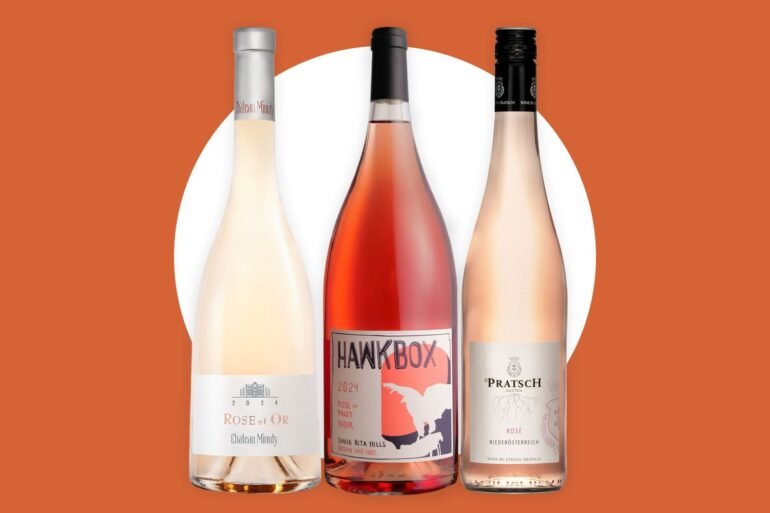
Château Minuty Côtes de Provence “Rosé et Or,” France ($38)
Food & Wine / Minuty SAS
For classic Provence lovers, this is a delicious choice that still feels right for winter. Pale pink and beautifully fresh, it bursts with raspberry and strawberry fruit, with racy acidity that cuts straight through rich holiday gravy. Even though it’s delicate in style, the texture is silky, creamy, and decadent — pure celebration vibes.
Pratsch Niederösterreich Rosé, Austria ($17)
Food & Wine / PRATSCH
This Austrian rosé, made from organic Zweigelt grapes with minimal intervention, feels spritely on the tongue — almost lightly carbonated — and carries a subtle, funky edge reminiscent of dried rose and musk. The fruit leans more toward black cherry and black raspberry than red fruit, and its savory character makes it a perfect match for stuffing, mushroom dishes, or green bean casserole.
Gramercy Cellars Olsen Vineyard Rosé, Washington State ($26)
Food & Wine / Gramercy Cellars
A blend of Cinsaut, Grenache, and Syrah from Washington, this is a woodsy, serious style of rosé layered with blackberry bramble, pine needle, and a sprinkle of black pepper. It drinks like it was made for the holiday table, with a plush body — almost like vanilla cream — yet never heavy. It’s an unexpectedly perfect match for sweet potatoes with marshmallows.
Lang & Reed Hawkbox Rosé of Pinot Noir Radian Vineyard, California ($85 for 1.5L)
Food & Wine / Lang & Reed
This is for Pinot Noir lovers who want the flavor profile of a red with the freshness of a white. The cherry fruit carries a thyme- and garrigue-like spice, layered with savory notes of rhubarb and beet root. Its lifted acidity keeps everything bright and refreshing, even after that extra helping of turkey. And since it comes in a holiday-party-sized magnum, no one at the table will go thirsty.
Adobe Guadalupe Uriel Rosé, Mexico ($30)
Food & Wine / Adobe Guadalupe
Grenache, Tempranillo, Cinsaut, Mourvèdre, and Syrah come together in this dark-magenta rosé — about as close to a red as pink wine gets. It carries a sense of its terroir with aromas of agave and prickly pear. Those notes carry onto the palate, mingling with deep cranberry flavors. The wine gives the illusion of sweetness while remaining fully dry, making it a versatile match for all the Thanksgiving fixings, from the turkey to the apple pie.
Alissa Bica Raines
2025-11-25 14:00:00