

Another week is in the books, and the buzz from a surprisingly bold Watches and Wonders still lingers. Outside the major brands, the show delivered genuine innovation. Highlights ranged from Armin Strom’s on-demand 12:59-chiming minute repeater to Zenith’s practical and deeply satisfying Zenclasp for the Chronomaster Sport Skeleton. For week 19, we shift focus to hidden complexity. These are watches with clean dials that conceal serious mechanical firepower. In this matchup, the H. Moser & Cie. Endeavour Perpetual Calendar Concept Tantalum faces off against the Parmigiani Fleurier Tonda PF Chronographe Mystérieux.
At first glance, these watches share little. The Moser costs roughly double the Parmigiani, at CHF 75,000 versus CHF 36,900. They feature different complications and use different case materials. What unites them is subtlety. Each hides its complexity in plain sight. This approach offers the ultimate flex — owning a high-complication watch that doesn’t advertise itself. Both designs avoid visual clutter. You won’t find obvious pushers, busy sub-dials, or technical scales here. The Moser houses a perpetual calendar, yet the dial appears almost minimalist. Compared to last week’s contenders, you could easily mistake it for a simple time-and-date watch.
The Parmigiani takes a similar approach. It hides its chronograph mechanism beneath the central timekeeping hands. Fratello editor Thomas Stover imagined this concept years ago. While Parmigiani’s execution differs slightly, it’s exciting to see the idea brought to life in a production watch. Considering the typical clientele for these pieces, the idea raises an interesting question: do all owners fully understand the complications in their watches? It sounds surprising, but it happens. I’ve heard collectors of high-end pieces admit they didn’t know their watches required daily winding.


H. Moser & Cie. Endeavour Perpetual Calendar Concept Tantalum vs. Parmigiani Fleurier Tonda PF Chronographe Mystérieux
That context makes this showdown even more interesting. These watches reward those who know what they’re looking at. So now, let’s hand it over to our writers. It’s time for them to stake their claims and argue for their chosen mystery watch. But first…

Looking back to last week
Last week, two integrated-bracelet watches faced off in a showdown of perpetual calendars. The IWC Ingenieur Perpetual Calendar 41 went up against the new Jaeger-LeCoultre Master Control Chronometre. The result was decisive.
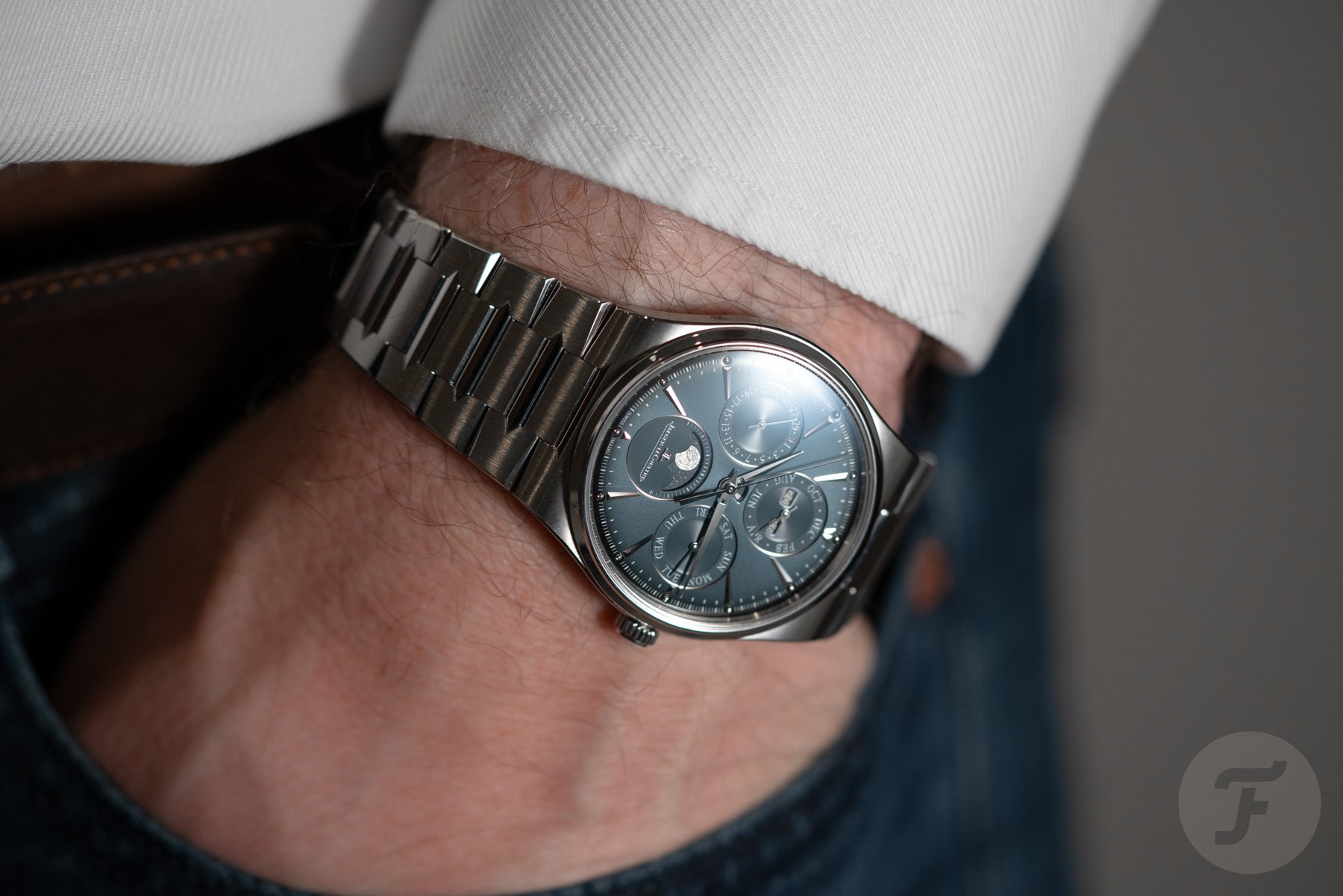
With 74% of the vote, the JLC dominated the contest. The outcome comes as no real surprise. The Master Control Chronometre benefits from strong recency appeal and also fills a clear gap in Jaeger-LeCoultre’s lineup.
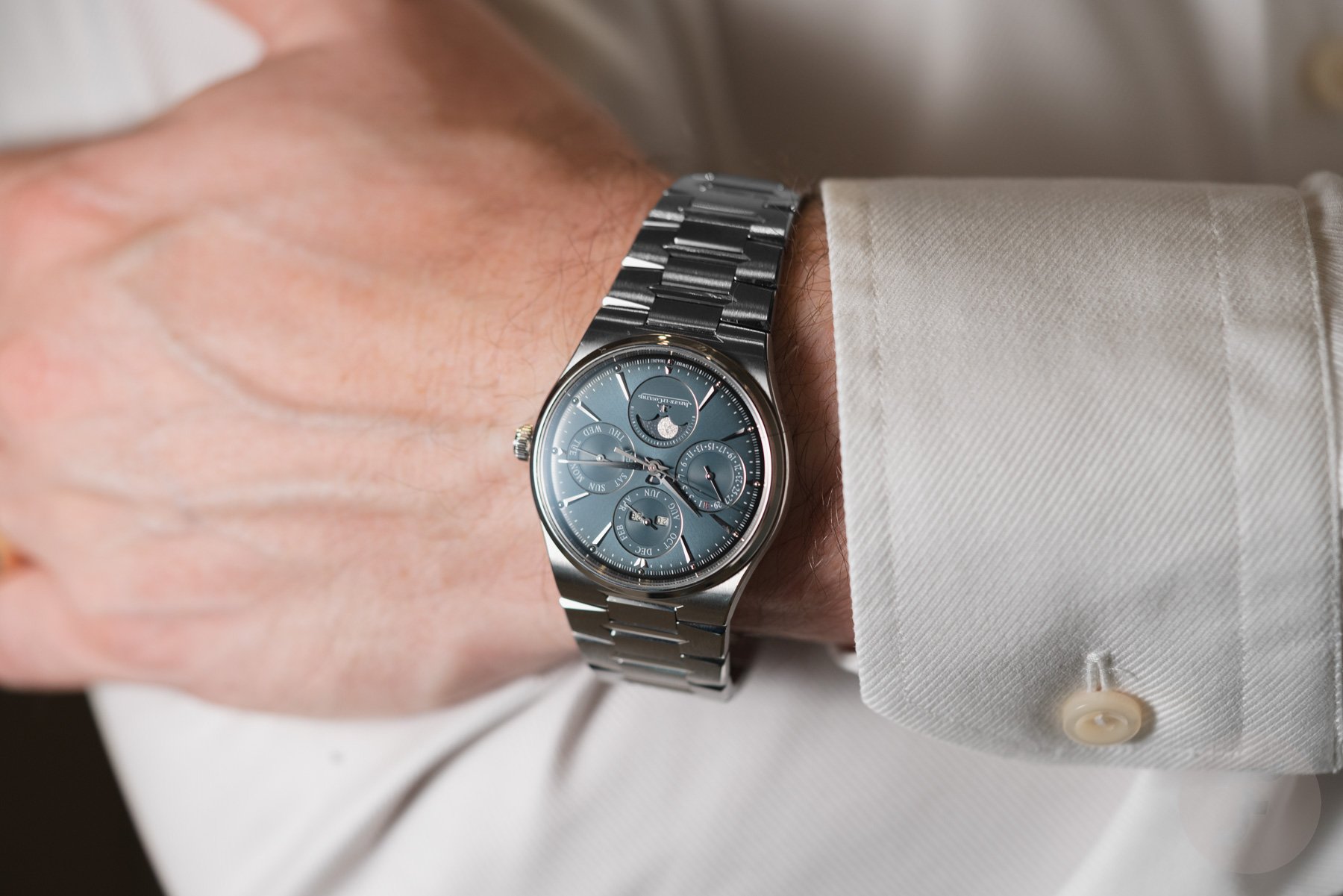
The watch hits a sweet spot. It offers classic design, excellent proportions, and broad wrist appeal. The watch community has responded enthusiastically. However, long-term success will depend on strong sales performance. For a brand as respected as Jaeger-LeCoultre, I hope it delivers.
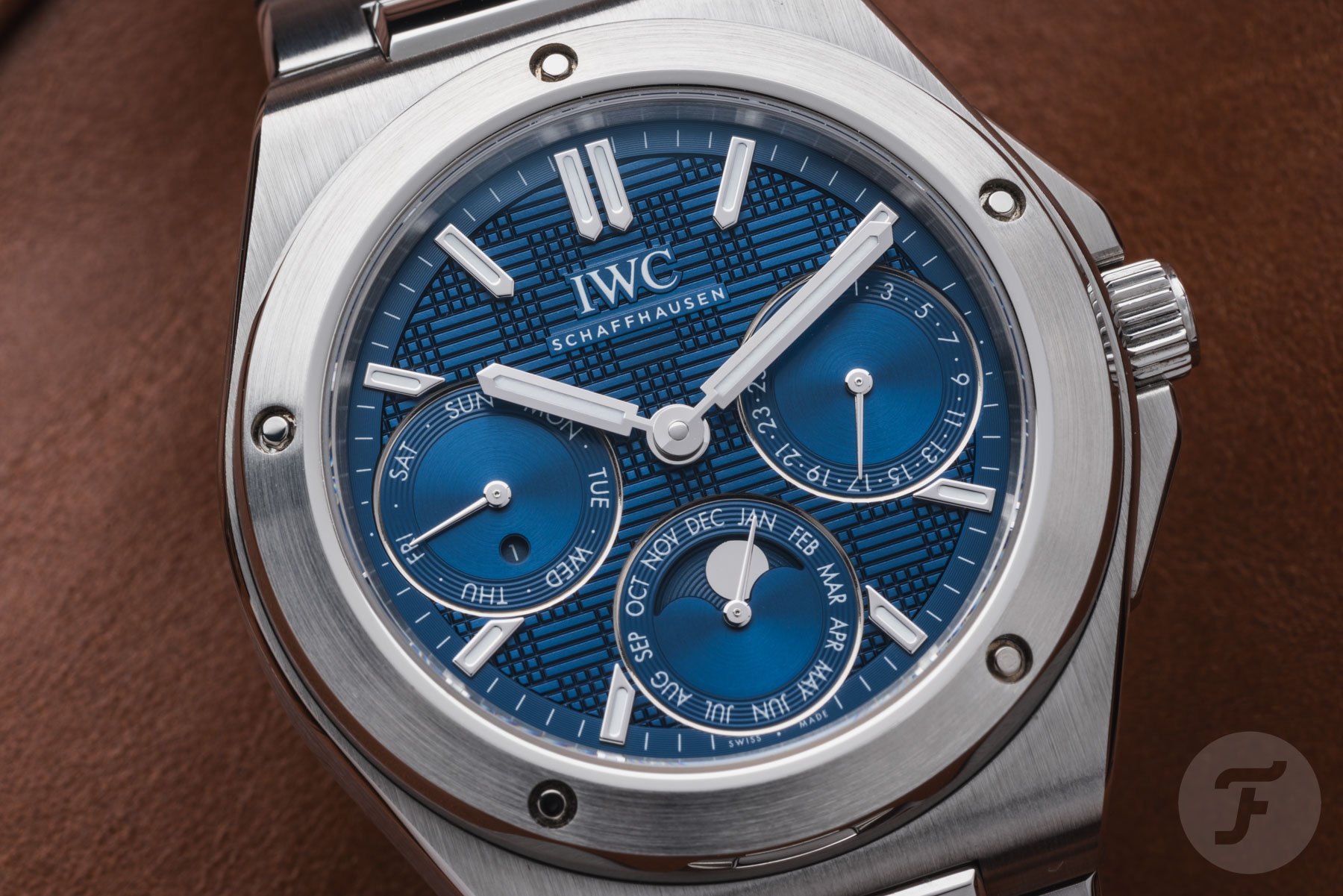
The entry-level time-and-date model’s price remains high, which may limit accessibility. Even so, serious collectors are likely already expressing interest. Many are probably setting funds aside. As for the IWC, it falls slightly short in refinement. Within the broader Ingenieur lineup, the Perpetual Calendar may not be the most compelling choice either. Now, let’s see how today’s watches fare.
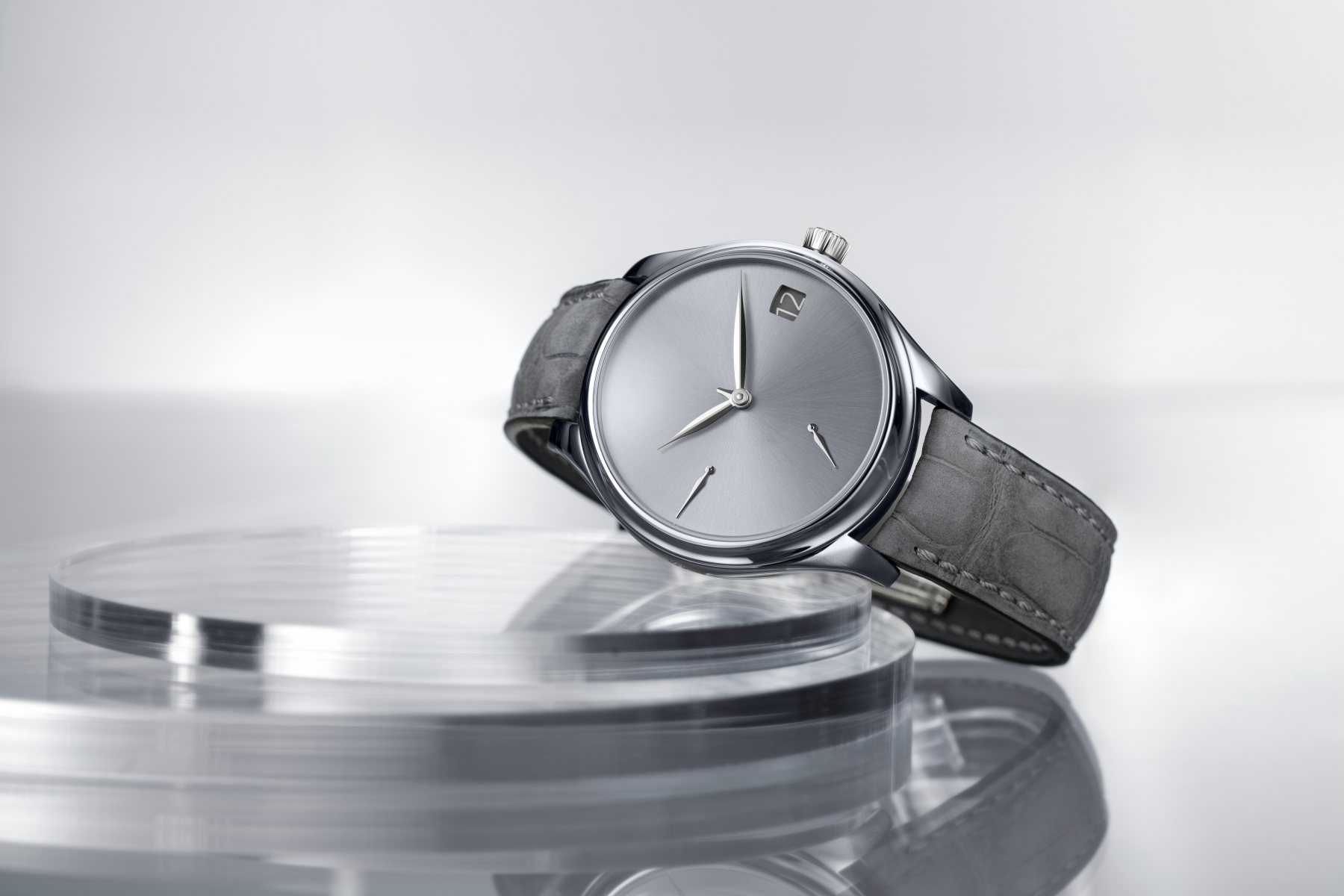
Ben: H. Moser & Cie. Endeavour Perpetual Calendar Concept Tantalum
I can already tell that my pick will be the outlier today. H. Moser & Cie. has built a reputation for pushing boundaries and provoking watch enthusiasts. Still, this design has always appealed to me. A perpetual calendar that focuses almost entirely on the date feels refreshingly different.
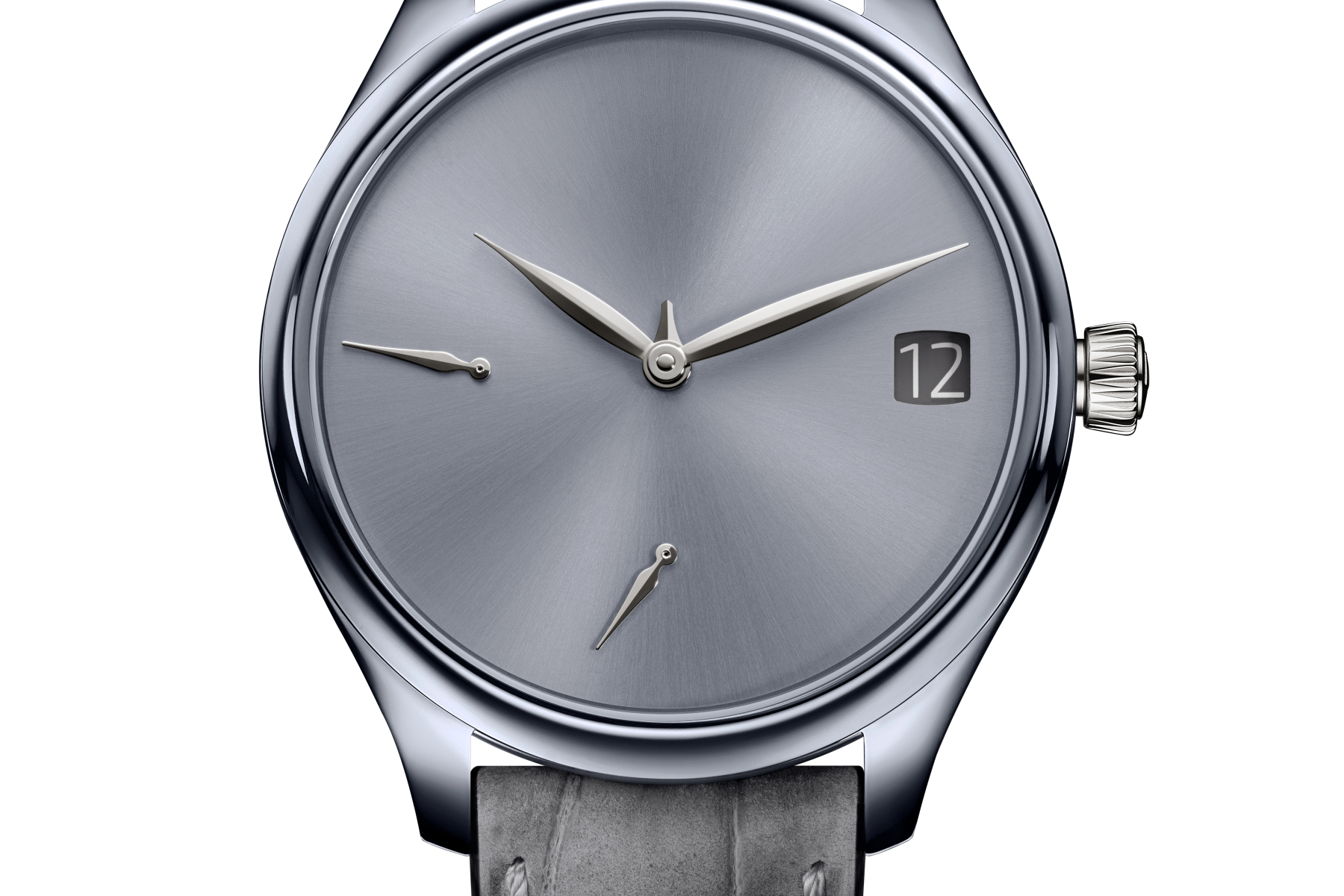
Yes, the watch includes a month indicator. However, the hand is small and points to hour markers in 12 positions, with January starting at 1 o’clock. At a glance, only the date stands out. That’s exactly what makes it work. In everyday life, the date matters most. We usually know the day and month, but the date often slips our minds. I had to check the date on my watch while writing this. Everything else feels secondary.
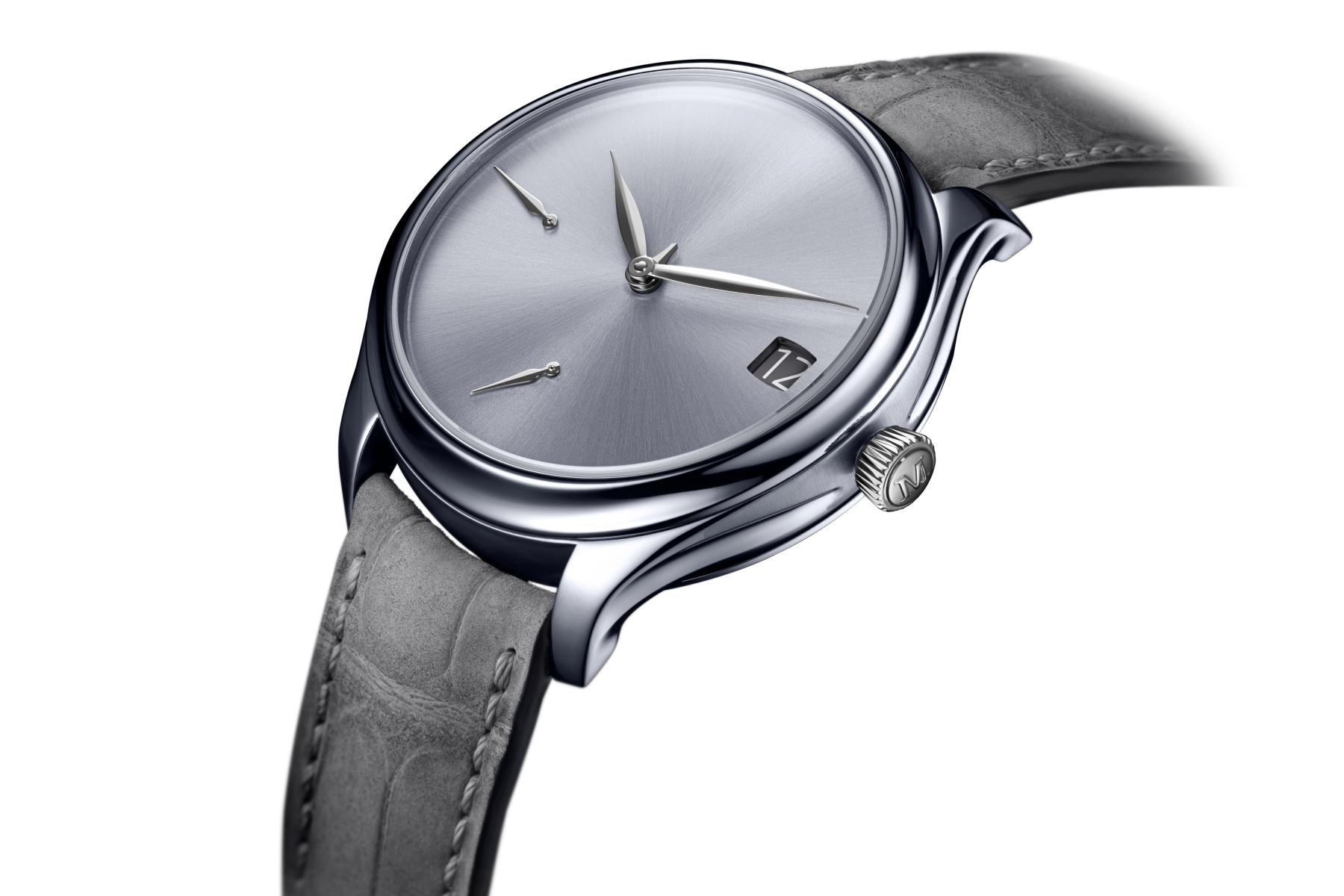
Even so, I still want a perpetual calendar mechanism behind it. It quietly manages month lengths, February, and leap years. It may seem excessive for such a simple display, but why settle for less? Moser also strips the dial back to near silence. The result is pure minimalism.
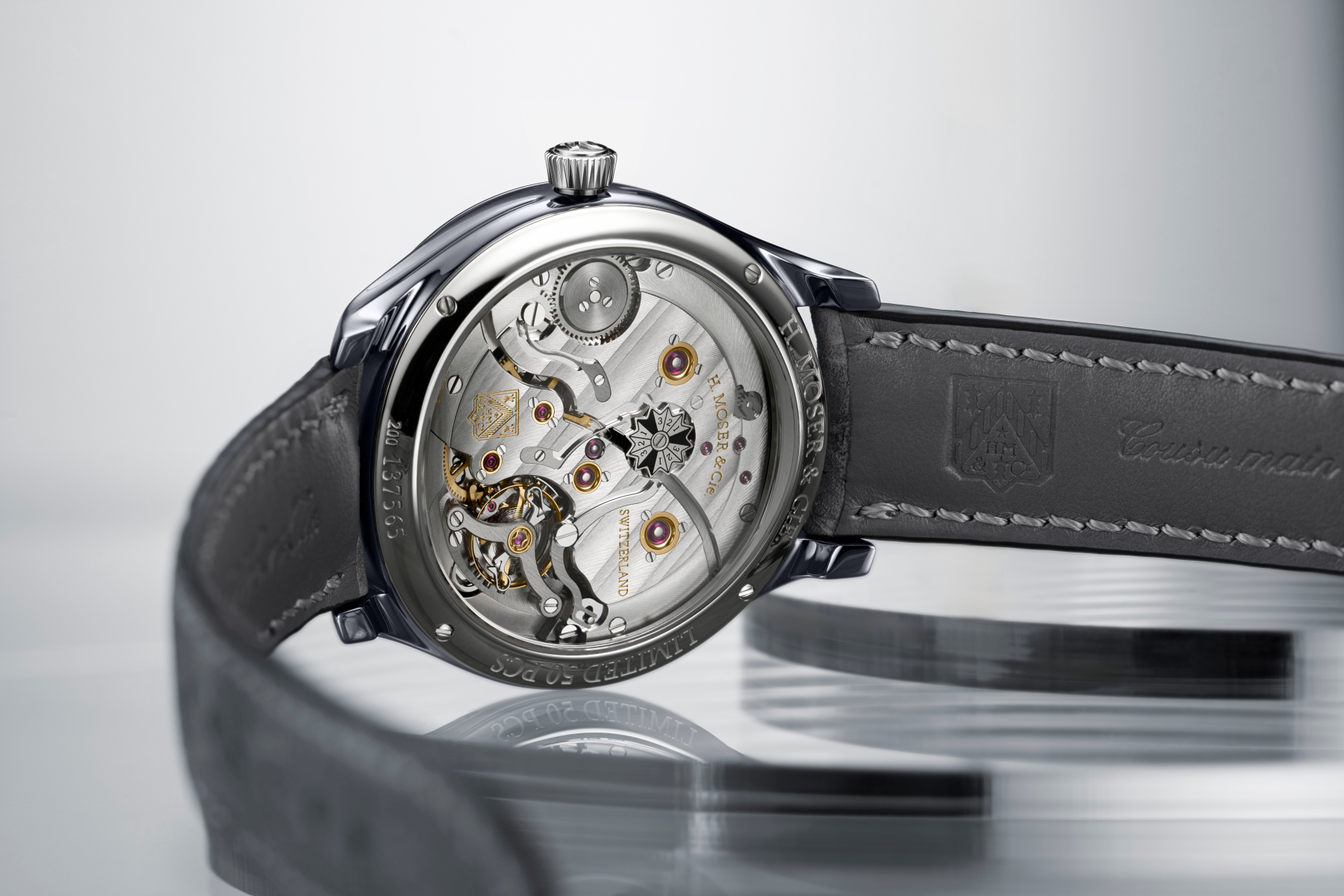
There’s no logo, no “Swiss Made,” and no distracting scales. While this design complicates time setting, Moser fully embraces the concept. Thankfully, caliber HMC 800 allows both forward and backward adjustments via the crown. That feature removes a major concern. With most perpetual calendars, a mistake can mean an expensive reset. Here, you have far more flexibility.
Getting the setting just right
My best advice is simple: wait until midday, align the hands perfectly, and watch for the date change. If it doesn’t shift, you’ve set it correctly. From there, everything advances in sync. The process feels deliberate but rewarding.
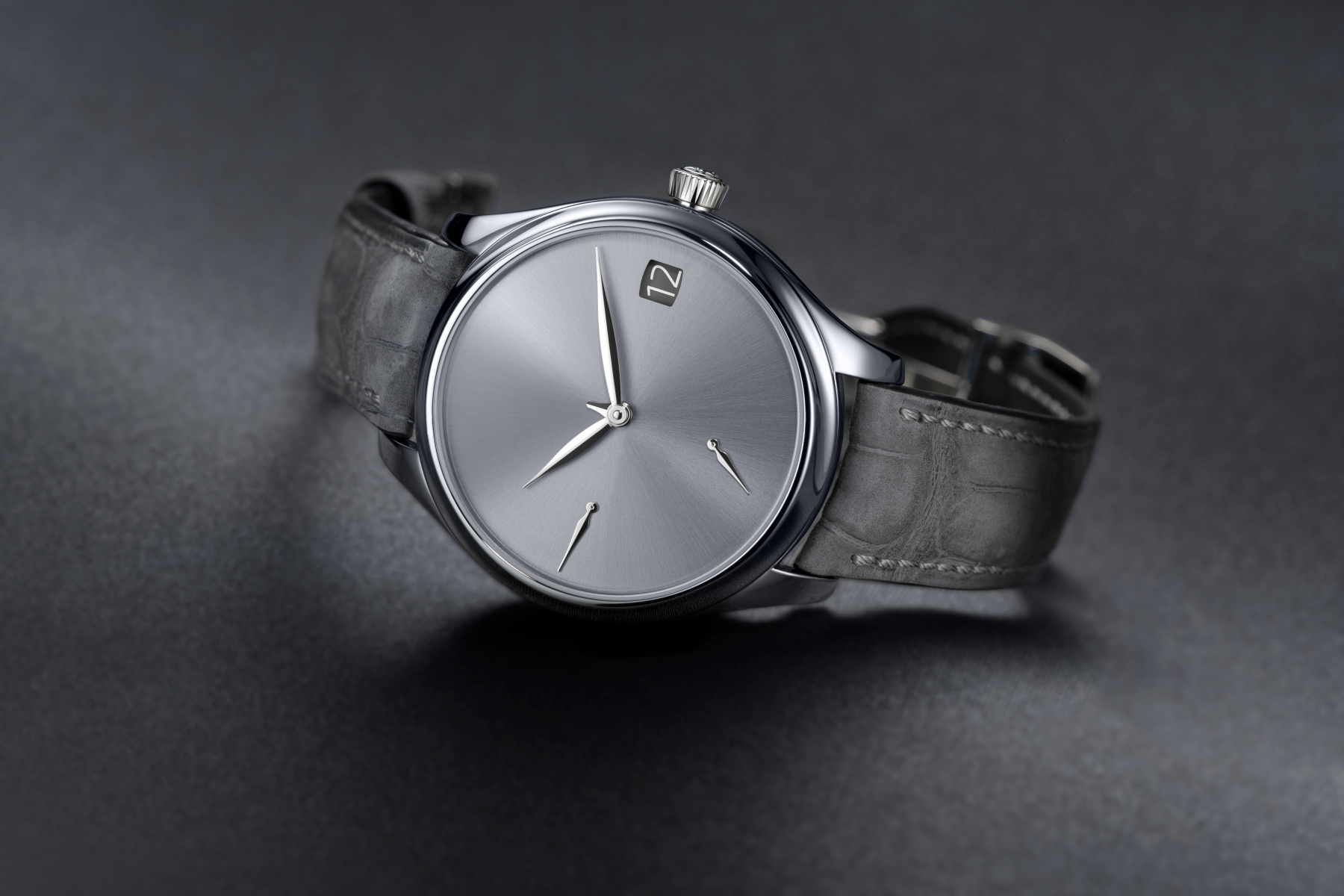
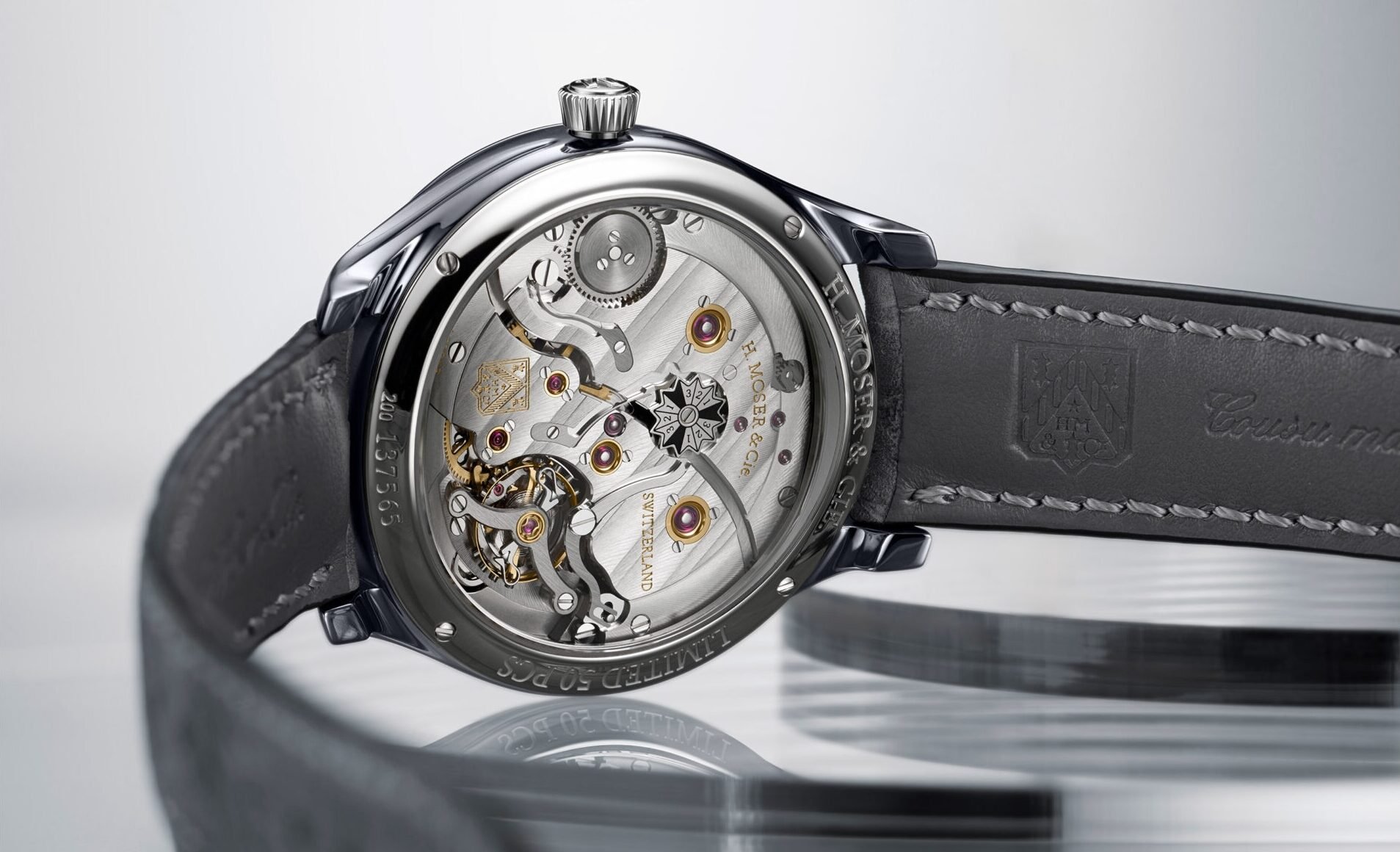
You do need to keep it wound, since this is a manual movement. Still, the seven-day power reserve gives plenty of breathing room. The indicator sits on the dial, though it lacks a scale. My rule of thumb is if the hand points closer to 10 o’clock, you’re fine. If it drops toward 8, it’s time to wind. The running seconds at 6 o’clock also hack, allowing for precise time setting (well, as precise as possible without minute markers).
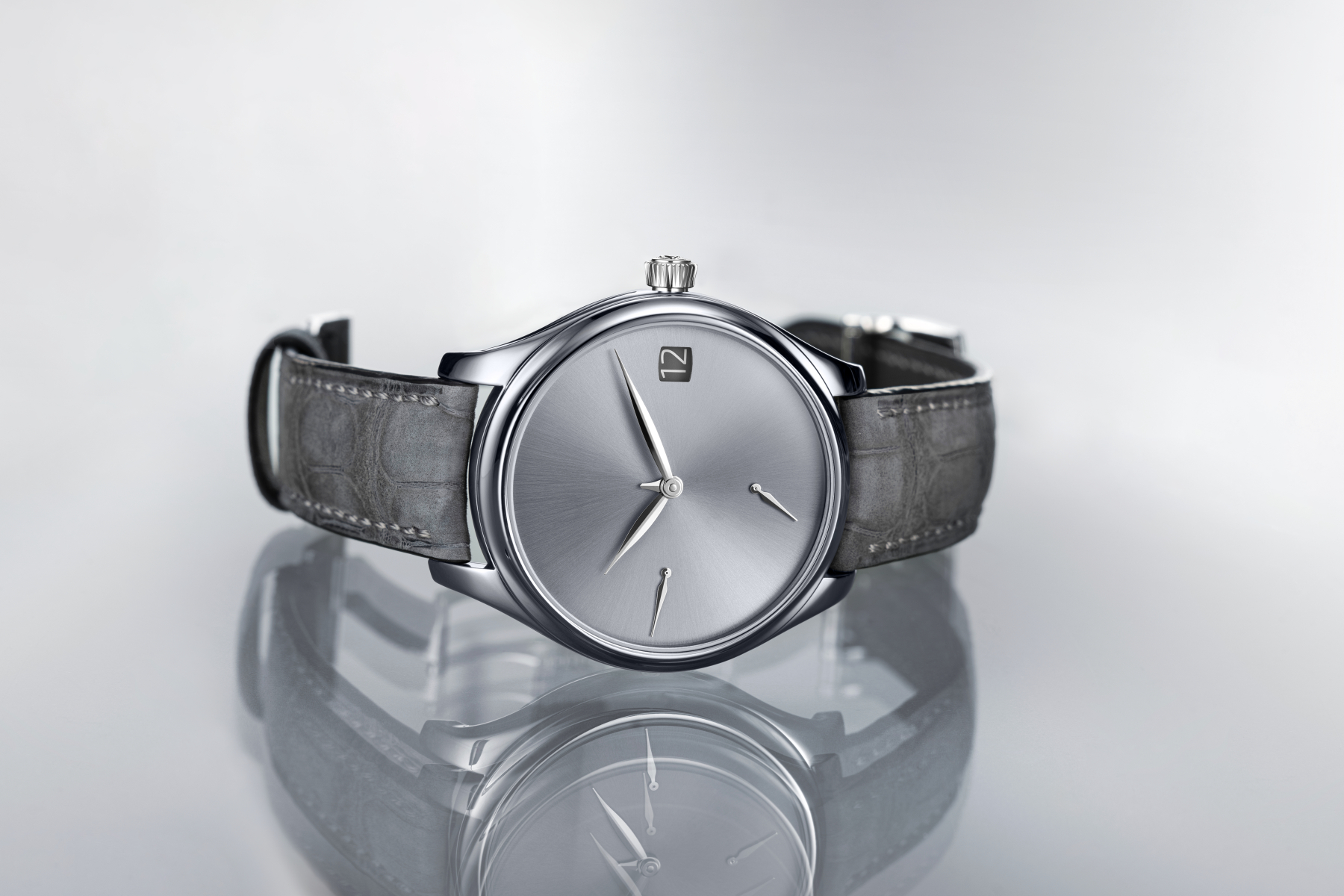
What this watch lacks in features of traditional perpetual calendars, it makes up for in clean design. That same philosophy extends to the materials. The mid-case and bezel are made of tantalum, a metal with a melting point above 3,000°C. It’s difficult to work with but highly rewarding.
You might ask why that matters. In luxury watchmaking, rarity and exclusivity drive desirability. Tantalum gives the case a dense feel and a unique blue-gray tone. It stands apart from more common materials. Moser goes even further by crafting the dial from untreated, brushed tantalum.
Without indexes or text, the material takes center stage. The flow from the sculpted Endeavour case to the matching dial feels seamless. It creates a subtle, almost ethereal presence on the wrist.
Keeping it simple
I don’t see the same cohesion in the Parmigiani. While the hidden chronograph is clever, the Tonda PF case feels busier. It has many facets competing for attention. By contrast, the Moser keeps its perpetual calendar quietly hidden. That restraint creates a stronger sense of surprise. Now, let’s hand things over to Mike and hear the other side of this shadowy duel.
Mike: Parmigiani Fleurier Tonda PF Chronographe Mystérieux
Instead of my usual foe, Jorg, today it’s a British battle of sorts. No, I’m not from Blighty, but Ben and I live within relative earshot of each other, so let’s have some fun, why don’t we? Today’s matchup is a tad lopsided price-wise, but given that it features two stupendously interesting watches, I don’t think that detracts from it. Ben made a great case for the Moser Endeavour Perpetual Calendar Concept Tanatalum. It’s an awesome watch with one of my favorite case materials to boot. However, I specifically chose to represent the Parmigiani.
The Tonda PF Chronographe Mystérieux
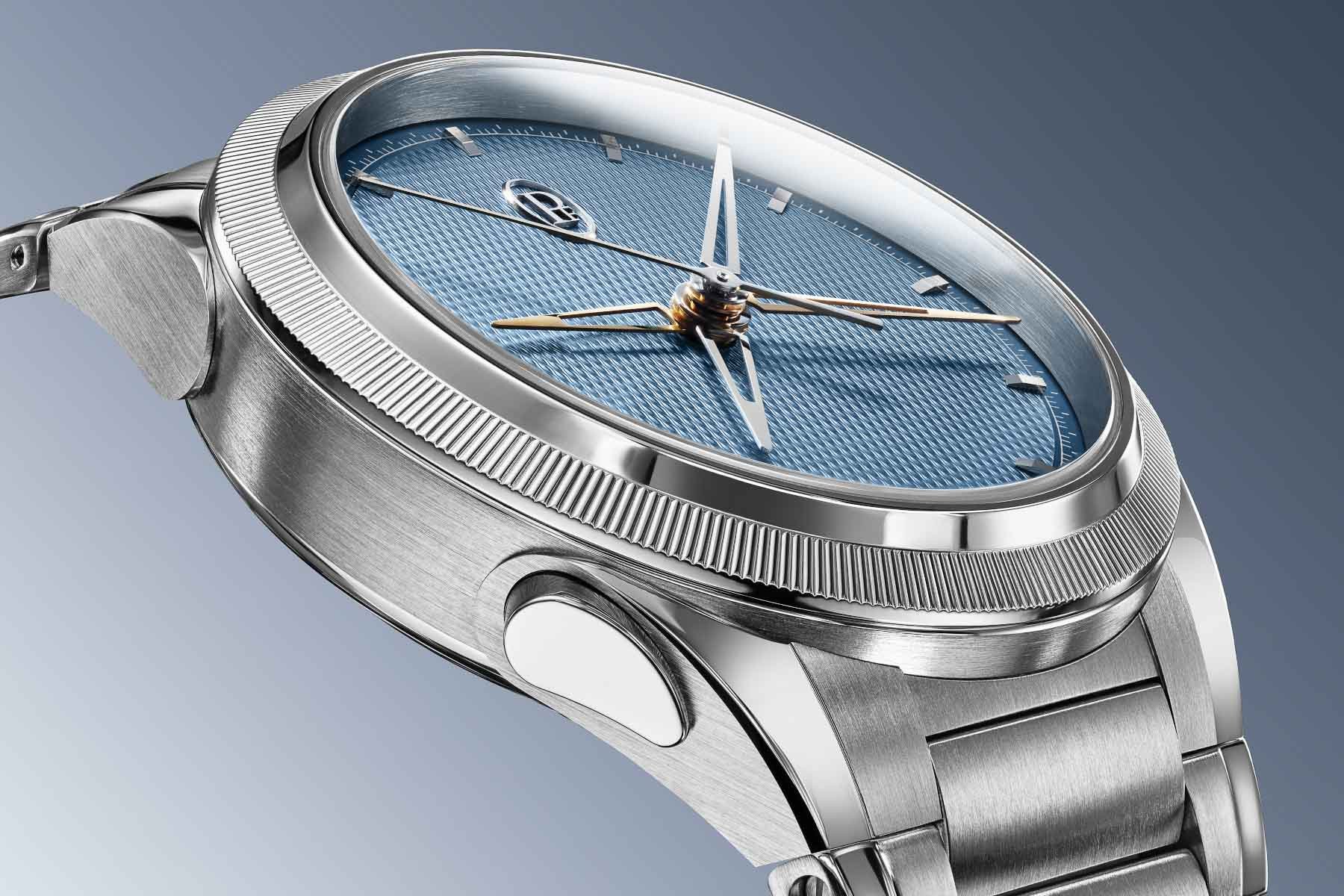
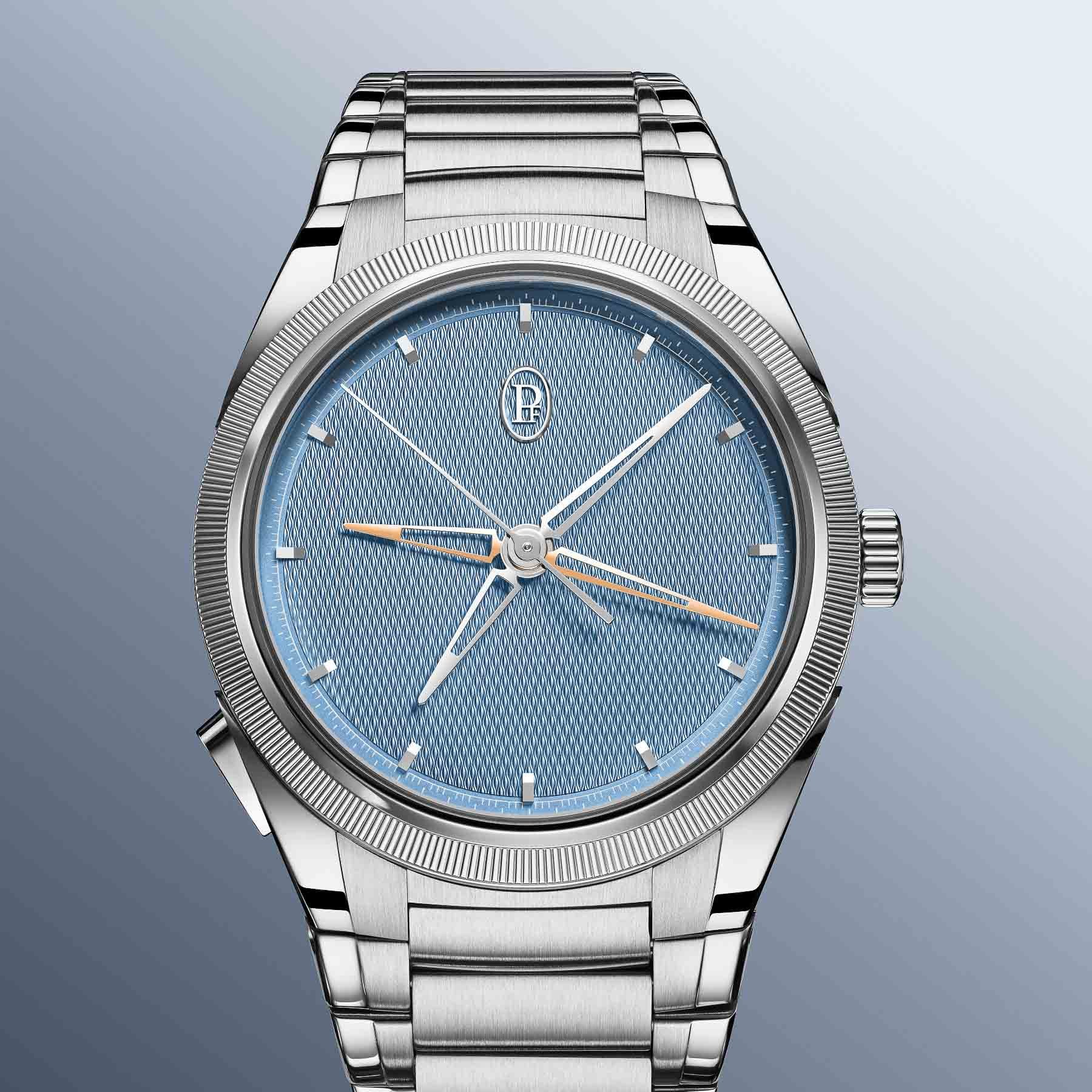
Look, I’m a well-known “slappy” when it comes to Parmigiani Fleurier. For me, the brand can basically do no wrong. I love its color palette, designs, and the quality of finishing. Whereas some companies flash complications for all to see, the relatively small Swiss brand makes watches that demand more focus and study. The 40mm Tonda PF Chronographe Mystérieux one-ups the Moser Perpetual Calendar by displaying its complexity with absolutely no display! This way, when its party trick is not engaged, it looks almost exactly like my favorite modern watch, the three-handed Tonda PF.
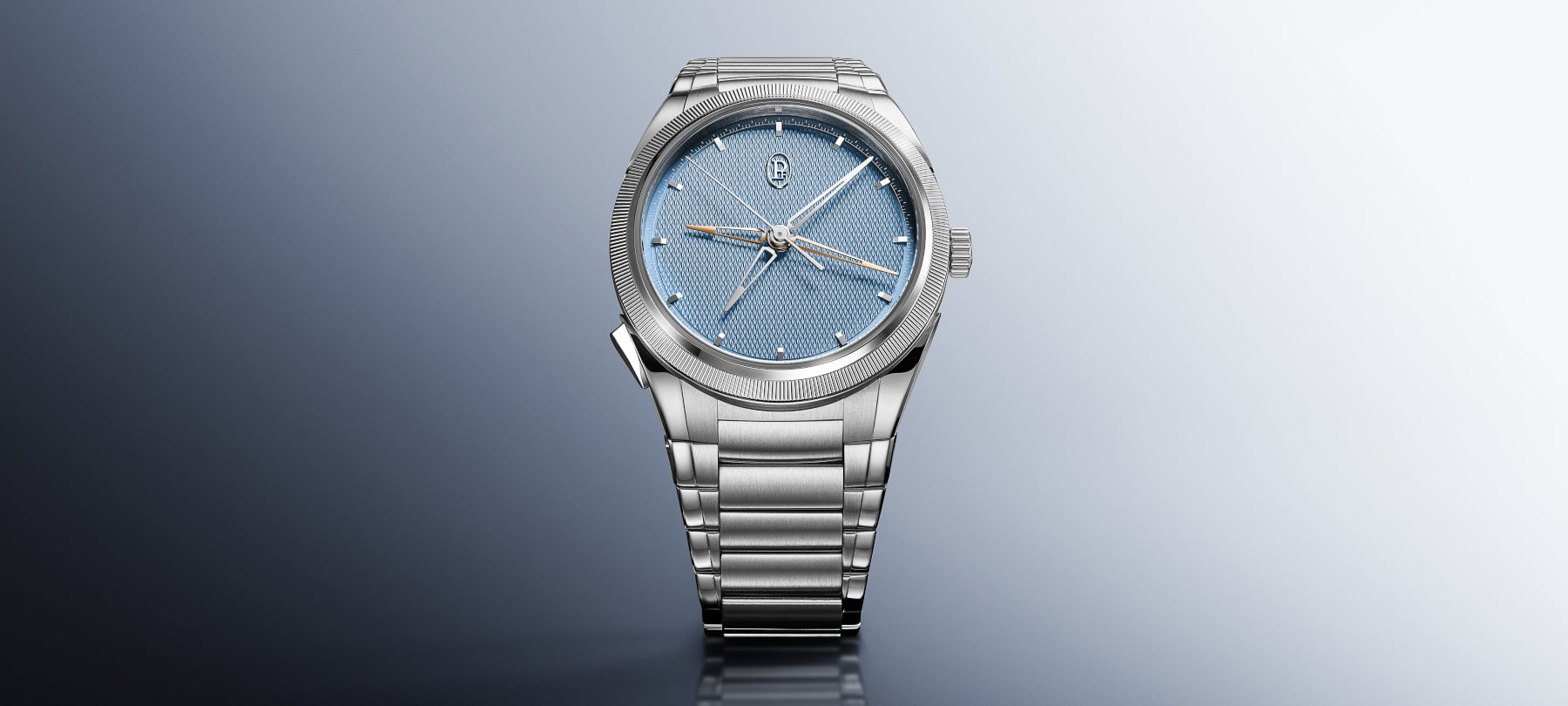
Elegant and simple magic
In my original article on this watch, I explained the functionality, but let’s highlight it again. The wearer engages the chronograph via the monopusher on the case’s left flank. This sends the three rhodium-plated hands to 12, and timing begins immediately. In their place, two formerly hidden skeletonized rose gold hands indicate the current time. The rhodium hands display chronograph timing that is easy to read at a glance. Just think, the hour hand counts hours, the minutes hand shows elapsed minutes, and the seconds — well, you’ve got it.
Is it different than a traditional chronograph display? Absolutely, but it’s so simple and elegant that it doesn’t feel like an invention for invention’s sake. So, who is this watch for? Well, my dad, for example, has softened on chronographs, but there was a time that he disliked all sorts of “junk” on a dial. I can also imagine others would enjoy knowing their watch has a hidden superpower.
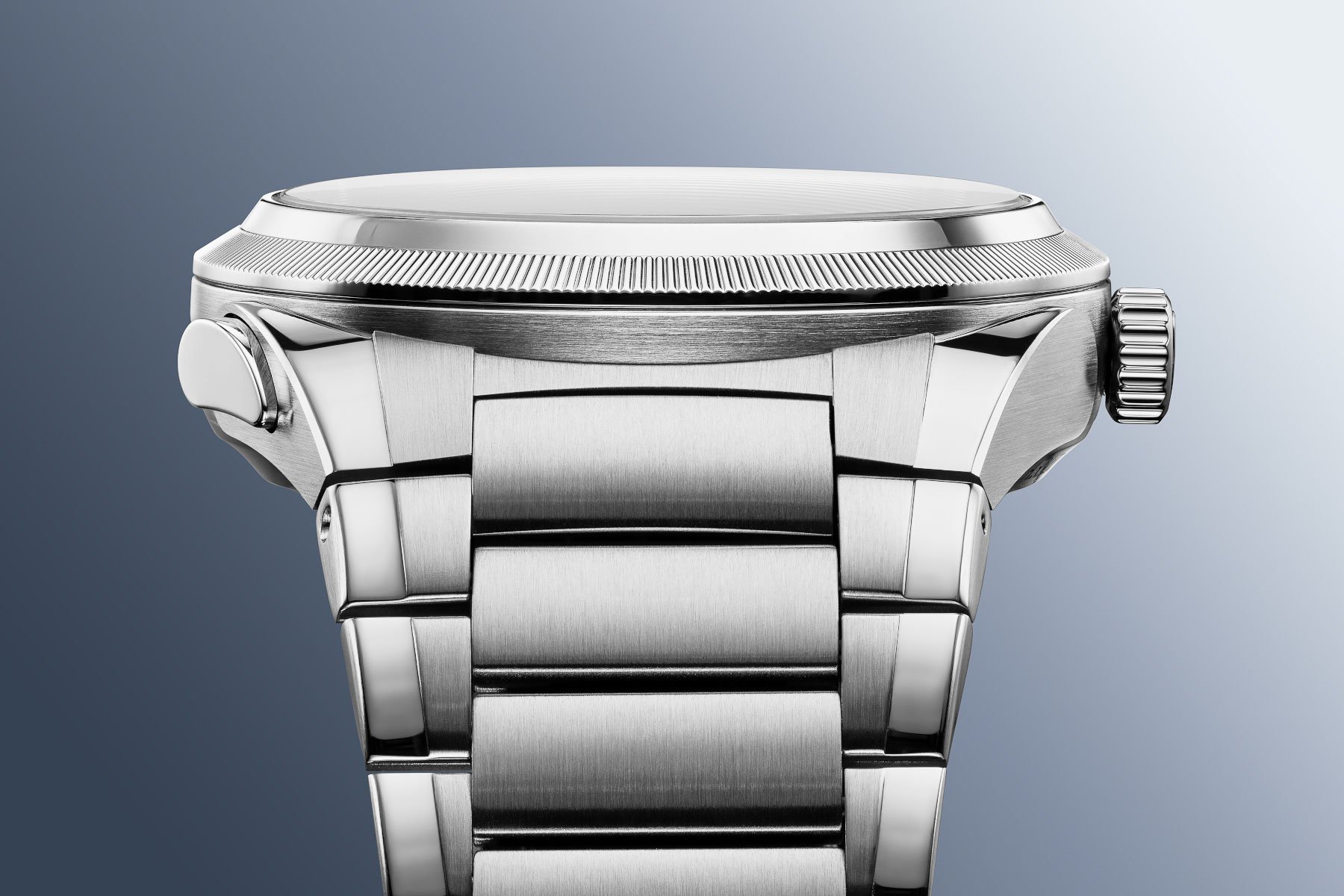
A sweet design
I heard Ben’s commentary on the intricacies of the Tonda PF case design. It’s true, the Moser Perpetual Calendar is a much simpler concept. However, it’s worth trying the Tonda on for size because it fits like a dream. I’m not kidding when I say that no one makes a bracelet as silky smooth as Parmigiani. It’s that damn good. From an overall design standpoint, I love the reeded platinum bezel and how it shines against the stainless case. Also, the dial is perfectly simple with hand-created guilloché and rhodium-plated 18K gold indexes.
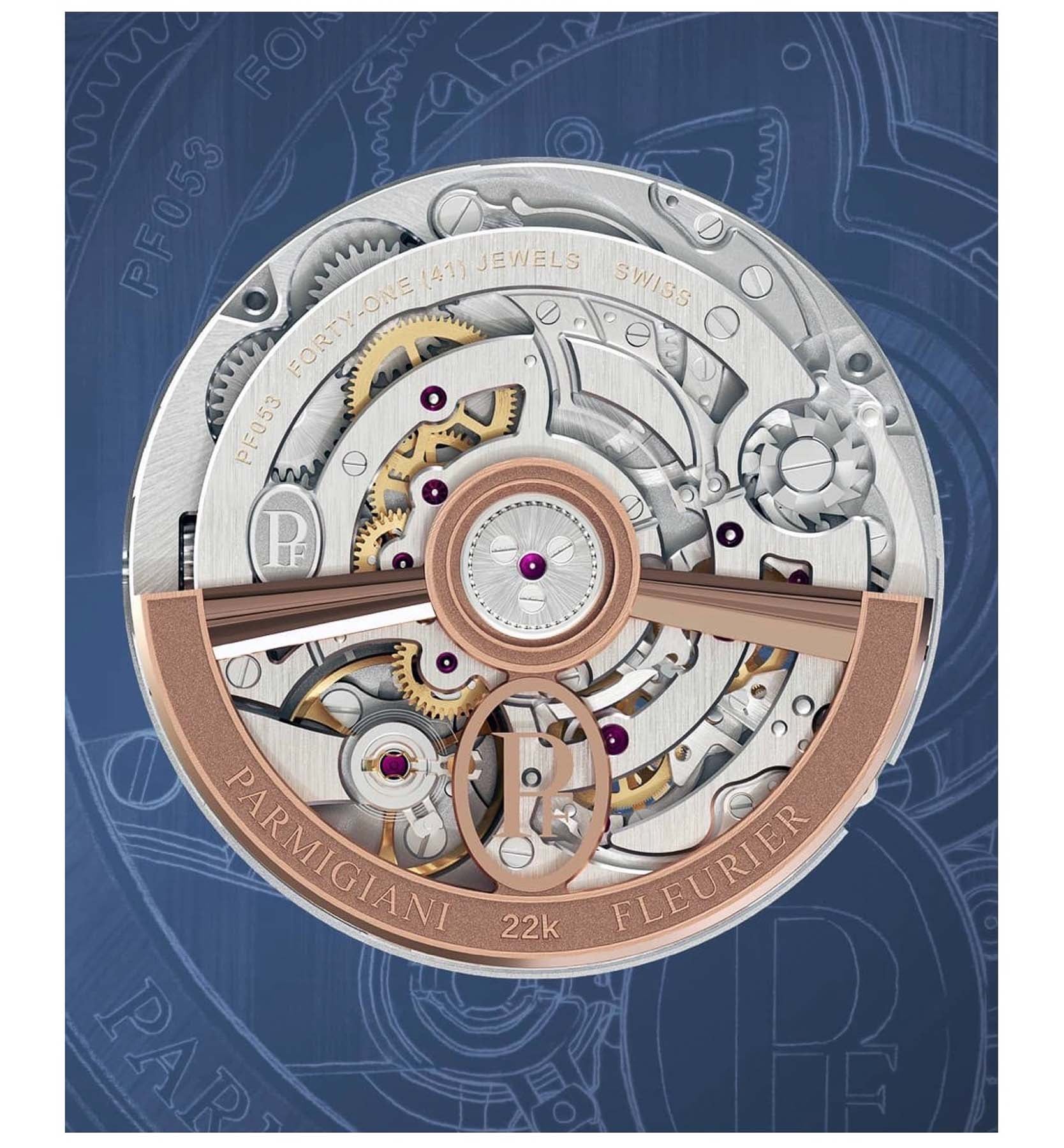
Then, there’s the movement. Parmigiani, along with sister company Vaucher Manufacture Fleurier, is crafting some incredible calibers. The automatic PF053 is certainly worth viewing with its fine finishing details. The column-wheel-equipped powerplant has a 22K gold rotor, a frequency of 28,800 vph, and a 60-hour power reserve. Would I like to see a manual-winding movement? Sure, but that’s not really in keeping with the Tonda PF line.
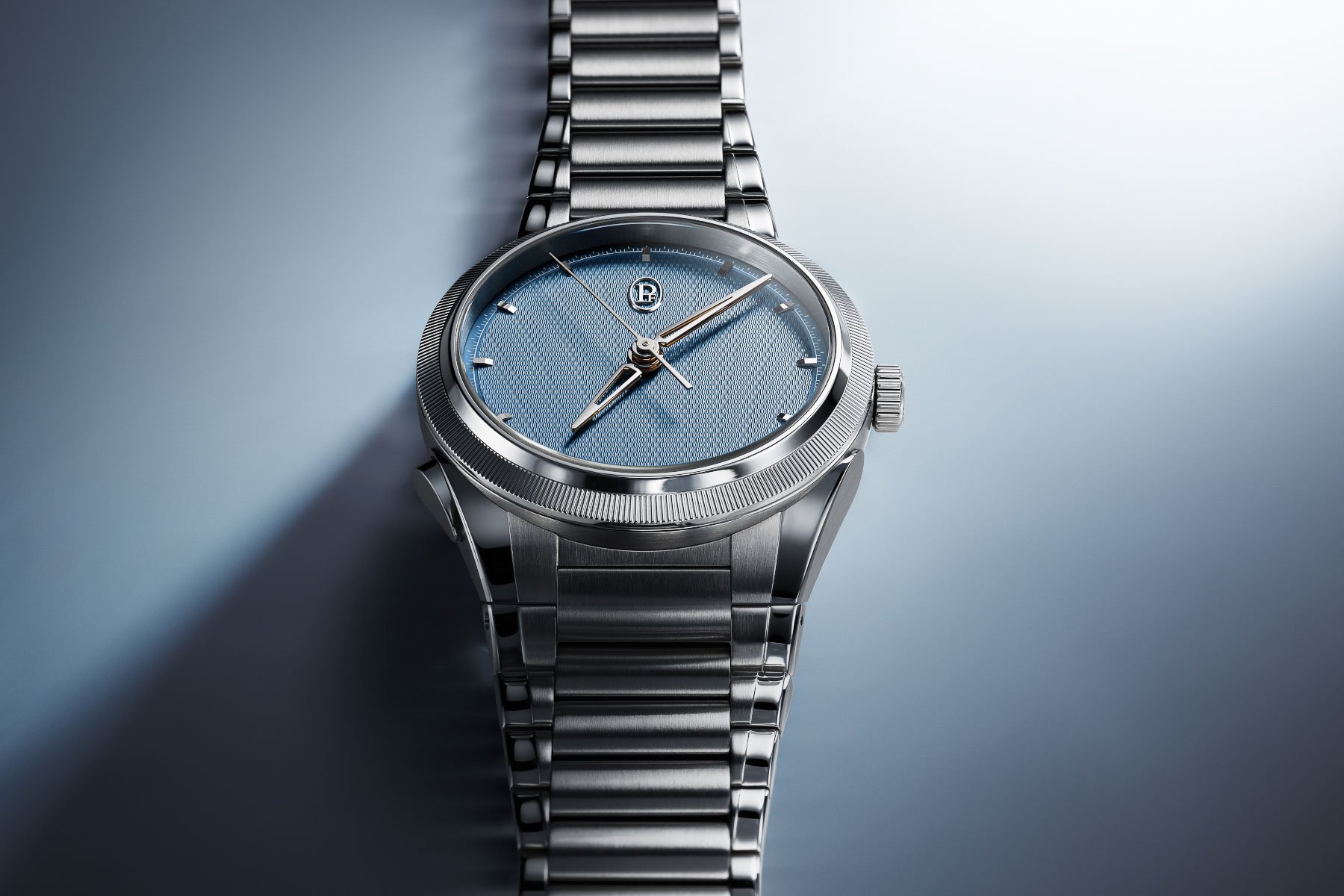
Time to choose
There’s no wrong answer today. Both the H. Moser & Cie. Endeavour Perpetual Calendar Concept Tantalum and the Parmigiani Fleurier Tonda PF Chronographe Mystérieux are amazing choices. Each obscures its capabilities in different ways, and both are magical. So, which will you choose and why? Try to keep pricing out of the equation, and let us know how you voted.
H. Moser & Cie. Endeavour Perpetual Calendar Concept Tantalum vs. Parmigiani Fleurier Tonda PF Chronographe Mystérieux
Ben Hodges
2026-05-10 05:00:00