
 With so much attention given to the business of running hotels efficiently, we may forget that it’s the emotional core of giving guests incredible experiences and the creative passion of senior teams that propel the hospitality industry forward by leaps and bounds.
This is where the luxury and ultraluxury categories truly shine; where innovators are given the chance to experiment with bold ideas that offer something genuinely fresh. We’ve discovered perhaps the truest case of this ingenuity in a quiet corner of Panama where the private island resort, Nayara Bocas del Toro, sits as a place of unrestrained ecotourism and immersion amongst nature, wholly embodying the globally growing trend of laidback luxury.
Interpreting a Balinese design into a Central American sensibility, this adults-only, all-inclusive property exudes charm and eco-friendly storytelling, creating a destination unlike any other. We sat down with the resort’s owner, Dan Behm, to learn about the labor of love that was this property’s development, how Nayara Bocas del Toro is able to offer unique experiences, how his team is helping bring the hospitality spirit to Panama and how the resort has fostered a culture of continuous innovation.
On an Island in an Archipelago
Advertisements

As anyone involved in construction would know, infrastructure is essential for getting materials to a site. In this case, Bocas del Toro is a sparsely populated archipelago on the gorgeous Caribbean coast in the northwestern part the isthmus nation of Panama. It’s a ‘developing’ area to put it politely and in stark contrast to the first-world metropolis of Panama City only a one-hour flight away.
Nayara Bocas del Toro started as a passion project for Behm. Enamored by the lush environments and diversity of Central America, after retirement he purchased a boutique luxury in Costa Rica in 2015. On the lookout for the next big tourist hotspot, Behm discovered the sleepy surfer community of Bocas del Toro and formally got underway with development in 2019 after purchasing Isla Frangipani (the private island’s official namesake).
As Behm put it bluntly, Nayara Bocas del Toro was brutal to build. Not only was shipping and warehousing difficult due to all the island hopping, but local officials had to be, ahem, kept happy, too. Through all that hardship, the result is a masterpiece of luxury seclusion that’s nevertheless unintimidating, tranquil, magically designed and wholly eco-conscious.
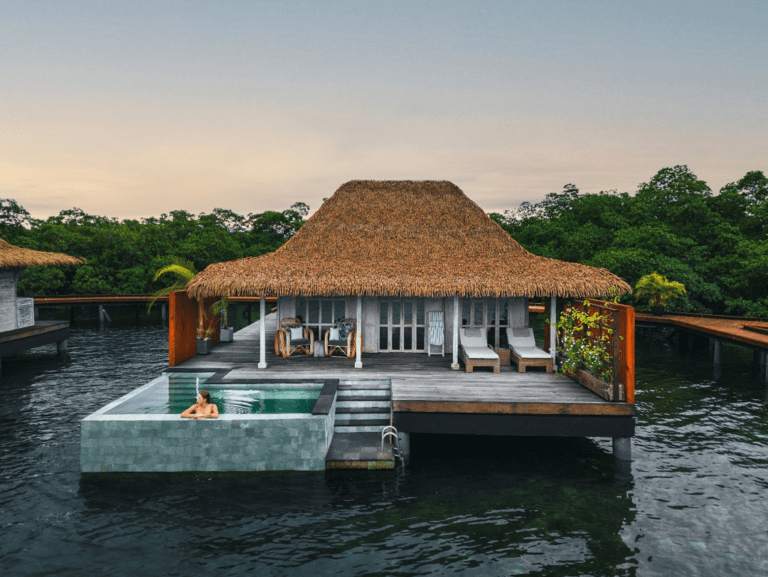
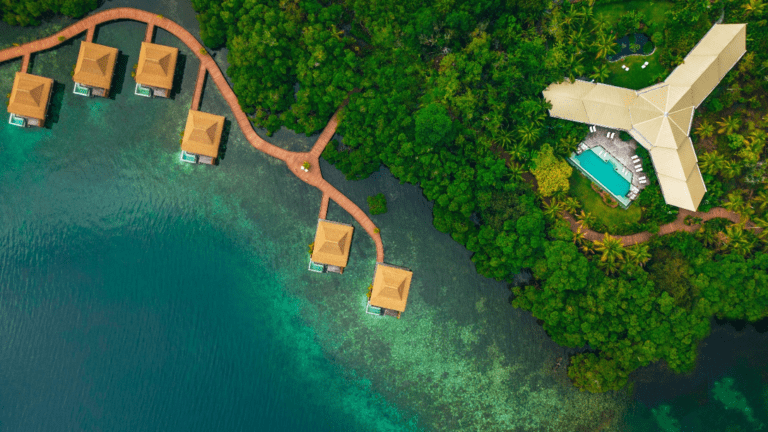
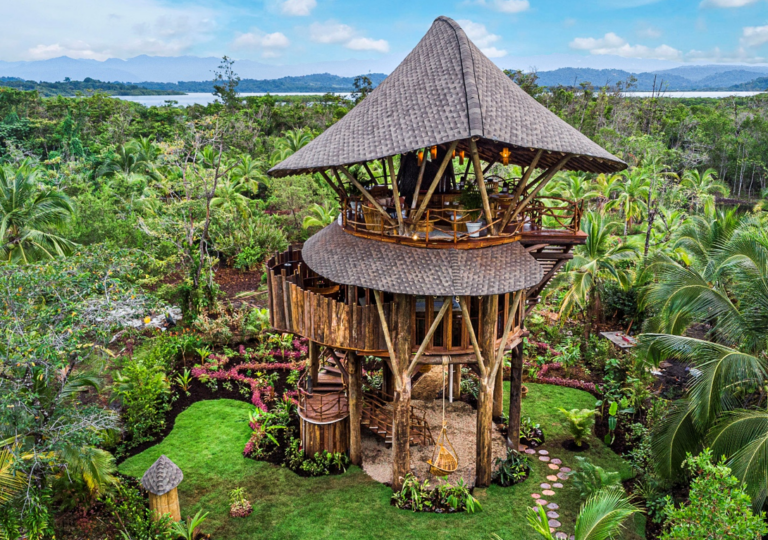
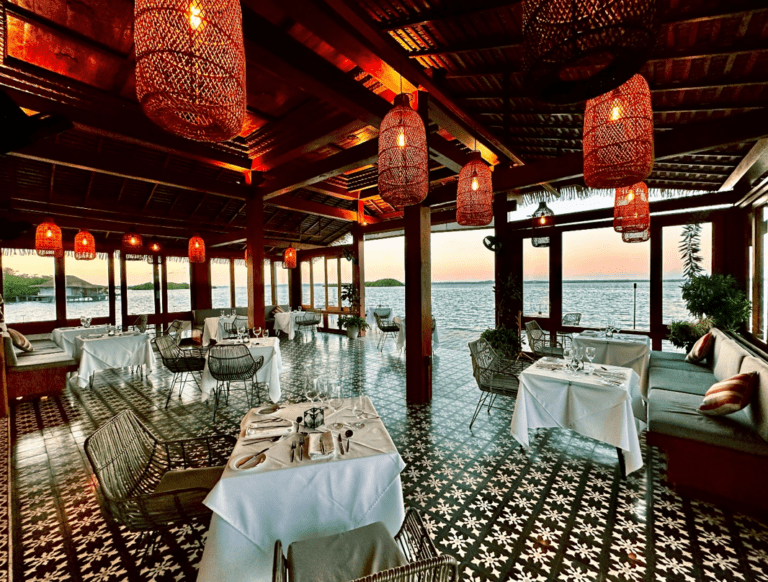
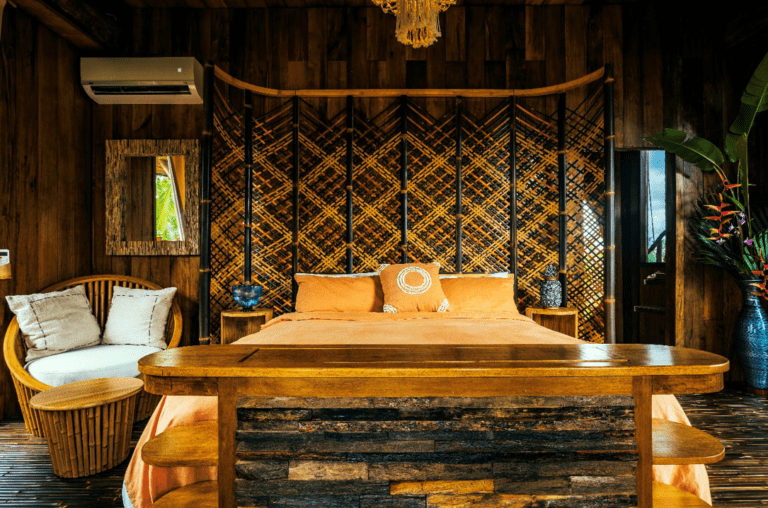
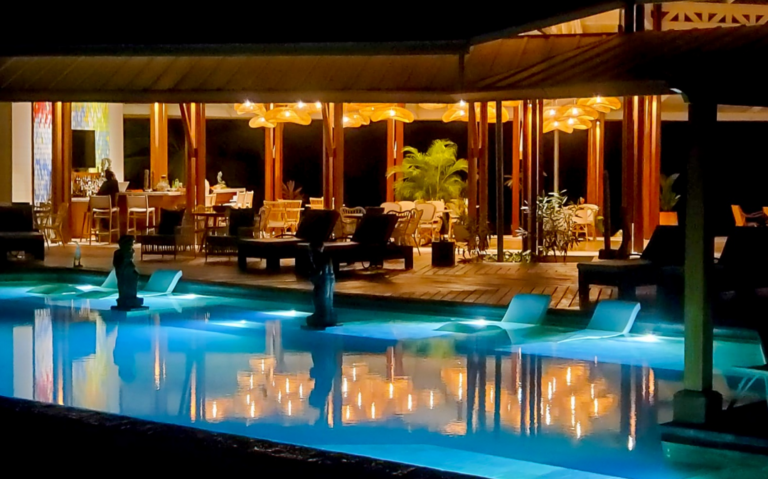
Launched in 2022, the 20-key resort comprises 16 overwater pool villas, each at 1,100 square feet with teak interiors and glass floor inlays, and another four stunning bamboo treehouses, also at 1,100 square feet each and built from reclaimed materials from the bottom of the Panama Canal. Rounding out the standalone units are two restaurants – The Elephant House (fine dining) and the Coral Café (laidback alfresco) – another 70-foot freshwater pool adjoining the main building and one beach bar fitted atop the world’s first over-the-water beach.
Despite opening during the pandemic when problems were faced industrywide, Nayara Bocas del Toro quickly built a following and earned acclaim with several prominent awards from Condé Nast and Travel + Leisure, with ADR for this adults only, all-inclusive resort now ticking above $1,500.
At the heart of operations, the resort aims to maintain a 3:1 staff-to-guest ratio at all times with 80 FTEs. As for branding, while Behm had set out with the vision of the property being an independent, he was soon approached by Leading Hotels of the World to join their prestigious network, and then Nayara Resorts next came calling, for which Behm has described their organization as filled with thoroughly wonderful and expert hoteliers.
The Proliferation of the Laidback Luxury Category
At this point, it’s best to take a step back and look at the current trend around ‘laidback luxury’, also known as ‘barefoot luxury’, and ask why all these exclusive ultraluxury abodes that are off the beaten path and steeped in local culture are at the pinnacle of travel demand. For this, Behm offered some timeless observations based on the types of guests he’s seen make the pilgrimage to Nayara Bocas del Toro.
What we are witnessing here is the dominance of the ‘experience economy’ whereby people are willing to prioritize traveling to exceptional destinations and pay a premium for peak experiences versus other materialistic discretionary spend items like fashion, cars or big houses in the suburbs.
Notably, the resort is hardly only for HNWIs; many of its guests are firmly within the professional class – doctors, lawyers and salaried individuals – who still have to splurge for a vacation at the titular ecoadventure hotspot. And yet, they still do spend and in a manner befitting the movement around ‘purposeful travel’, with the resort achieving an average LOS around 4.2 nights.
Therein, Behm has noticed a new type of hybrid leisure travel emerging. Guests are willing to spoil themselves on a luxurious jungle paradise such as Nayara Bocas del Toro, but then are more than content at shouldering said vacation with a less expensive luxury hotel like Hotel La Compañia (part of The Unbound Collection by Hyatt) in Casco Viejo – the beautifully preserved Spanish colonial part of Panama City.
In this sense, the modern traveler is highly flexible and totally willing to spend above their supposed means if the experience is worth it. The ironic thing is, as Behm remarked, this composite leisure modality – ultraluxury destination saddling affordable accommodations elsewhere – would still average out across the whole trip to the same dollar amount if a couple had stayed the entire time at an all-inclusive luxury resort elsewhere.
It’s as if the luxury segment is undergoing a schism at present, with the smaller, boutique and niche hotels, like what the Nayara brand offers, evolving to be wholly distinct from the larger (roughly over 125 keys), traditional properties on offer by established brands like Four Season, Park Hyatt, Ritz-Carlton and Waldorf Astoria. To that end, Behm noted the strong sense of community that forms amongst guests, which is only possible due to its intimate size where everyone becomes acquainted during their stays.
Overall, as people continue to search for meaning through travel and to discover their personal identities amidst the eight billion other souls on this planet, secluded and laidback luxury will continue to prosper by giving travelers just that.
On a Mission to Always Innovate
Defying the odds of construction was hardly the only feat in launching this Balinese-styled eco-sanctuary. Unlike neighboring Costa Rica, rural areas of Panama at the time didn’t have the groundswell of available team members who were knowledgeable and passionate enough to bring Nayara Bocas del Toro to life. That was the assumption at least.
Like practically everywhere on the planet where community-driven and purposeful hotels have been built, it turns out that the locals in Bocas del Toro are also lovely people who possess the deep-rooted ‘spirit of service’ that’s essential towards making a laidback luxury property feel authentic. Bringing this to light by showing the world the very best of Panamanian hospitality is a point of pride for Behm, with 80% of the team from Panama.
What Behm attributes to this achievement is a core business mission of always trying to improve and do creative things. That’s what propelled the team to bravely press on when others said that they couldn’t build a luxury product in Bocas del Toro or when they said that Panamanians didn’t have a hospitality mindset. It’s this same culture of ingenuity that has made Nayara Bocas del Toro such a unique place in the world by, for instance, being one of the few in the Americas to put overwater bungalows built on stilts or by adding coral directly below the villas to help attract fish and sustain the surrounding mangroves.
This innovative drive has also guided the resort’s team in the way of operations and peak experiences available to guests. One in particular that Behm highlighted was the ability to offer guests private guided boat tours of the archipelago by having nine boats on hand and by hiring nine private captains.
Rather than follow a regimented island-hopping itinerary, the captains – who were all tour guides at one point – simply ask guests what they want to see and the rest takes care of itself. They end visiting the popular sites like Starfish Beach, Isla Escuda, Isla Cayo and Bird Island, but having a one-on-one private boat ride allows the captains to take guests to their hometowns on Bastimentos Island in order to be immersed in the local community.
Back on premises, ingenuity also means experimentation, with the senior team giving a wide berth to Cedric, the head gardener, to tinker with what plants will take root in the salty soil of the mangrove island. Under the broader objectives of developing regenerative permaculture and agroforestry to round out the culinary program with more farm-to-fork offerings, the team is constantly challenged to deliver Michelin-quality dishes that are as brightly flavorful as they are visually stunning. As a result of this pursuit, and in tight collaboration with the chefs as well as the general manager, Scott Dinsmore, the grounds at Nayara Bocas del Toro now have over 200 plant species along with flower patches and secret gardens for guests to discover.
The Future for Laidback Luxury
Continuous innovation implies that there’s constantly a new project in the works. In this case, our conversation focused specifically on the new rooms products and building a proper treehouse spa befitting a five-star resort.
As a preview of what’s to come, Behm first shared his plans for a new premium-tier villa that’s over 50% larger than the current stock of overwater villas and containing a signature, 24-foot indoor-outdoor lap pool running down the spine of the living area. To create a feeling of seamless transition with the Caribbean Sea, the team has gone as far as importing a specific type of glass from a niche boat glass manufacturer in Miami. Much like how Behm drew inspiration from Bali for the initial set of 16 overwater villas, here his muse is the Maldives, aiming to launch in Q3 2025 at a price point nearly double the current ADR.
Next, the treehouse spa will consist of three pavilions connected by elevated boardwalks. As guided by the spa director who helped develop the wellness programming for Nayara Springs in the Arenal Volcano ecotourism zone in Costa Rice, the first treehouse will be for massage and other body treatments to complement the in-villa spa services presently offered to Nayara Bocas del Toro guests. The second and third buildings will be dedicated to contrast therapy with tubs, a sauna and a cold plunge.
Beyond these two, Behm hopes to take on more projects that will highlight what makes Bocas del Toro such a unique destination. For example, currently there’s a fun, multi-level, floating bar near Bocas Town that’s accessible only by boat. So, why not build another one?
Questions like these may seem innocuously simple, and yet they can act as the spark to propel a hotel off in exciting – and often financially fruitful – new directions. Ultimately, we all benefit from hotel leaders like Behm who take the big, bold steps necessary to carve out new niches in the hospitality industry by building properties that offer one-of-a-kind guest experiences while also enriching the local communities.
Adam and Larry Mogelonsky
2026-05-06 01:47:00