
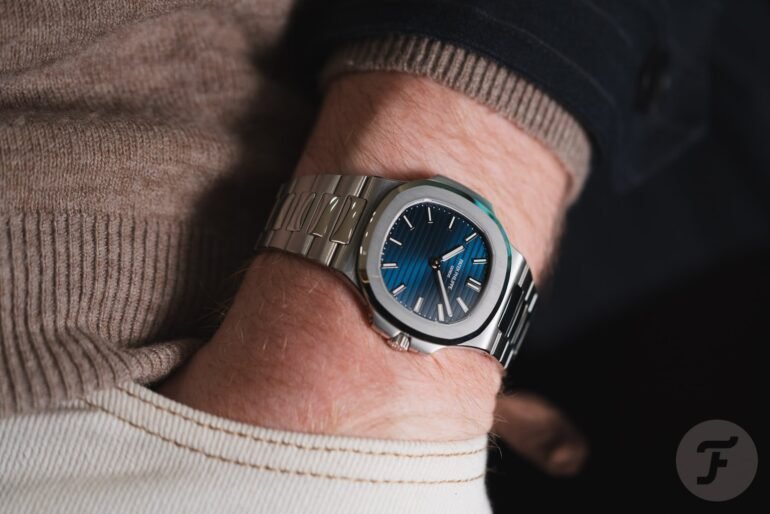
A surprise party is probably the last thing anyone turning 50 would want. Those celebrating five decades would rather be surrounded by loved ones who understand their wishes and enjoy a good dinner with a nice selection of wines. That’s likely what Patek Philippe had in mind when the iconic Nautilus reached its 50th anniversary. The four jubilee models feel familiar yet still festive in a way that suits the respectable age of this luxurious sports watch. Fratello got invited to the party and went hands-on with the Patek Philippe Nautilus 50th-anniversary watches, especially the two 41mm “Jumbos.”
How do you celebrate the birthday of a watch that, 50 years after its release, has grown into a myth? Calling the Nautilus an “icon” reflects the fact that waiting lists are endless and secondary-market prices reach triple the retail price, hence the term “myth.” The original Nautilus is the ref. 3700/1A “Jumbo,” a bold watch in every respect. Its nickname comes from the 40mm case (measured from 10 to 4 o’clock), which is even larger when including the “ears.” Its robust, integrated design and staggering price — around €3,000 at the time — caused a sensation. Such a price for a steel watch was unheard of; adjusted for today, it would be about €15,000. Patek Philippe even boasted in advertisements: “One of the world’s most expensive watches is made of steel.”
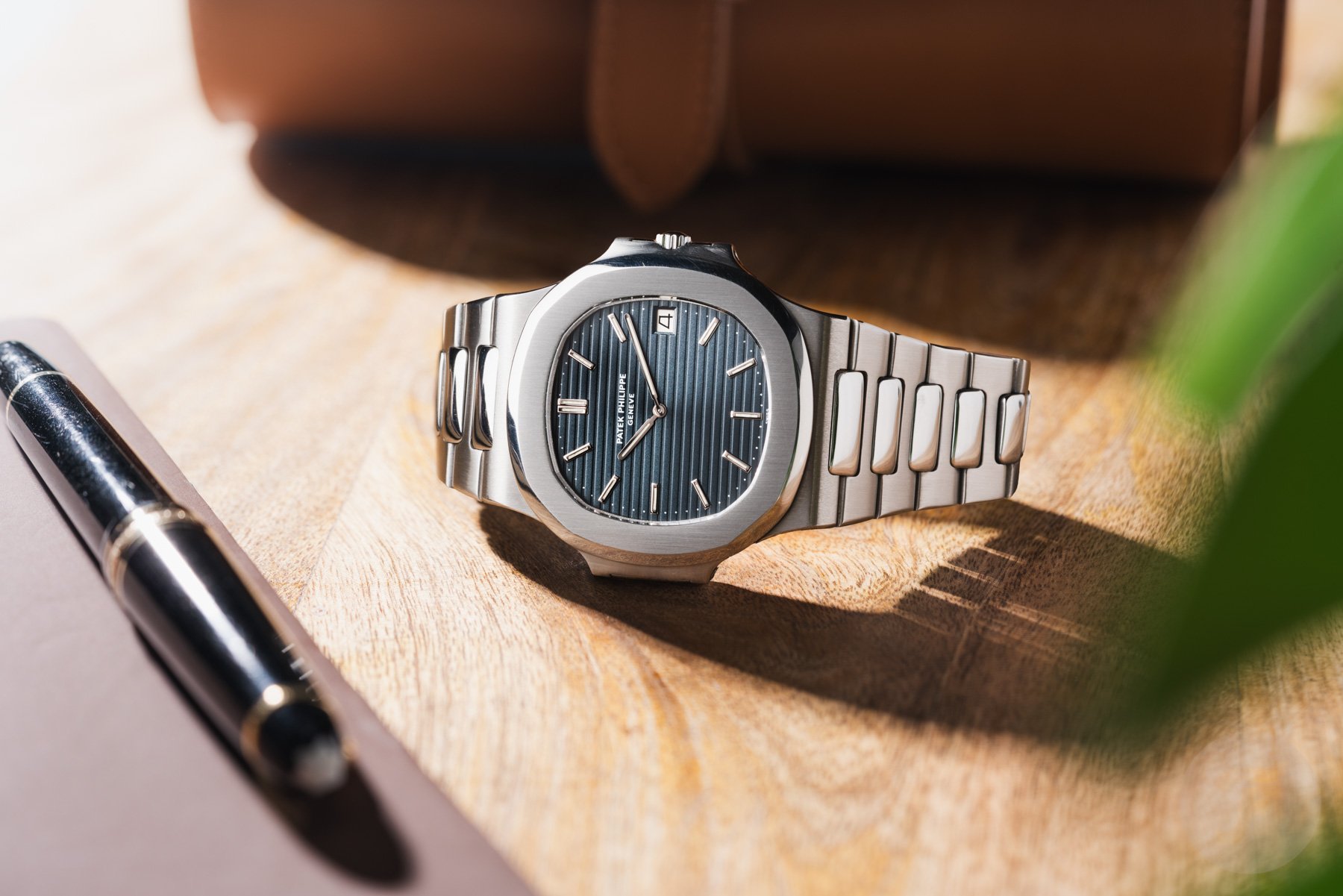
The original Nautilus ref. 3700/1A
Hands-on with the Patek Philippe Nautilus 50th-anniversary watches: First, a bit of background
The origins of the Nautilus are quite controversial. Allegedly, designer Gérald Genta sketched the rough design on a napkin in a few minutes during a watch fair in Basel, after spotting Patek Philippe executives in the same restaurant, and handed it over. His drawing resembled one of his earlier designs, the Audemars Piguet Royal Oak, introduced in 1972. That watch helped Audemars Piguet navigate the Quartz Crisis by positioning itself as the ultimate symbol of luxury. The Nautilus confirmed the success of that approach. The similarities between the two sports watches are striking: the Royal Oak, inspired by a diving helmet, and the Nautilus, inspired by a porthole, both debuted with ultra-thin automatic Jaeger-LeCoultre movements, integrated bracelets, and blue dials.
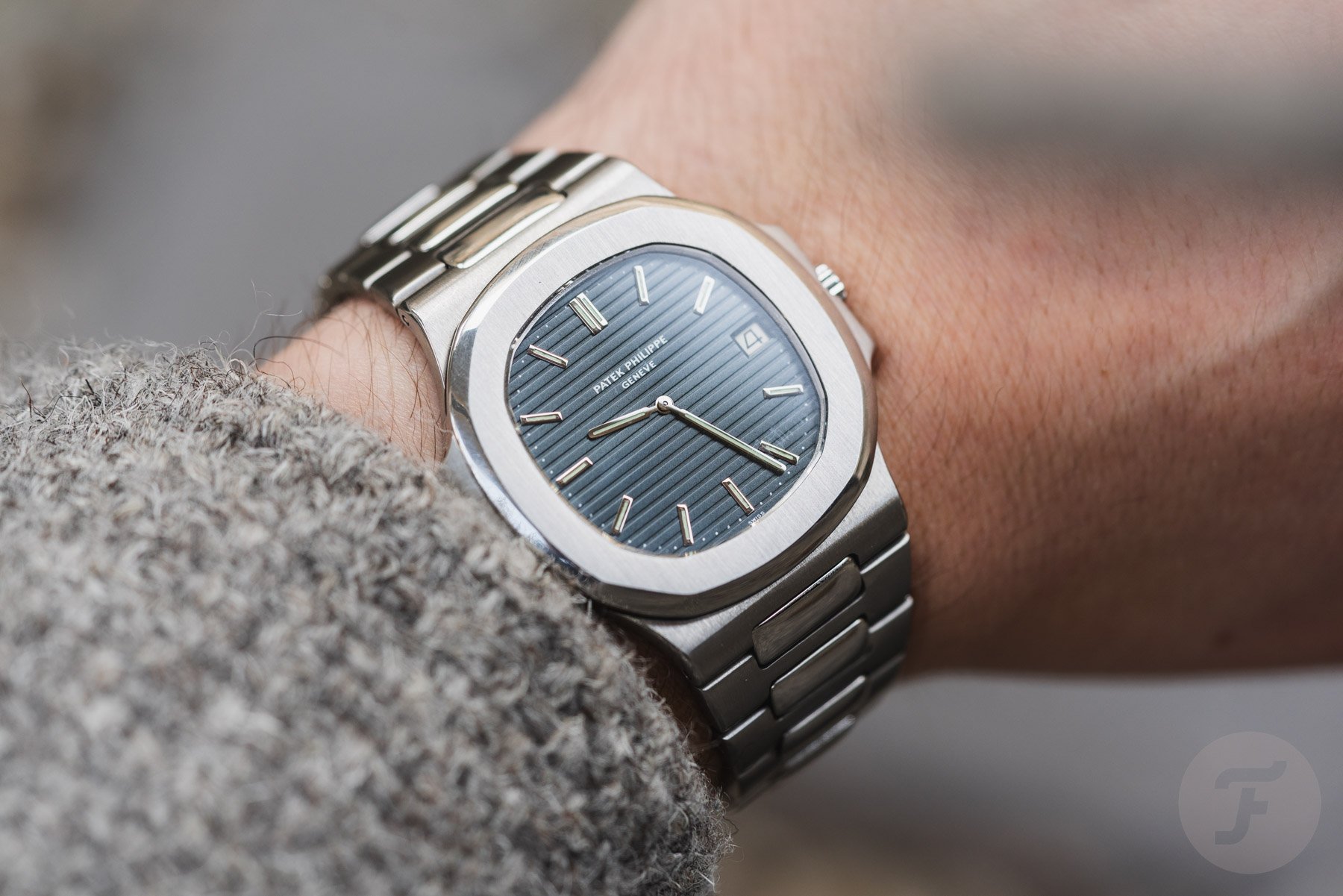
Nautilus ref. 3700/1A
Key features of the original Nautilus include its case and dial. The two parts of the case are joined by screws in the so-called “ears,” turning the porthole-inspired design into both an aesthetic and a practical construction. Because of this two-part case, the movement had to be inserted from the front, making servicing less convenient but allowing the watch — despite its automatic movement featuring a central rotor — to maintain a svelte 7.5mm profile. The result is a refined, cohesive, and supple integrated design.
The Nautilus’s recognizability also comes from its gray-blue dial with a “teak deck” pattern. The texture was crafted by hand, then given a subtle sunburst effect and a blue lacquer coating. Simple rectangular white gold hour markers contrast with rounded baton hands. It’s not just the characteristic case shape but also the small details that give the Nautilus its distinctive character and unmistakable look.
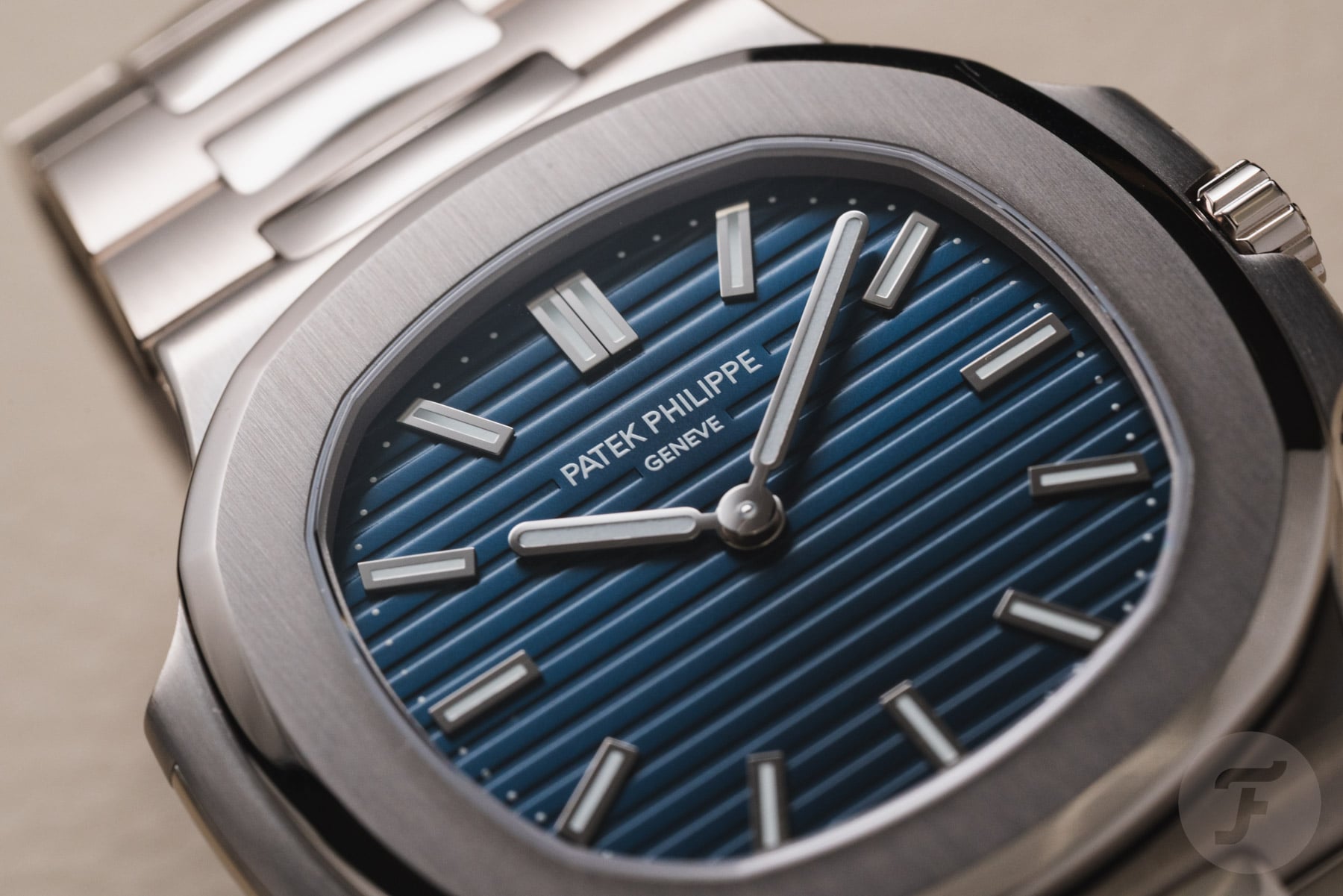
Nautilus ref. 5810/1G-001
Gold instead of steel
Patek Philippe decided to celebrate the 50th anniversary of the Nautilus ref. 3700/1A with three models that honor the original, plus a variant in line with the brand’s tradition of special table clocks. Interestingly, these special editions are not in the original alloy, stainless steel, but in more precious white gold and platinum.
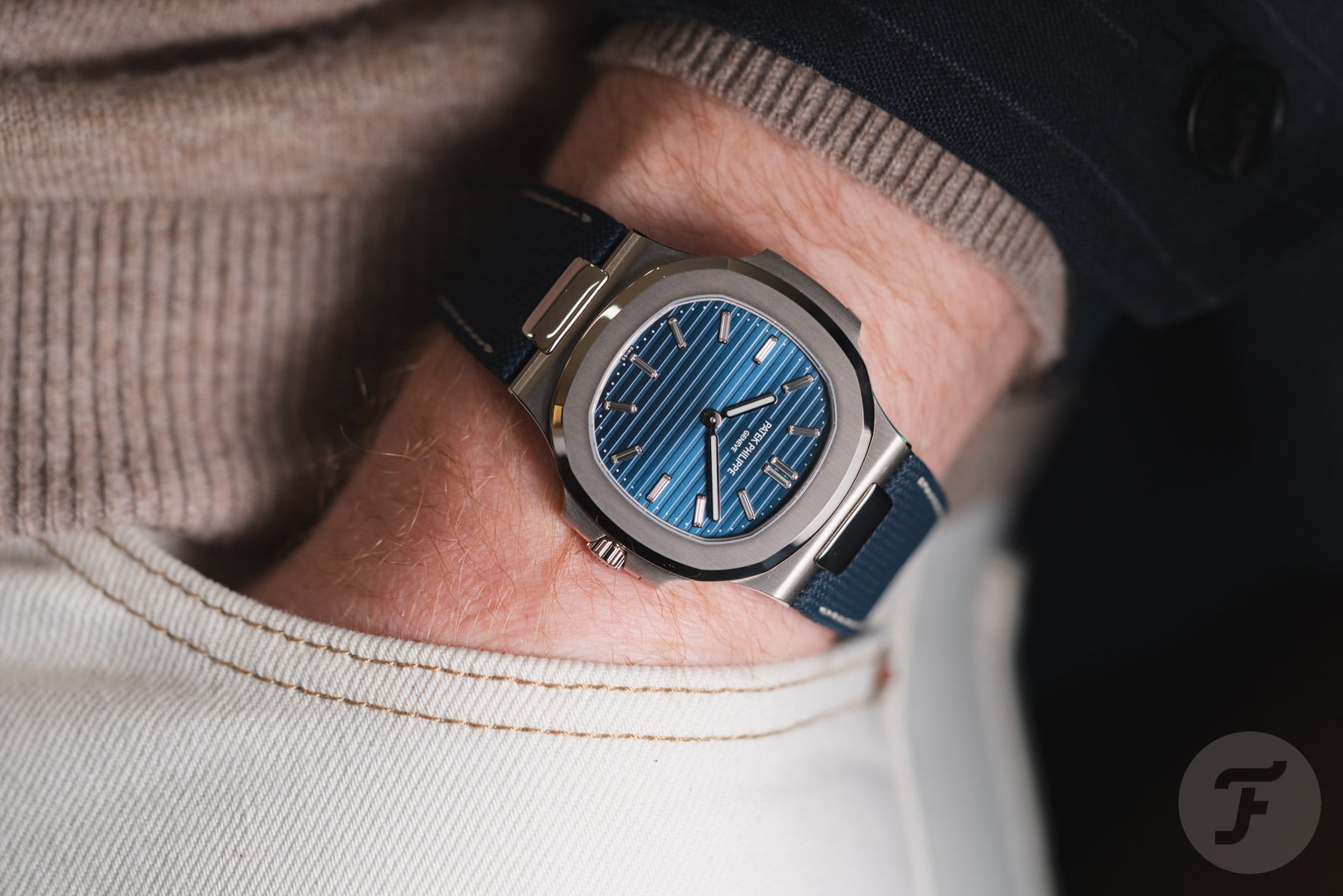
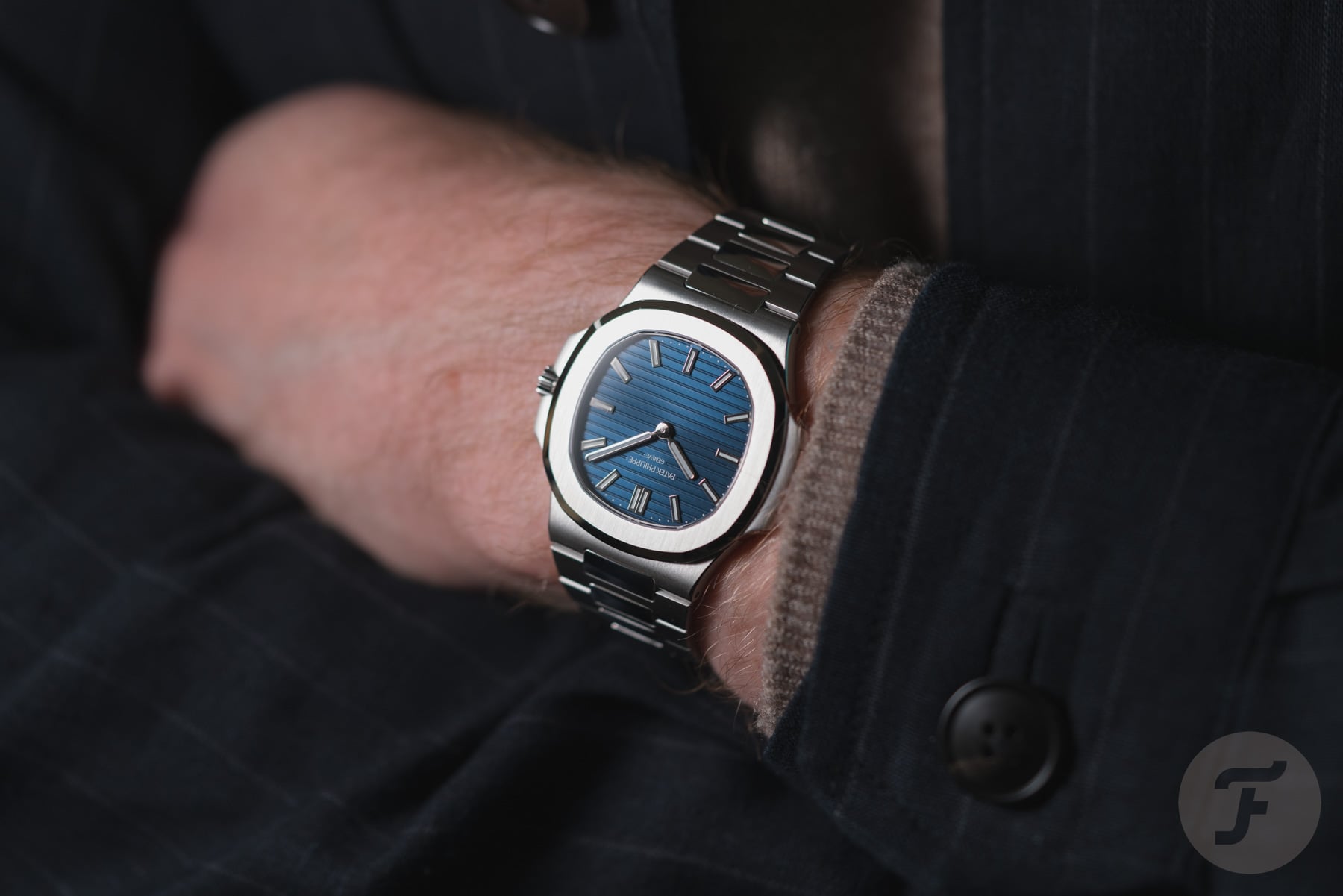
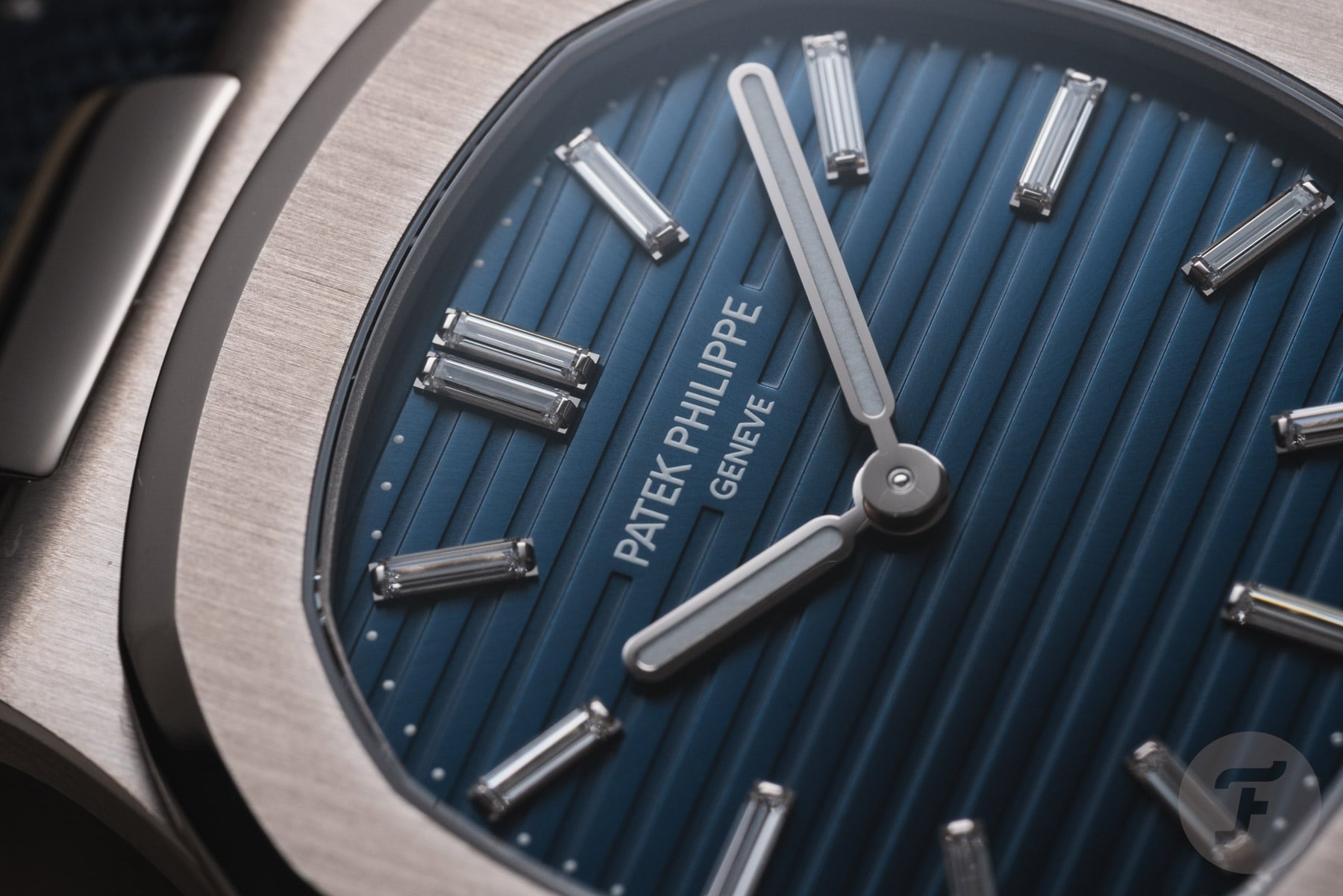
The ref. 5810/1G-001 (limited to 2,000 pieces / €88,400) features an integrated white gold bracelet, while the 5810G-001 (limited to 1,000 pieces / €70,000) comes fitted with a blue composite strap with a textile pattern, cream stitching, and a white gold folding clasp. The dials set them apart, as the former uses Super-LumiNova-filled indexes, while the latter features 13 baguette-cut diamond hour markers. The white gold 41 × 6.9mm cases of both “Jumbos” are identical, though, measuring a millimeter larger and 0.6 millimeters thinner than the original.
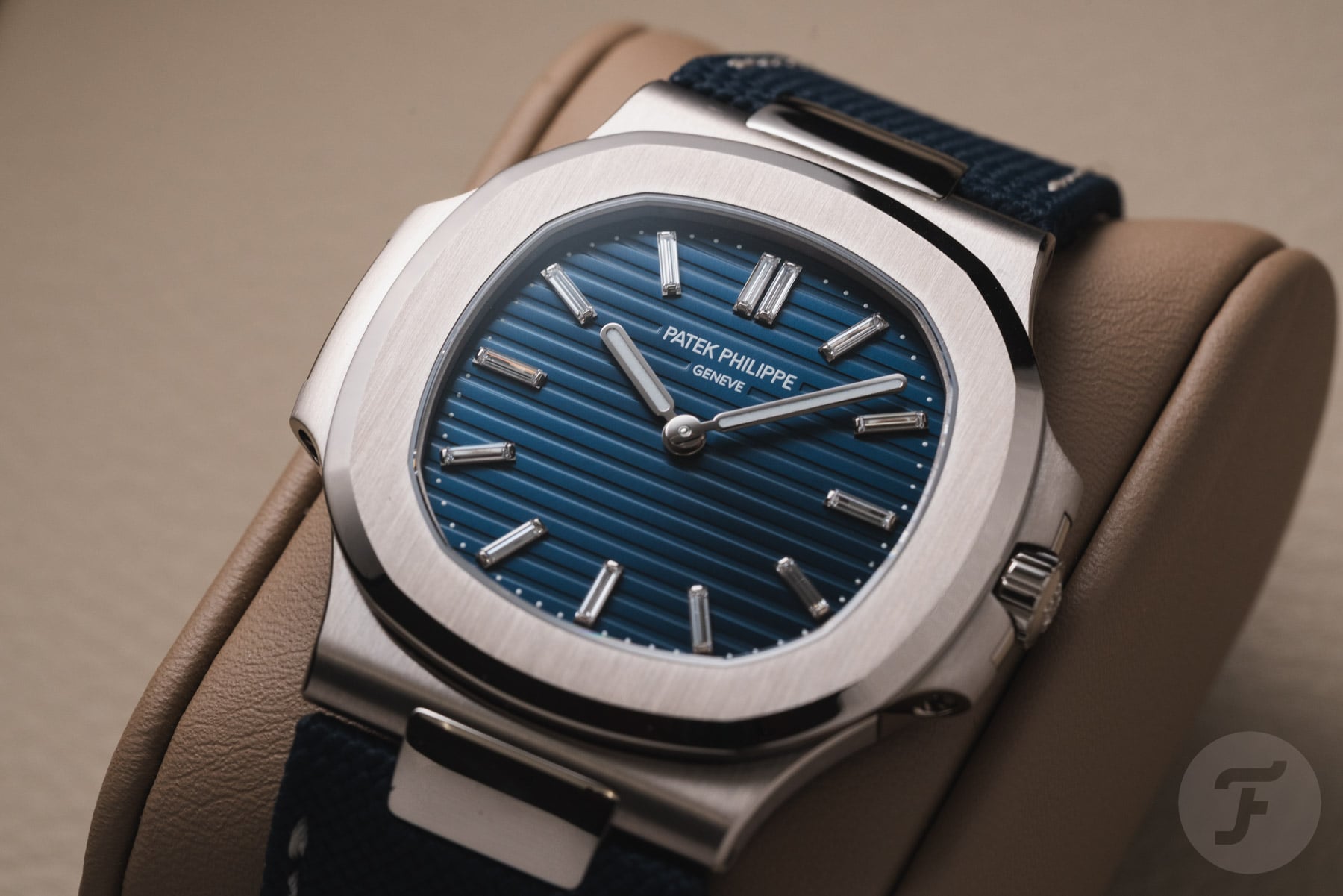
Nautilus ref. 5810G-001
This reduced thickness is due to a movement with a micro-rotor rather than a central one. The automatic caliber 240, visible through the case back’s sapphire display, features a 22K gold micro-rotor engraved with “50 1976–2026.” This 2.53mm-thick movement offers a 48-hour power reserve and includes a modern silicon balance spring. Unlike the original Nautilus ref. 3700/1A, the new white gold models have no date window. This change could be seen as an improvement. For some, the 3700 might be perfect and untouchable. Still, the watch has a somewhat odd configuration, including a date but no central seconds hand. Yes, it’s unusual, quirky, legendary, and more, maybe, but it is not perfect. The new models also lack a central seconds hand, and with the absence of a date window, it means the look is distinguished, calm, and even stately. If you ask me, it’s even borderline perfect.
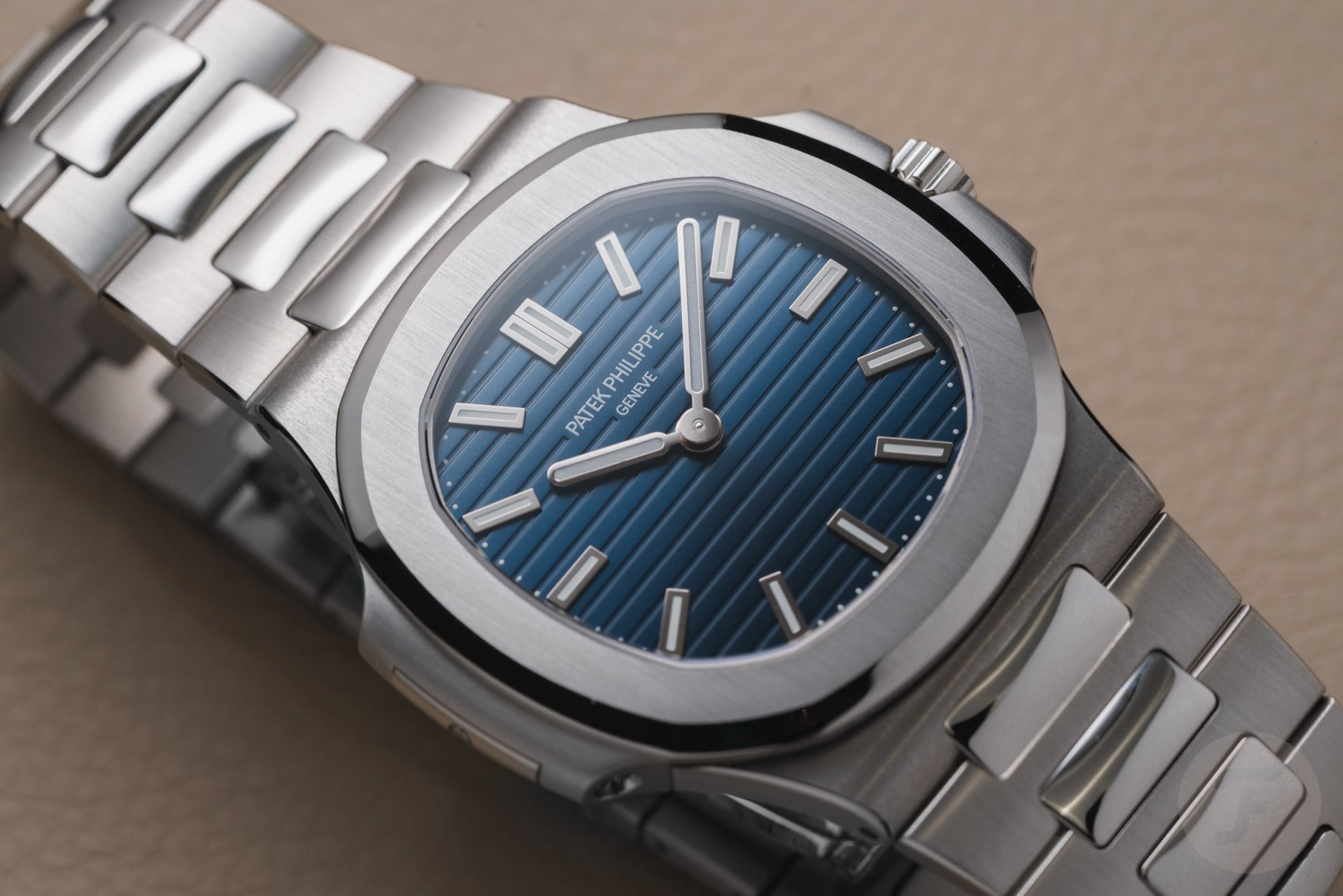
Nautilus ref. 5610/1P-001
Celebration with a diamond
Dimensionally, the new platinum 38 × 6.9mm Nautilus ref. 5610/1P-001 (limited to 2,000 pieces / €106,000) draws inspiration from the midsize Nautilus ref. 3800. That watch debuted in 1981 with a 37.5 × 7.5mm case.
Traditionally, Patek marks platinum cases with a diamond. Normally, the gemstone is placed discreetly between the lugs at 6 o’clock. But since the Nautilus has an integrated bracelet, the diamond needed to go somewhere else. Patek moved to 9 o’clock, in a slightly less discreet spot. Like the white gold versions, this model also uses the caliber 240 and, therefore, has no date or central seconds, resulting in a clean, balanced look. Its blue dial with horizontal Nautilus embossing gleams thanks to a sunburst finish and blue PVD coating, and its white gold hour markers and hands are filled with Super-LumiNova.
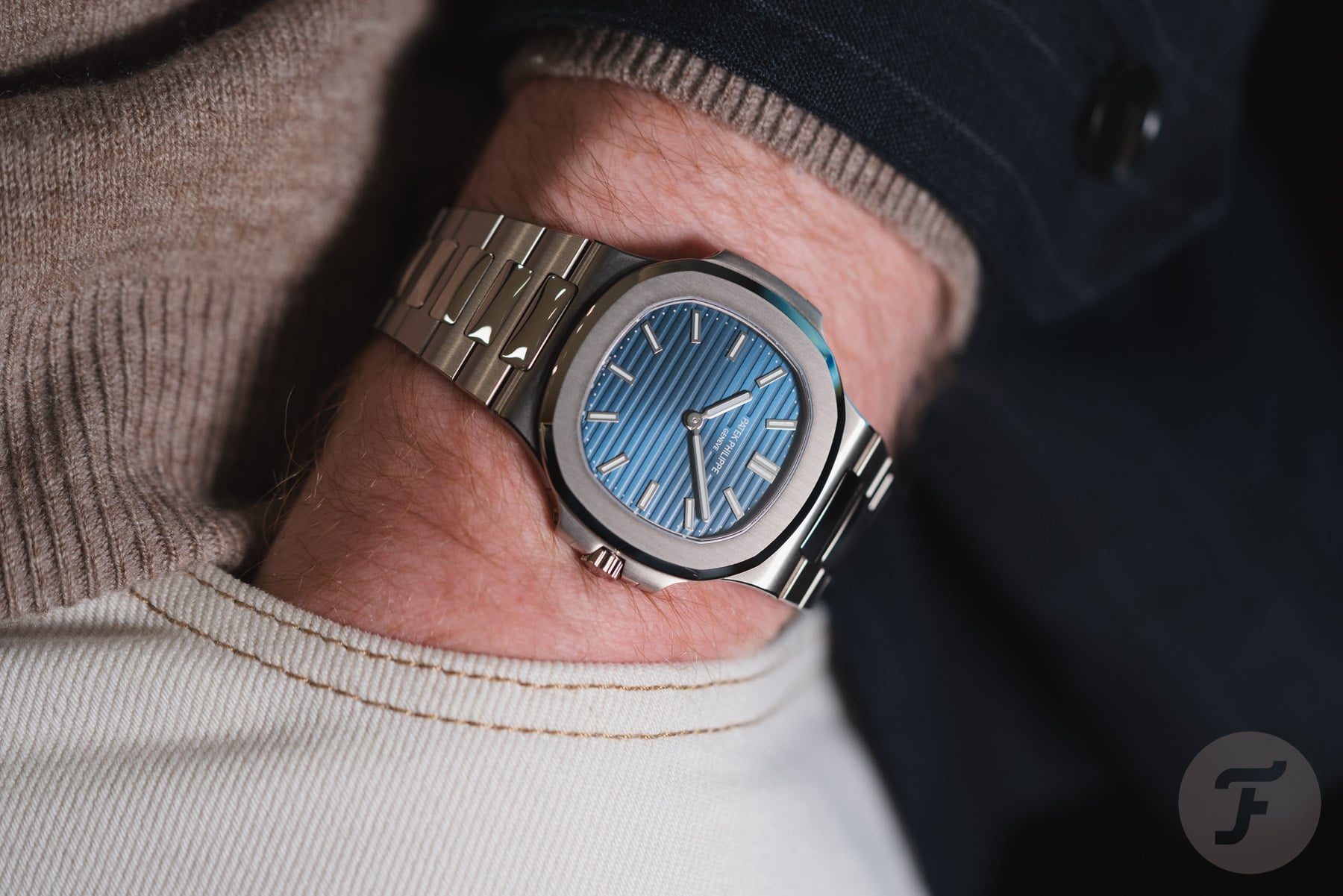
Nautilus ref. 5810/1G-001
Nautiluses on the wrist
We didn’t go hands-on with the ref. 958G desk clock/pocket watch with its 50.65mm white gold case, but we did with the other three during Watches and Wonders 2026. First up was the ultra-costly and heavy ref. 5610/1P-001. It’s hard not to feel impressed by this watch. The weight, in combination with the looks and the finishing, is otherworldly. It also sits nicely on the wrist, showing a bit of bracelet.
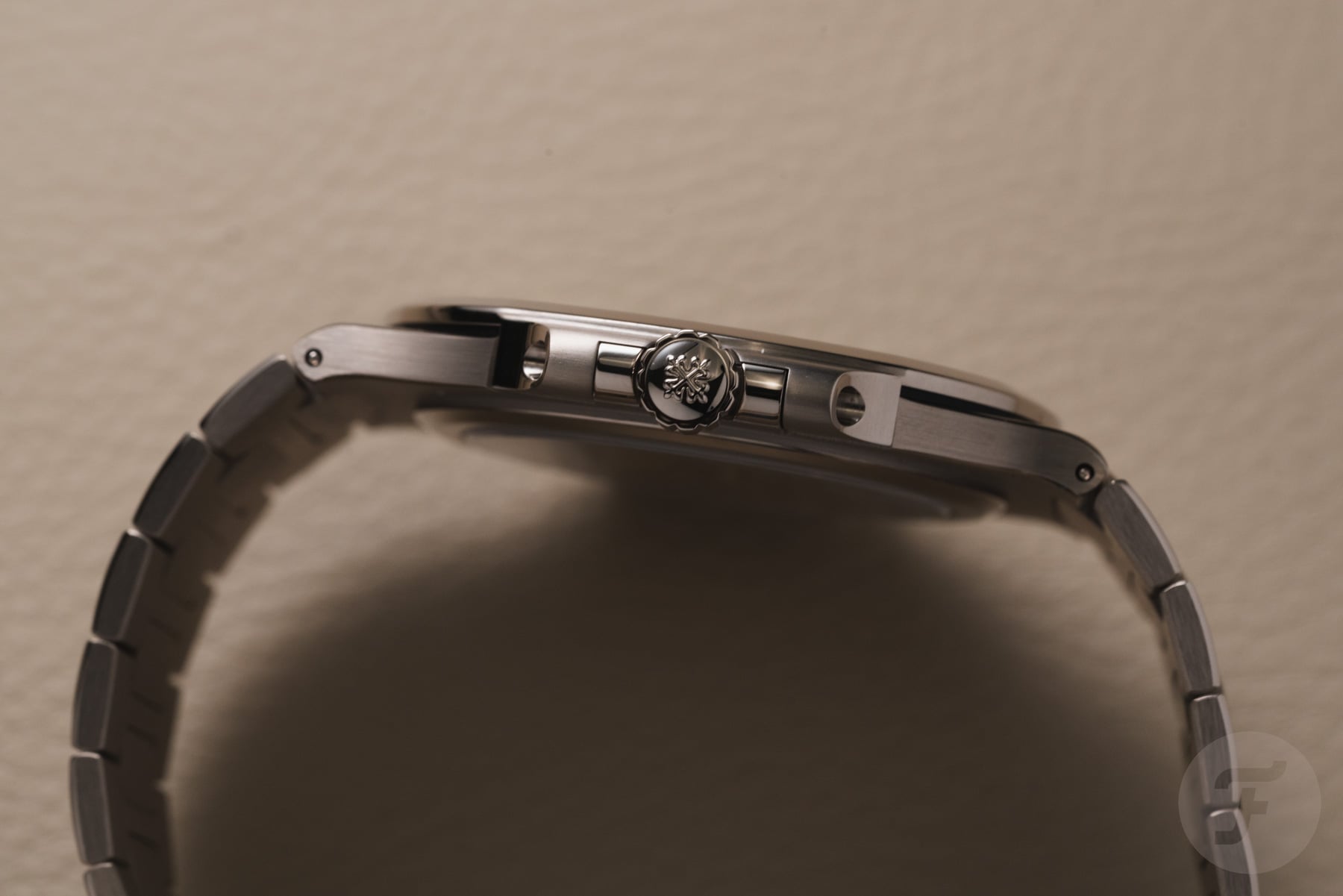
Case profile of the Nautilus ref. 5810/1G-001
But as soon as you pick up the ref. 5810/1G-001 “Jumbo” with its gold bracelet, the mood switches. And that’s because of the proportions. Both Nautiluses have a mere 6.9mm thickness, and when you combine that with a 41mm-diameter case, it arguably looks better-proportioned. The sleek lines are longer and look more impressive than when combined with a 37.5mm case. So, is the ref. 5810/1G-001 the winner, then? Hold your horses; there’s also the ref. 5810G-001 that comes on a blue composite strap with textile pattern and contrasting cream stitching.
Nautilus ref. 5810G-001
Apart from the case material and the movement inside, both white gold 41mm models feature the unanimously acclaimed no-date, two-hand dial layout. The differences are the strap and the hour markers. My vote goes to the ref. 5810/1G-001, the bracelet version. First of all, it aligns with the original design. A Nautilus on a strap is an afterthought, an addition to the collection, a diversifying derivative. When celebrating a 50th birthday, it’s all about the essence, the roots, the origin, so the version on the bracelet has my preference. Also, the contrast stitching on the strap doesn’t do the Nautilus any favors, in my opinion.
Nautilus ref. 5610/1P-001
Configuring the perfect Nautilus
The “Jumbo” on a bracelet might have my preference, but it isn’t perfect. The baguette diamond indexes on the strap-equipped version are so festive without screaming “party” at the top of their lungs. I guess 0.39 carats of diamonds is the sweet spot. The way they sit against the familiar blue-striped background and interact with the rounded, luminescent white gold baton hands is a class act.
The baguette diamond indexes on the ref. 5810G-001
If only that diamond-set dial were available on the 50th-anniversary Nautilus with a bracelet. But it isn’t. Creating this version means buying them both and switching out the bracelet and the strap, meaning you’d be the proud owner of two limited-edition Nautilus models — one to wear and enjoy with the subtle luster of the diamond indexes and the other to keep as an investment. Or you can use the one on the sporty strap as a weekend “beater.” This strategy will set you back a cool €158,400. It could be worth it, given that we’re looking at limited-edition Nautiluses celebrating an important anniversary. Losing value will most likely not apply to this very handsome and tasteful set of birthday watches.

Two questions remain. Are these Nautilus models timeless or ageless? And do you think Patek should also have launched a steel version with a different color dial, like gray, green, or white, or would that have been too much of a surprise party? Please leave your answer in the comments section below. Thanks.
Lex Stolk
2026-05-02 09:00:00