
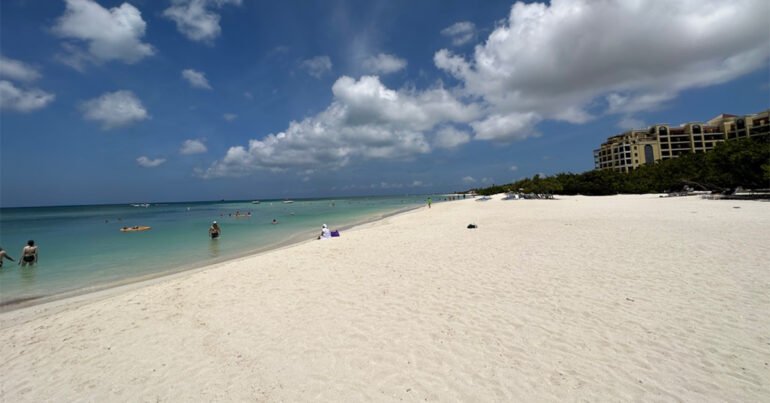
White sand that stays cool underfoot. Water so clear you see the bottom without stepping in. In Oranjestad, rows of coral and pastel buildings line the harbor, with Dutch gables and shaded streets just a few minutes from the airport. Up the coast, Palm Beach runs in a long, active stretch of perfect white coastline — beach bars open to the sand, catamarans anchored just offshore, music carrying across the sand. On the island’s southern edge, Baby Beach curves into a wide, shallow lagoon, the water calm enough to wade out for hundreds of feet.
You can cross the island in under an hour. You can be on a beach minutes after landing. You can switch from one side of the island to the other without planning your day around it.
JetBlue is adding more access to Aruba — and it means getting there will be easier than ever.
The Flight Change
JetBlue will expand its Fort Lauderdale to Aruba route to daily service beginning July 9, adding four additional weekly frequencies, Caribbean Journal has learned.
The route, which had operated three times a week, will now run seven days a week between Fort Lauderdale-Hollywood International Airport and Queen Beatrix International Airport in Aruba.
That change increases both capacity and flexibility, turning the route into a consistent, everyday option from South Florida.
What Daily Flights Actually Change
A daily schedule removes the constraint that shapes most Caribbean trips: limited departure days.
You can leave on a Tuesday. You can return on a Friday. You can extend your stay by a day without rebuilding your entire itinerary. You can book around hotel availability instead of airline timing.
From Fort Lauderdale, the flight time is just over two and a half hours. It’s short enough to treat Aruba as a quick trip, long enough to feel distinct from Florida.
That combination — short flight, daily service — changes the way the destination fits into a travel calendar.
How to Discover Aruba
Aruba is easy to explore and quick to get around.
From Queen Beatrix International Airport, you’re in the hotel zone in about 10 minutes. There’s no long transfer, no extended drive before you reach the coast.
That puts you on the beach almost immediately.
The island itself stays compact. The distance from Palm Beach to Baby Beach is under an hour by car. You can leave your hotel, drive to the other side of the island, and still be back in time for dinner.
That ease shows up in how people spend time here. You don’t stay in one place all day unless you want to. You move between beaches, restaurants and different parts of the coastline without turning it into a full-day plan.
Where to Stay on the Island
The Embassy Suites by Hilton Aruba Resort has, the biggest standard rooms on the island, with true two-room suites that give you space to spread out — particularly if you’re traveling with family or staying more than a few nights. I honestly wish more Caribbean hotels were like this — the space and comfort are pretty hard to match for families.
The location is solid with underground tunnel access to the beach and reserved palapas already set up. You get free daily breakfast, which adds up over a longer stay, and the pool is one of the larger ones in this area. The main restaurant, Brickstones Kitchen & Bar, is a solid option when you don’t feel like going out.
At the Boardwalk Boutique Hotel Aruba, the appeal is how much quieter it feels than everything around it. You’re staying in individual casitas, each with a full kitchen and private outdoor space, set inside a former coconut plantation.
It’s a short walk to Palm Beach, and the hotel has its own reserved beach area with loungers, but you’re far enough removed that you don’t hear or feel the resort strip when you’re back on property. There are two smaller pools and a casual on-site option at The Coco Café, but most people use this as a place to reset between time on the beach and going out at night.
The Bucuti & Tara Beach Resort is one of the best beachfront stays on Eagle Beach, especially if you want to be directly on the sand. This is an adults-only hotel, and the setup is simple: wide beach, plenty of space between chairs, and no crowding at any point in the day.
Rooms are steps from the water, and you can go from your door to the beach in under a minute. The main restaurant, Elements, is right on the ocean, and the SandBar keeps things easy during the day. It’s the kind of place where you can stay put for most of the trip and not feel like you’re missing anything.
What You Do During the Day
What You Do
Aruba works best when you split your time between the beach (the beaches are phenomenal) and everything else, because the island is small enough that you can actually cover a lot of ground without overplanning.
Start in Oranjestad, where the streets near the harbor are lined with shops, local boutiques and smaller storefronts mixed in with the larger retail spots. It’s an easy place to walk for an hour or two, especially later in the day, and a few blocks inland you’ll find quieter streets with cafés and small art galleries.
That’s also where Aruba’s craft distilling scene has started to take shape. At Pepe Margo Distillery, set inside a restored historic house, you can walk through the space and taste small-batch rum and gin made on the island. It’s a quick stop, but one of the few places where you’re seeing something produced locally.
From there, drive south to San Nicolas, widely considered the island’s cultural capital. Entire blocks are covered in large-scale murals, with work from both local and international artists. You can walk the area in under an hour, stepping into small galleries and shops along the way. It’s a different side of Aruba, less built around resorts and more focused on local art and everyday life.
A few minutes further, you reach Baby Beach, where the water stays shallow across most of the bay. You can walk out a long way without losing footing, and it’s one of the easiest places on the island to get in the water without worrying about conditions.
Nearby, the beloved local stop Zeerovers is one of the most reliable stops for lunch. You order at the counter — fresh fish or shrimp — then sit outside by the water while it’s prepared. It’s quick, casual and consistently good.
If you want something more active, head to the east side of the island. The coastline changes quickly — no resorts, rougher water, steady wind — and it’s where most ATV and off-road tours run. Inside Arikok National Park, you’ll find caves, rocky coastline and the natural pool, all reachable by dirt roads and guided routes.
That’s the rhythm that works here. Beach in the morning, explore in the afternoon, dinner back near your hotel — all without needing to plan too far ahead.
Beach Bars
Aruba’s beach bars aren’t all in one place, and that’s part of the appeal. You can hit a few very different ones in a single trip without going far.
Near the airport, Surfside Beach Bar is one of the easiest first or last stops on the island. It’s right on the water, with tables in the sand, steady breeze, and a clear view of planes coming in low over the beach. The menu leans simple — cocktails, seafood, casual plates — and it’s the kind of place where you end up staying longer than planned, the perfect spot for a cold Bright.
Up the coast at Arashi Beach, the setup is more low-key. The beach itself is one of the better swimming spots on the island — calm water, good visibility — and the small beach bar there keeps things simple with drinks, snacks and shaded seating.
Back toward Palm Beach, you still have places like Bugaloe and Moomba, where the energy builds throughout the day and into the evening, with music, crowds and a more social feel.
The difference across Aruba is how easy it is to switch between these. You can start somewhere quiet like Arashi, stop at Surfside for a late lunch, and end up at a busier bar near Palm Beach — all in the same day without needing to plan it out.
Chef’s Tables
Aruba has quietly become one of the Caribbean’s best islands for chef’s table dining, and it’s something you need to book in advance because most of these spots are small and fill up quickly.
At Ever Restaurant in Oranjestad, you’re getting a multi-course tasting menu with limited seating and the kitchen working right in front of you. The pacing is tight, the presentation is precise, and the focus is on technique and detail throughout the meal.
At 2 Fools and a Bull, it’s even more intimate — just a handful of seats, a fixed menu, and the chefs cooking and walking you through each course as it’s served. It’s one of the toughest reservations to get on the island, and for good reason.
This is a different side of Aruba’s dining scene — smaller rooms, fewer seats, and meals that are planned start to finish. If you’re coming for more than just beach days, it’s one of the better things to build a night around.
Why JetBlue Is Expanding This Route
JetBlue has been building out its Caribbean network from Fort Lauderdale, positioning the airport as a key departure point for leisure routes.
Aruba remains one of the most consistent destinations in the southern Caribbean, with strong demand tied to its weather, accessibility and hotel inventory.
Moving to daily service allows the airline to capture that demand across the full week, rather than concentrating it on specific travel days.
It also adds more total seats into the market, increasing availability during peak periods.
Why It Matters for Aruba
Aruba depends on steady airlift from the United States.
Frequent, reliable flights support hotel occupancy along Palm Beach and Eagle Beach and keep a consistent flow of visitors moving through the island’s tourism network.
Daily service from South Florida strengthens one of the island’s closest and most important gateways.
It also increases the number of arrival windows each day, spreading passenger flow more evenly and reducing pressure on peak travel days.
When It Starts
The expanded schedule begins July 9, Caribbean Journal has confirmed.
That places the change at the start of the late-summer travel period, with continued demand into the fall.
With daily flights in place, Aruba becomes easier to reach on short notice, easier to plan for flexible stays and easier to fit into a wider range of travel windows.
For travelers coming out of South Florida, it turns one of the Caribbean’s most consistent beach destinations into a trip you can take on your schedule
Prices on This Route
Fares are pretty low in July. I found prices of around $357 roundtrip for the just-under 3-hour flight for a July 10-17 itinerary. That’s also significantly lower than the competing Spirit route, which is showing fares of $873 on the same dates, based on my query on Google Flights.
Karen Udler
2026-04-03 02:02:00