
Happy birthday to all you Piscean cusps (if you’re into that sort of thing), and congrats again, Ballers, for slogging through another week. In fact, not even another week—you’ve made it through all of winter, as spring is, as of today!—is upon us. Celebrate accordingly.
Scorekeeping last week’s picks, the quartz Vacheron Constantin 222 (ref. 46003) went for 11,000 CHF, and the Corum Golden Bridge will be auctioned tomorrow. The Sonny Crockett 18k Ebel ref. 8134901 sold for €4800, the Yema Yachtingraf for €4100, and one of the Rallyes sold for (only!) €1350. Last week’s BAL was published before the auction for the Girard-Perregaux 9034 Playboy/Moonwatch closed, which sold for $3626.
Strays
As I’ve noted over the last few weeks, there are more watches than I can reasonably cover with individual write-ups, but it seems a shame to let them go unnoted. So I’m proposing a new category for BAL: Strays. These’ll be watches that merit a look, but for whatever reason didn’t hook me enough to dive much deeper.
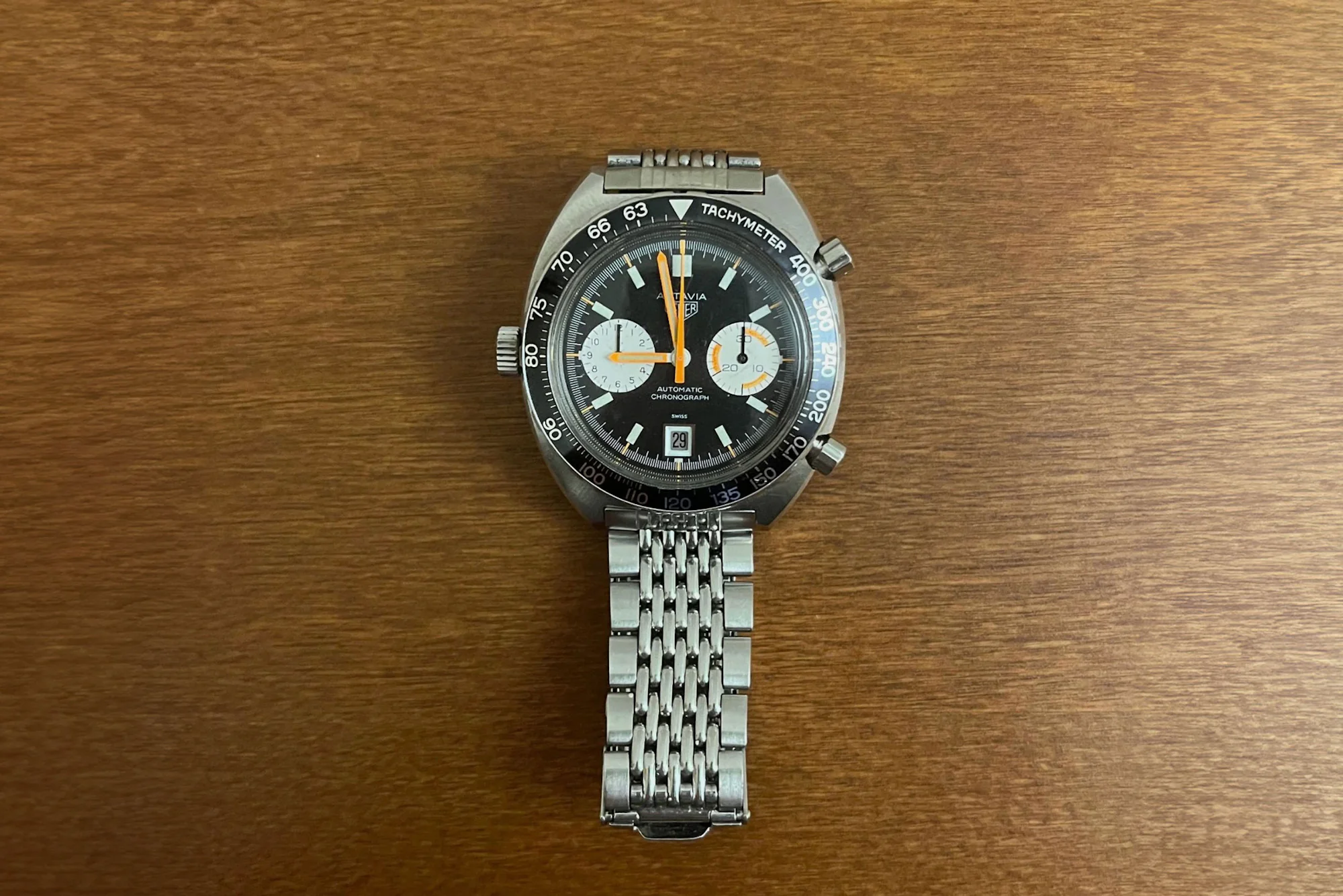
Here’s a vintage Heuer Autavia “Orange Boy” which comes on its original Gay Frères bracelet and with its original box (and which is being sold somewhat under duress—make sure to read the item description), and if you’re into 1163 Autavias but want a bit more splash, perhaps this Siffert is more your speed. I’m not much of an Omega Flightmaster guy, but if you are and you’ve been hankering for one that comes with its original, rare box, have at it. If you’re into watches with a bit more funk (friend: welcome), here’s a vintage ZRC diver with a dial that’s gone wonderfully tropical; here’s an excellent UG Polerouter Sub; and here’s a Tudor 7032/0 “Monte Carlo,“ which also comes with its original box. If you’re in the mood for something much more design-driven, here’s a lovely Pierre Cardin “Chauffer” (ref PC109), and if you’ve been aching for a whole lot of watch (and box and papers), your Rolex 6542 GMT awaits.
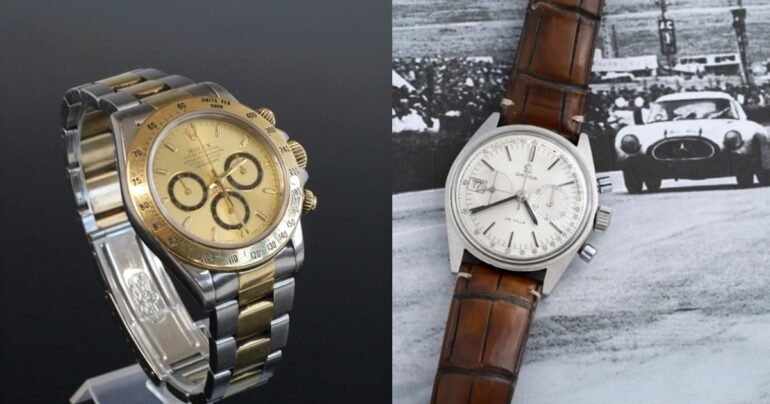
Rolex Daytona ref. 16523 “Inverted Six”
Daytonas are tricky. Each phase—the manual-wind classics, the Zenith era, the contemporary in-house-movement period—has its fans and detractors, plus the model is so well known and has been so well covered that writing about it feels a bit like writing about the Mona Lisa or Star Wars, objects so culturally ingrained it’s hard to even find a way to make them visible.
One way to think about Daytonas is that, more than any other model, the crown’s Cosmograph and its subtle changes over time have helped shape and structure contemporary watch collecting. While each classic reference—from Speedmasters to Carreras to Subs—has changed over time, the Dayonta is in a class by itself in terms of incremental changes year in and year out. Think of the details, the small shifts: screw-down or pump pushers. Black or aluminum bezels and the number of hashmarks therein/on. Consider just the minute esoteric dial elements, only those conversant know, from “Floating Cosmograph” to “Sotto”/RCO to “Patrizzi.” The good old Speedmaster has plenty of references, but features nothing like the cornucopia of various iterative (Mk1, Mk2, etc.) dials for each reference a Daytona has.
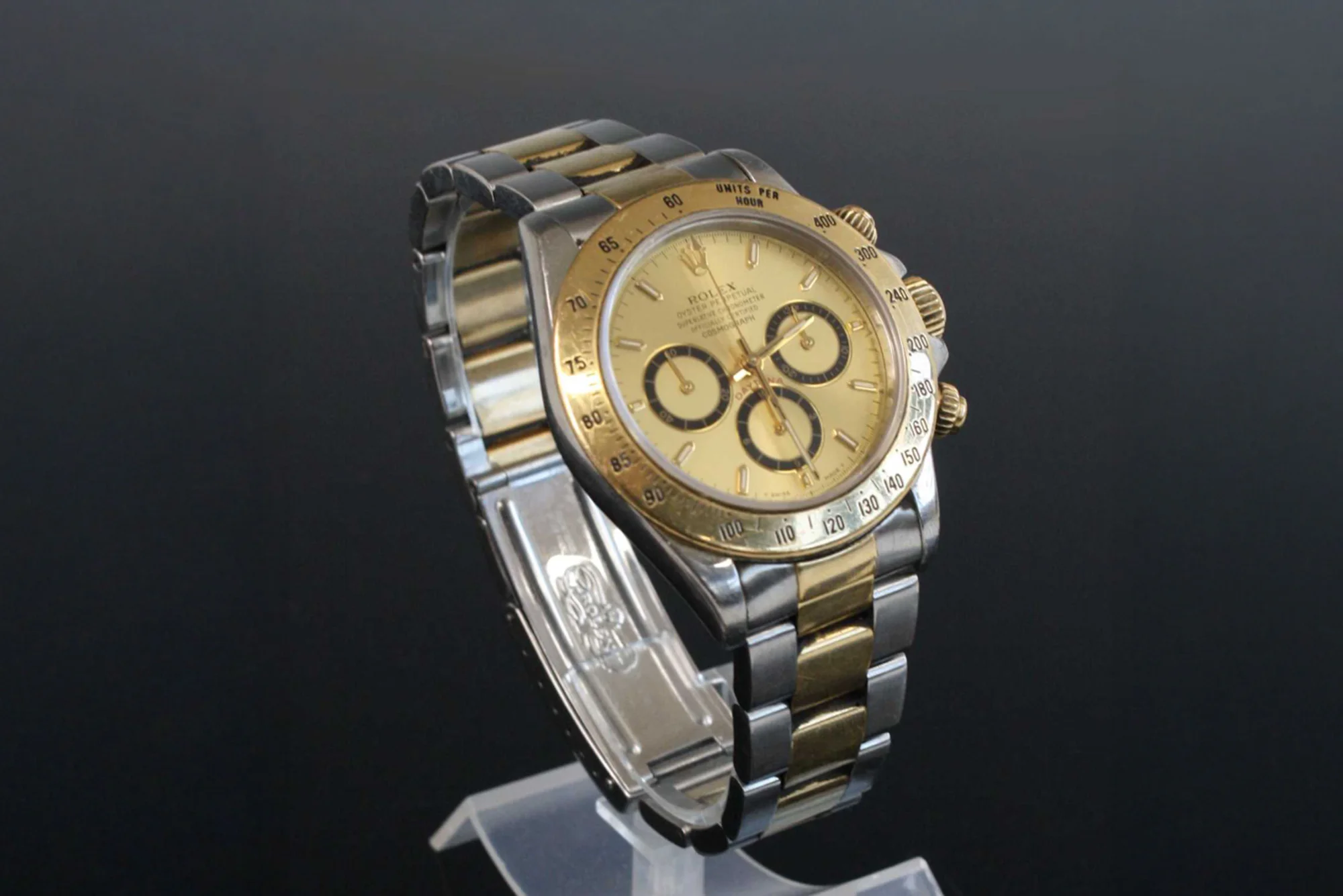
The five-digit-reference Daytona (ref. 16520), introduced in 1988, changed the Daytona significantly—beefing up the case from 37 to 40mm, adding crown guards, swapping the domed acrylic crystal for a flat sapphire, and, of course, upgrading from a manual-wind movement to an automatic caliber based on Zenith’s El Primero. Along with all those changes, the early dials—from ’88 to 1994—also featured an ‘inverted 6’ in the hour totalizer, such that the 6 is printed as a 9. I personally find this particular detail almost impossibly sweet: for six years, they printed dials where the 6 was a 9!
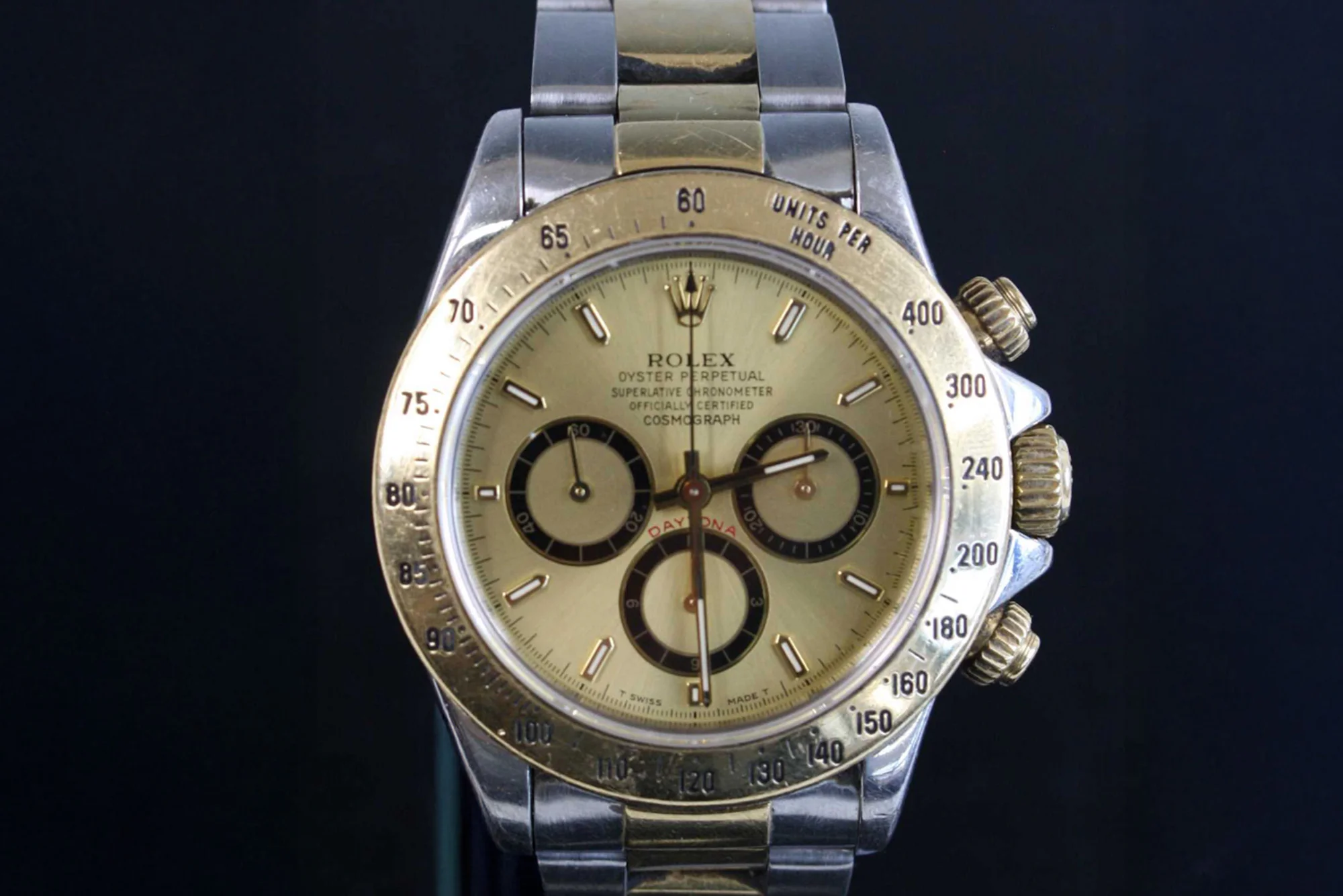
The watch available here—1050£ at the time of writing—is a two-toned reference 16523 that looks to have had a dignified existence since its creation in 1991 (it has an N serial). Showing modest wear, the watch comes not only with the box and papers, but also with a letter from Rolex noting that: a) the watch was serviced in September of ’98; and b) after the service, one of the automatic winding bridge screws became loose, which was addressed two months later. There are, of course, hundreds of other variants of Daytonas to consider, but if you’re looking for a wearable, full-set, inverted 6 early 90s Daytona, you could certainly do worse than this watch.
Cartier Tortue Monopoussoir ref. 2356
This watch merits inclusion both for its horological heft and for the unlikeliness of where it’s being sold. If nothing else, be aware that even in 2026, a Cartier Tortue can appear at Goodwill (in fairness, the Goodwill is in Ventura County, so).
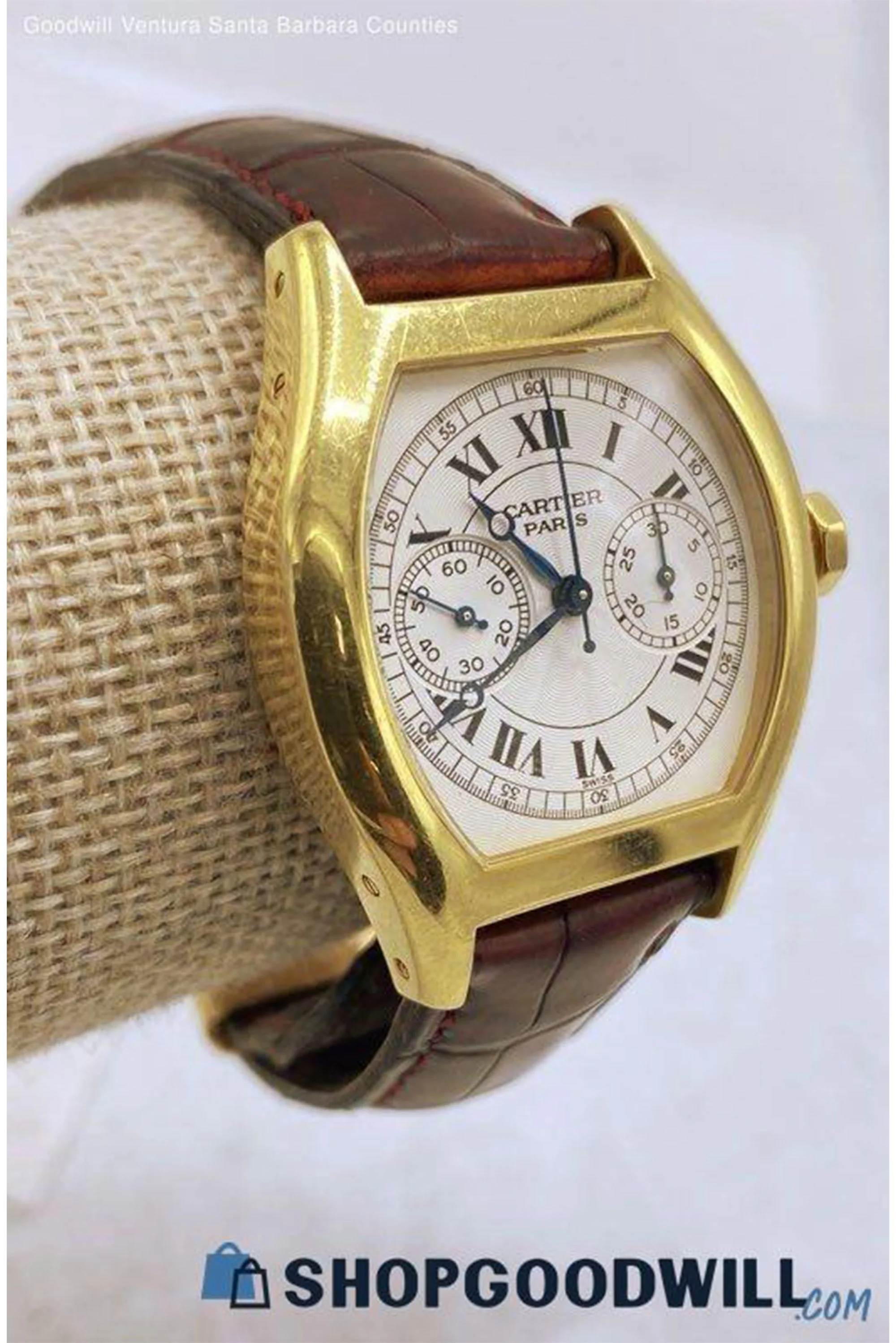
The Tortue’s been refreshed and rereleased a few times since its introduction in 1912 (most recently in 2024), and this particular version is from the 1998 iteration, which has plenty to recommend it. For most of us, the most exciting aspect is probably the movement, and specifically the watchmakers responsible for its creation: François-Paul Journe and Denis Flageollet.
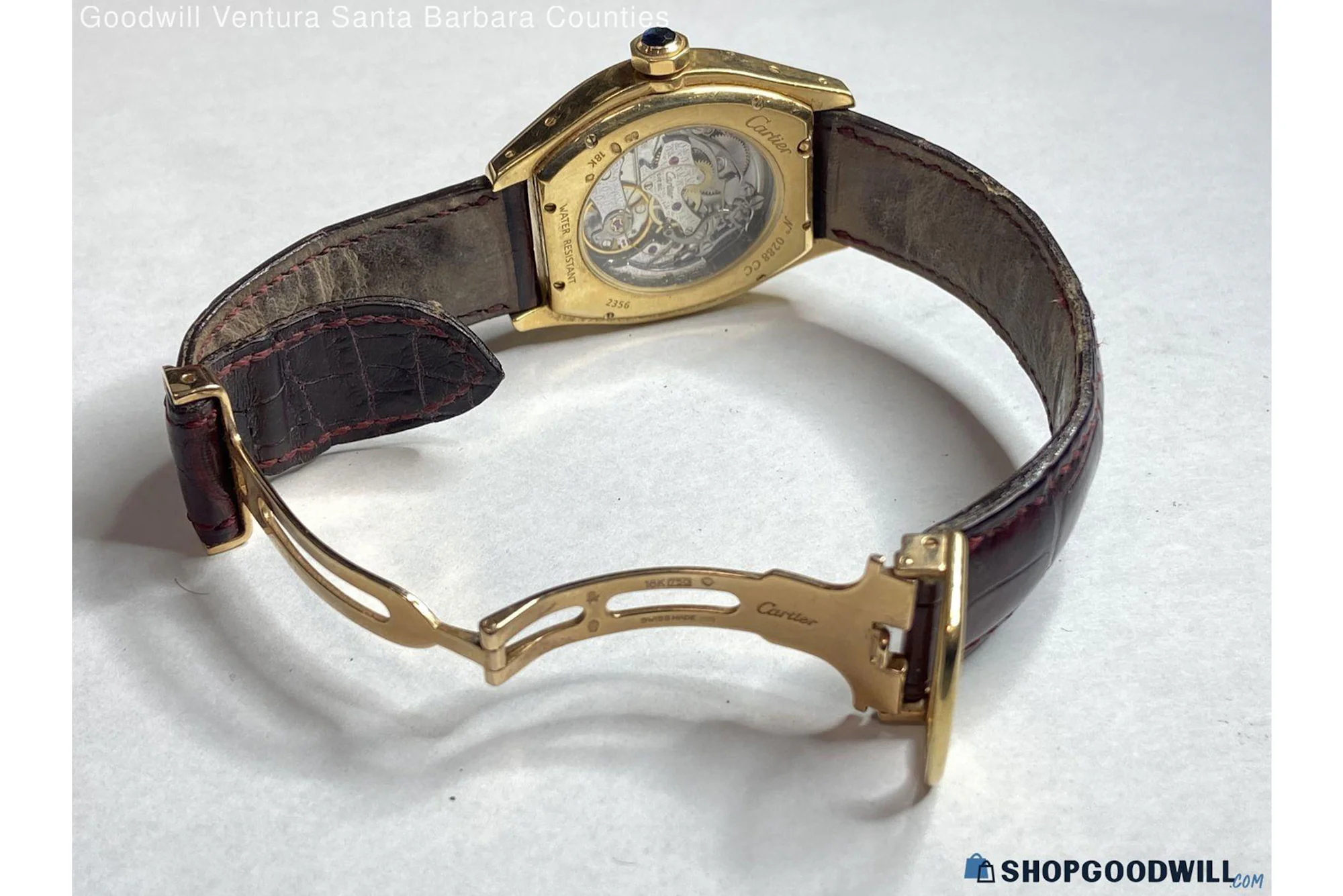
The two of them had by then spent nearly a decade together, along with Vianney Halter, at Techniques Horlogères Appliquées (THA), a workshop they’d founded in 1989. Of the movements and designs they developed and launched at THA, certainly the most notable, or at least most well-known, is the one found in this watch, which movement (the Cartier 045MC) would be something Mr. Flageollet would revisit when he left THA in 2002 to start De Bethune (ahem).
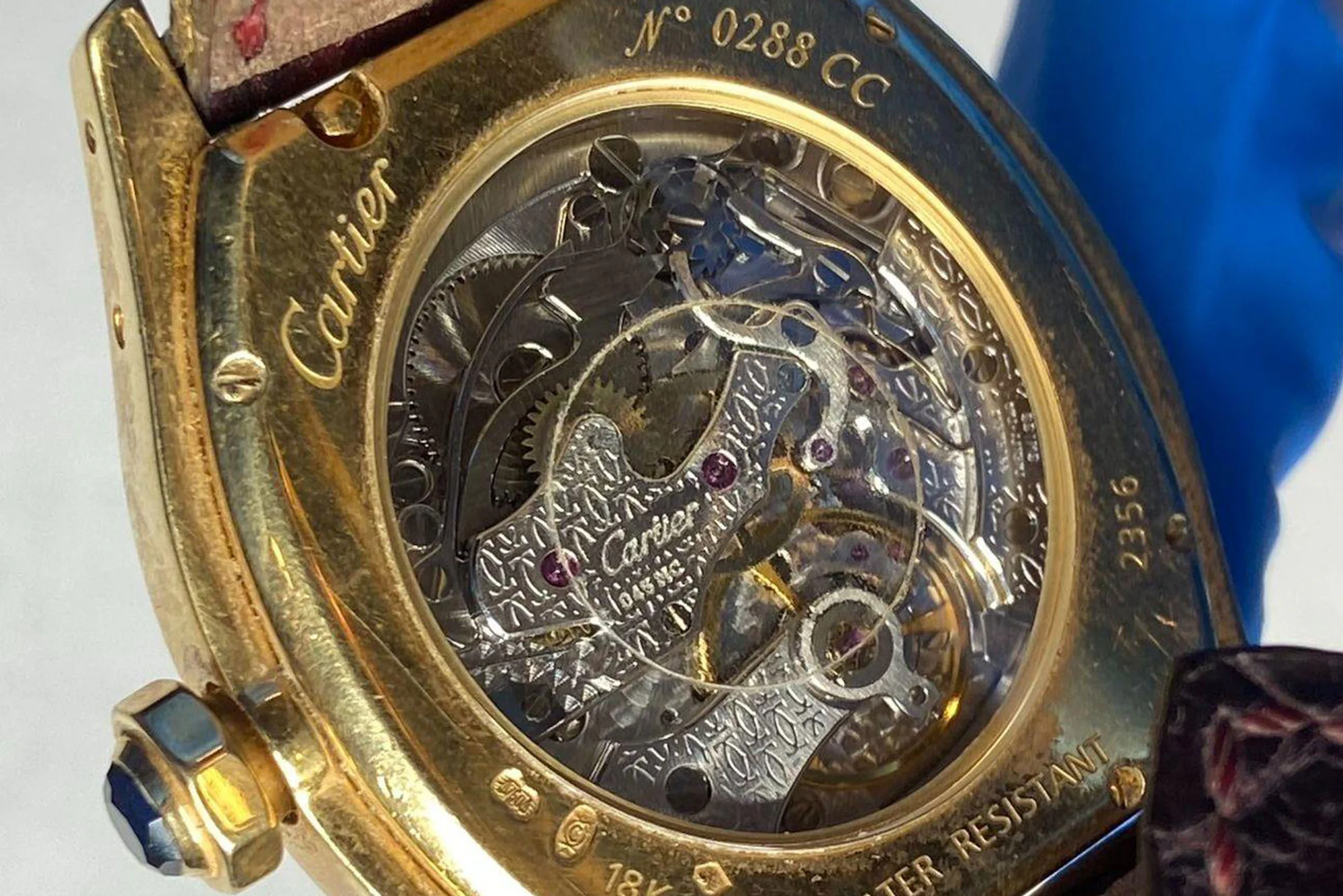
As for this particular example: it looks in fairly good shape, given that it’s, you know, at a Goodwill (no knock at all! But man, don’t you wish you could’ve been there for the drop off, a Cartier there amongst outgrown sweaters and kids’ books?). The case and leather bracelet certainly show wear, but nothing extreme, and the dial and hands look fantastic. Like I suspect most of us, I pine for the days when you (or someone) could swing by the local Goodwill and end up with a phenomenal watch that’d flown completely under the radar, but those days are gone. This Cartier is up to $15,601 at the time of writing, and the auction ends Saturday evening.
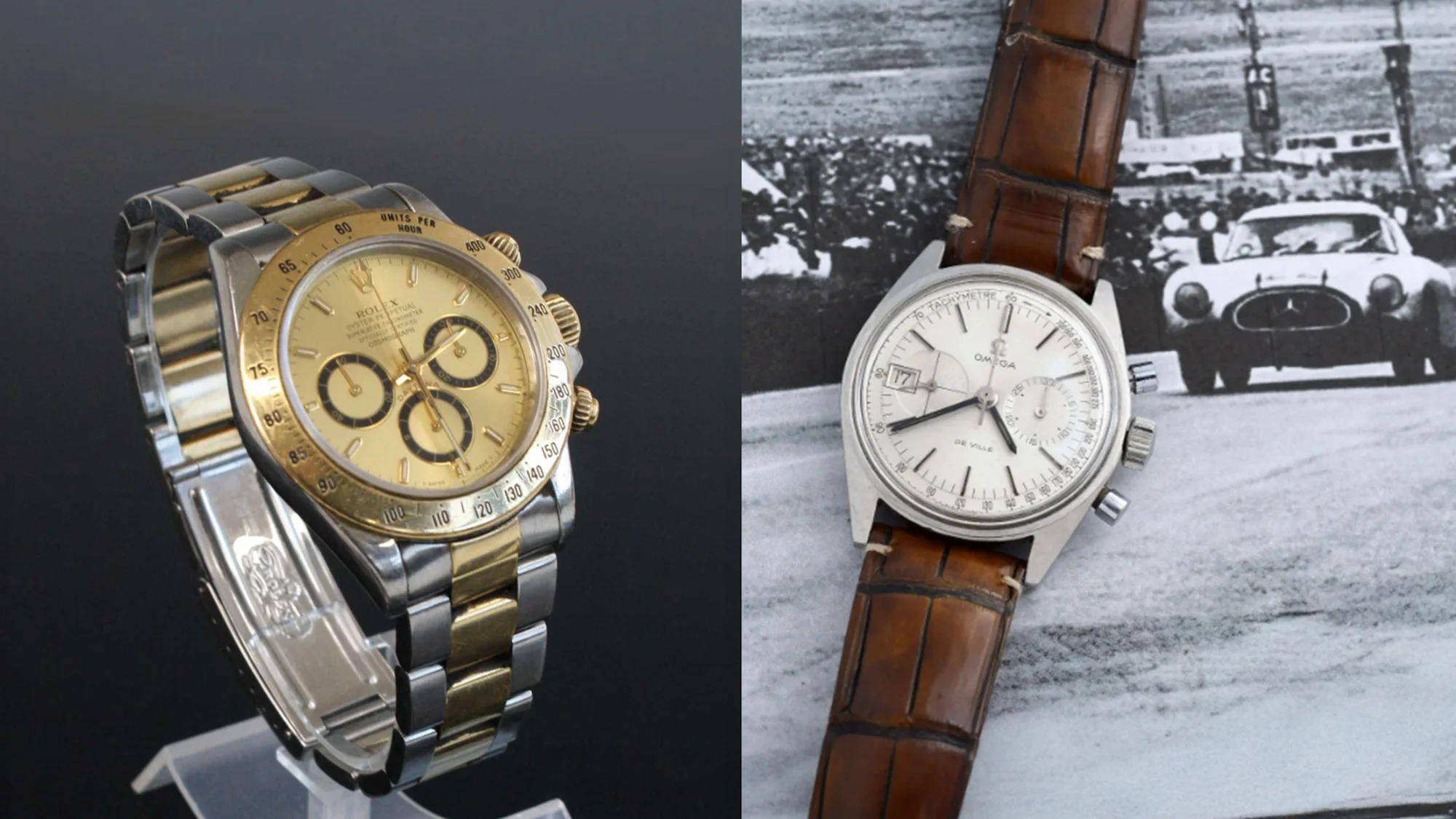
Omega Chronographe de Ville Sport ref. 146.017
Part of the same sale as one of last week’s Yema Rallyes is in, I’ve been salivating about this lot since I spotted it, and the only reason I chose against including it last week was so that I could spend a little more time wrestling with whether or not I should keep the listing to myself or share it here.
The watch under consideration is the delightful Omega 146.017. Made only from 1969-1970, the 146.017 is verifiably a dress chronograph at all of 35mm wide, and there were three versions available—gold-plated with a gold dial, stainless steel with a white or black dial (rare blue dials are also available), and a rare stainless steel version with a white dial.
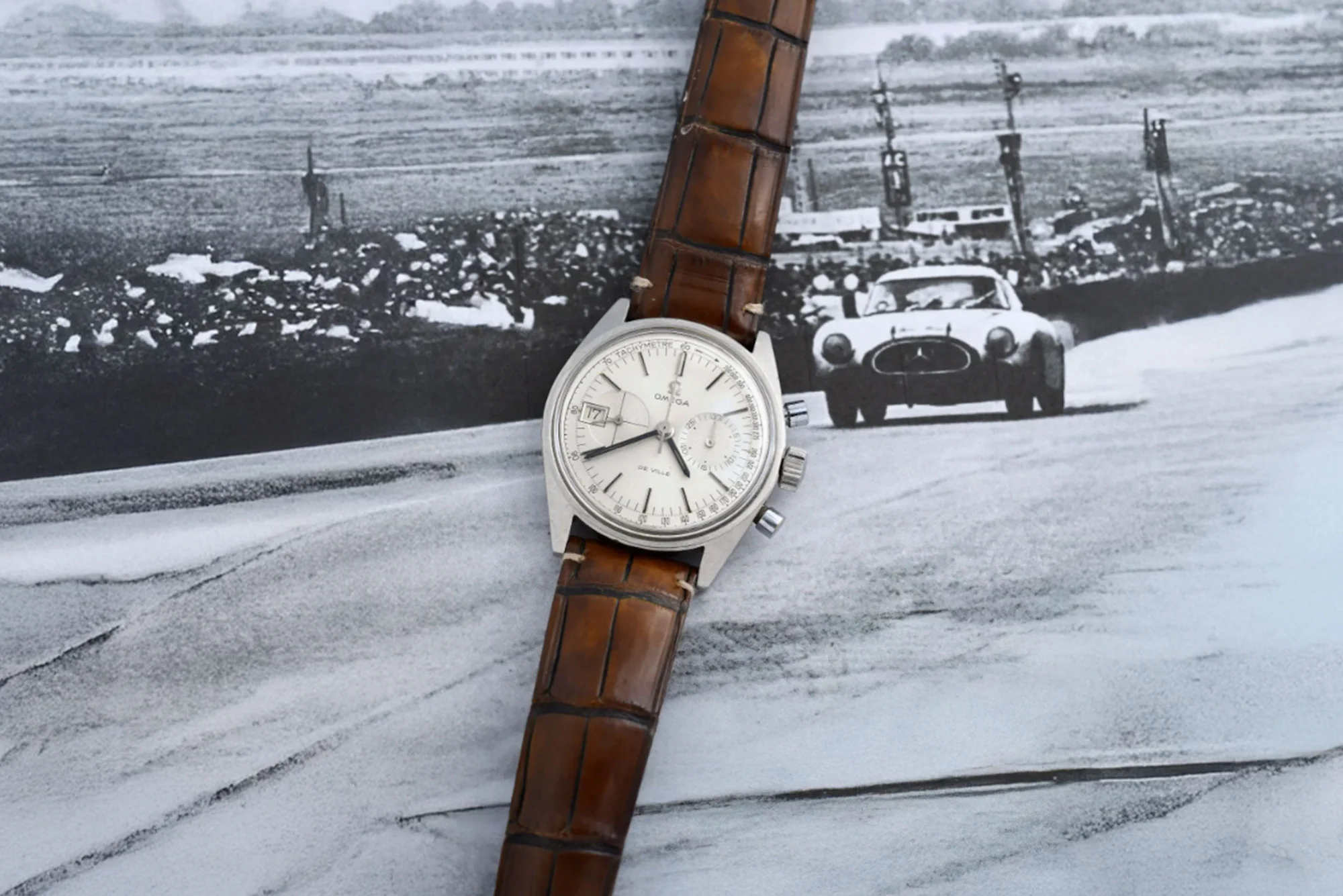
Powered by the Omega caliber 930, the watch is an austerely beautiful oddball. It’s staid and restrained, and then there’s the weirdness of the date at 9. I love this model immodestly, and have owned several examples, all of which I have, eventually, sold, and the only reason I’m ultimately not going for this particular watch is that I cannot get over the fact that the case is fully polished. I appreciate that that’s maybe a silly reason to let any watch fall out of favor, but I have to trust my past selves in this case.
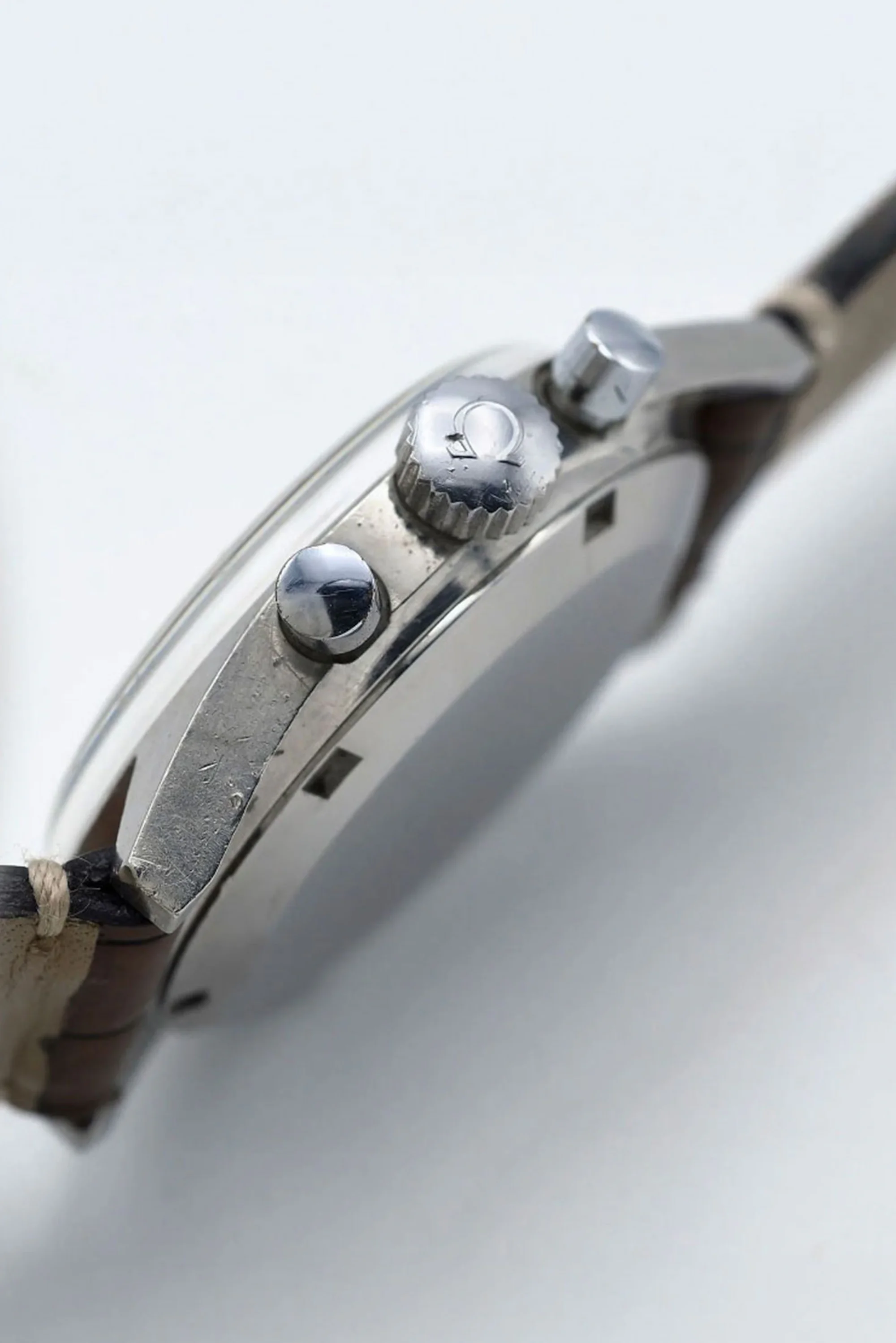
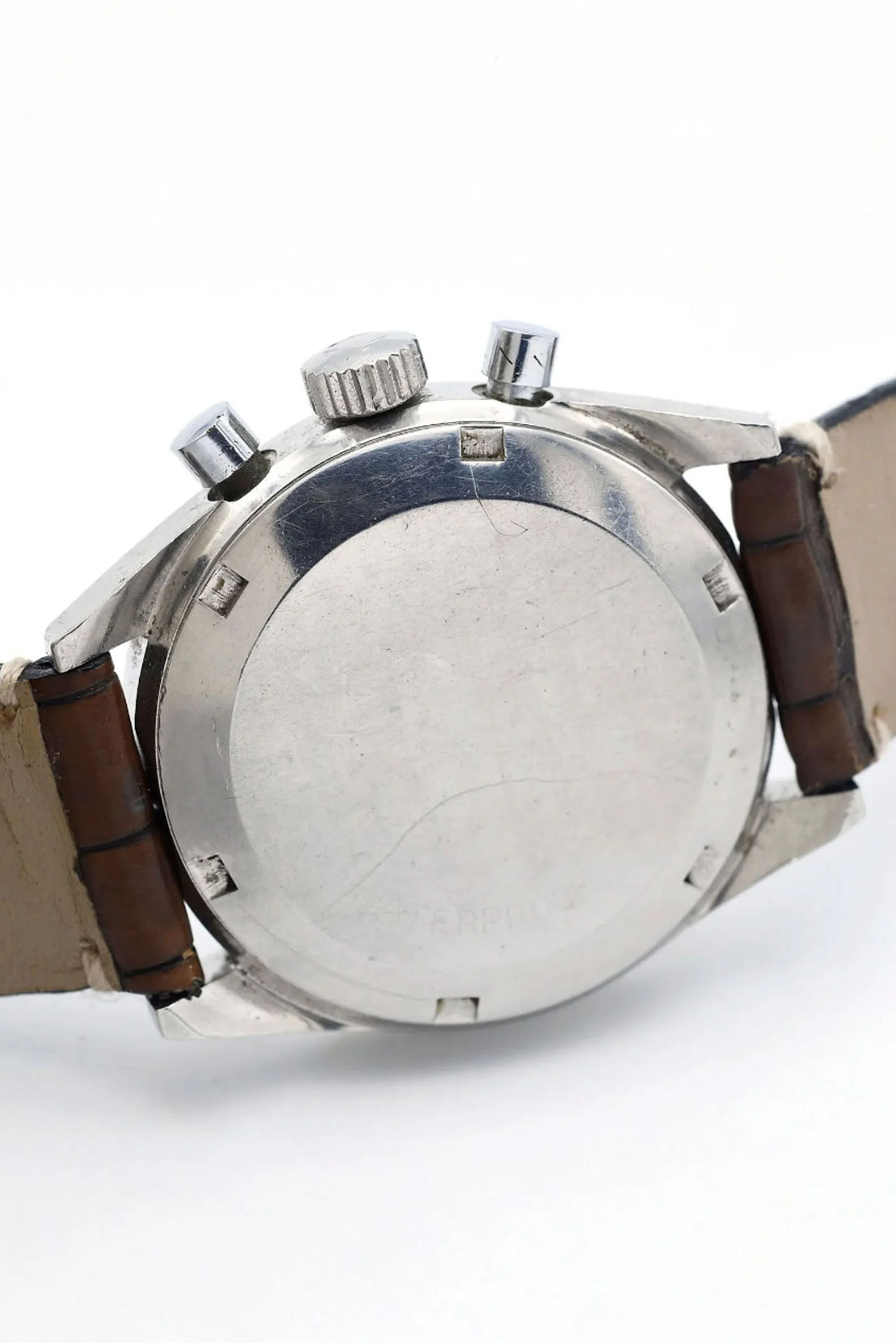
That’s not to say the watch isn’t excellent, fun, and imminently wearable—it’s all those things—but rather that my entrance into Omega was through Seamasters and Speedmasters, which had more dynamic case finishing, making the Deville 146.017 feel oddly bland. Still, these are uncommon watches (I’ve seen production of cal 930 Omegas listed at 10,000 pieces total, and the only models that used the movement were the 146.017 and the Bullhead), and if you’ve been looking for one, this is as good as any you’ll find in a good while. The white dial looks excellent, and while the case shows wear (and the lower-right lug has taken a hit at some point), nothing here should prevent an interested buyer.
Arnold Schwarzenegger’s “Arnie” Seiko H558-5009 Quartz 150m Diver Watch
Something is charming about named watches like the Paul Newman Daytona and the Steve McQueen Monaco. The romance comes from the fact that the watches ended up shadowed by the wearer, which feels unlikely to happen any time soon for any number of reasons. By way of example, what would a famous person have to do now for a watch to be fully and exclusively associated with them? How many years would he have to rock, say, a new Land Dweller for us to start thinking Ahh, yes, the Bob Odenkirk? Yes, there’s the “Alcarez” and the “John Mayer,” but it’s hard to imagine such nicknames catching on with the broader culture (no offense, Mark).
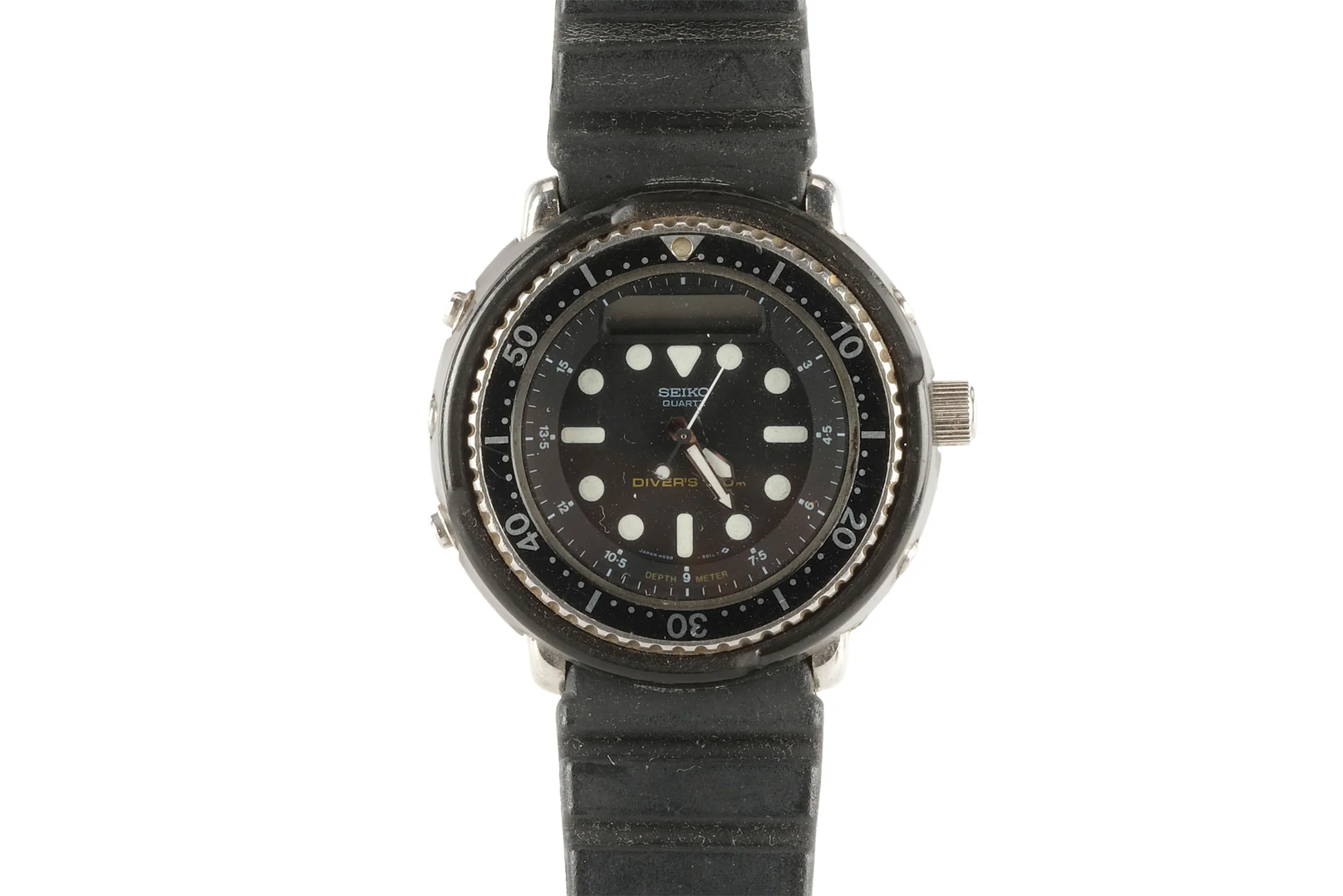
Which brings us to today’s watch: this is Arnie’s Arnie. Technically, sticking with the fictional universe the watch existed in, the watch is actually Major Alan “Dutch” Schaefer’s Seiko H558-5009, and if you don’t know your 80s action movies, you’re forgiven for not knowing “Dutch” Schaefer is the character Arnold Schwarzenegger plays in Predator (though it’s worth noting that the former California Governor wore the same reference in Commando).
The Seiko H558 is an early 1980s digital/analog watch and, as befits the man it was eventually nicknamed after (at least the 5009 model), it was a huge 45mm wide. The case silhouette is kin to Seiko’s Tuna dive watch from around the same time, veritably screaming No Nonsense Tool Watch. The actual watch for sale seems to be in very good shape, though, as the listing notes, it’s currently not running, so the winning bidder may be on the hook for anything from swapping its battery to finding a donor movement.
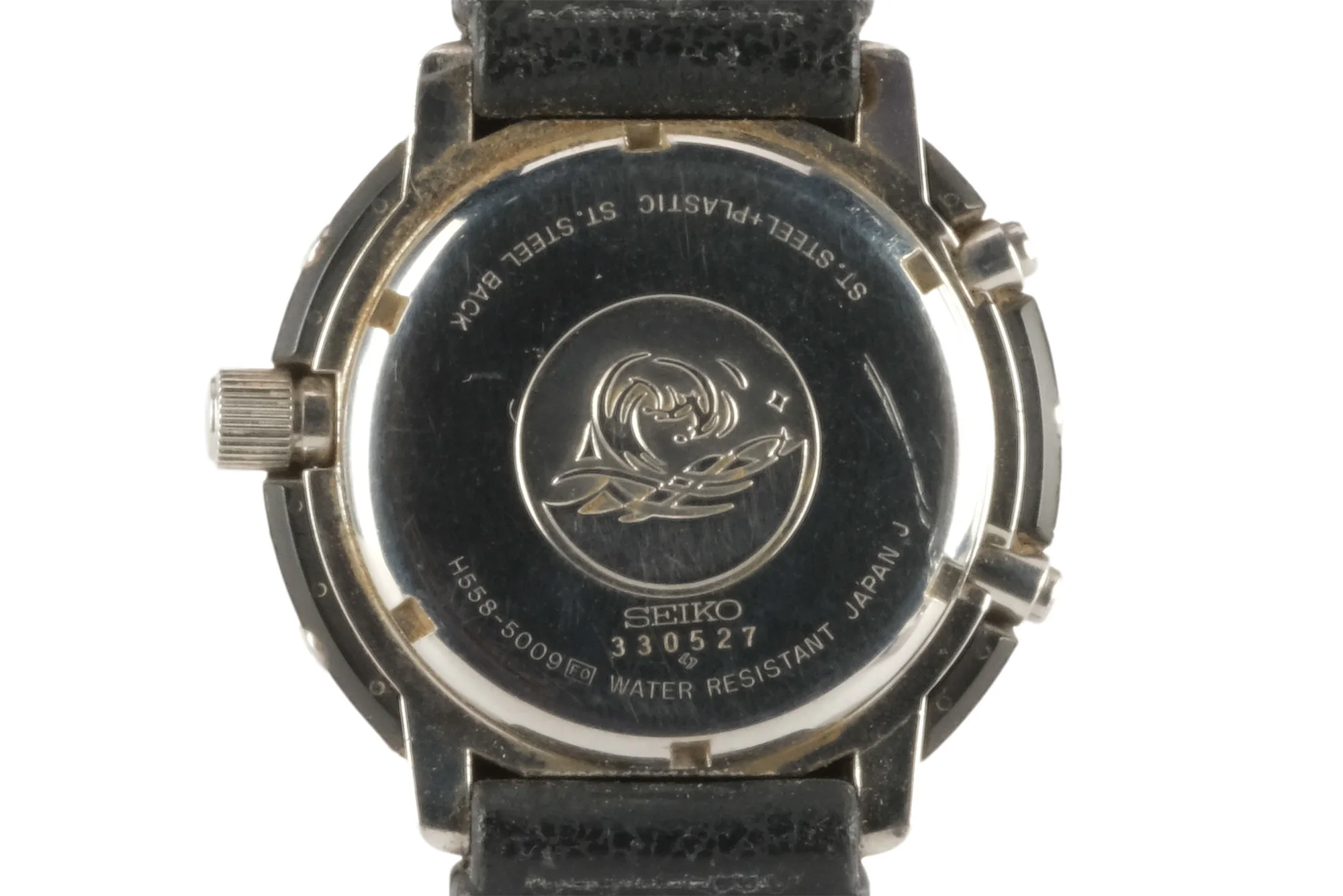
Bidding’s already up to $4k at the time of writing, and at least one fan believes it’ll reach $20k. We’ll let you know next week. If this isn’t quite your cup of Brutal Tea, John McClane’s TAG Heuer from Die Hard 2 is available in the same auction.
Eberhard Scafograf 300
This is the nicest example I’ve seen of this model in a long while (the lume on vintage Scaforgrafs has a tendency to age poorly), and if you’re unfamiliar, no, the case is not *identical* to the Omega Seamaster of the same era, but the cases of each of those watches were made by Huguenin Freres.
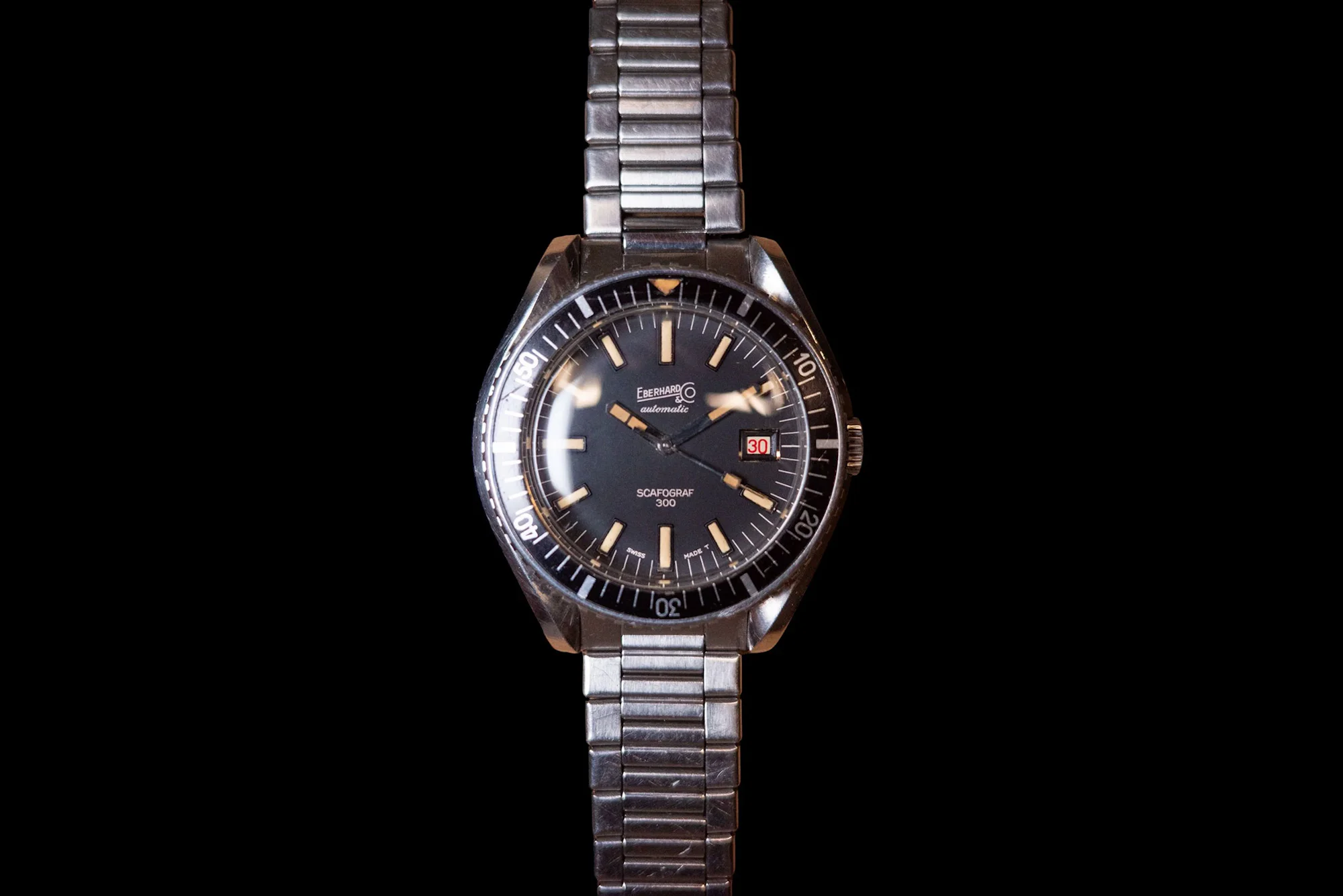
In fact, if you do a little digging, the Scafograf traces a similar developmental arc to the Seamaster in lots of ways: introduced in ’59, the Scafograf 100 lacked a rotating divers bezel but had a case that looked not all that different from the ’57 Seamaster. This similarity would continue through the 60s, as the Scafograf 300, with its larger case, rotating bezel, and lyre lugs, launched in ’64, with the Seamaster 166.024 seeing release in ’65 (if I’m wrong on those dates, reader, feel free to correct me).
This example is from the later 60s—gone are the huge triangle lume plots at 6/9/12, replaced by more buttoned-up rectangular indices—and looks to be in incredible condition, with a clean case that retains its original bevels and lines, a phenomenal dial and hand set, and its original (presumably Gay Frères) bracelet (the listing doesn’t make clear if the original signed crown remains). The watch is available from Bolder Vintage for $9500.
Buyer Beware: Omega “Ed White” Speedmaster 105.003
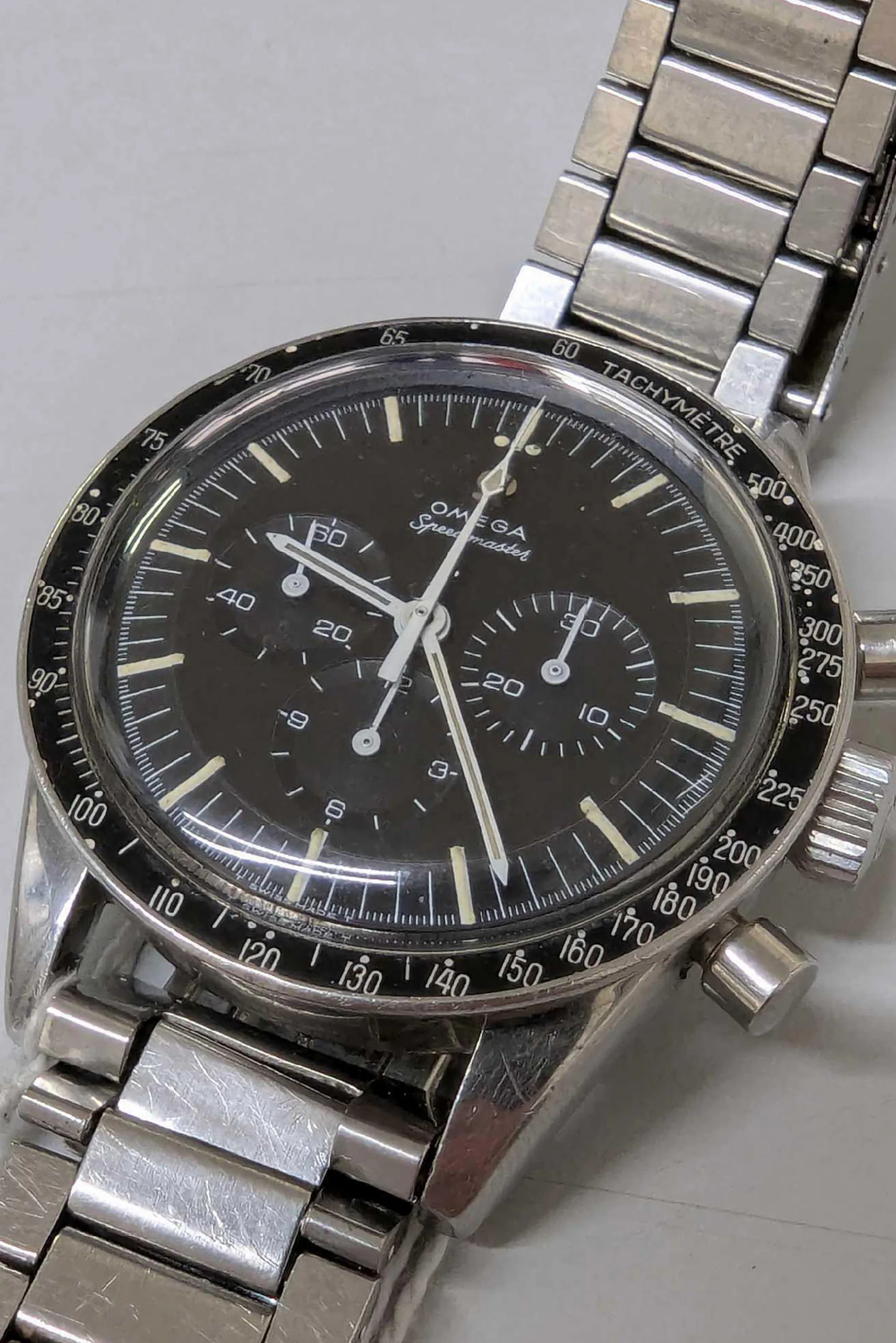
The pros of this watch are that it comes on an unsprung, seemingly full-length 1035 bracelet, features a pair of No 6 Omega endlinks, and sports a tatty-but-not-terrible DON bezel, along with an original flat-foot Omega crown and a decent straight-lug pre-pro case. The cal 321 movement looks like an out-of-range (28M, though it 100% could be a 23M, I just can’t see it clearly enough) serial number, and a caseback not only lacking a year designation but with the reference etching that looks unlike any I’ve seen, both of which aspects make me question things. The bad is simpler: that’s a relumed dial. Proceed accordingly.
Weston Cutter
2026-03-20 15:13:00