
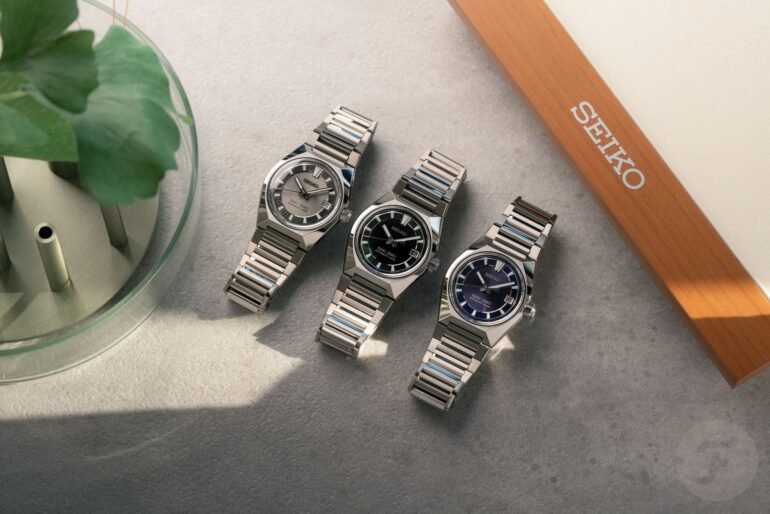
Some things must be titanium — orthopedic implants, for example. And the Lockheed SR-71 “Blackbird,” the retired Mach 3+ reconnaissance aircraft, could only do what it did because it was made of titanium. The three new titanium King Seiko Vanac watches might also qualify as something that just has to be made from that special metal, named after the Titans of Greek mythology to symbolize its extraordinary strength, durability, and resistance to corrosion. The Vanac has distinct, powerful, multifaceted shapes and lines that suit titanium’s look and feel, as I found out during a hands-on encounter.
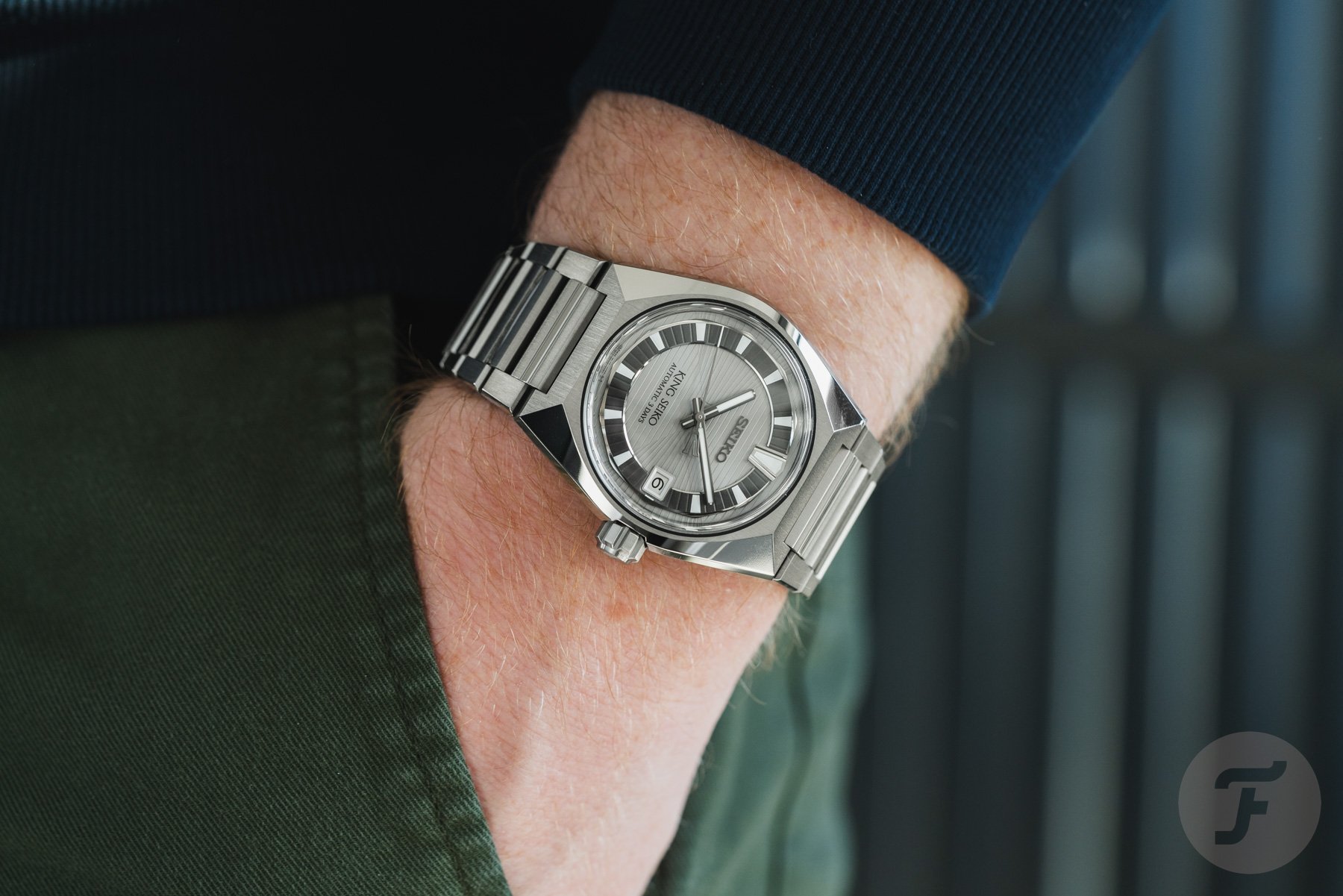
In steel, the different versions of the King Seiko Vanac are impressive and powerful-looking watches. With their 41mm-wide, 45mm-long, 14.4mm-thick cases, these timepieces pack a visual punch. Surprisingly, in less “heavyweight” titanium, the punch is arguably even more powerful. The avant-garde edginess of the design becomes more refined and in character with the use of titanium, which is slightly grayer and around 40% lighter than 316L stainless steel. The lightness of the three new Vanac models, combined with the superbly finished brushed and mirror-polished surfaces, gives the watches a high-end, luxurious presence with an industrial twist. Also, the new dial design, with its subtle and dynamic geometric pattern, fits the watch’s futuristic feel.
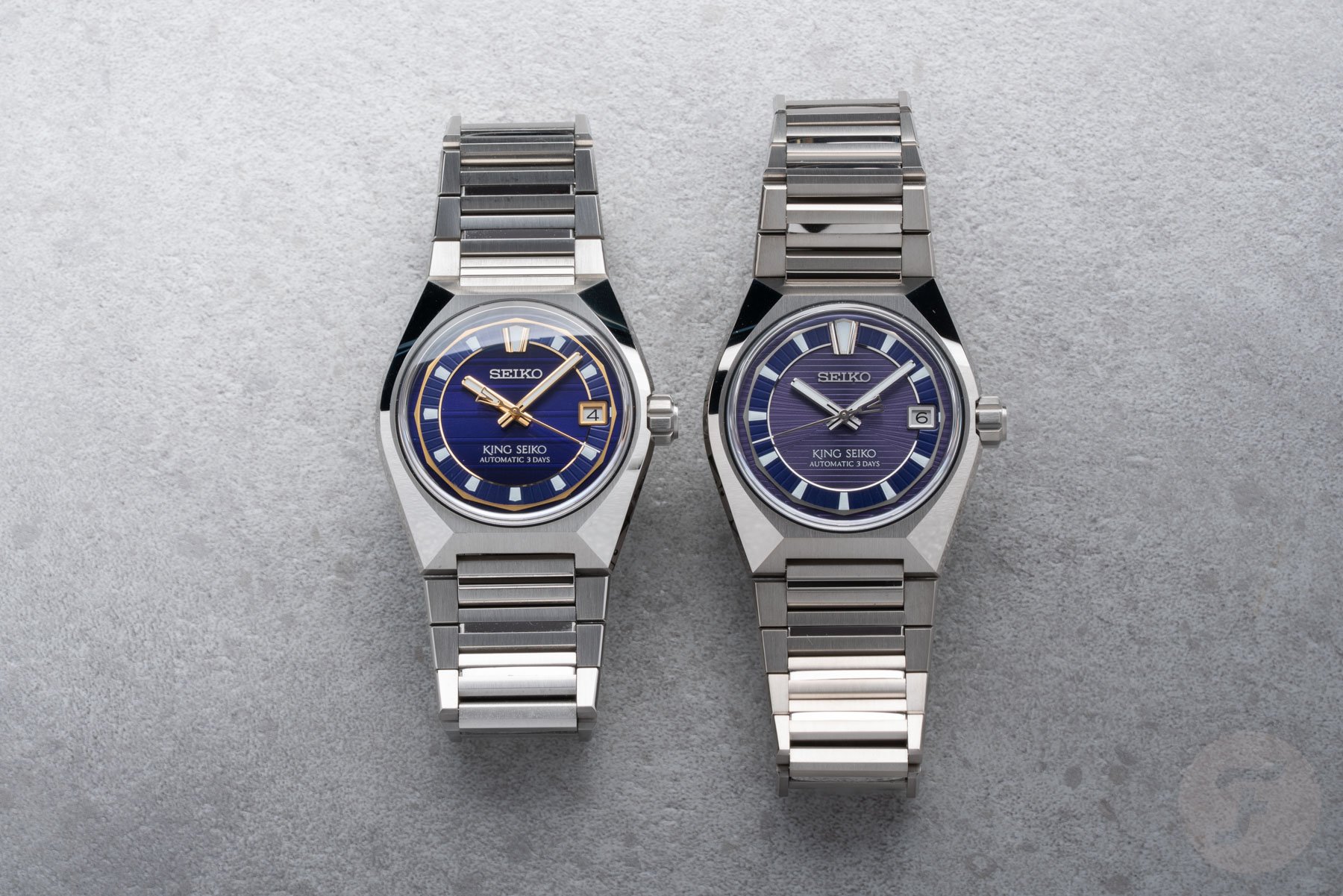
Steel King Seiko Vanac SLA083 (left) next to the titanium HKF001
Hands-on with three new King Seiko Vanac watches in titanium
The King Seiko Vanac has an assertive stance. That was always the case. In 1972, Seiko launched the Vanac line, and while you might think the name refers to an extraterrestrial spaceship commander with extraordinary strength from an obscure manga, it’s cloaked in mystery. Nobody knows where the Vanac name came from, and in 1974, the line disappeared. Last year, though, the Vanac made a comeback. Just like the creations from the 1970s, the new steel versions displayed vibrant colors and innovative, multifaceted designs. The 2025 Vanac also had a sporty new aesthetic while preserving the spirit of the original.
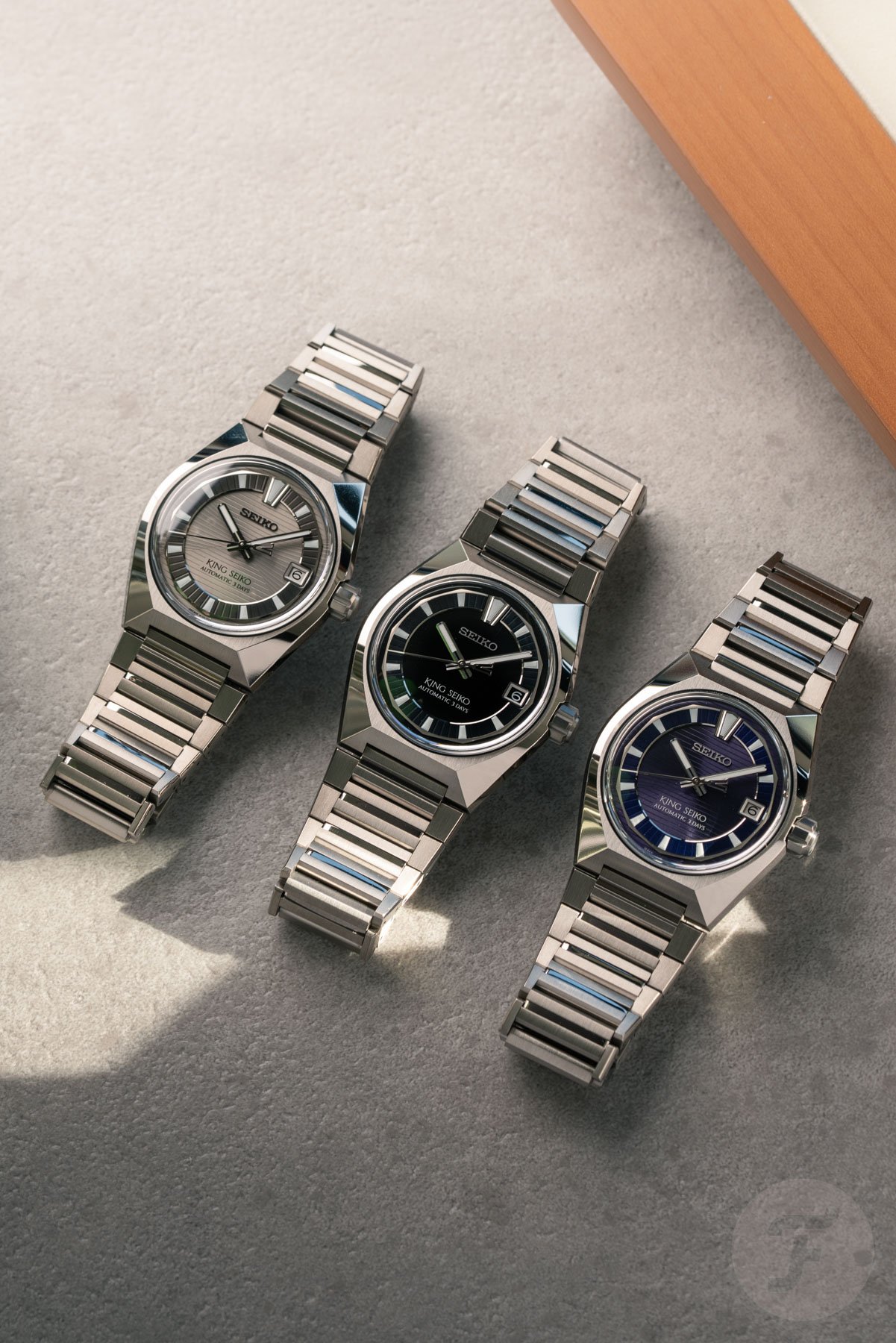
The three new Vanac models in titanium are the next step in the modern collection. The dimensions have stayed the same, but in titanium, the Vanac is around 40% lighter than the steel versions, now coming in at 116 grams versus 192. You do feel that difference on the wrist. Some say lightness is not luxury, but I disagree. Yes, it’s the opposite of platinum, arguably the most prestigious alloy out there. But the use of a high-tech, lightweight alloy indicates a drive to innovate. It also links to the worlds of motorsport and aviation, for instance, and symbolizes modern, technical luxury.
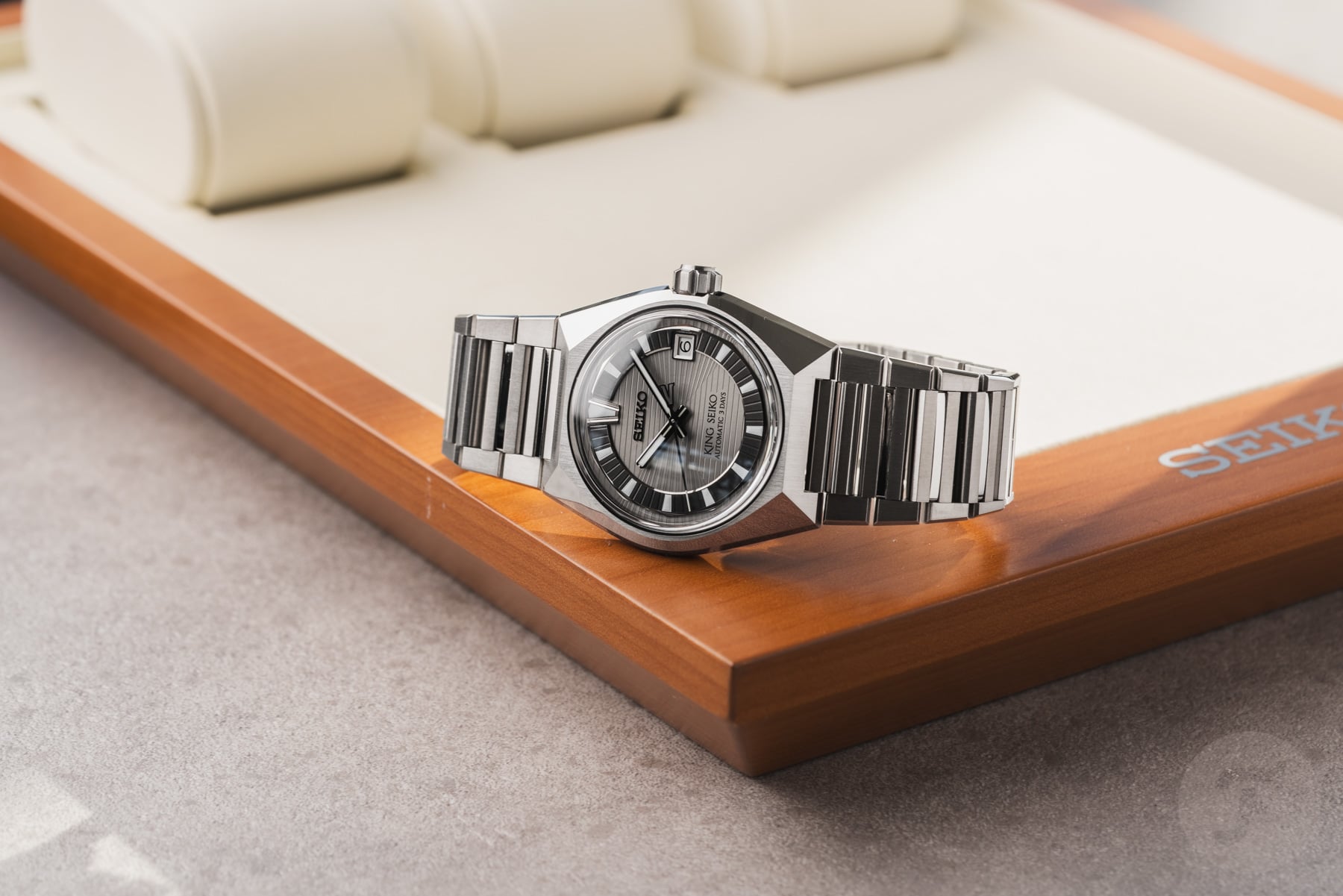
King Seiko Vanac HKF002
No bezel, no problem
The distinctive case and bracelet of the modern Vanac feature many bold facets and a dynamic angularity…but no bezel. That’s no problem. On the contrary, the bezel-less design creates an elegant and slender profile.
The bracelet, which flows seamlessly from the case, has short links that lead to distinct horizontal lines. Forget any notions of Grade 5 titanium being a dull and grayish metal. The King Seiko Vanac in that alloy features extensive mirror-polished surfaces, which are accented by brushed finishing on the case and bracelet.
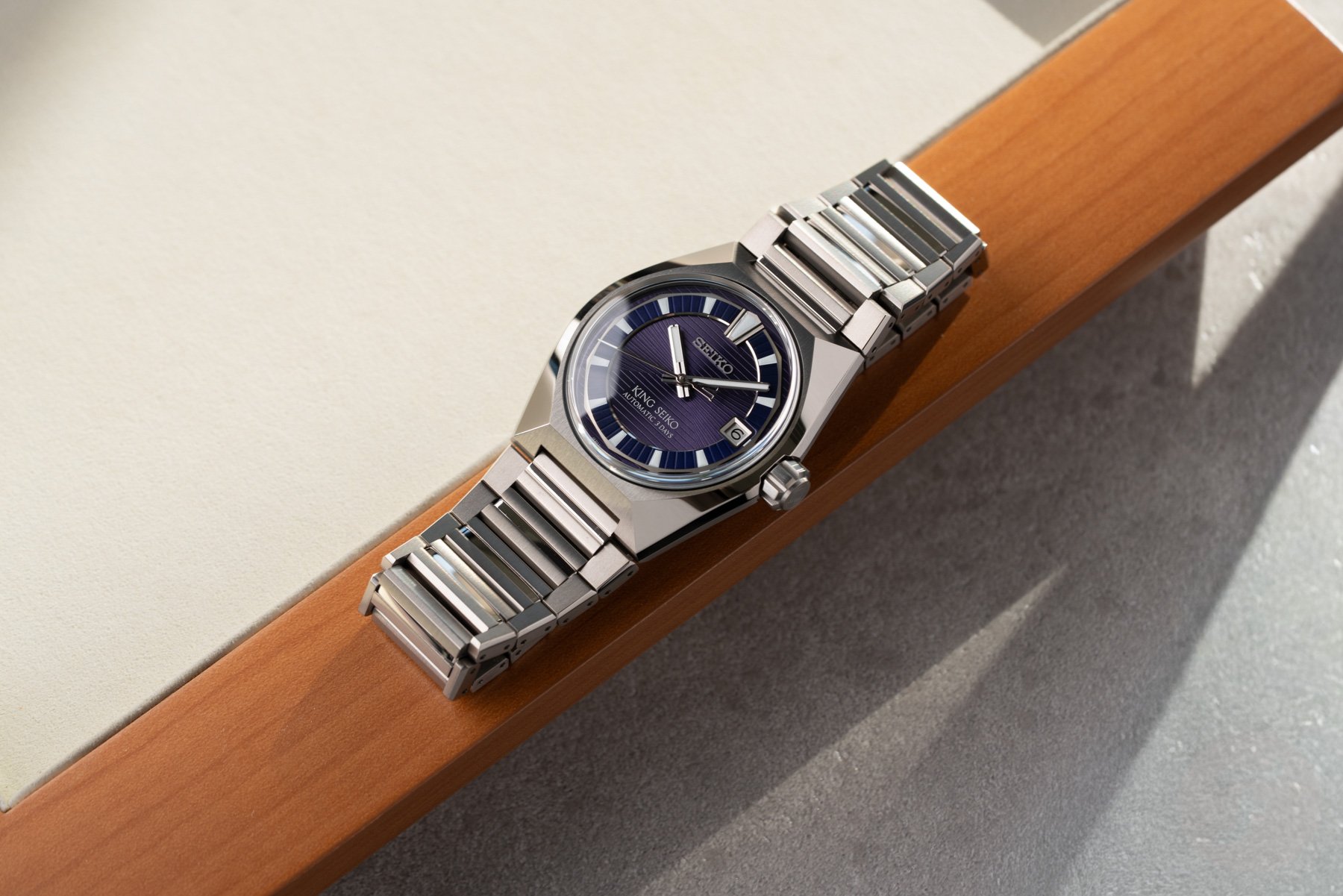
King Seiko Vanac HKF001
Titanium’s darker tone results in a strong contrast between polished and brushed areas. Therefore, the titanium version of the Vanac has a stronger visual presence than its steel counterpart. The looks and the greater wrist comfort from the significant weight loss have me pick the titanium over the steel references. I also prefer the new dials.
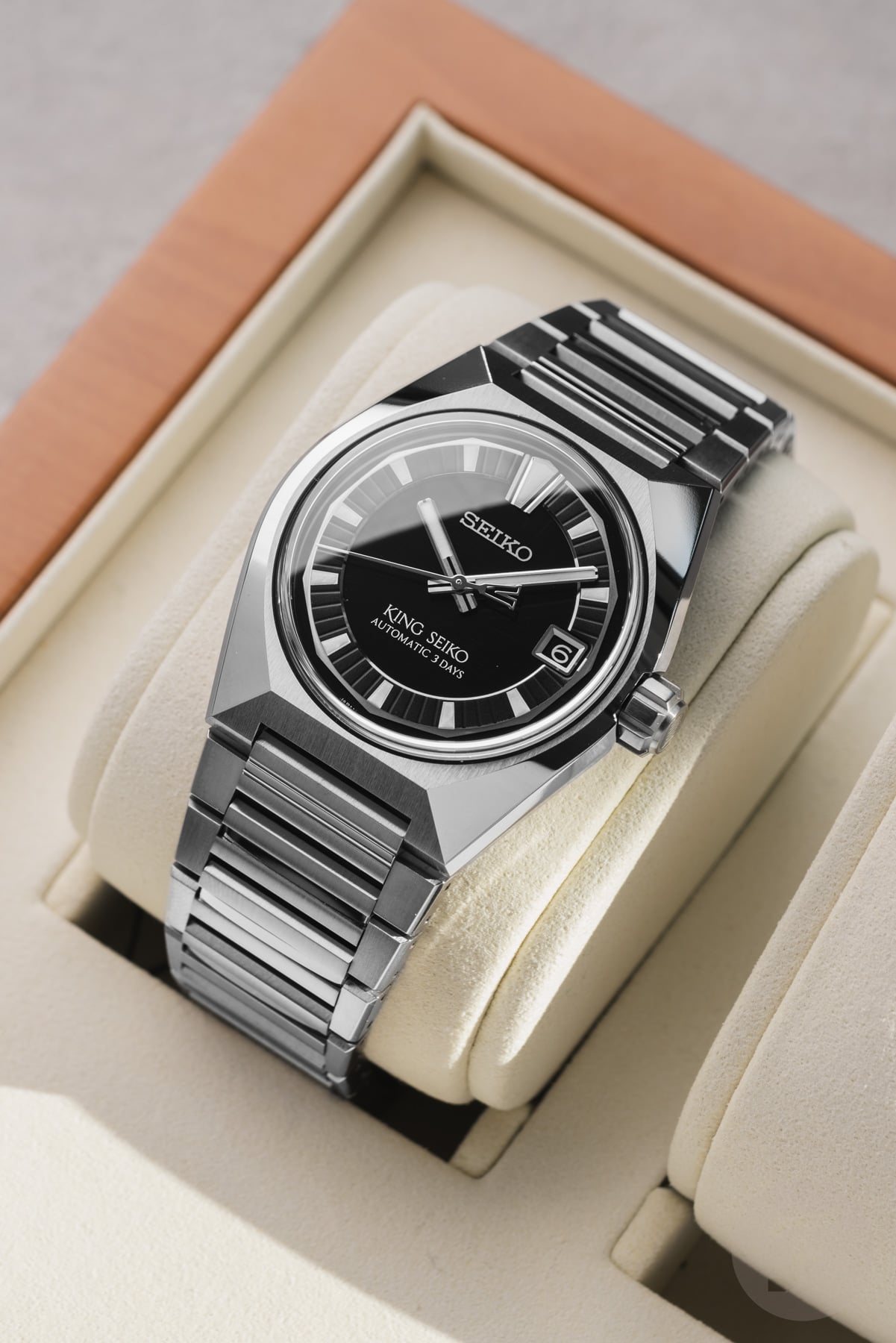
King Seiko Vanac HKF003
The new Vanac dials
The steel Vanac models feature a horizontal teak-deck pattern and printed indexes. For the titanium versions, Seiko drew inspiration from Tokyo’s sweeping skyline and the metropolis’s rhythm and pace. It results in a geometric pattern combining horizontal lines with rays extending outward from the center. The idea is that those lines capture the sensation of driving along one of Tokyo’s highways toward the vast urban horizon. I don’t know if I can relate to that, but I do prefer these dials over the more retro-looking ones we find in the steel variations. Also new and, in my opinion, improved is the redesigned applied index at 12 o’clock, which is present on all three dial variants — purple (HKF001), gray (HKF002), and black (HKF003). There’s also a touch of titanium to link the dial to the case and bracelet. Apart from the marker at 12 o’clock, the luminous indexes are printed, but the date shows a nicely finished frame.
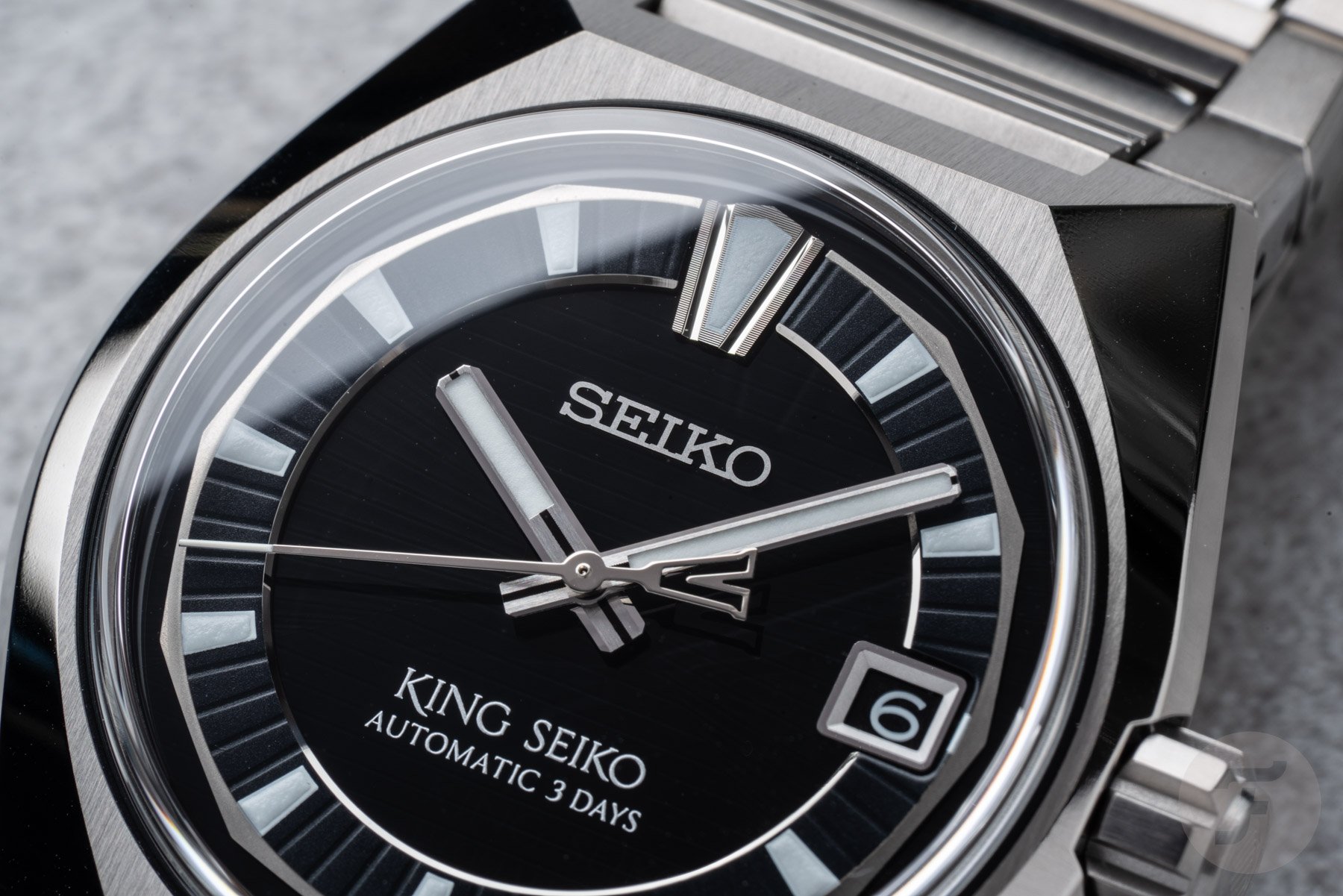
Back to driving through Tokyo, the three colors supposedly represent different moments of the road trip. It starts with the calm horizon at dawn, the sleek beauty of the urban highway, and the rush of speed as Tokyo comes alive at night. You can figure out which color fits which moment. I think the right order is silver, black, and purple, but I could be completely wrong. Regardless of what moment it represents, my favorite dial of the three is the purple one. Yes, it’s the most provocative color, but that does suit the Vanac’s nature.
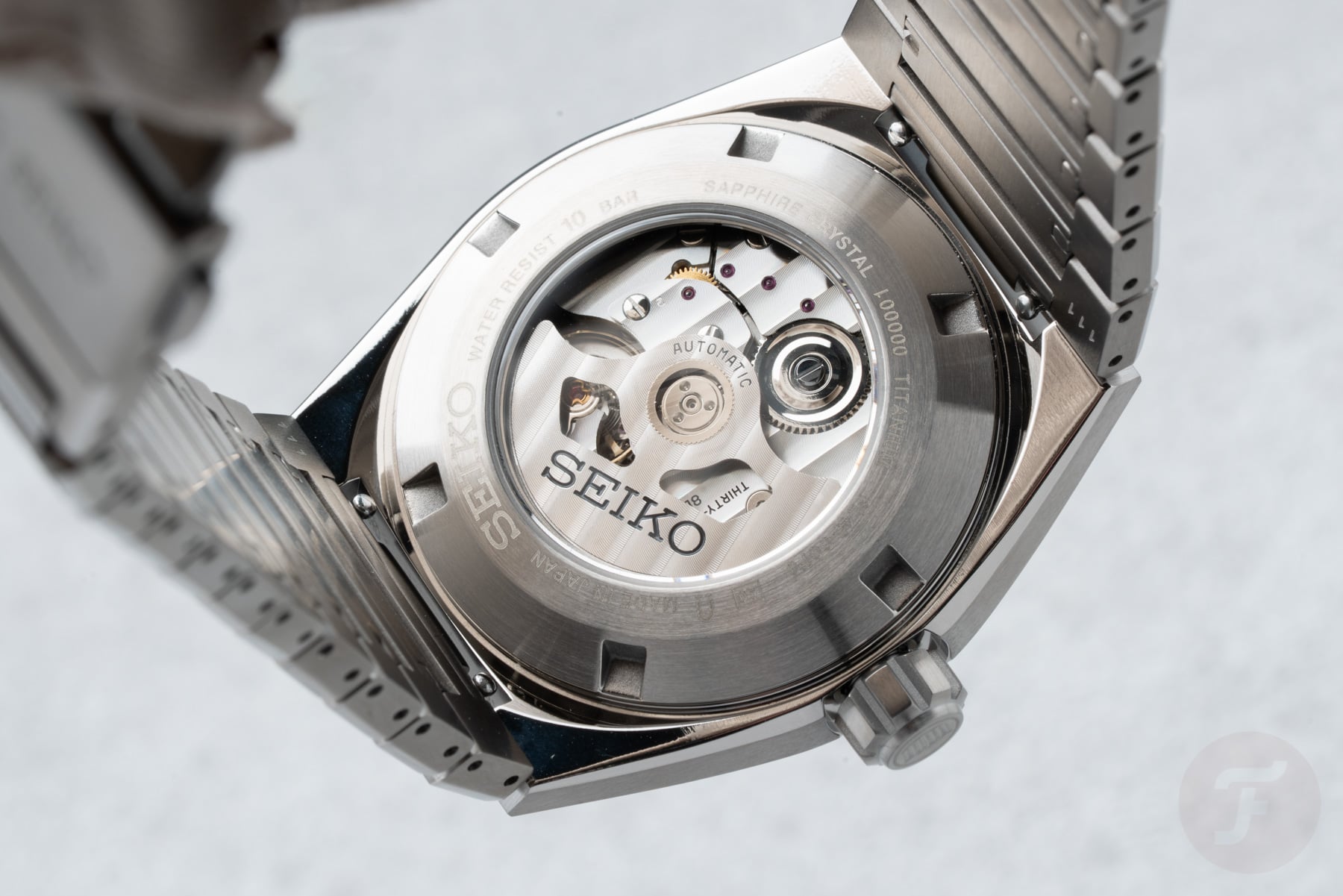
Powering the Vanac is the 4Hz caliber 8L45 — basically, a sparsely decorated version of Grand Seiko’s 9S55 movement. It delivers an approximate 72-hour power reserve and an accuracy rating of +10/-5 seconds per day. It’s built with sports watches in mind, meaning it was engineered for durability and reliable everyday performance.
Final words and price
The three King Seiko Vanac models in titanium will join the regular collection and be available starting in July 2026 through Seiko boutiques and select retail partners worldwide. The price is €3,950, and that’s €550 more than you pay for a steel Vanac. Is it worth the extra money? In my humble opinion, it is. The futuristic watch with avant-garde shapes benefits from the darker titanium tone and the contrast between polished and brushed surfaces. On the wrist, this titanium timepiece just feels better than the steel version because you don’t notice it as much.


What do you think about the three King Seiko Vanac models in titanium? Are they better than the steel versions or not? And what about the price? Is it reasonable? Please let me know in the comments section below.
Lex Stolk
2026-03-18 08:30:00