

Technology has a gravitational pull. It’s omnipresent, addictive. Resisting it—especially in 2026—requires effort and intention, as its magnetism only seems to grow stronger. Even in watches, an industry built on mechanical anachronism, we feel the pressure to keep pace. Brands compete not just on aesthetics but on specs, materials science, and incremental performance gains. Cases get slimmer. Power reserves get longer. Watches get more accurate. The language of advancement is quantitative.
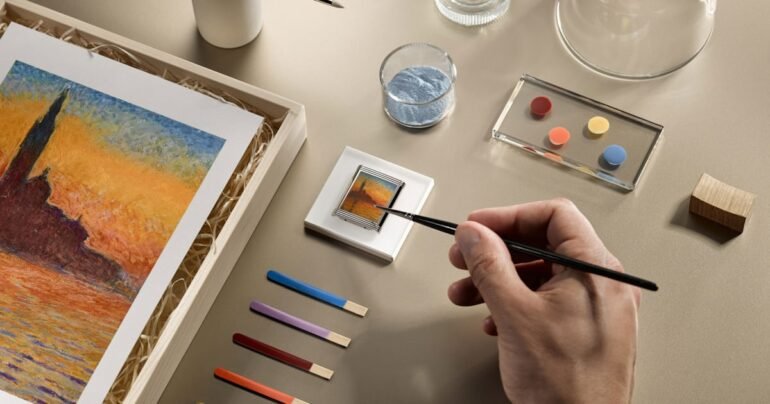
Yet, in the era of technology, watches themselves aren’t about efficiency at all. If you zoom out a bit, they start to feel a lot like that single-bristle paintbrush. Compared to the technology we rely on every day, a mechanical watch is wildly inefficient. It’s delicate, functionally unnecessary, and occasionally unreliable. And yet, like that tiny brush used to paint the enamel figures on a Reverso caseback, it persists because what it represents goes far beyond utility.
And within watchmaking, some crafts push that idea even further. Hand-enameling isn’t quantitative. It’s not scalable. It’s inefficient in the most literal sense. Fewer and fewer people are entering the profession. It can’t be automated. Rather, it depends on the steadiness of the hand working in lockstep with the eye, guided by the accumulated knowledge of someone who has spent years mastering the craft. The entire process depends on transmission—knowledge passed from one generation to the next.
Tim Jeffreys
2026-03-12 17:00:00