
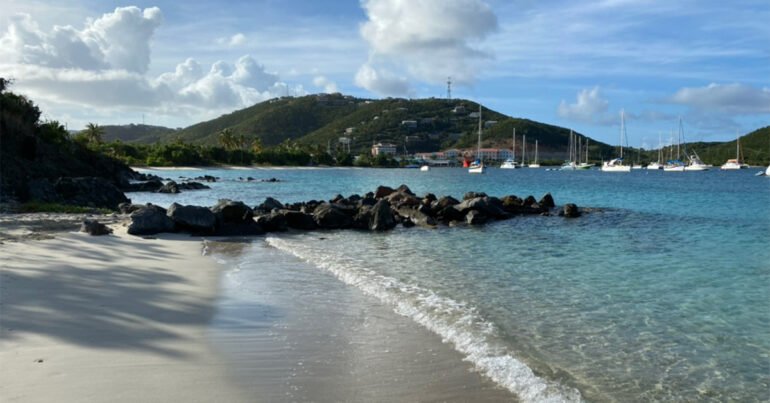
Long evenings in Red Hook. Ferry runs over to St. John. A slow stretch of sand at Hull Bay. Walking Main Street with bags in hand, moving between shops, cafés, and the harbor. This is the version of St. Thomas travelers keep coming back for — and right now, more of them are arriving than at any point in years.
The island is seeing a 21.6 percent increase in air seats in 2026, a clear signal of how quickly demand has accelerated. Airlines are adding capacity, routes are expanding, and St. Thomas has become one of the most consistently booked destinations in the Caribbean Basin.
Why The Numbers Are Rising
The increase in airlift is the result of a steady climb that began in the early post-pandemic period and never slowed.
St. Thomas checked several boxes for travelers at the right time: no passport requirement for U.S. visitors, direct flights from major cities, and a wide mix of hotels and villas. That initial wave of demand has since matured into repeat visitation, with travelers returning and bringing new ones with them.
Airlines have responded accordingly. More seats mean more frequency, and more frequency makes the destination easier to book — a cycle that continues to reinforce itself.
The island’s role as both a standalone destination and a gateway has also contributed to the surge. You can base yourself here and expand outward, or stay entirely within St. Thomas and still fill your itinerary.
A Post-Pandemic Climb That Hasn’t Slowed
St. Thomas has been on a sustained upward trajectory since 2021.
What began as recovery has turned into consistent growth. Hotel occupancy has remained strong across seasons. Cruise traffic has returned, but air arrivals have become the more telling indicator — visitors staying longer, booking ahead, and treating the island as a primary destination.
The 21.6 percent increase in seats for 2026 reflects confidence from airlines that demand will continue at this pace.
This is no longer a rebound story. It’s a fully established trend.
How You Experience The Island Now
The appeal of St. Thomas has always been tied to range, and right now that range feels fully active.
You can start at Lindquist Beach, where the sand runs wide and white and the water stays calm through most of the day. It’s less crowded than the island’s more famous stretches, with room to spread out and stay for hours.
From there, it’s a short drive to Magens Bay, still one of the most recognizable beaches in the Caribbean, with a long curve of shoreline and consistent conditions that make it easy to settle in for the afternoon.
Later, you head toward the water again, this time for cocktails at Iggies, where tables fill up as the light drops and the beach becomes part of the evening.
At some point, you make the drive up to Mountain Top, where the view opens out across the surrounding islands. It’s a quick stop, but one that stays with you — the kind of vantage point that reminds you how much is packed into this part of the Caribbean.
Another day might look completely different. You’re out early, paddling through the mangroves, working your way through narrow channels with clear water beneath you and quiet surroundings on all sides.
That variety — beach, viewpoint, bar, water activity — is what defines St. Thomas right now. You don’t need to choose one version of the island. You can move between them easily.
Where To Eat Right Now
Dining has become a bigger part of the St. Thomas story, with restaurants leaning into more defined concepts and standout dishes.
At Blue 11, the experience centers on a multi-course tasting menu, with each dish plated and paced as part of a full evening. It’s one of the most deliberate dining formats on the island right now, drawing travelers who plan their night around the meal.
At 3 Palms, the focus shifts to smaller plates with strong execution — the lobster dumplings have become one of the most talked-about dishes, combining local seafood with a tighter, more modern presentation.
Then there’s Lime Out, the floating taco bar that has turned into one of the most recognizable stops in the Virgin Islands. Boats anchor nearby, swimmers pull up to the counter, and tacos come out fast — a casual, water-level experience that connects directly with the surrounding bays.
Together, they show how dining on St. Thomas now stretches from structured tasting menus to quick, open-air stops in the water.
The St. John Factor Still Matters
St. Thomas continues to function as a gateway to St. John, and that connection remains central to the experience.
Ferries run regularly from Red Hook, giving you the option to spend a full day across the channel. You leave in the morning, reach Cruz Bay quickly, and spend the day at beaches that fall within Virgin Islands National Park.
It’s a simple extension that adds depth to the trip, and one that many travelers now build into their plans automatically.
Where To Stay Right Now
The hotel landscape has evolved alongside demand, with a mix of boutique properties, beachfront resorts, and newer concepts reshaping the island’s accommodation mix.
Three properties in particular reflect where St. Thomas is right now.
The Pink Palm Hotel
Set above Charlotte Amalie, The Pink Palm Hotel has quickly become one of the most recognizable boutique stays on the island. The rooms open toward the harbor, with terraces that keep the town and the water in view throughout the day. The design is bold and deliberate, with a focus on color, clean finishes, and open-air dining spaces. The on-site restaurant draws both guests and locals, turning the property into a destination beyond just a place to stay.
Buoy Haus Beach Resort
Buoy Haus Beach Resort brings a beachfront option into the mix, with rooms oriented toward the water and outdoor spaces that keep the shoreline front and center. The design is modern, with clean lines and an emphasis on simplicity. You spend most of your time outside — on the beach, by the pool, or at the restaurant — with everything within a short walk of your room. It’s a compact, easy-to-navigate resort that keeps the focus on the ocean.
Bolongo Bay Beach Resort
We just love this place — and it’s one of the most legendary all-inclusive options anywherein the region. Bolongo Bay Beach Resort offers the island’s only all-inclusive vacation, a format that continues to draw steady demand. The property runs directly along the beach, with rooms just steps from the water and a setup that keeps dining, drinks, and activities within the same footprint. It’s a straightforward, social environment, with guests spending much of their time along the shoreline or at the main restaurant and bar. The all-inclusive model simplifies the stay, making it a consistent choice for travelers who want everything in one place. But what we love the most? The rum snorkel hunt. Yes, you read that right.
Together, these three properties show the range of what’s available — boutique hillside, modern beachfront, and all-inclusive — all within the same destination.
No Passport Required
Travel to St. Thomas is notably straightforward for U.S. travelers. As part of the U.S. Virgin Islands, the destination does not require a passport, making it one of the easiest Caribbean getaways to plan. You can fly in and out using a government-issued ID, with no international entry process, which continues to be a major draw for travelers looking for a seamless trip.
Getting There Has Never Been Easier
Flights to St. Thomas have expanded significantly heading into 2026, with a 21.6 percent increase in available air seatsreflecting strong demand from U.S. travelers.
Service into Cyril E. King Airport now includes robust nonstop options from major gateways across the East Coast and South Florida, with carriers like American Airlines, Delta Air Lines, United Airlines, JetBlue Airways, and Spirit Airlines all operating regular routes.
You’ll find especially frequent service from cities including Miami, Fort Lauderdale, New York, Atlanta, and Charlotte, with multiple daily departures on some routes during peak periods.
That’s along withe newest routes to St Thomas, Southwest Airlines‘ just-launched service from both Orlando and Baltimore.
Why It Keeps Growing
The drivers behind St. Thomas’ rise are consistent.
Ease of travel remains central. U.S. travelers arrive without passport requirements, use the U.S. dollar, and navigate an infrastructure that feels familiar.
The island also delivers a wide range of experiences in a relatively compact area — beaches, shopping, nightlife, and day trips to nearby islands.
Add in the expanded airlift and the broader hotel mix, and the destination becomes easier to book and easier to customize.
That combination continues to bring travelers back.
What 2026 Looks Like
With a big increase in air seats, St. Thomas is entering one of its busiest periods in recent memory.
Flights are fuller. Hotels are seeing stronger occupancy across seasons. Key areas of the island carry more activity throughout the day.
At the same time, the range of experiences remains intact. You can still find quieter beaches, early-morning water, and less crowded stretches if you know where to go.
That balance — higher demand without losing variety — is part of what defines the destination right now.
The Bottom Line
St. Thomas has moved beyond recovery and into sustained growth.
More flights, more hotel options, and steady demand have combined into a clear pattern: the island is drawing more travelers, and it’s doing so consistently.
Karen Udler
2026-04-29 02:02:00