
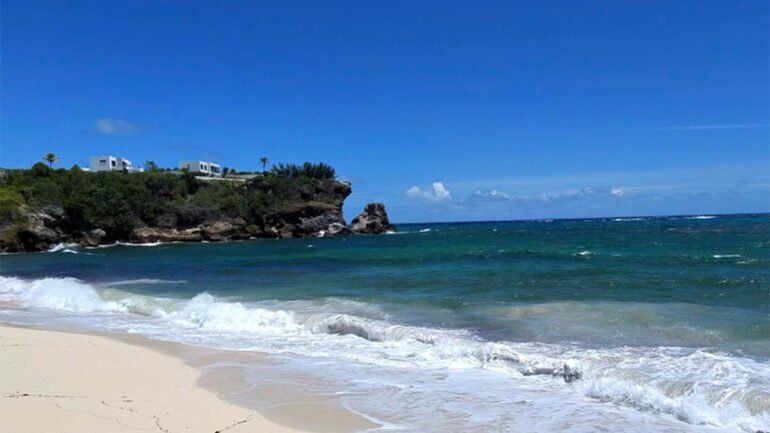
The turquoise gives it away long before you land. Coming in along the west coast, you watch the white sand meet the water in colors that don’t look quite real from 35,000 feet, and a few minutes later you’re on the ground, stepping into one of the most complete destinations in the Caribbean.
That’s an easy trip to make right now, because JetBlue is flying daily nonstop between New York’s John F. Kennedy Airport and Barbados. It’s a direct line to an island that quietly does almost everything well — some of the region’s best beaches, a deep bench of luxury resorts, one of the Caribbean’s strongest food scenes, and a history that lands differently in 2026.
What I’ve always liked about Barbados is that it never focused on a single thing. People come for the beaches and end up obsessed with the restaurants. They book a resort and spend their afternoons wandering historic towns instead.
They plan a winter escape and come home talking about rum, cricket, architecture and the people they met along the way. You can spend a whole week here without leaving your beach chair, or spend that same week moving through neighborhoods, museums, distilleries and fishing villages — and very few islands let you do both this well.
The Flight That Gets You There Before Lunch
The pitch for a nonstop is simple. You leave New York in the morning and you’re in Barbados in under five hours, with no connections, no airport changes and no layover eating up your day. That kind of convenience matters more than ever now that everyone’s watching schedules and travel time as closely as airfare.
Daily service also gives you room to move. A long weekend works. So does a stretched-out stay. Families trying to line up everyone’s calendars suddenly have more to work with, and one of the Caribbean’s most popular islands stays within easy reach of one of its biggest markets. If you’re anywhere in the Northeast, Barbados feels closer than it has in a while.
Why Barbados Keeps Bringing People Back
Plenty of Caribbean islands are great at landing first-timers. Barbados is great at getting them to come back, and the reason becomes obvious pretty fast: the island has layers, and you keep finding new ones.
Your morning might start on Paynes Bay, where calm water laps a stretch of white sand lined with luxury resorts. By afternoon you could be in Bridgetown, walking streets that have been part of Caribbean history for centuries.
The next day might take you out to Bathsheba on the Atlantic side, where the waves slam into giant rock formations and the whole landscape looks like a different island entirely. Each coast has its own personality, and that range is a big part of why people keep returning year after year.
The Beaches That Made Barbados Famous
Barbados in many ways developed its name on beaches, and it’s still one of the strongest beach destinations in the region. Some of them really are among the best in the world. The celebrated West Coast — the one everyone calls the Platinum Coast — holds some of the most famous sand in the Caribbean. Mullins, Paynes Bay, Alleynes Bay and Holetown all deliver that postcard combination of calm water, soft white sand and sunsets that pull people back to the shoreline every single evening.
The South Coast plays it differently. The beaches around Dover, Worthing and Maxwell run livelier, with restaurants, bars and watersports a few steps away, which makes this side a natural fit if you want beach time and a real dinner-and-drinks scene in the same day.
And then there’s the east, which feels like a secret even though it isn’t. The Atlantic coastline around Bathsheba, Cattlewash and the Soup Bowl is dramatic and wild, and surfers, photographers and longtime regulars have been quietly gravitating here for years. That coast-to-coast range is one of the island’s real strengths — Barbados never feels like a one-beach destination.
There’s also Foul Bay, one of my personal favorites.
Barbados’ Standout Resorts, Coast to Coast
Barbados has been shorthand for Caribbean luxury for decades, and nowhere shows it more clearly than the west coast. At the center of all of it, still, is Sandy Lane. Few resorts anywhere carry the same name recognition.
It has hosted celebrities, executives and heads of state while helping set the standard for luxury hospitality across the region, and guests still arrive to expansive suites, manicured grounds, championship golf and one of the most recognizable beachfronts in the Caribbean. Even in a region full of luxury resorts, it sits in a category of its own.
The all-inclusive side of the island has gotten a lot more sophisticated, too. The O2 Beach Club & Spa on Dover Beach has become one of Barbados’ most talked-about resorts, pairing modern design with an elevated all-inclusive concept built around food, premium drinks and contemporary rooms. Rooftop dining, oceanfront suites and direct beach access have made it one of the island’s standout newer options.
A short walk away, the Sea Breeze Beach House keeps drawing travelers who want something more intimate, with a beachfront setting, multiple pools and a family-friendly feel that’s earned it a loyal following.
Barbados is also home to two of the Caribbean’s most significant all-inclusives in Sandals Barbados and Sandals Royal Barbados. The neighboring properties run as one connected experience, which gives guests access to dozens of restaurants, multiple pools, rooftop spaces, entertainment and a long stretch of beach — one of the largest resort footprints on the island, and a longtime favorite with couples and honeymooners.
Over on the southeastern coast, the Wyndham Grand Barbados Sam Lord’s Castle (rooms from about $434 per night, all-inclusive on Google Hotels right now) brings something none of the others can: a story. The sprawling all-inclusive sits on a cliff above the Caribbean Sea in St. Philip, right beside the 19th-century castle that gives the resort its name and a genuinely colorful piece of Bajan lore.
With 422 rooms, six pools, a spa and a lineup of restaurants about 15 minutes from the airport, it’s one of the biggest resorts on the island — and an easy pick if you want heritage and an all-inclusive wrapped into the same stay.
The hotel landscape keeps shifting, too. One of the newest arrivals is the Hotel Indigo Barbados, which brings the internationally recognized lifestyle brand to the island and gives travelers a hotel that’s wired into the surrounding destination rather than a self-contained resort.
A Food Scene That Goes Way Beyond Resort Dining
The food is where a lot of people fall for Barbados. This isn’t a place where restaurants exist to feed tourists — food is woven into daily life here, from roadside vendors and neighborhood bakeries to waterfront tables and proper fine dining. A single day might run from a fresh pastry and coffee in the morning to a flying fish sandwich near the beach at lunch to dinner overlooking the Caribbean Sea.
The national dish, flying fish and cou-cou, is still a staple of Bajan cuisine, and you’ll find fresh mahi-mahi, lobster, fish cakes, macaroni pie, pudding and souse, and endless variations on local seafood all over the island.
The most famous food experience of all might be the Oistins Fish Fry, where locals and visitors gather near the waterfront every week for grilled fish, live music and an atmosphere that feels unmistakably Barbadian. It’s become a signature attraction, but it’s still rooted in local tradition.
That’s along with my favorite food court in the Caribbean.
Rum runs through all of it. Barbados is widely recognized as the birthplace of rum, and that heritage is still everywhere — distilleries, restaurants, bars and the island’s beloved rum shops all keeping one of the Caribbean’s most influential exports front and center. The whole thing feels authentic instead of staged. People show up expecting beaches and go home talking about the meals.
Did I mention this Caribbean island also has a Rum Beach Club?
The Island George Washington Visited
History plays a bigger role here than most travelers expect, and it feels especially timely in 2026 as the United States marks the 250th anniversary of American independence.
In 1751, a teenage George Washington came to Barbados with his half-brother, Lawrence, who was seeking treatment for tuberculosis. The visit lasted only a few months, but it carries real weight: Barbados is the only country outside what would become the United States that Washington ever set foot in.
You can tour George Washington House in the Garrison Historic Area today, which connects you to a young man walking these grounds long before the Revolutionary War, the presidency or the country itself existed.
The broader Historic Bridgetown and its Garrison district is a UNESCO World Heritage Site, preserving a collection of military, civic and commercial buildings that speak to the island’s outsized role in the colonial era. If history is part of how you travel, Barbados has a lot more than beaches waiting.
The Island’s Most Famous Celebrity
You can’t really talk about Barbados without talking about Rihanna. She was born in St. Michael and grew up around Bridgetown, and the island has claimed her right back.
In 2021 she was named a National Hero of Barbados, one of only a handful of people ever given the honor, and her childhood street was renamed Rihanna Drive back in 2017 (yes, we actually visited the street).
She’s also the unofficial queen of Crop Over, turning up at Grand Kadooment in jewel-covered, feathered costumes that make headlines around the world. If you’re on the island in summer, her fingerprints are everywhere — in the music, the fashion and the pride Bajans take in one of their own going global.
Bridgetown Still Rewards a Walk
Most visitors spend their time along the coast, but the ones who head into Bridgetown tend to find another reason the island stands apart. The capital is a working Caribbean city, not a tourism set piece — government offices, local businesses, historic buildings and everyday commerce all operating side by side.
The waterfront Careenage is still one of the city’s defining features, and the streets around it reveal centuries of architecture sitting comfortably next to modern Barbados. Markets, shops, churches and public squares give the whole place an energy that’s distinctly urban and distinctly Caribbean. Bridgetown keeps evolving, but it’s held onto its past, and that mix is what makes it quietly compelling once you start exploring.
The Town Everyone’s Watching
The west coast has always gotten most of the attention, but another corner of the island has been building momentum, and Speightstown might be the most intriguing place in Barbados right now. The historic town on the northwest coast has a slower, more local feel than the heavily developed resort zones. Historic buildings line stretches of the waterfront, independent restaurants and bars have multiplied, and art galleries and small boutiques have added real energy.
The developers have noticed. One of the biggest projects on the horizon is the planned Pendry Barbados, which would bring the luxury brand to Speightstown and add another major name to the island’s hotel lineup — a clear vote of confidence in where the town is headed. You can already see why. Speightstown pulls together waterfront scenery, history, walkability and genuine local character in a combination that feels increasingly rare across the Caribbean.
More Than a Resort Destination
The best Barbados trips almost always include time away from the hotel — an afternoon on the east coast, a slow lunch in Speightstown, a wander through Bridgetown, a night out at Oistins.
The island rewards a little curiosity, and you feel it in the small moments: fishermen coming back with the day’s catch, a cricket match unfolding on a neighborhood field, easy conversation at a rum shop, families gathering along the water as the light drops. The beaches make the first impression, but it’s all of this that keeps people coming back.
Summer Is Crop Over Season
If you’re coming in summer, you’re coming during Crop Over, and that changes the whole feel of the island. Crop Over is Barbados’ biggest festival, a weeks-long run of soca and calypso competitions, food fairs and dusk-till-dawn fetes that builds toward Grand Kadooment Day on Monday, Aug. 3, when thousands of masqueraders in feathered, sequined costumes dance behind music trucks through the streets toward Spring Garden Highway. It’s the island’s most electric day of the year.
The tradition goes back centuries, to the celebrations that once marked the end of the sugar cane harvest, and it was revived in 1974 into the cultural centerpiece it is today.
Even if you never jump in a band, the energy is everywhere in July and early August — the Bridgetown Market street fair, the food stalls, the music spilling out across the coasts. Travel in this window and you’re not just catching warm weather and good fares; you’re landing in the middle of Barbados at its most alive.
What You’ll Pay on the JetBlue Route
Given where airfare sits globally right now, a $450 round-trip from New York to Barbados is a genuinely good deal, especially in June. That’s what I turned up on Google Flights, and I even spotted some days at $437 round-trip. On a daily nonstop to one of the most complete destinations in the Caribbean, fares like that make Barbados look awfully tempting heading into summer.
Karen Udler
2026-06-01 02:02:00