
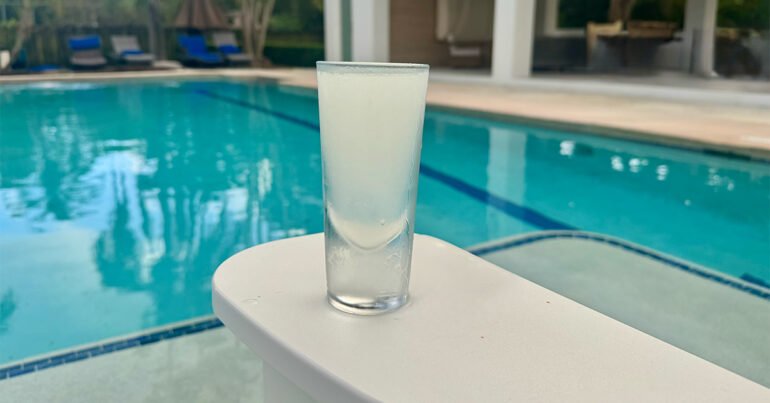
This is not the daiquiri you think you know.
There are cocktails, and then there are cocktails. The difference, as any serious drinker will tell you, comes down to one thing: what you put in the glass.
The daiquiri is one of the great originals. Three ingredients. No hiding. Lime juice, simple syrup, and white rum. It is, in its purest form, a test of everything. The quality of what you use. The balance you strike. The temperature you serve it at. There is nowhere to hide in a daiquiri, and that is exactly why so few people make a truly great one.
I have been obsessed with this cocktail for years. And a few years back, I made a decision that changed the way I think about it entirely: I stopped making it with molasses rum and started making it with white Rhum Agricole.
What happened next is something I have been trying to describe ever since.
The Moment That Started It All
In 2008, I walked into Bar Hemingway at the Ritz Paris. I was not prepared for what was about to happen. I didn’t fully appreciate who was behind the bar at the time, but I believe it was the legendary Colin Field who placed a glass in front of me, and with the first sip, I was teleported to another planet.
What he had done was not complicated in concept. He had simply used the best possible ingredients in the world and balanced them with a precision that most people never even think to attempt. That glass changed my entire understanding of what a cocktail could be.
It planted a question in my mind that I have been answering ever since: what happens when you apply that same philosophy, that same obsession with ingredient quality and balance, to the classics?
What the Pandemic Taught Me About People’s Glasses
When the world stopped in 2020, I started making videos for my friends. Not cooking videos. Cocktail videos. The goal was simple: get people to make drinks at home they had never made before, or, just as importantly, to make drinks they already knew but with better ingredients than they had ever considered using.
The response was remarkable. People were stunned by what a difference it made. The revelation, almost every time, was the same one. It was not some exotic technique or impossible-to-find ingredient. It was the decision to upgrade what was already in the glass.
And nowhere was that more dramatic than in the daiquiri.
Three Ingredients. One Upgrade. A Completely Different Drink.
The daiquiri is three things: lime juice, simple syrup, white rum. Fresh lime juice is non-negotiable; if you are using anything from a bottle, stop reading and go to the store. Good simple syrup is simple to make and takes five minutes. The rum is where the conversation gets interesting.
Most daiquiris are made with a molasses-based white rum. There is nothing wrong with that. Molasses rum is sweeter, rounder, and more familiar. It plays well with the lime. It is a very good cocktail.
But when you swap in the right white Rhum Agricole, you are no longer making the same cocktail. You are making something with more depth, more personality, and a flavor profile that lingers in a way that a standard daiquiri simply does not.
Rhum Agricole is distilled directly from fresh-pressed sugarcane juice, not from molasses. As I explored in depth in my ultimate guide to Rhum Agricole, that single distinction changes everything about what ends up in your glass. You taste the land. You taste the cane. You taste something alive.
Degrees Matter More Than You Think
Here is something most people never consider when they are building a cocktail at home: the degrees, or alcohol percentage, of the spirit you are using matters enormously.
In the world of Rhum Agricole, “degrees” is not just a number on a label. It is a direct expression of the distiller’s intention for how that Rhum should perform and where its flavors will shine brightest. A white Rhum at 50 degrees will behave very differently in your daiquiri than one at 40. The texture changes. The way it carries the lime changes. The finish changes.
For a Rhum Agricole Daiquiri, I have found that a blanc at 50 degrees is the sweet spot. Enough presence to hold its own against the citrus, without overwhelming the delicate grassy, vegetal notes that make this cocktail so unique.
Choosing Your Rhum: What You Are Looking For
Not all white Rhum Agricoles are the same, and in a cocktail this transparent, those differences will speak loudly.
Some express more anise, a subtle licorice quality that adds a savory complexity to the daiquiri that is genuinely surprising. Others lean into green banana and tropical fruit, which pairs beautifully with fresh lime in a way that feels effortless and bright. Certain Rhums from Martinique carry a volcanic minerality, a wet stone quality on the finish, that gives the cocktail a depth that is almost wine-like.
My suggestion is to start with a well-regarded blanc from Martinique. A Depaz Cuvée Papao is extraordinary in this application, its volcanic minerality from the slopes of Mount Pelée adding a dimension to the daiquiri that is unlike anything else. A Rhum Bielle Blanc at 50 degrees brings a tropical explosion that works brilliantly with the lime. La Favorite Canne Bleue is something else entirely, with that earthy funk that divides people, but for those who love it, there is no going back.
The point is to try them. The daiquiri will tell you everything you need to know about a Rhum.
The Recipe
The Rhum Agricole Daiquiri
2 oz White Rhum Agricole (50 degrees or higher, your preference)
3/4 oz fresh-squeezed lime juice
3/4 oz simple syrup
Combine in a cocktail shaker with ice. Shake hard for 10 to 12 seconds. You want it properly cold, the temperature in the glass are just as important as the degrees in the bottle. Double-strain into a chilled coupe glass.
No garnish required. Let the Rhum speak.
The Magic Is in the Balance
What Bar Hemingway taught me, and what I have been passing along ever since, is that the magic in a cocktail is not found in complexity. It is found in balance. The balance between acid and sweet. Between the raw power of the spirit and the brightness of the citrus. Between what you expect and what you get.
When you build a daiquiri with the right white Rhum Agricole at the right degrees, balanced with perfectly fresh lime and a clean simple syrup, something happens in that glass that is genuinely hard to describe to someone who has not experienced it.
It is a cocktail that tastes like a place. Like volcanic soil and fresh-cut cane and the French Caribbean sun. It is the original daiquiri reimagined by a spirit that was never meant for molasses in the first place.
Make it once and see for yourself. The glass will do the talking.
Jose Antonio
2026-05-30 21:28:00