
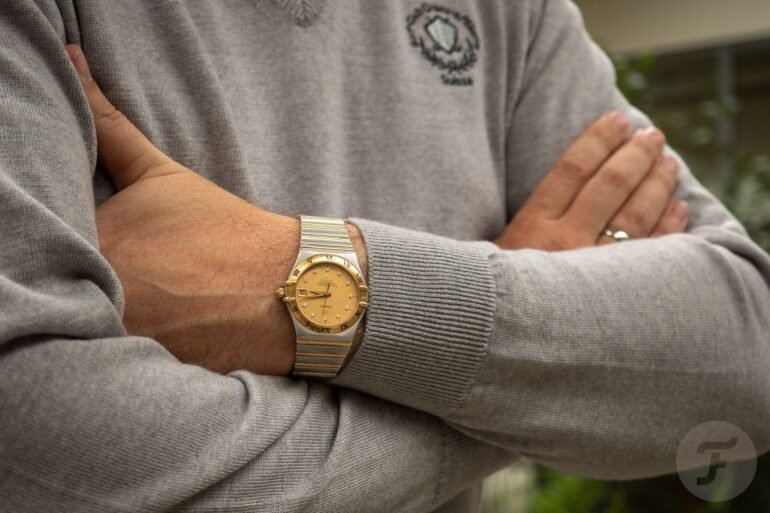
In this new series, we will focus on (neo-)vintage watches that can now be found at interesting prices on the secondary market. We will select watches we have come across in our searches for nice pieces or simply those we think could fulfill a certain desire or role in one’s collection. For this first installment, we picked the long-discontinued Omega Constellation ’95 models because they could fulfill the need for a thinner, dressier, more elegant wristwatch.
The demand for smaller, thinner, and more affordable watches is growing among watch enthusiasts, and rightly so. I am not opposed to larger watches, as a watch up to 44mm would easily fit my wrists. But I do appreciate a finer, thinner watch from time to time.
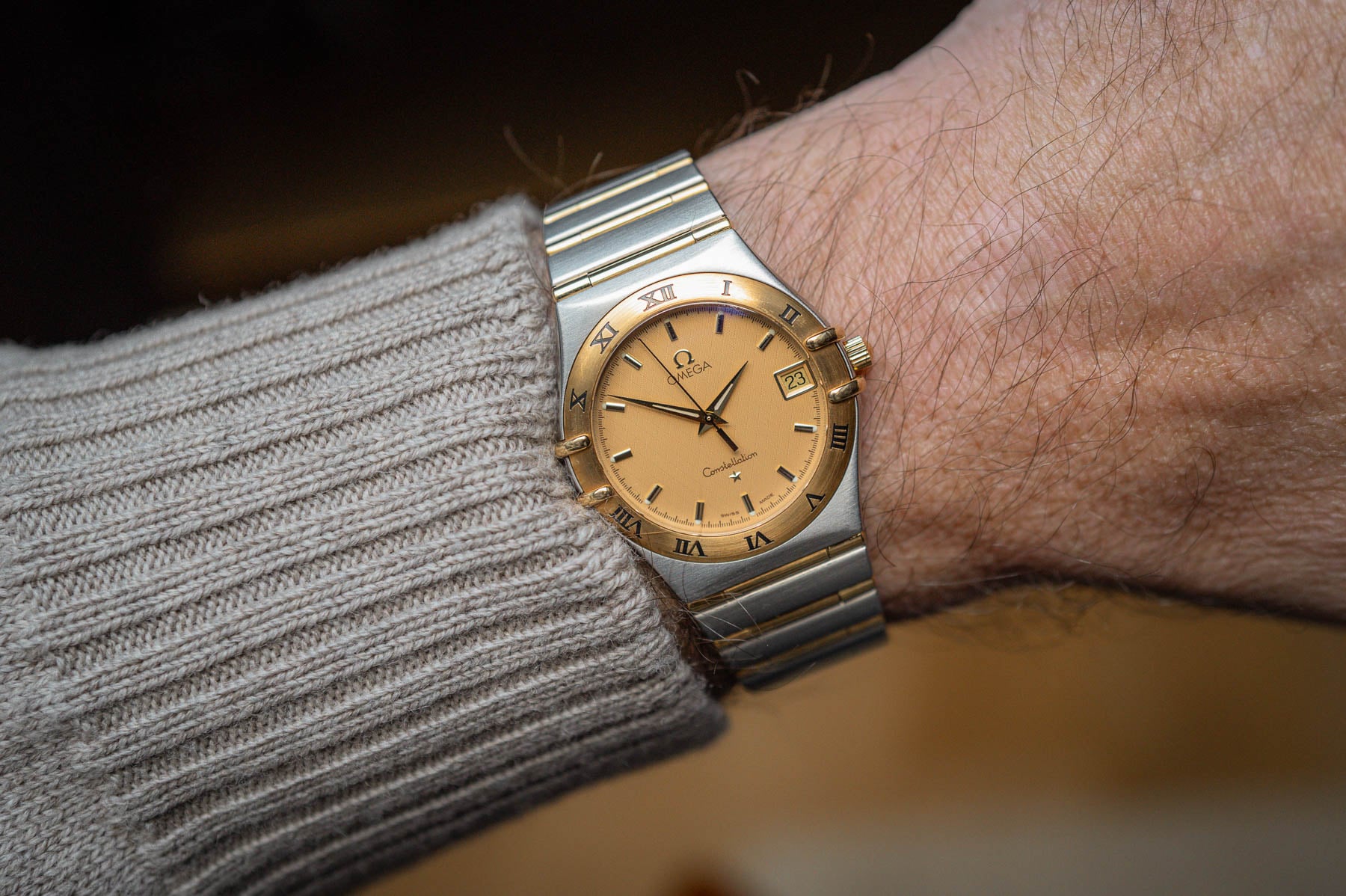
Constellation ’95 ref. 1210.10
Omega Constellation ’95
After a youth filled with Casios and Swatches, my first nice watch was an Omega Constellation ’95. This 33.5mm quartz watch was a gift from my mother for my graduation, and she knew I was in love with it (she often caught me browsing the Omega catalogs at the time). This was in 1998, and at the time, I had just tried it on my wrist, and it was fine. I don’t think I was even aware that it only measured 33.5mm in diameter. The catch with the Constellation ’95 is that the case has a tonneau shape, so it wears larger than the specifications imply.
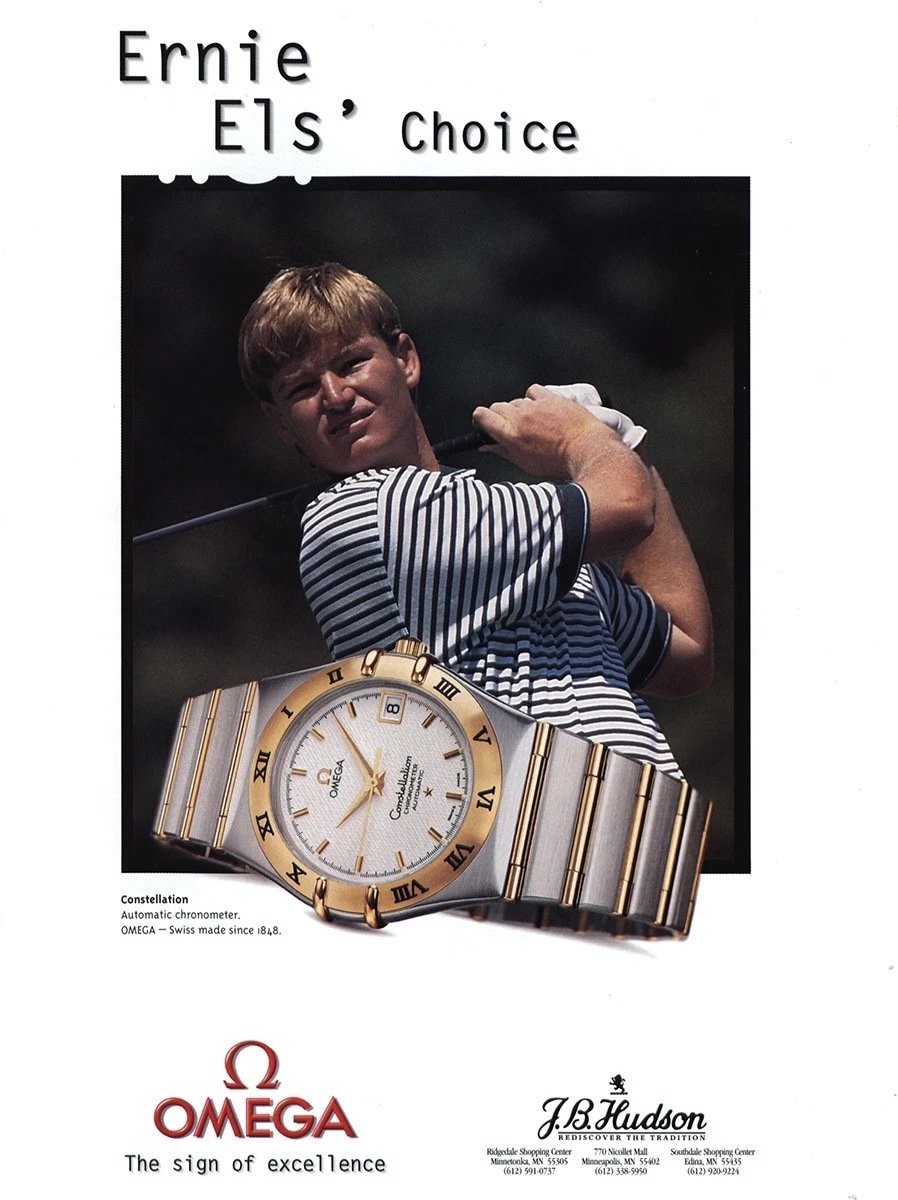
Omega and its Constellation ’95 ambassadors
Following the introduction of the Constellation ’95 collection in 1995, it was a great success for many years, especially with women but also among men. Ambassadors included Cindy Crawford and Pierce Brosnan (yes, besides wearing the 300M in his role as James Bond, he was also the face of the Constellation in some Omega catalogs). Besides him, golf players, like Ernie Els and Bernhard Langer, were prominent wearers.
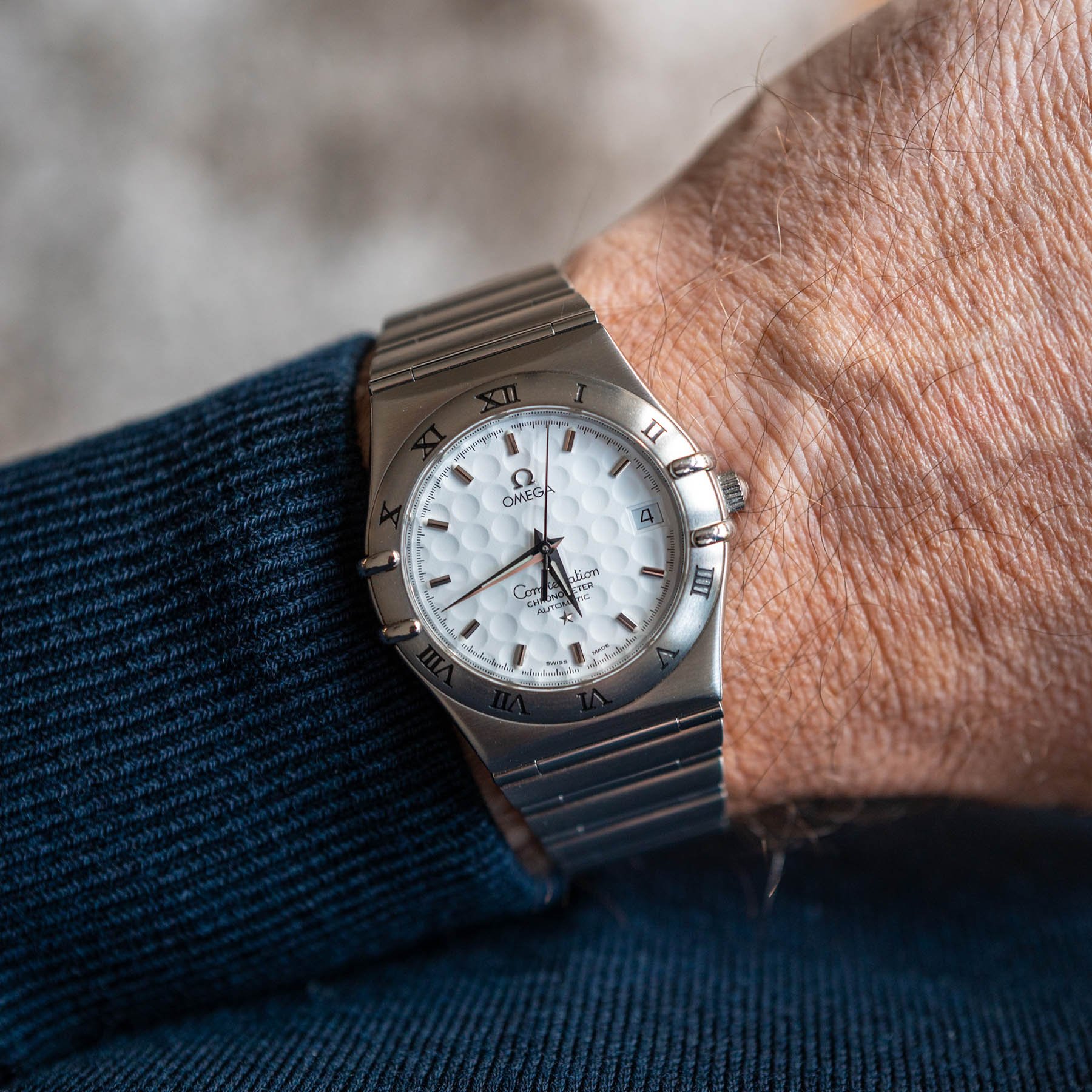
In 2001, Omega even produced a limited-edition Constellation ‘95 model (ref. 1506.40) of 1,500 pieces featuring a golf-ball motif on the dial for Ernie Els.
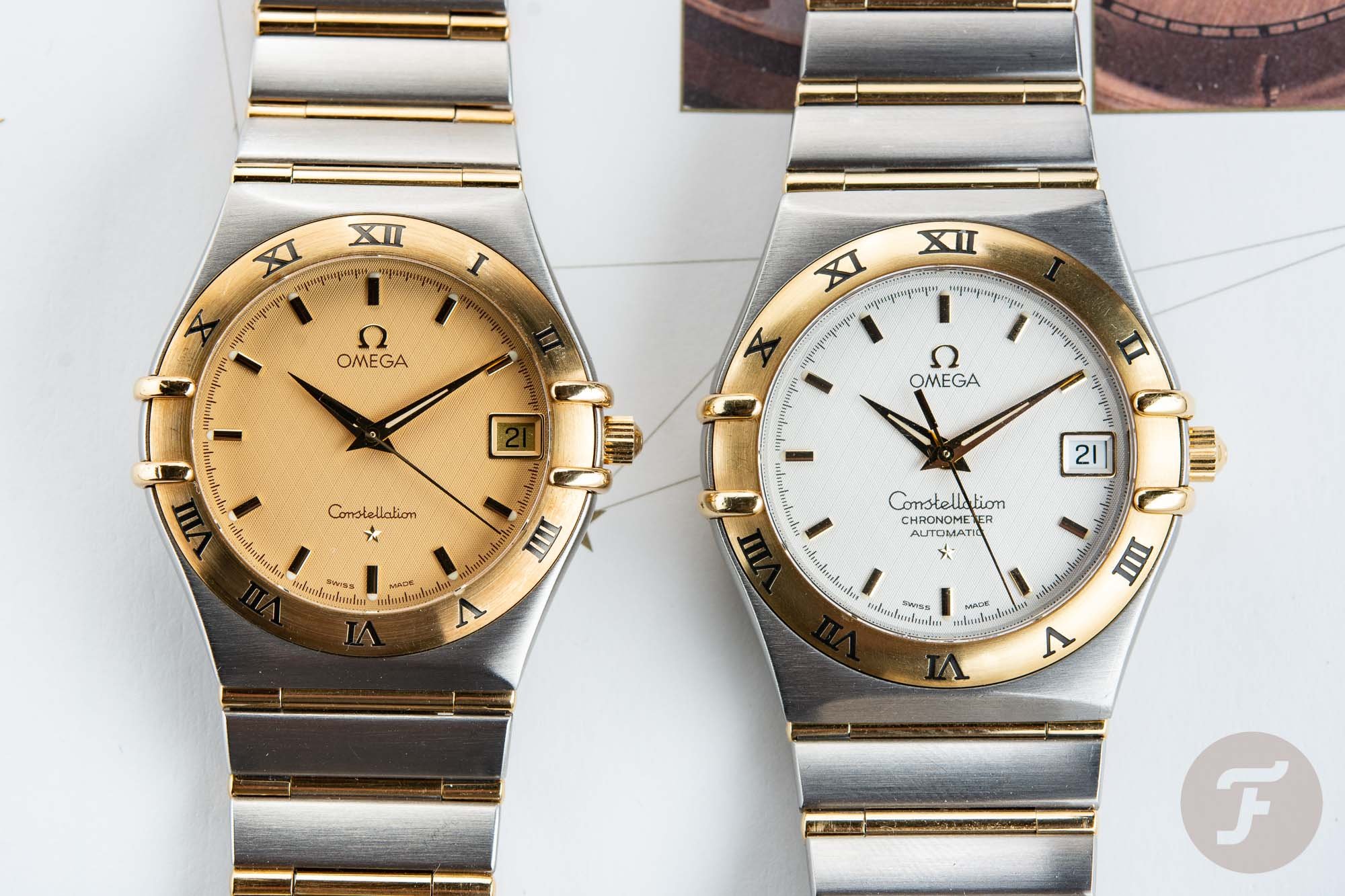
Quartz (left) and automatic (right) versions of the Constellation ’95
Very modest dimensions
Anyway, the Constellation ’95 came in several sizes for men and women. I will stick to the gentlemen’s versions, measuring 33.5mm for the quartz-powered models and 35.5mm for the automatic ones. Both housed an ETA-based movement, with the automatic version based on the 2892-A2 featuring Côtes de Genève decoration and an Omega-signed rotor. This movement, Omega’s 1120, also powered other watches, such as the Seamaster 300M.
Though not as slim as a dress watch from Breguet or Patek Philippe, at 9.5mm thick for the automatic version, it’s still a comfortable size (for comparison, the 36mm Rolex Datejust from the same era measured 11.7mm thick).
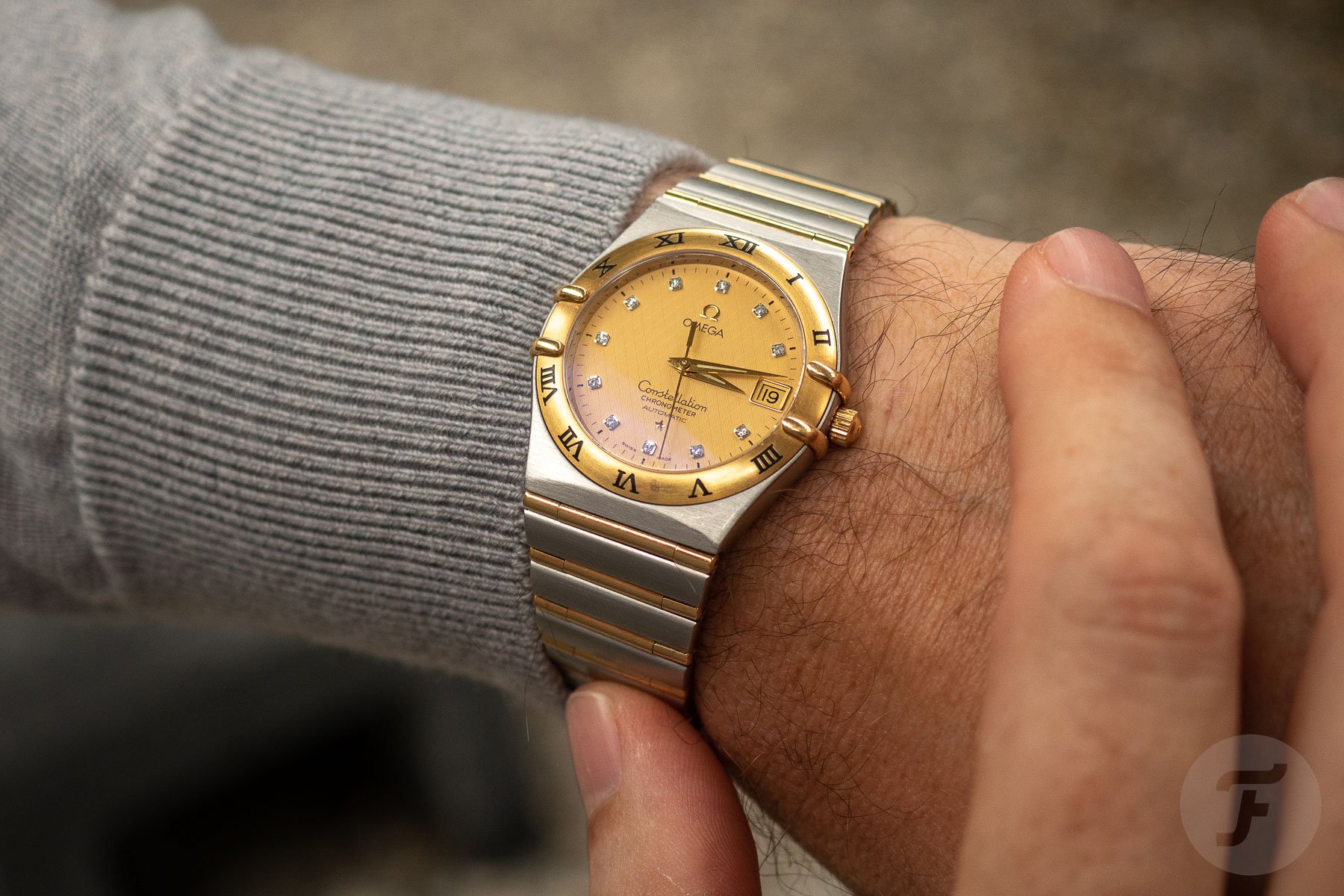
Constellation ’95 ref. 1202.15 with diamond hour markers
The Constellation ’95 was in production from 1995 to 2008
I wore my quartz Omega Constellation constantly for about a year until I bought a Speedmaster Professional later in 1999. The quartz Constellation ’95 is smaller and thinner than the automatic version, so if that’s what you are after, it might be a very solid choice, especially at today’s prices. The two-tone Constellation ’95 quartz (reference 1212.10) retailed for 4,000 Dutch guilders (roughly €1,815 without inflation correction, etc.) in 1998, and the automatic version was 1,000 Dutch guilders more. Back then, it was a lot of money for a wristwatch!
In 2003, Omega replaced the Constellation ’95 with the Constellation (Double) Eagle, which received a less prominent spot in the catalog. However, the very last Constellation ’95 came out in 2008 with a Co-Axial caliber 2500 to commemorate the company’s 160th anniversary.
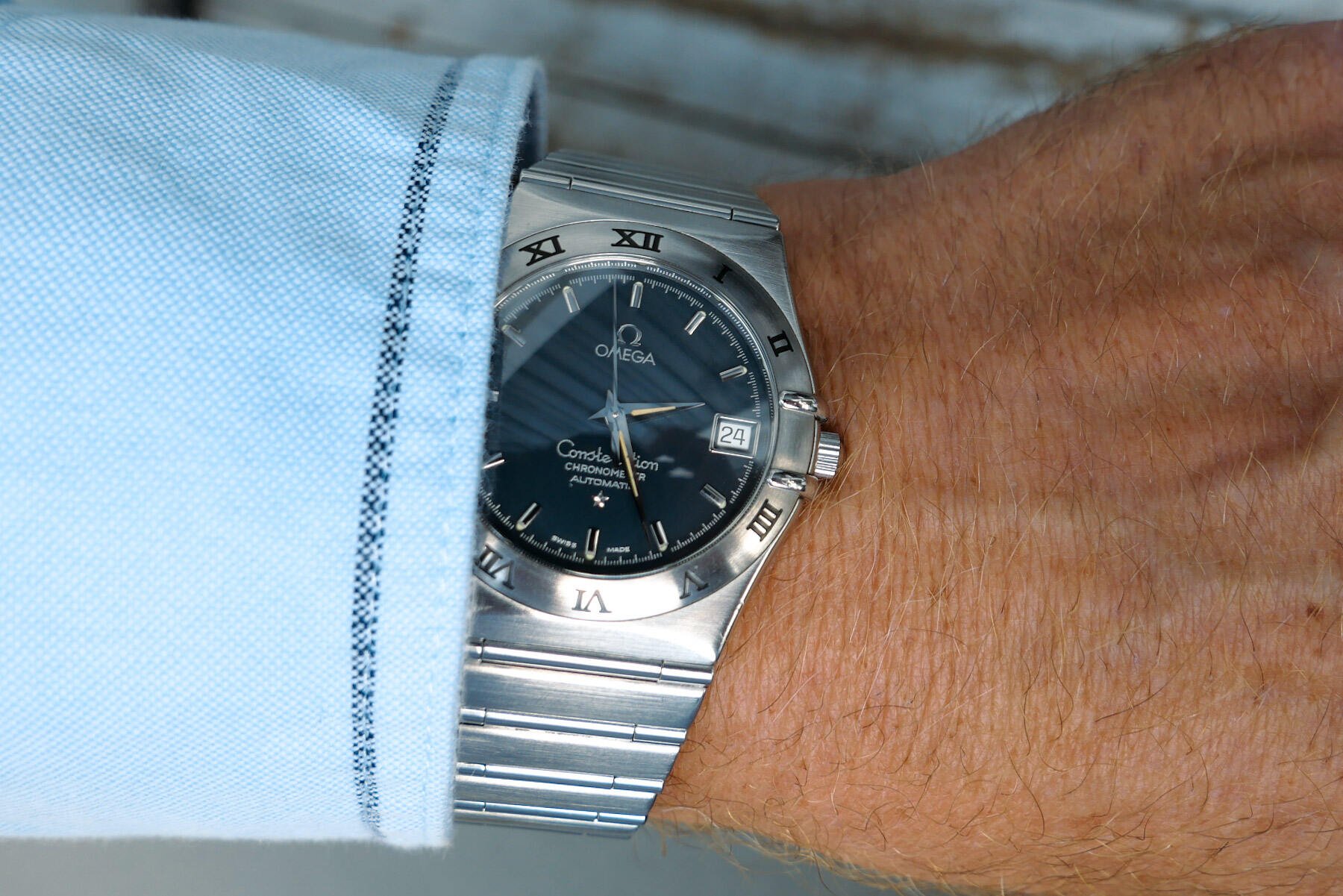
Constellation ’95 ref. 1502.40
Is it worth getting a Constellation ’95 today?
So, what about the Omega Constellation ’95 today? The design has roots in the 1980s, stemming from the Constellation Manhattan from 1982.
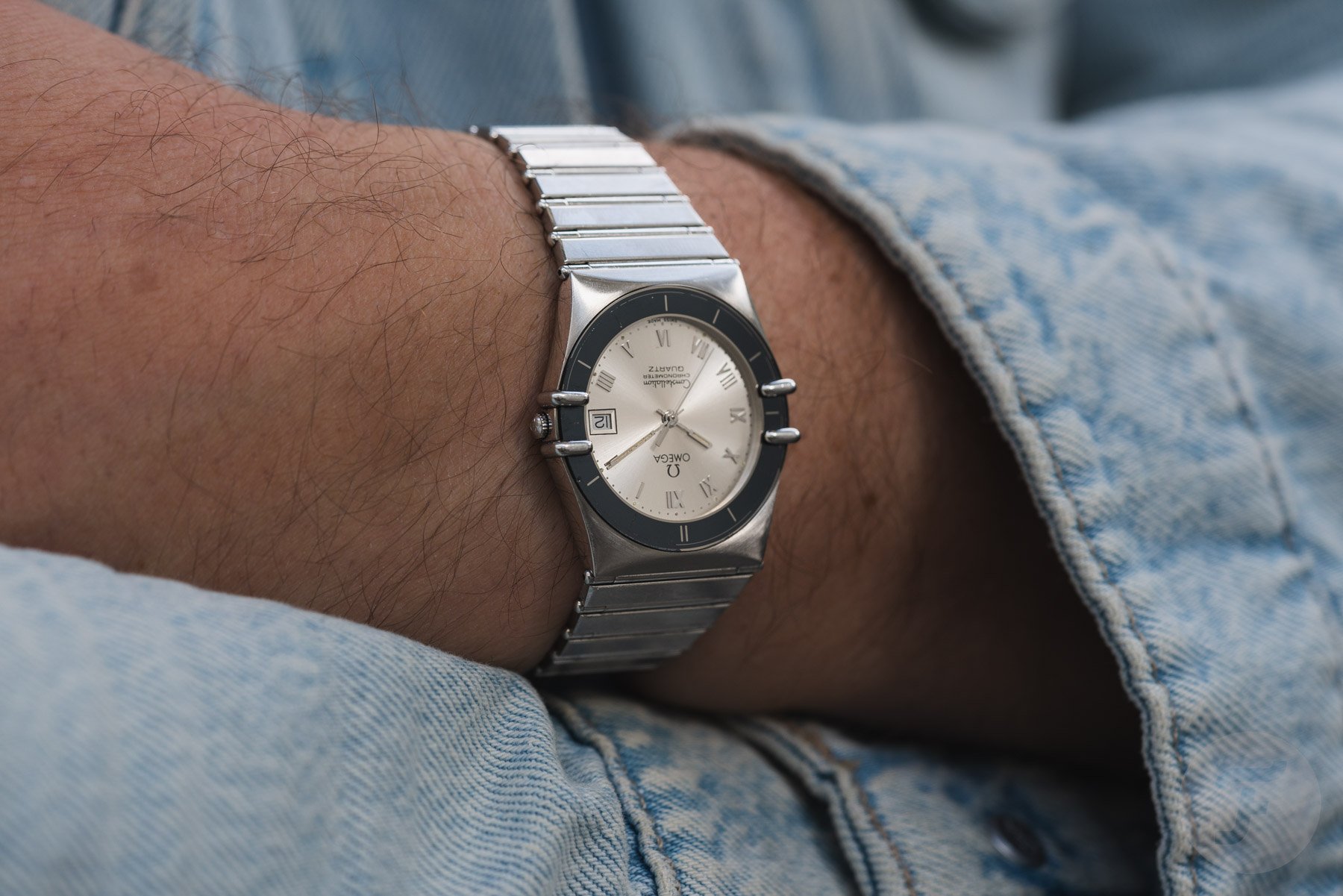
The 1982 Omega Constellation Manhattan
This means the design isn’t typically 1990s. Rather, it was an updated version of a watch that had existed for more than a decade. The 1980s and 1990s produced watches that were long neglected but are now gaining traction again. Can the Constellation ’95 be one of those models that see a reborn interest?
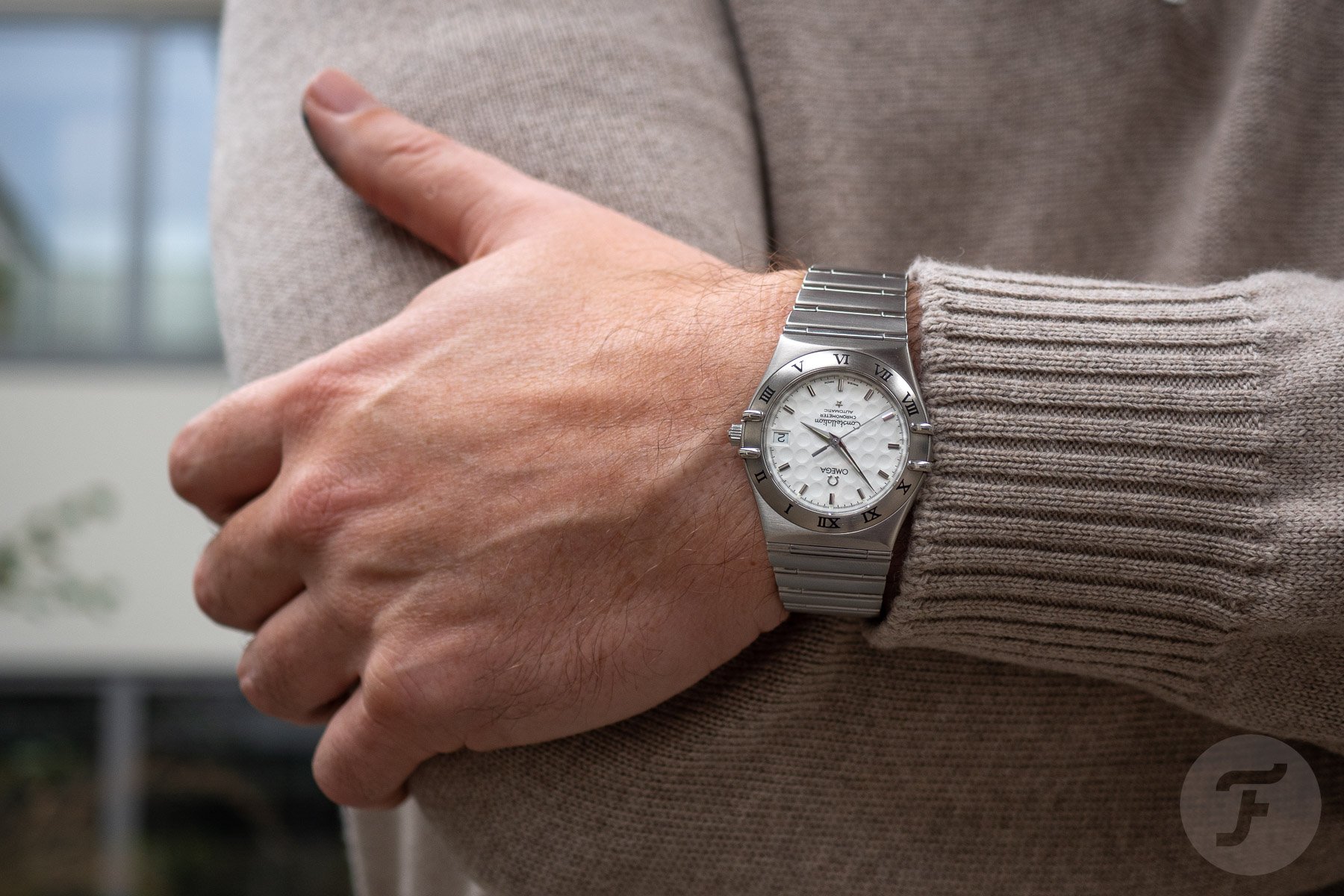
Ernie Els Constellation ’95 ref. 1506.40
Super comfortable and reliable watches
After neglecting them for quite a while, I recently picked up my Constellation ’95 watches again, and I enjoy wearing them. I had owned two (one automatic and the quartz version my mom gave me) for years, and at the end of 2024, I added a third Constellation ’95 to the collection — the stainless steel Ernie Els limited edition with the self-winding caliber 1120.
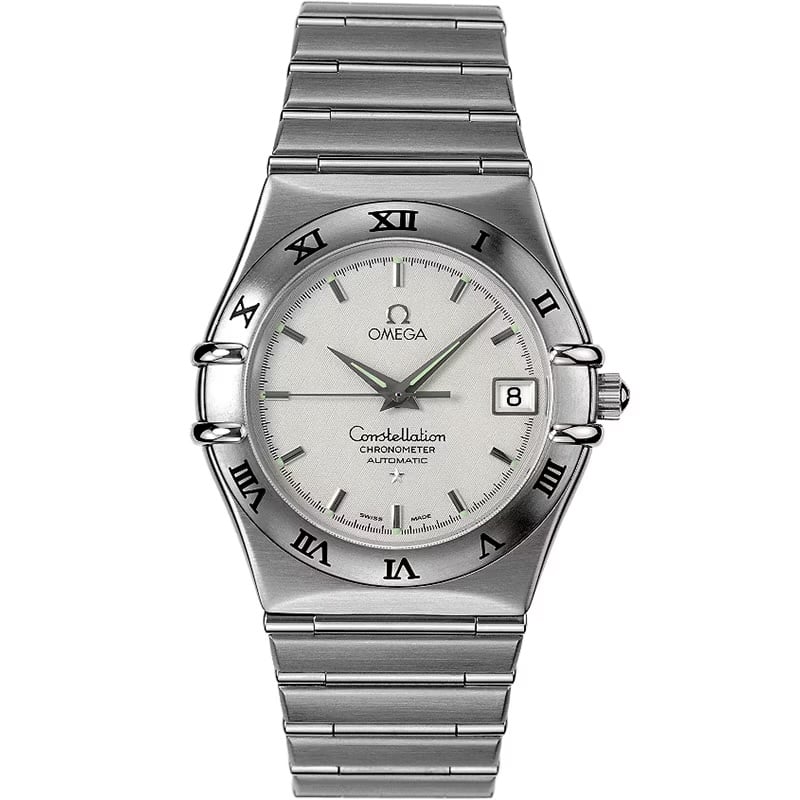
Constellation ’95 ref. 1502.30
The Constellation ’95 is super comfortable, reliable, and relatively affordable. If this ticks your boxes, you should try one for sure. A blue-dial steel Constellation ’95 ref. 1502.40 can be had for less than €2,000, and the same applies to the white-dial ref. 1502.30. These will cost even less if you can track one down in Japan. A blue-dial quartz Constellation ’95 ref. 1512.40 will set you back less than €1,000.
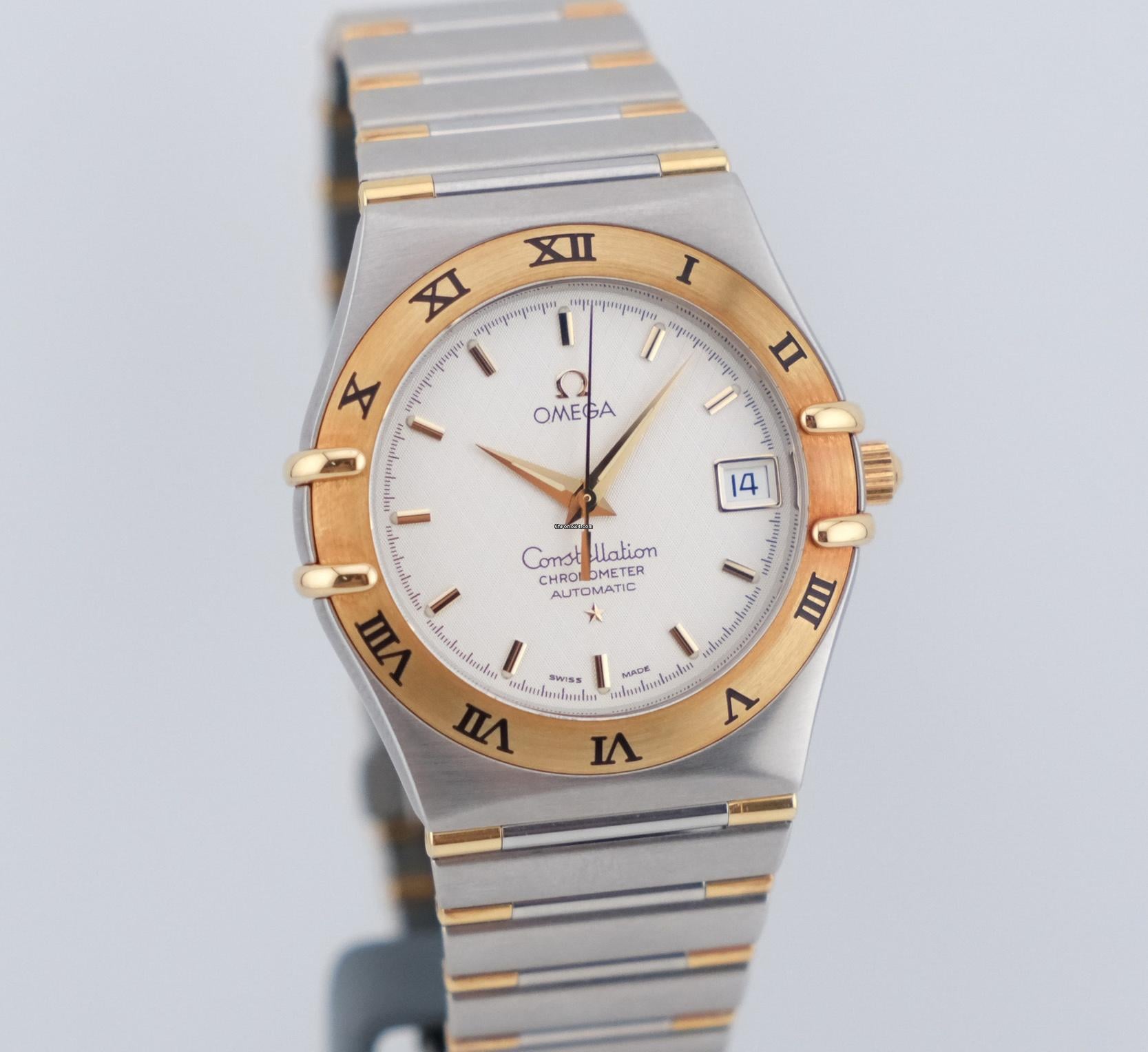
Constellation ’95 ref. 1302.30 “Half-bar” — Image: Chrono24
Half-bar and full-bar links
That said, my preference is with the two-tone models, like the ref. 1202.10. Please be aware that the two-tone ones come with two bracelet variations, featuring either full-bar or half-bar links. It’s self-explanatory, but the full-bar bracelet contains more gold. The white-dial version carries the reference number 1202.30. The half-bar variations have the reference numbers 1302.30 (white dial) or 1302.10 (champagne dial).
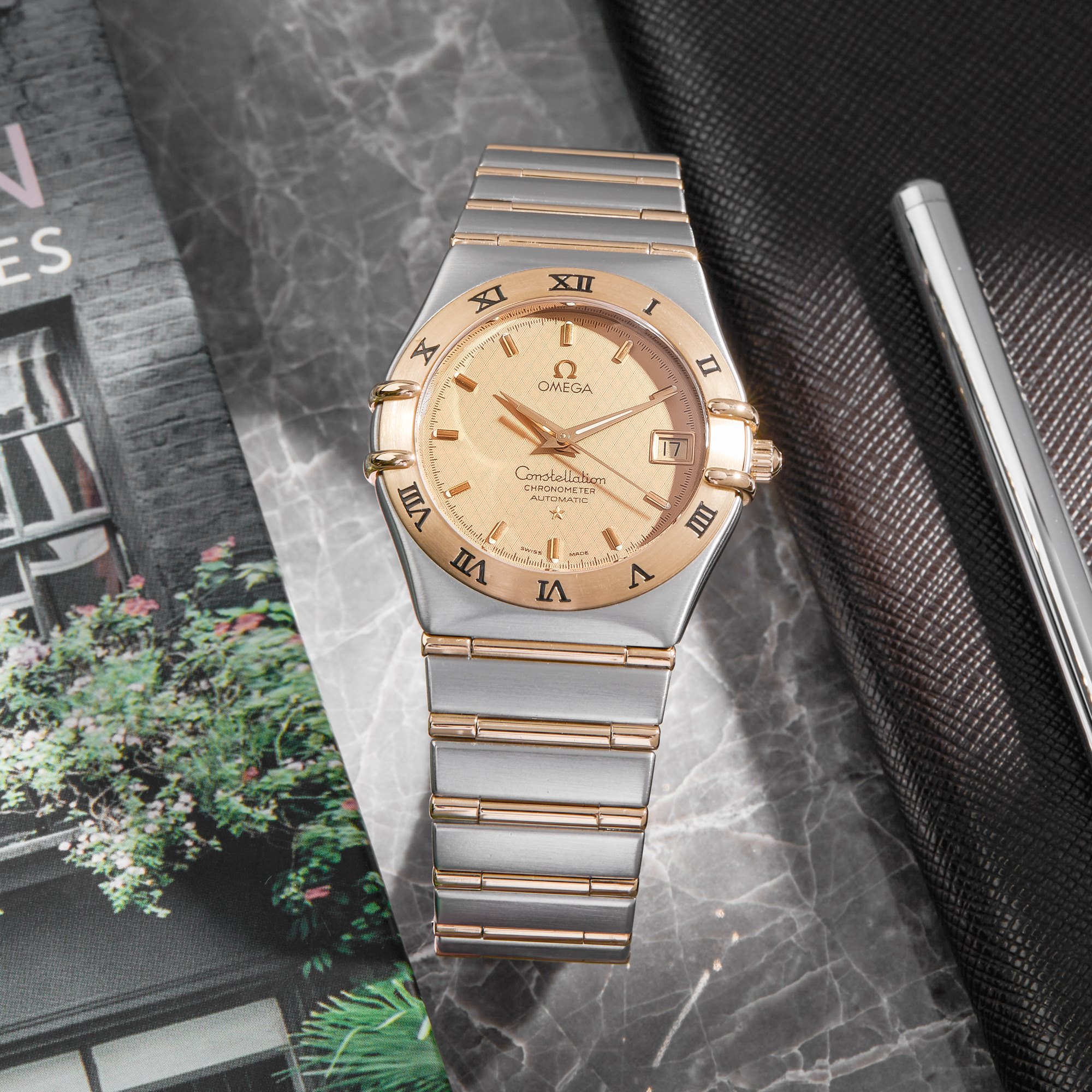
Constellation ’95 1202.10 “Full-bar”
I mention this explicitly, as I’ve noticed many sellers on the pre-owned market get the references mixed up. Consequently, you will find half-bar models with the full-bar model’s reference number and vice versa. While annoying, this is often just a mistake rather than ill intent. Still, now you know what to look for. The full-bar gold models currently sell for between €2,000 and €2,500. All these models are also available with a quartz movement, making them even thinner and smaller.
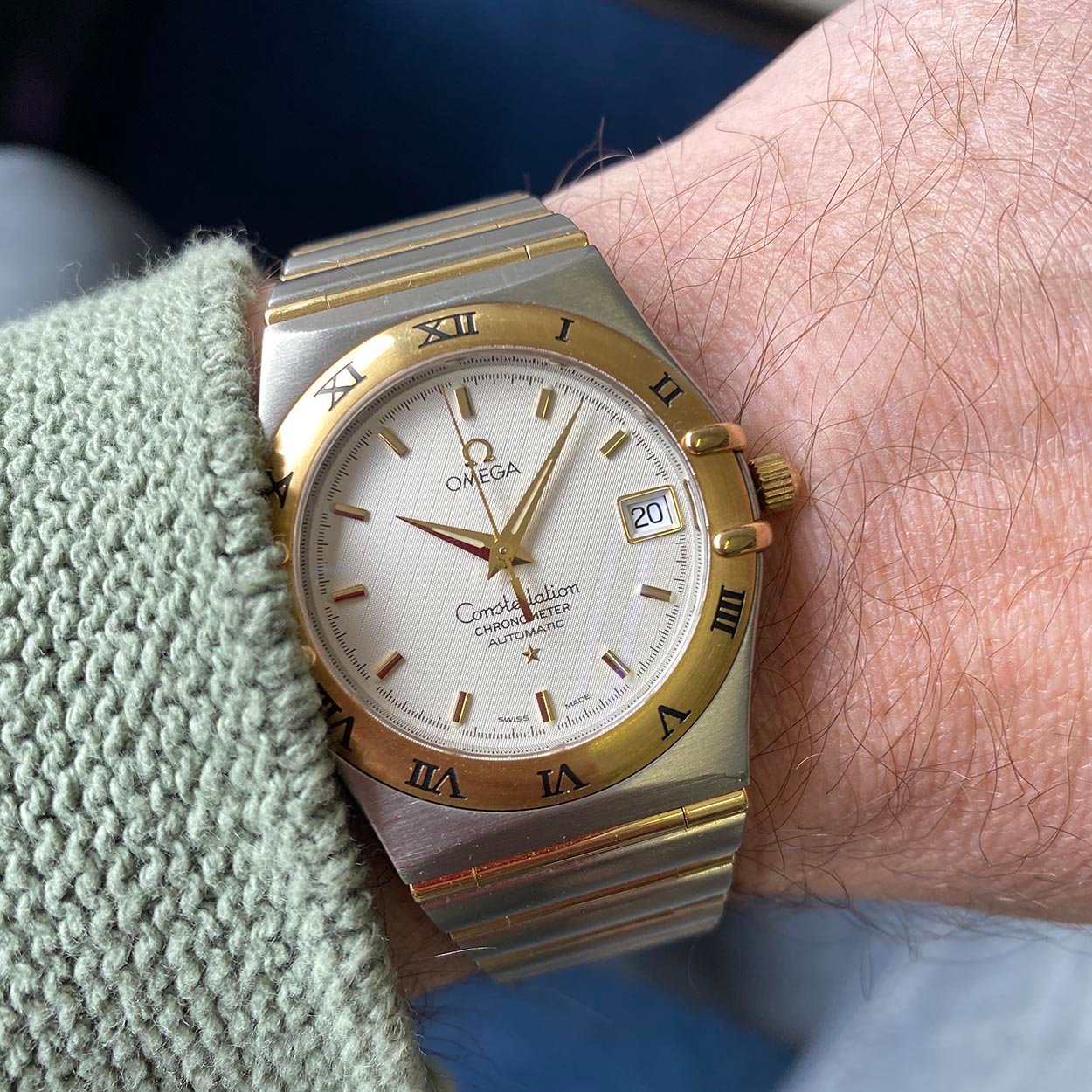
Constellation ’95 ref. 1202.30
Are there any things you need to be aware of?
Certainly, as some sellers list completely different models under the wrong reference numbers, you will even find models that predate 1995 and don’t have the dauphine hands or motif on the dial and can have older movements (such as caliber 1109). Luckily, Omega has an online catalog with most reference numbers for you to check, like this one.
Also, make sure you get a bracelet with enough links (there should be 23, including those for the clasp) and not any bent ones. These are easy to recognize because there will be too much space between links. It should be one fluid-looking bracelet.
Getting a Constellation ’95 with its original box and papers shouldn’t be a big issue. Also, be aware that those Omega boxes from the 1990s weren’t the best in class, so if you find one that shows deterioration, don’t be too worried. It’s pretty common for that era.
Robert-Jan Broer
2026-05-07 05:00:00