
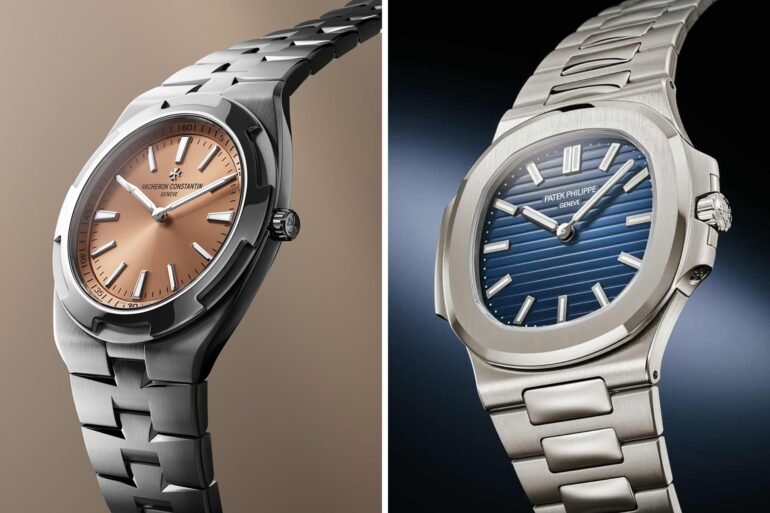
It’s that day of the week again, Fratelli! This Sunday marks the end of a week that brought us a gazillion new watches, two of which go head-to-head today. For this week’s Sunday Morning Showdown, we put two literal heavyweights up against each other. Jorg puts forward the platinum Vacheron Constantin Overseas Self-Winding Ultra-Thin. Meanwhile, Thomas defends the Patek Philippe Nautilus 5610.
These two may be heavyweights, but they are also incredibly slim — heavy and lean like Anthony Joshua and Deontay Wilder. Let’s see which one takes the belt today!
But first, last week’s results
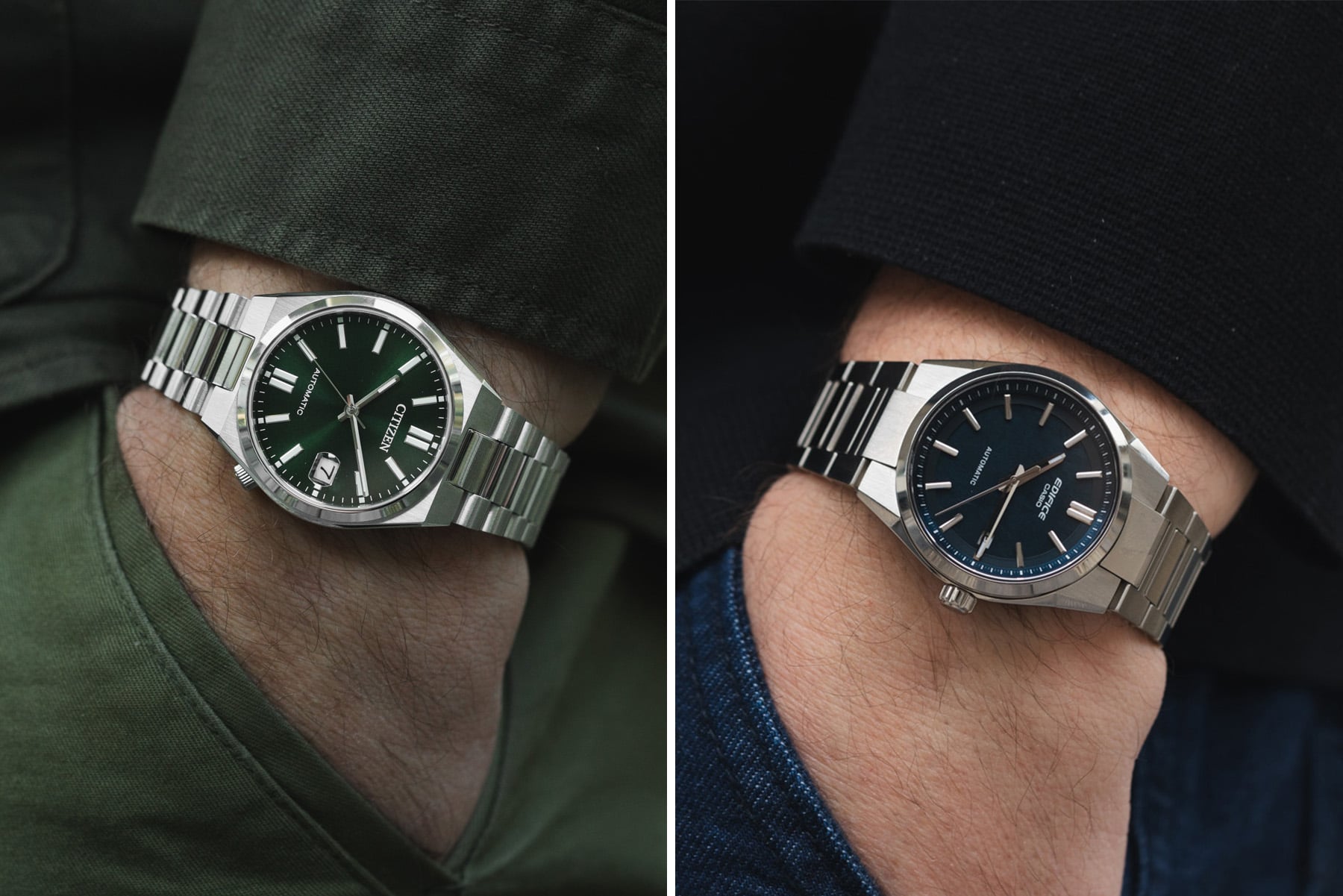
It is not often that a Sunday Morning Showdown feels as long ago as it does today. It really has been only one week since Jorg took on debutant Gerard. That’s the “Watches and Wonders Effect” for you! The contrast with today’s contestants could hardly be greater. Last week, the gents organized a brawl between two ultra-affordable watches, Jorg’s Citizen Tsuyosa 37 versus Gerard’s Casio Edifice EFK-110.

Well, Fratelli, you clearly weren’t interested in greeting Gerard with a soft, warm welcome to Sunday Morning Showdown. The Citizen basically wiped the floor with the Casio, beating it with a 60-40 split. I don’t think we’ll see Gerard again anytime soon!
The Edifice did, however, score points for omitting a date magnifier, a much-disliked feature of the Tsuyosa. Interestingly, beyond this point, there weren’t any clear trends to be found in the motivations shared in the comments section. In fact, many commenters preferred the Casio, showing that the silent majority holds power here. In any case, let’s shift market segments and proceed to today’s matchup!
Thomas: Patek Philippe Nautilus 5610
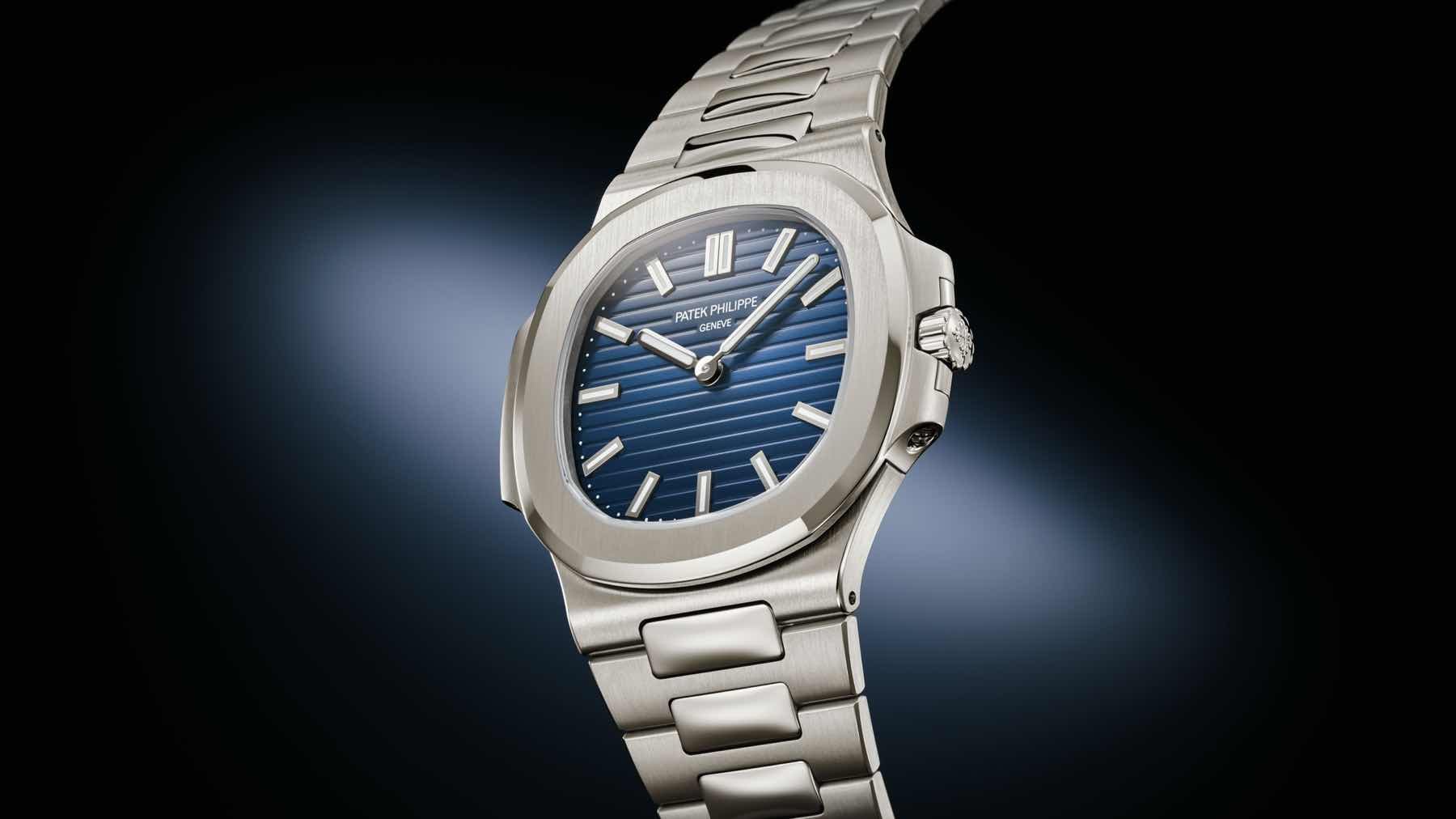
Good morning, Fratelli! And good morning, Jorg! What a week it has been. After writing a book’s worth of deadly serious release articles, I am happy to round off the week with a bit of a tongue-in-cheek brawl. Seeing as Jorg wrote even more than I did, I am hoping to catch him off guard and tired. Knowing Jorg, the chances of that are slim, but one can always hope, right?
Today’s battle sees two of my favorite releases from this Watches and Wonders take each other on. I could happily defend either candidate, and I certainly wouldn’t kick either out of my watch box. Still, if I were spending my actual hard-earned euros, I would go for the Nautilus. Before I tell you why, let me briefly outline the comparison we have before us.
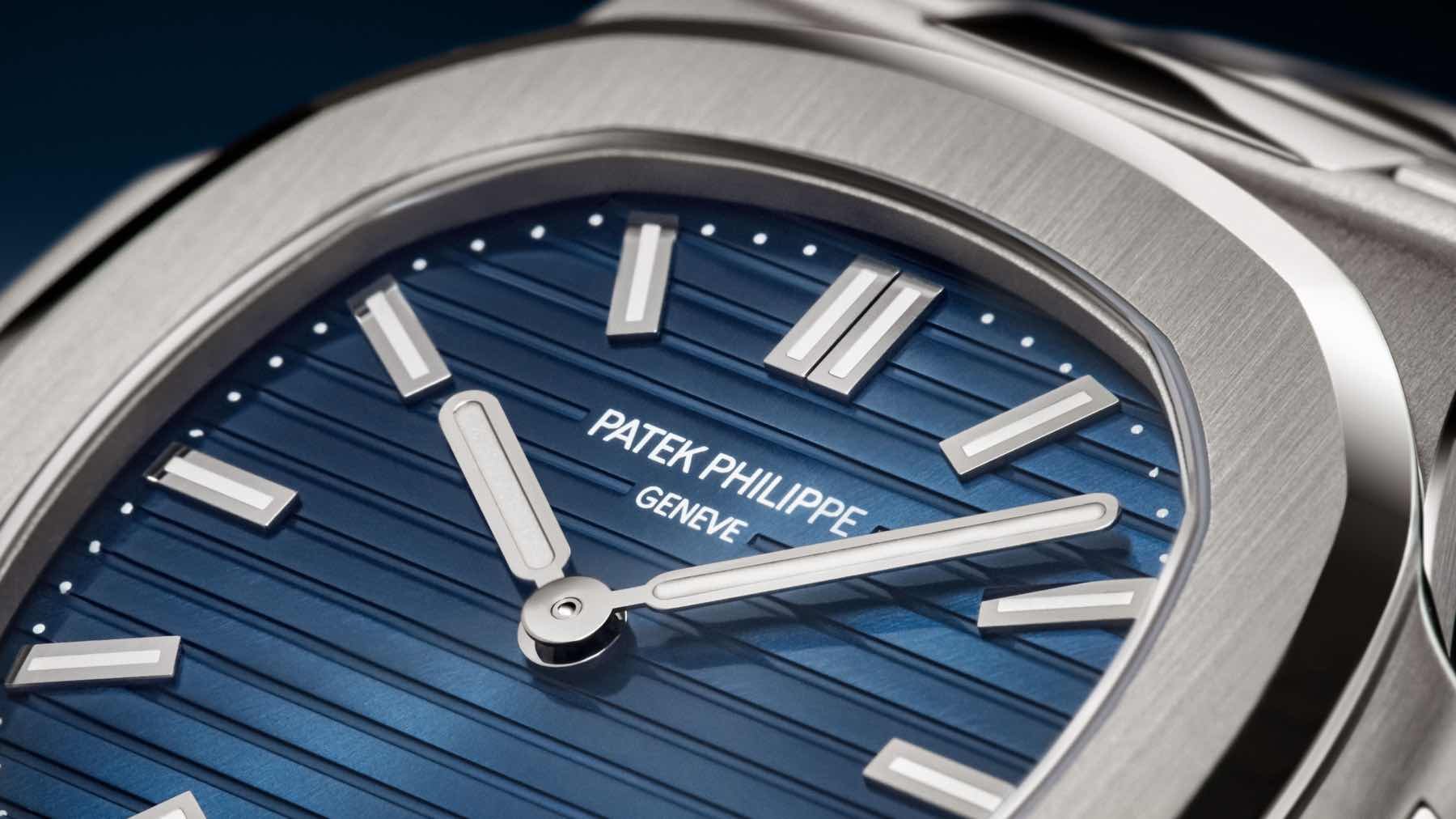
These are two integrated-bracelet sports watches from two of the original Holy Trinity watchmakers. Yes, I know some of you think that’s a stupid term; you can voice your displeasure in the comments section below. I hope it offers relief and safeguards your loved ones from moody outbursts later today. I refer to the Trinity because it is relevant here. After all, that other member of this illustrious trio, whose name shall not be spoken, introduced the genre a few years before Vacheron Constantin and Patek Philippe. Still, the Nautilus and the Overseas predecessor, the 222, were part of that original wave. This week, both released platinum, ultra-thin, ultra-costly versions of their creations. The Overseas costs €119,000, while the Nautilus comes in at €106,000. That means that if you have recently sold a kidney and one or two of your offspring, these are well-matched, direct competitors for your earnings.
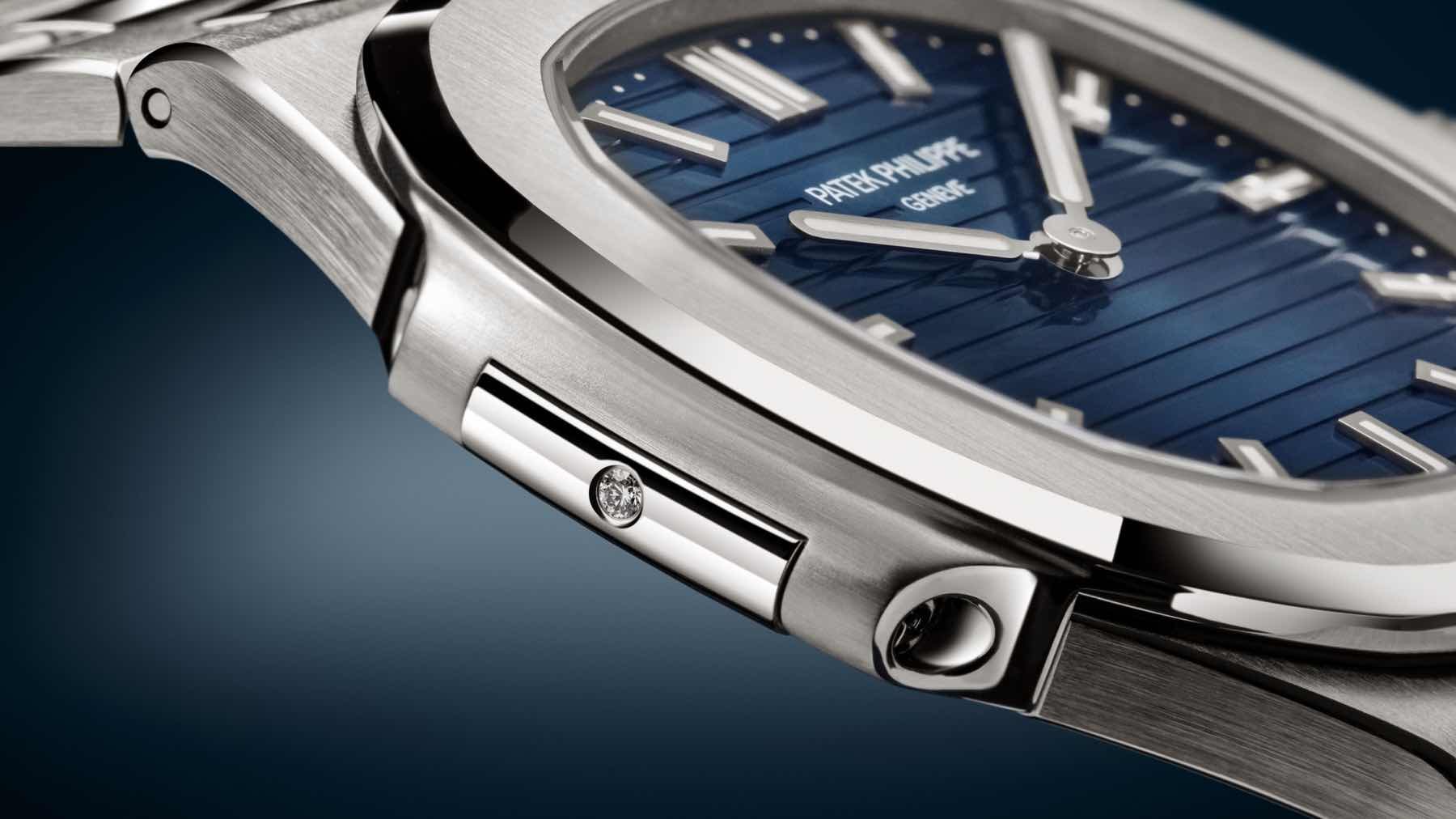
The Nautilus 5610 over the Overseas Self-Winding Ultra-Thin from a specs perspective
I have two main motivations for picking the Nautilus 5610 over the Overseas Self-Winding Ultra-Thin. First, there is the spec sheet. Okay, admittedly, I don’t actually care about that at all, but it offers some easy points that I cannot afford to miss. The second, more relevant reason is the design. I am also not too proud to admit that a third factor, the brand, leans in Vacheron’s favor. To me, Vacheron Constantin is the more sympathetic company of the two. This is, however, not entirely justified. After all, this inclination stems from an incident of tone-deaf demeanor from a president who isn’t representative of the hundreds of passionate and skilled people working at the maison.
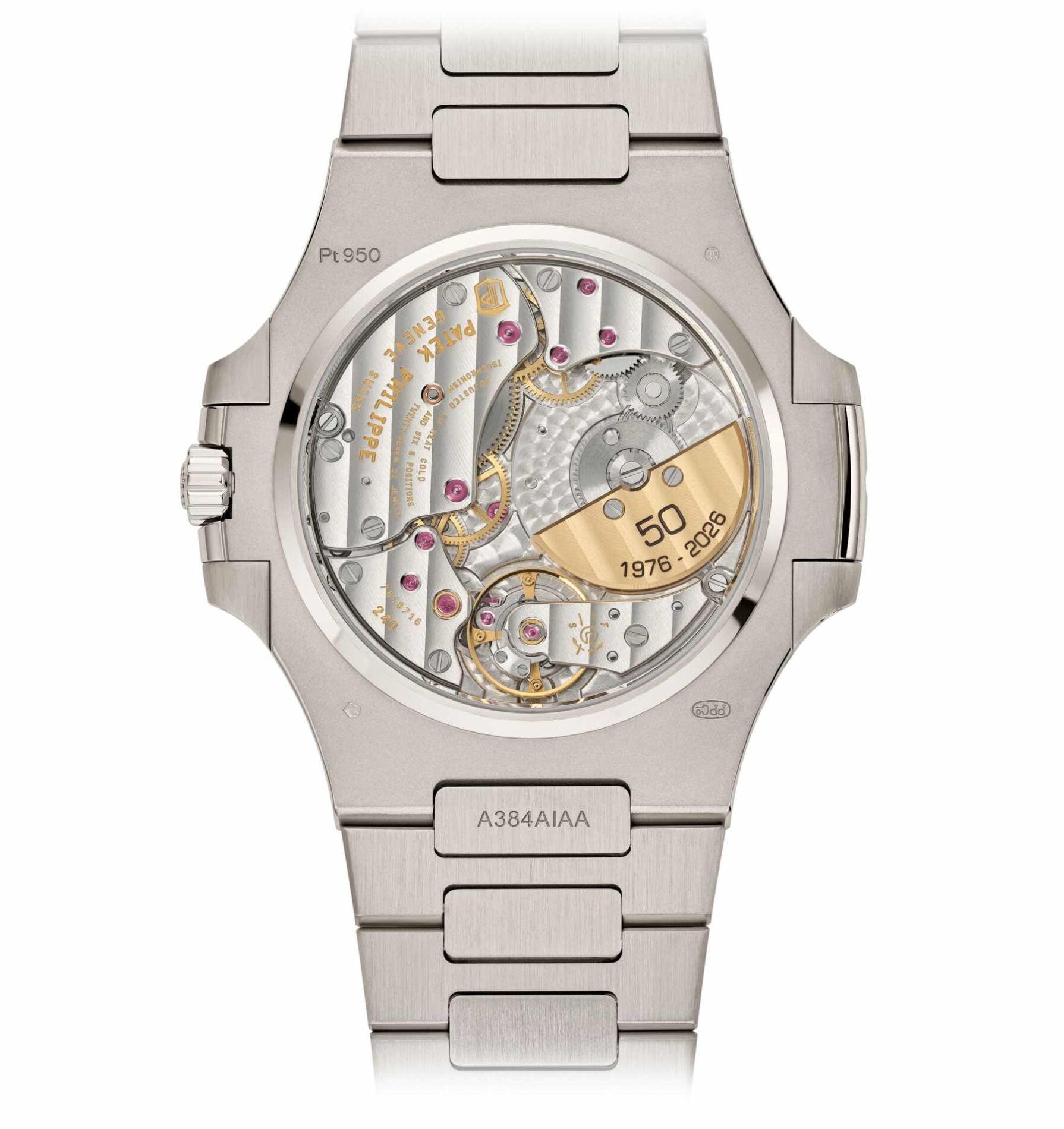
In any case, let’s get to those pesky specs. Ultra-thin watches are all about proportions. The Nautilus 5610 wins here, hands down. Not only is it thinner, at 6.9mm versus 7.35 for the Overseas, but it is also more ergonomically shaped. Its more compact case follows the contours of the wrist better than the elongated, flat Overseas. As a result, it is less likely to wear like a pancake.
While I am sure Jorg will share some valid specs around the Vacheron’s new caliber that weigh in its favor, I have one more thing speaking for me — price. Not only is the Nautilus 5610 a whopping €13,000 cheaper (that’s IWC Ingenieur money), but just imagine what happens if, one day, you decide to sell these watches. Which do you think will do better?
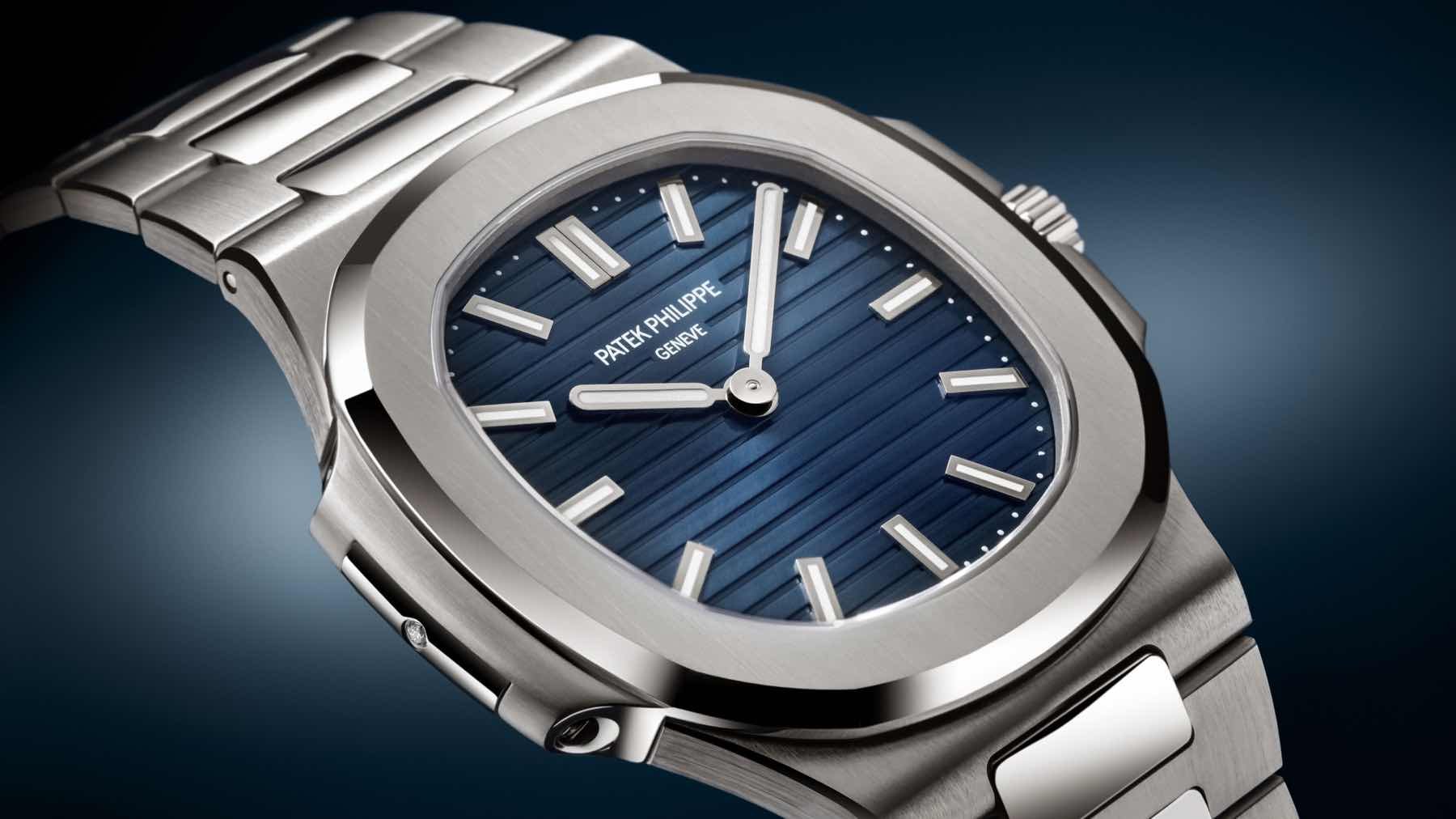
The Nautilus 5610’s design over the Overseas Self-Winding Ultra-Thin’s
Okay, on to the core of the matter — design. After all, both watches are executed to similarly awe-inspiring standards, and both have a satisfying feature set. Now, I have to admit that I am fed up with the ceaseless worship of Gérald Genta. We have a new generation of great designers who deserve to be celebrated, and Genta also produced some eyesores. He was also just a human being of flesh and blood, okay? Still, I think the Nautilus is one of the maestro’s best. Allow me to elaborate.
That original integrated-bracelet sports watch, the name of which shall not be mentioned here, was a masterstroke. Still, it feels like Genta got something out of his system there, in 1970, allowing him to try a little less hard when he turned to the Nautilus in 1976. The result is a watch that feels more effortless, somehow less contrived. It is less strict, drawn with a more relaxed hand. It feels like the brainchild of an established, confident designer with little to prove.
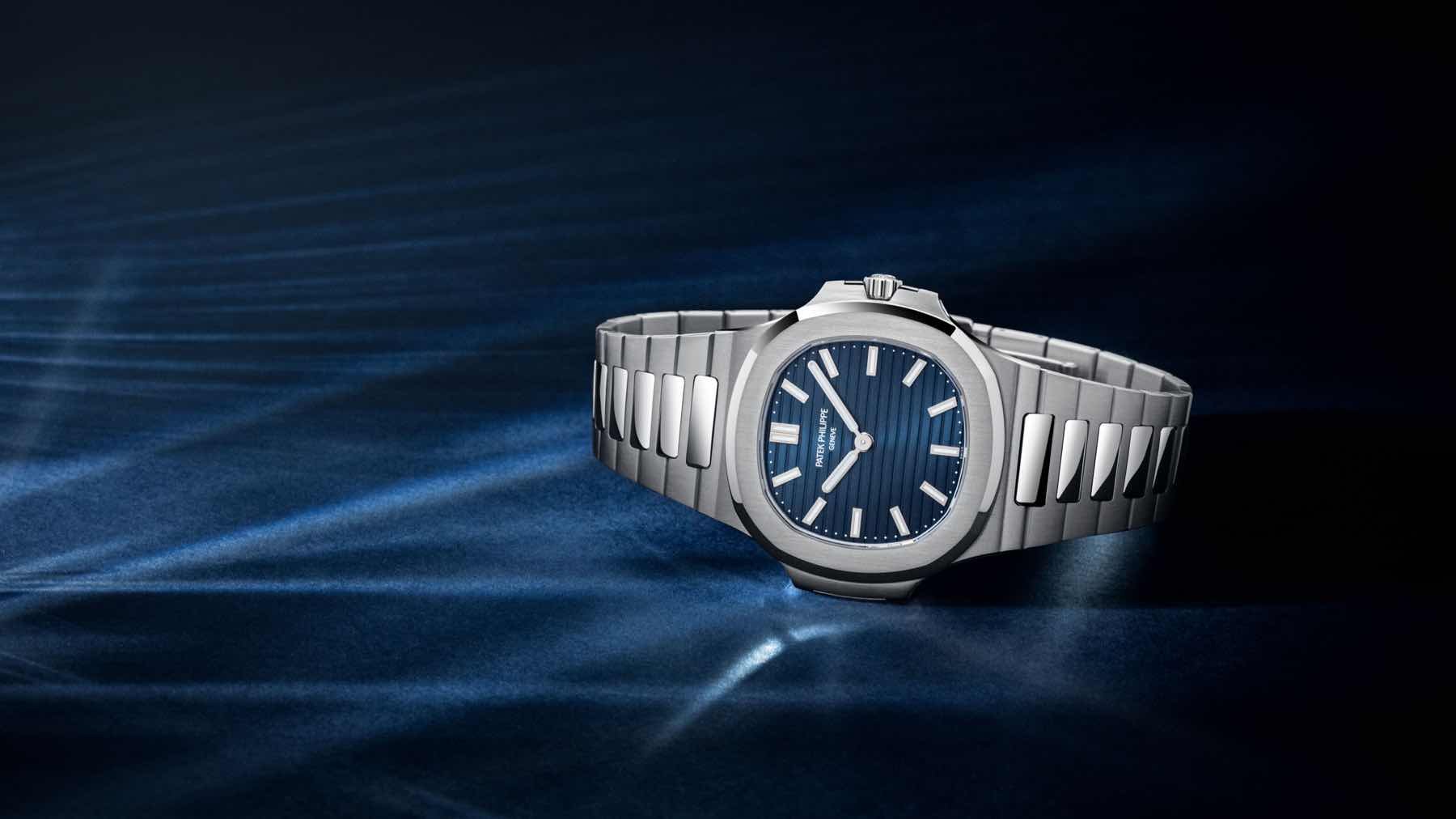
By the time Vacheron joined the party in 1977, it felt like the brief was “try not to think of those other two.” You still see this in today’s contestants. The Nautilus 5610 still looks effortless and iconic. The Overseas Self-Winding Ultra-Thin, though beautiful, is comparatively contrived. The sawblade bezel and those puzzle-piece bracelet links… It’s all a bit different for different’s sake. Worst of all, it is inconsistent. Have a closer look at how the first bracelet link connects to the case. In my book, this is a straight-up design error. I am sorry, Fratelli; I am usually not this snarky. Blame it on the workload this week. Jorg, please take the keyboard before I step on any more toes.
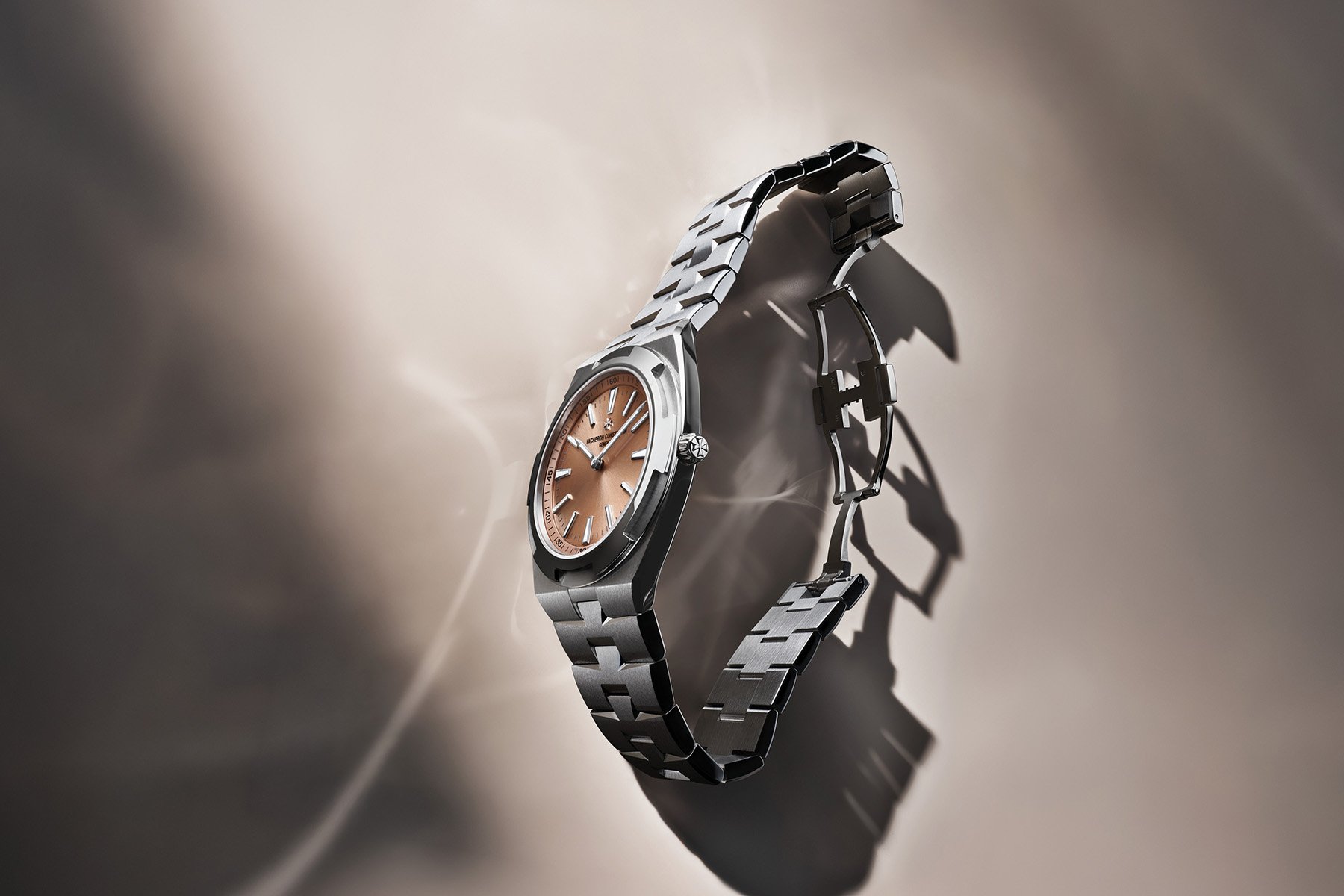
Jorg: Vacheron Constantin Overseas Self-Winding Ultra-Thin
Wow! You gave me plenty to react to at the end of this long week, Thomas. I admit, I am tired after writing what seemed like an endless barrage of articles. But can I be caught off guard? Maybe… I’ll leave that up to the commenters, who will undoubtedly chime in with even more specs and opinions than we could ever cover in our parts for this week’s Sunday Morning Showdown. I love that you brought up the price difference between the two in Ingenieur terms. It genuinely made me laugh out loud.
To lean in on that observation, how many steel Ingenieurs can we actually buy for the prices of either of these watches…? The answer to that question reveals the abstract reality of the prices both Patek and Vacheron set for their timepieces. To your point, I don’t think one Ingenieur will be the limiting factor to prevent any potential buyer from buying the new ultra-thin Overseas.
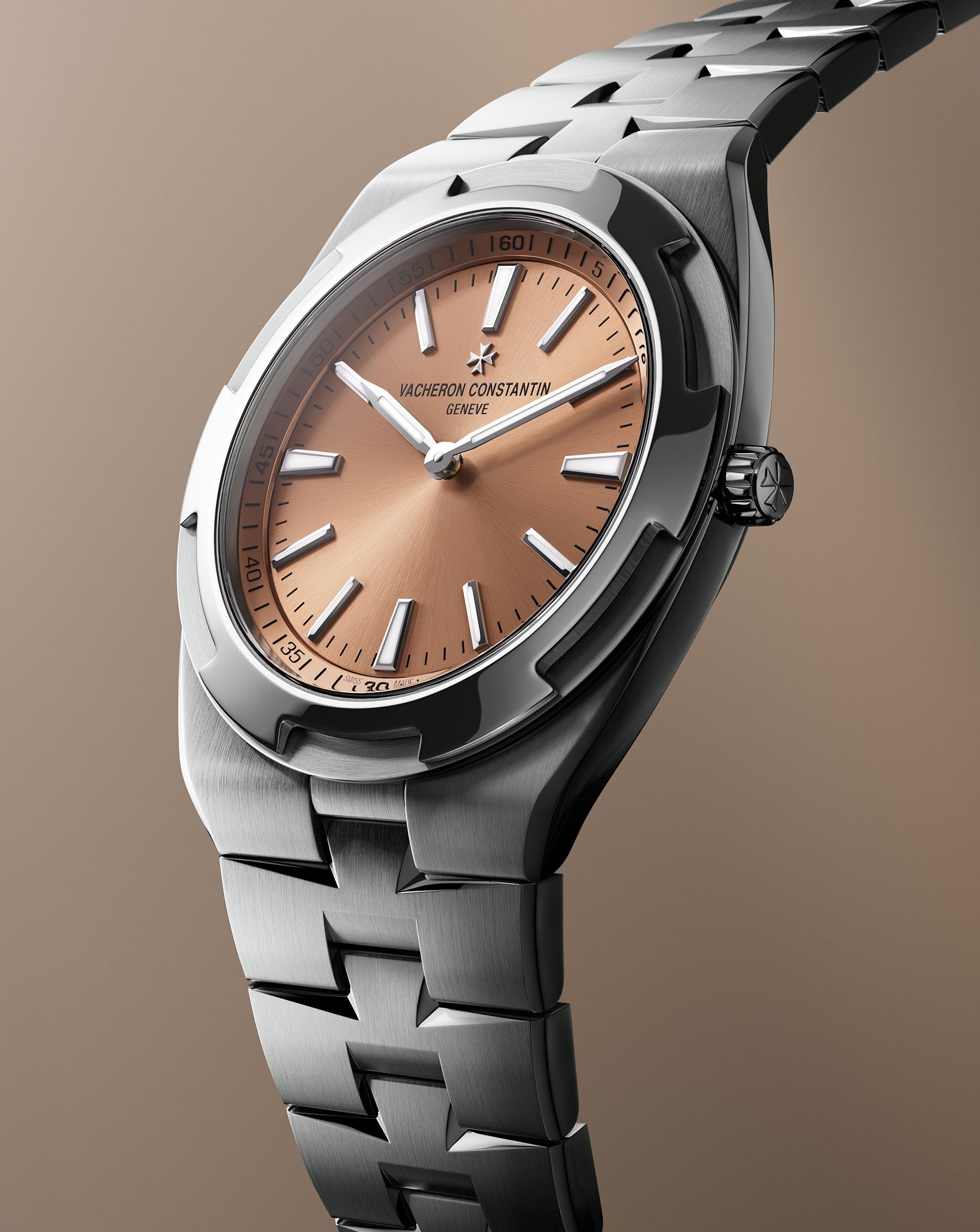
Going by the spec sheet…
But I am wandering off because our readers are probably eagerly awaiting my rebuttal, sparked by the Vacheron’s fact sheet. On it are the dimensions of the new automatic micro-rotor movement that Vacheron Constantin developed for this smaller, ultra-thin Overseas Self-Winding. To my surprise, the 2.4mm-slim caliber 2550 that powers the Overseas is 0.13mm thinner than Patek’s caliber 240 inside the Nautilus. It begs the question: where did Vacheron Constantin lose the extra thickness that makes the Nautilus 0.45mm thinner?
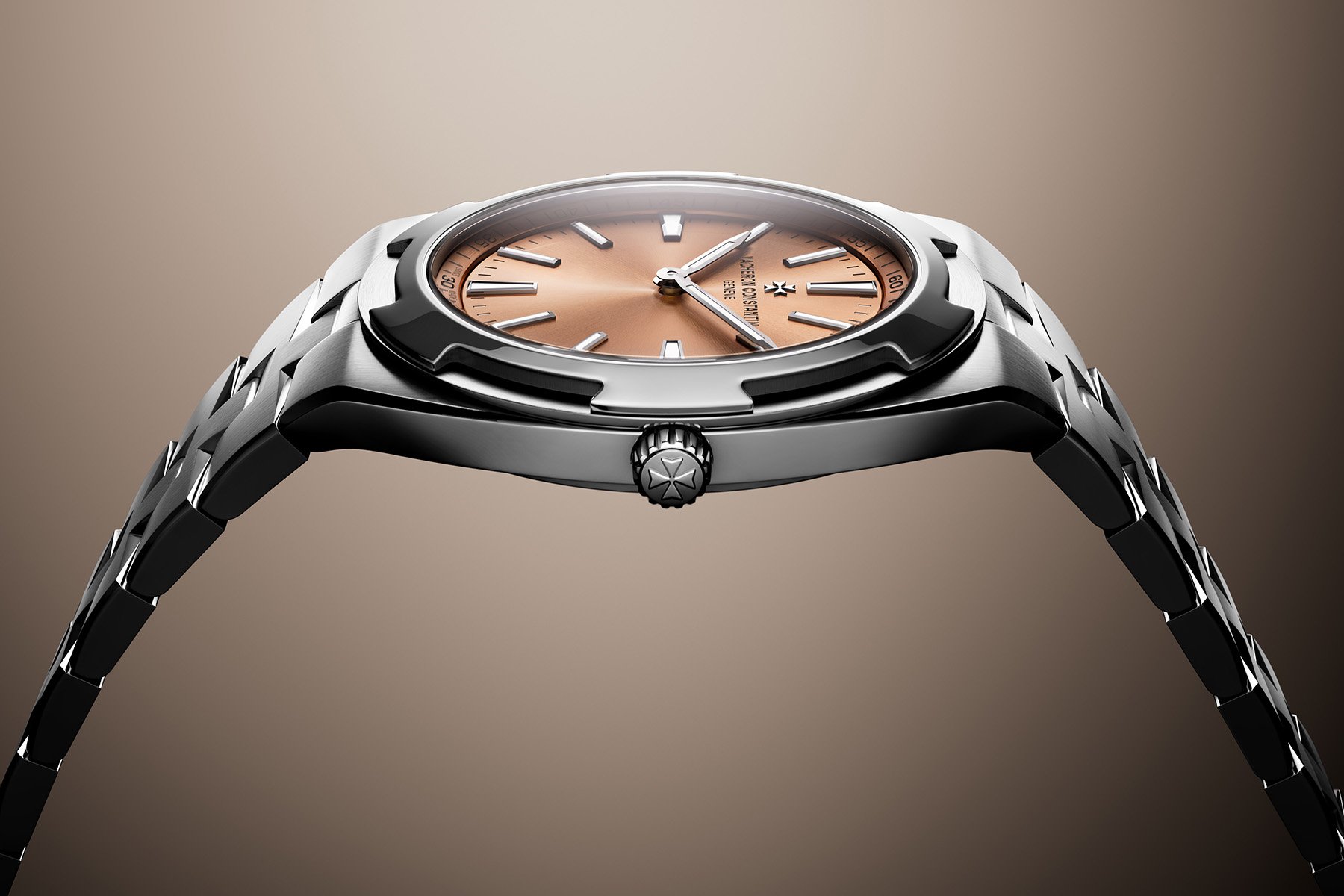
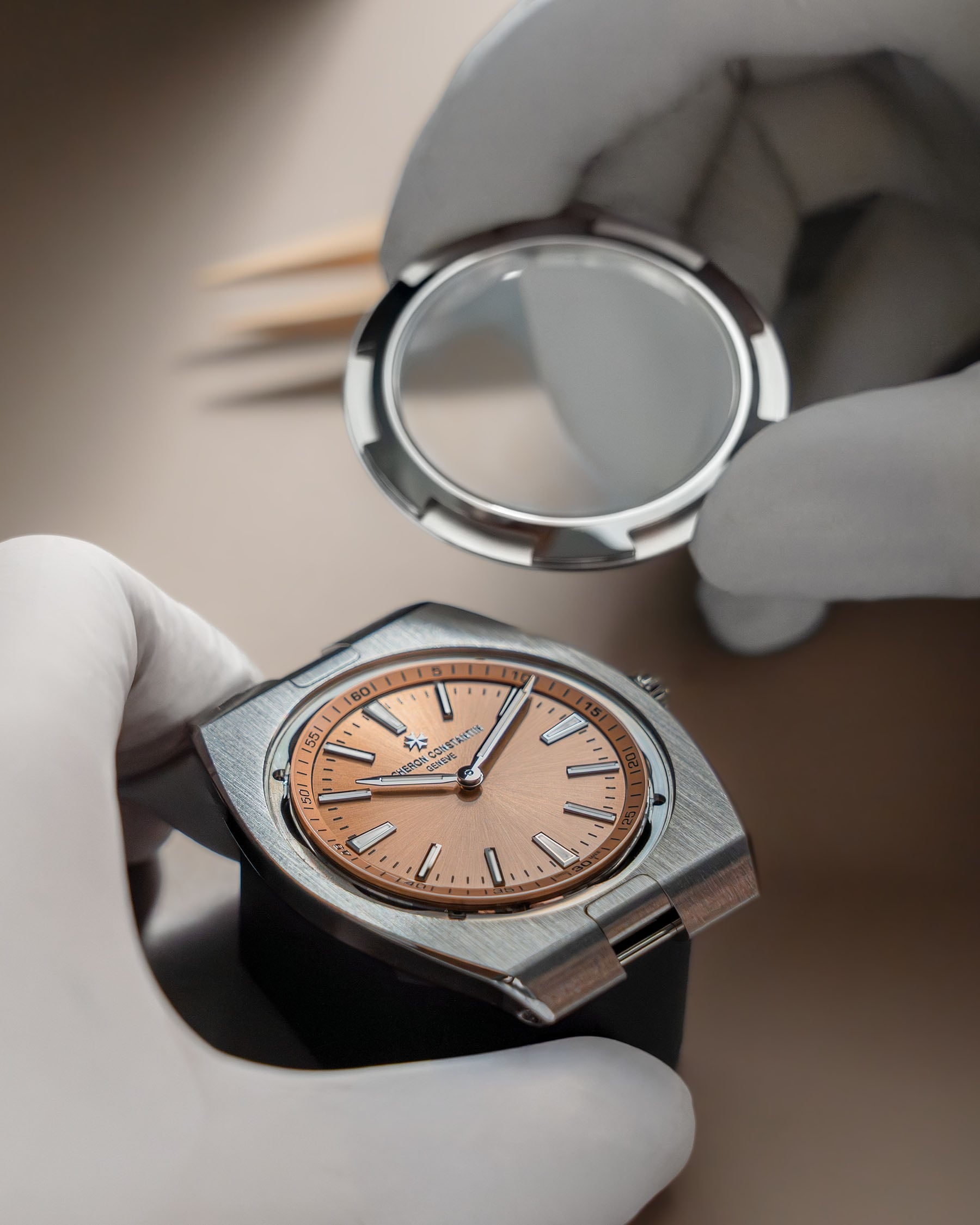
It’s an interesting question that could be answered by just looking at the images and discussing the Overseas Self-Winding Ultra-Thin’s peripheral minute track and the hand stack, which seem to make a difference. But my simple answer is that, with watches this thin, the actual difference wouldn’t keep me from buying “my” Overseas. I’m pretty sure it won’t keep you from choosing it either.
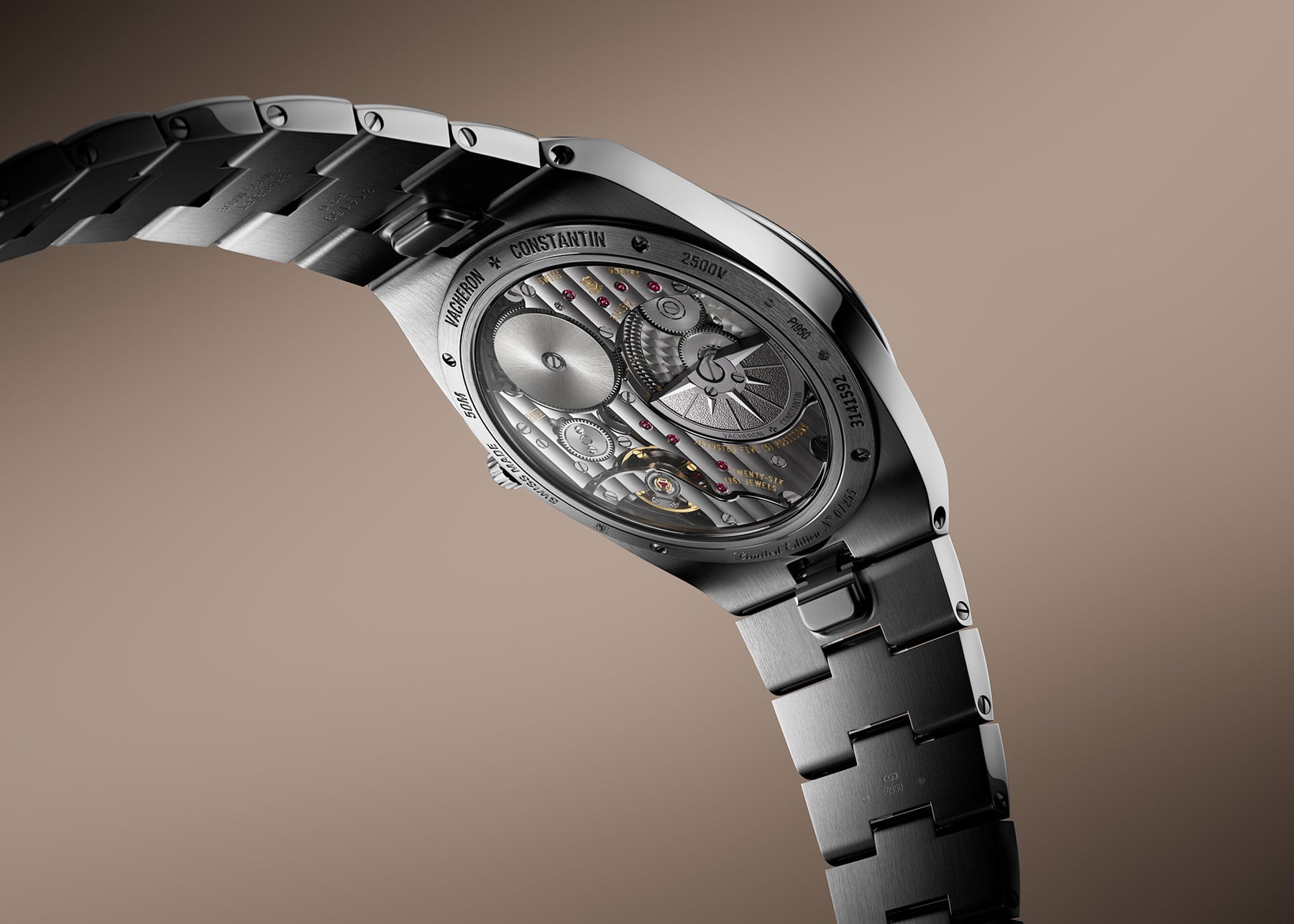
The modern Vacheron Constantin caliber 2250
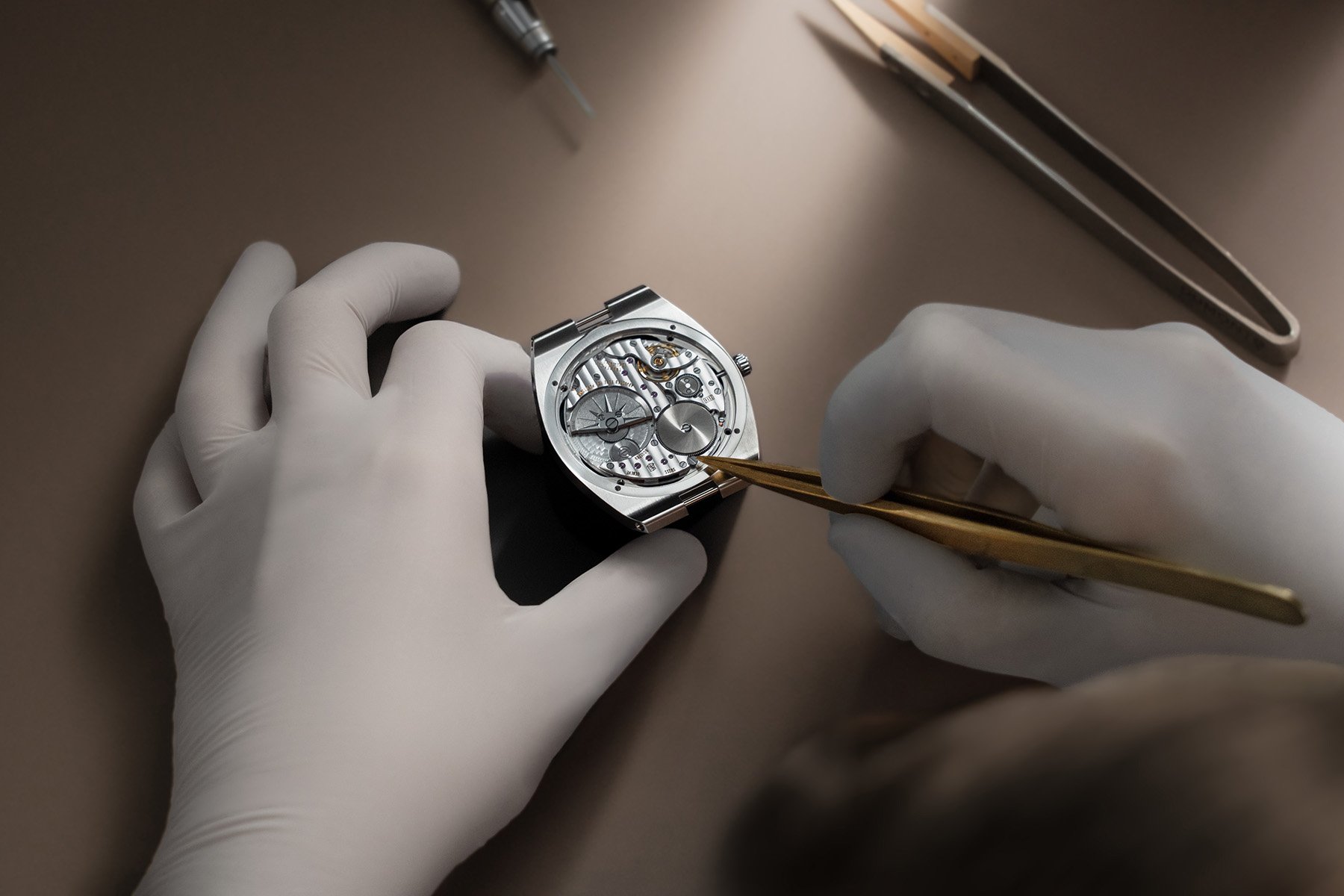
But going back to the movements for a moment, did you see on the spec sheets that Vacheron’s new caliber 2250 offers 80 hours of power reserve versus 48 hours from the Patek 240? It’s a notable difference that scores the Overseas practicality points. On top of that, what is with the celebratory decoration on the yellow gold rotor of the Nautilus?
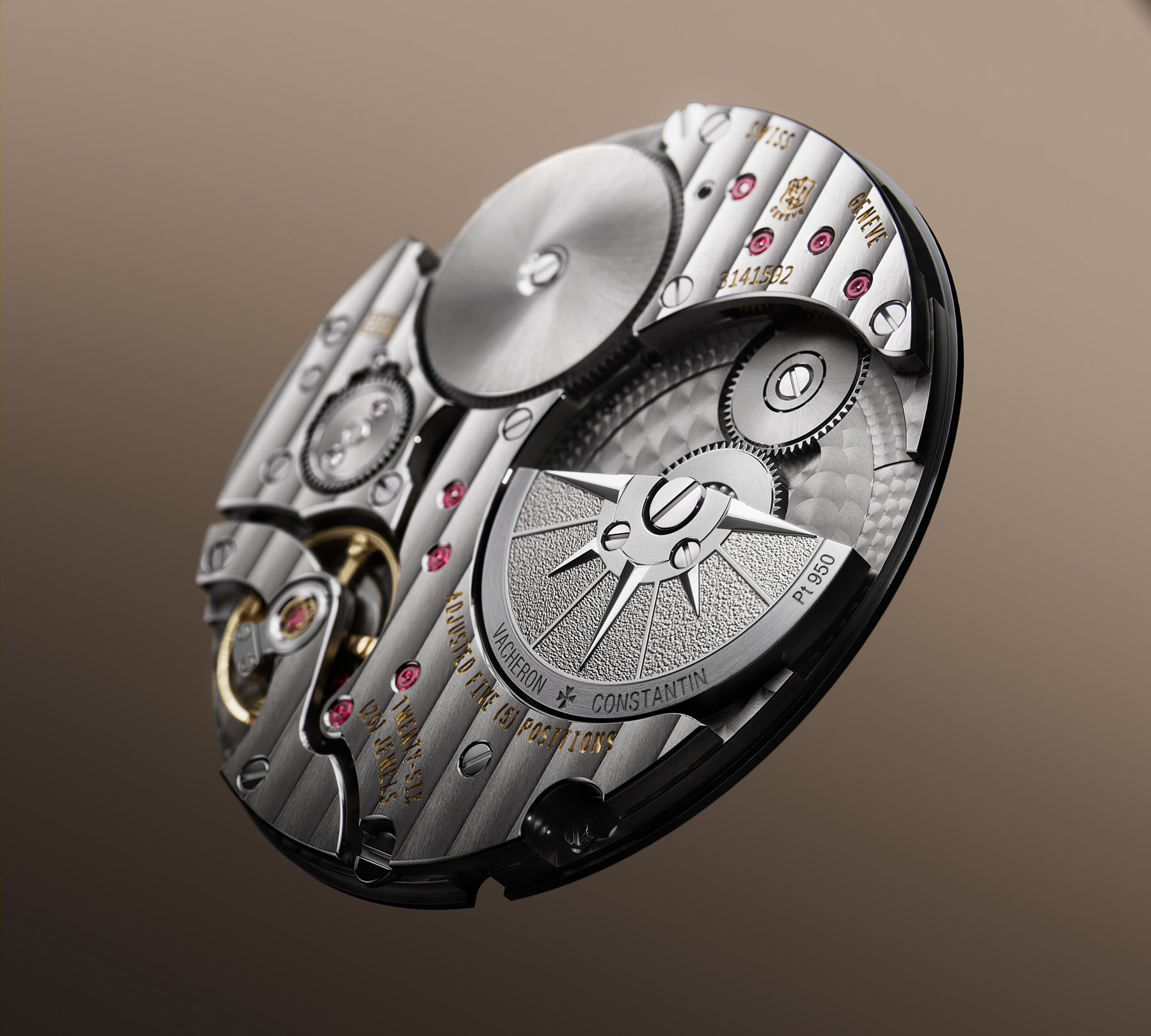
It looks rather gimmicky, and the years’ placement is tilted and strange. One glance at the Vacheron’s platinum micro-rotor displays that the modern-day caliber 2250 might be better-looking than the legendary caliber 240 that powers the Nautilus. But my main spec-sheet win for this Sunday has to be the larger power reserve. We could debate the modern architecture of Vacheron’s new movement versus the very simple 1970s architecture of Patek’s, but I suspect there are fans of both, so I will leave that for our commenters to further debate.
Choosing the Overseas Self-Winding Ultra-Thin based on the surprise factor
But we both agree we are not spec-sheet warriors, Thomas. So just like you, I want to turn to the design of both watches. Let me start by saying that while I greatly appreciate Gérald Genta, the man certainly didn’t just deliver hits, as you mentioned. However, we can agree that the Royal Oak, Nautilus, and his Ingenieur make a special trio of watches through which the man explored symmetrical shapes (square, round, and octagonal). I would love to add the Credor Locomotive (hexagonal) to that equation, but I know you’re not a fan, so let’s save that discussion for another time.
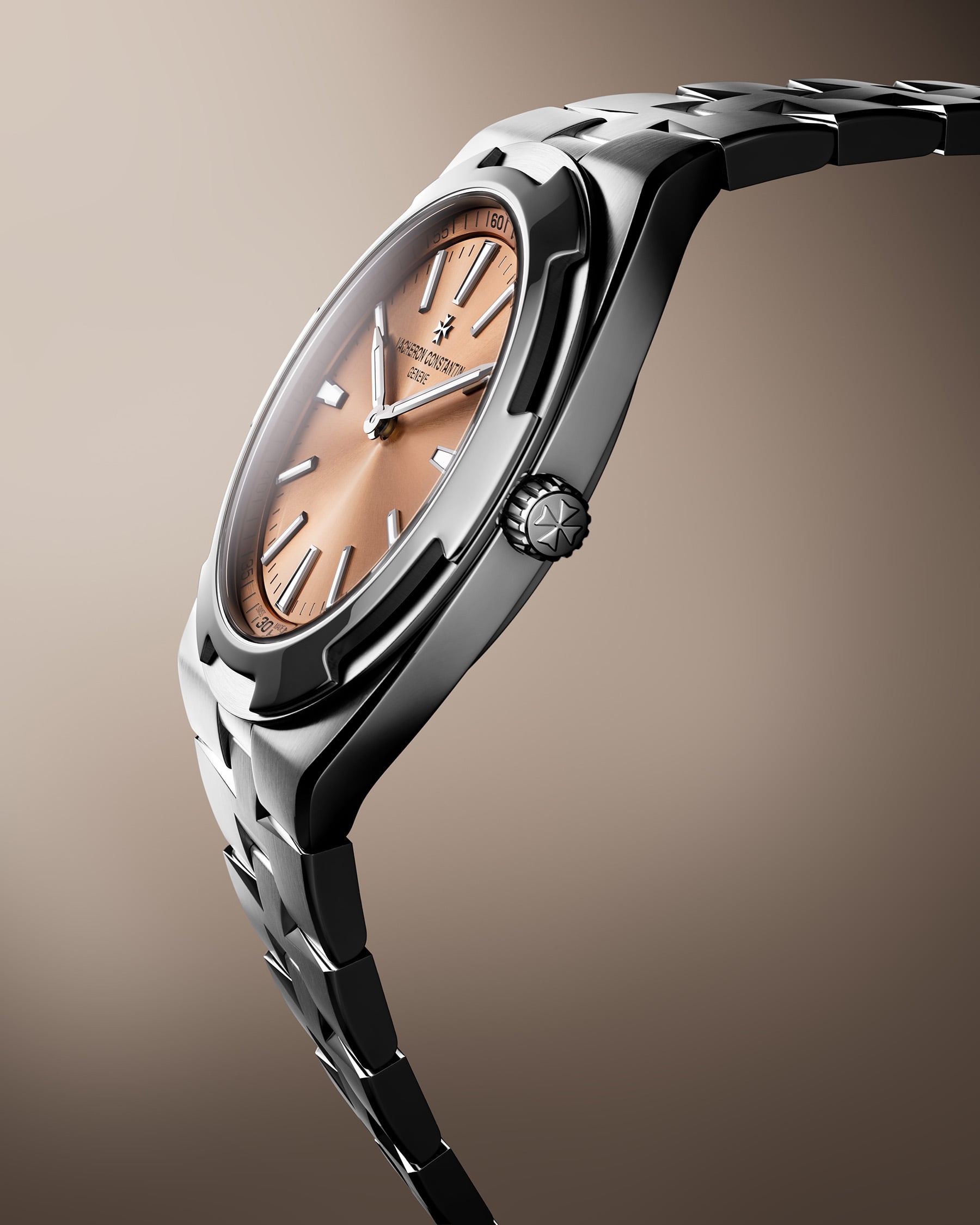
The Overseas is neither a Genta creation nor a modern version of the legendary Vacheron Constantin 222 that Jorg Hysek designed. While the 222 laid the groundwork, the Overseas is a derivative design that is merely a spiritual successor rather than a modern evolution of the 222. The proof of that is in the successful return of the 222 and seeing how they can perfectly coexist in the brand’s lineup. Despite my preference for the 222, the Overseas has grown on me tremendously. The sawblade bezel has softened its visual edges, and the Maltese-cross-inspired bracelet, while puzzling, still feels unique. But I wouldn’t just pick the standard Overseas Self-Winding.
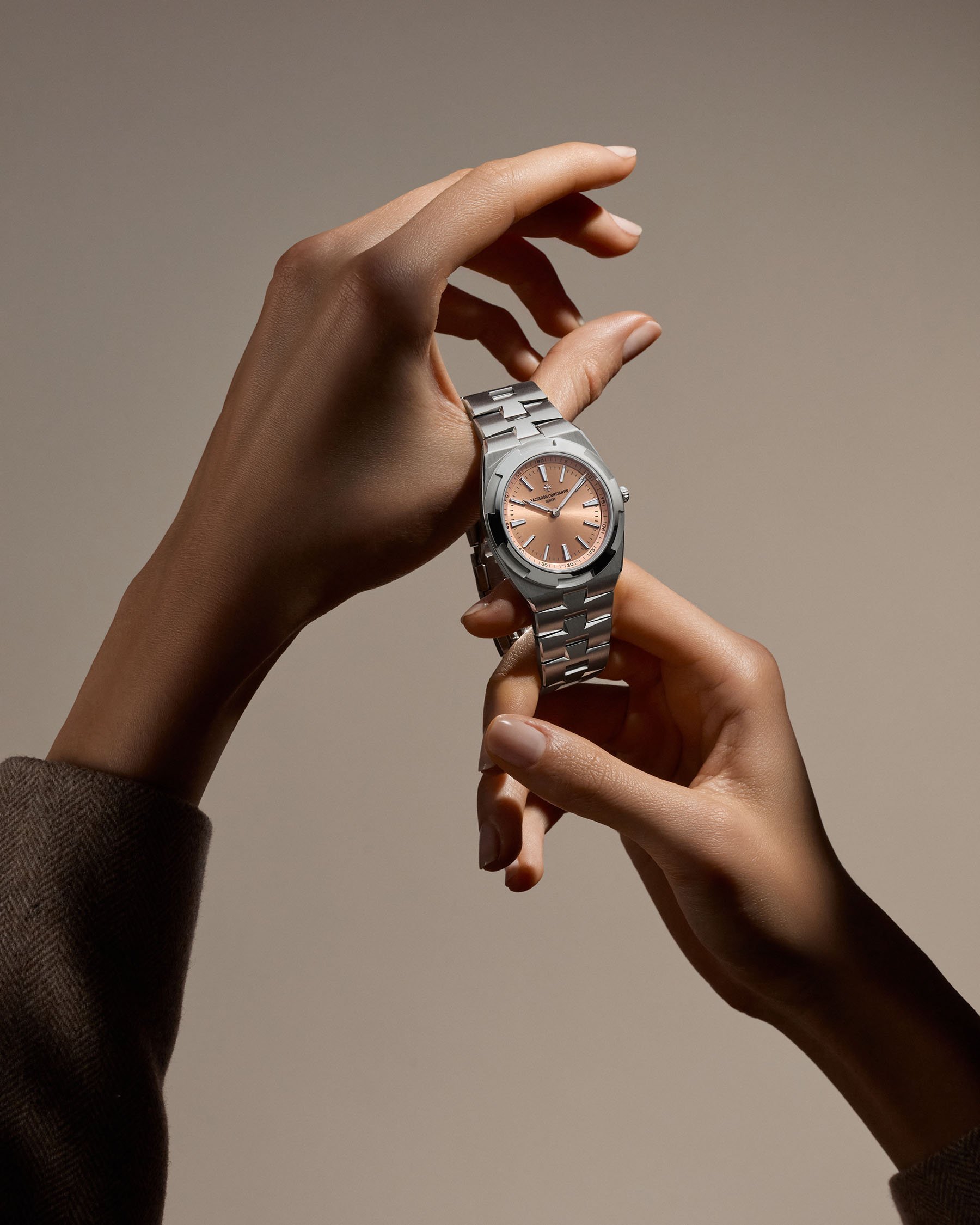
So what makes this new version so special, especially compared to your Nautilus? It’s the element of surprise. The new Overseas Self-Winding Ultra-Thin is smaller and slimmer than the regular 41mm model, making its introduction a really nice revelation. Instead of Patek’s approach of creating a smaller version of the regular-size Nautilus with the same blue dial and an existing caliber, Vacheron went the extra mile to create something truly special.
Why I’d pick the Overseas over the Nautilus
The smaller Overseas case is paired with a beautiful salmon dial that offers much more depth and refinement than the Nautilus’s dial. The lacquered finish is combined with a sunburst satin texture in the center, and a contrasting peripheral minute track adds extra detail. On top of that, it links back to the beautiful salmon dials that Vacheron Constantin produced in the mid-20th century. So, besides being a unique color in the Overseas lineup, it also has a significant history.
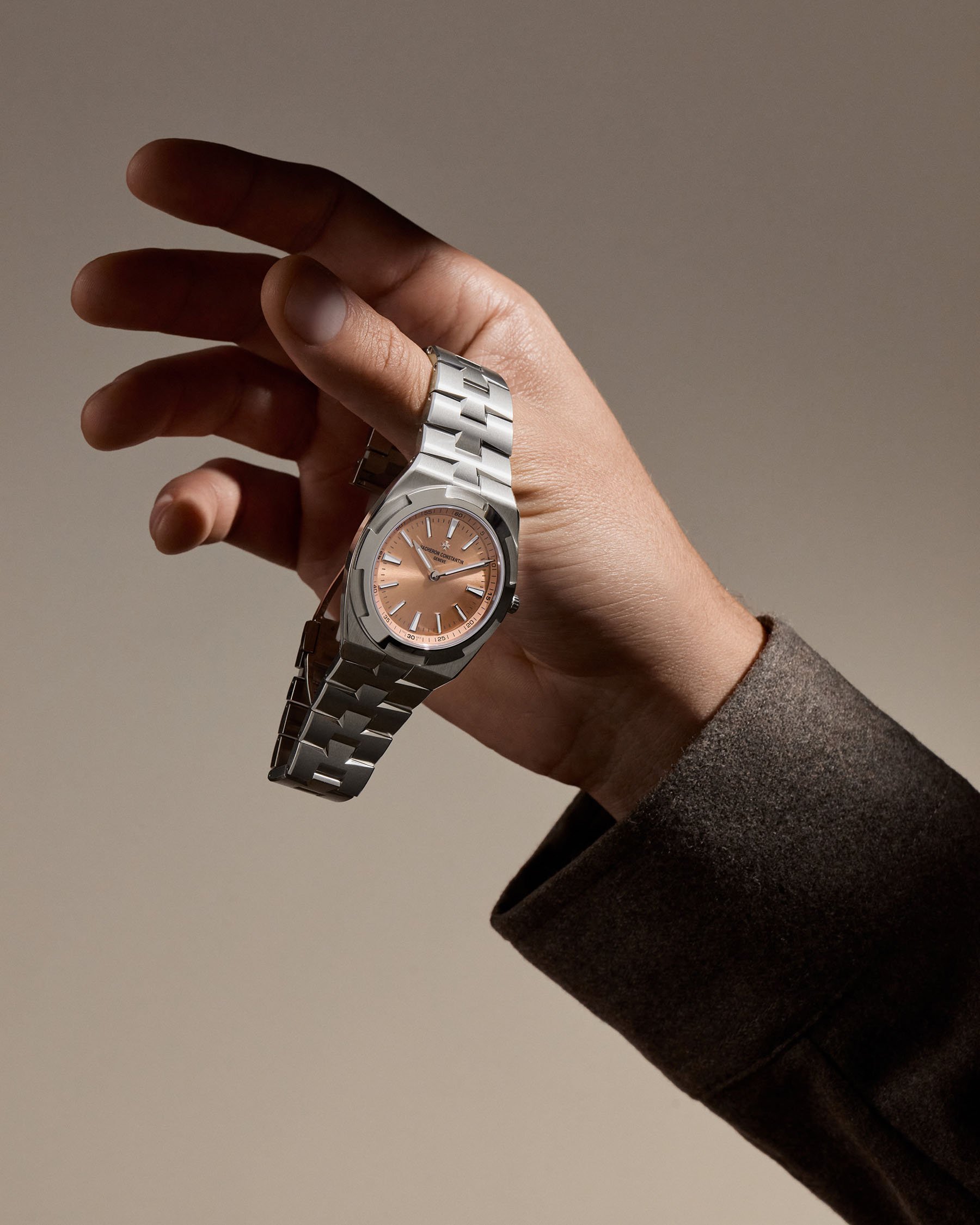
All these things add to the story of the new Vacheron Constantin Overseas Self-Winding Ultra-Thin. From the smaller and thinner case to the new caliber and beautiful dial, this is a special version of the Overseas that I love. At the same time, the Nautilus 5610 simply looks like a slightly smaller and very expensive version of the regular Nautilus. Oh wait, for a second there, I forgot about that special micro-rotor…
Time to vote
There you have it — another Sunday Morning Showdown. It’s time to choose your favorite and cast your vote. Are you a fan of the 38mm Patek Philippe Nautilus 5610 in platinum, or do you prefer the slightly bigger Vacheron Constantin Overseas Self-Winding Ultra-Thin? Let us know in the comments below why you voted the way you did!
Patek Philippe Nautilus 5610 vs. Vacheron Constantin Overseas Self-Winding Ultra-Thin
Thomas Van Straaten
2026-04-19 05:00:00