
:max_bytes(150000):strip_icc():format(jpeg)/faw-food-safety-tools-tout-73d61d8660ac4cbbb13320f787504461.jpg)
I started working in restaurants when I was 19. I learned quickly that food safety was its own skill set and one I needed to hone fast. Ten years later, I was state-certified at the manager level and was training all new employees.
You might think most of the content is just common sense — don’t leave raw meat out all day and wash your hands before cooking — but some things are not necessarily intuitive. The number of times I’ve seen friends handle a chef’s knife unsafely or graze on food at a potluck that had been sitting for hours made me realize that food safety mistakes are easy to make in the home kitchen, and not everyone knows the ins and outs of food-borne illnesses. Here’s my list of the most significant food safety risks I see home cooks make, along with the restaurant tools I use to fix them.
Hedley & Bennett Crossback Apron
Hedley & Bennett
A thick apron like this Hedley & Bennett Crossback has saved me from countless burns and cross-contamination issues over the years. I have been wearing this apron when hot oil splashed out of a pan, and instead of soaking into my clothes and severely burning me, I quickly took the apron off and was able to prevent the burn. Aprons are also more hygienic; when raw chicken is flopping around your cutting board and the juice is flying everywhere, you’ll be glad it was on an apron you can take off before you move on to other tasks.
Ergo Chef 5-Piece Knife Edge Guard Set
Walmart
Imagine the look of horror on my face when I saw a friend open a kitchen drawer full of loose knives and other hand tools. Not only is it terrible for your knife blade to be clanging against your fish spatula and the walls or the drawer, but it’s also incredibly unsafe. I bought this set of knife sheaths in my first year in the kitchen, and they’re still on my knives today. Not everyone has the counter space for a knife block, and these save space by allowing your knives to nestle safely in a drawer. A mere $16 is a small price to pay to avoid stitches from unsafe knife storage.
King Arthur Flour Sack Towels
King Arthur
In my first kitchen job, a chef exasperatedly shoved a wet one of these flour-sack towels under my cutting board mid-chop. He had been watching me unsafely cut bell peppers on a warped, dishwasher-damaged plastic board that was sliding across the prep bench, and he had to intervene. A damp towel will help your cutting board stay put and minimize the risk of knife slips.
Thermapen ONE
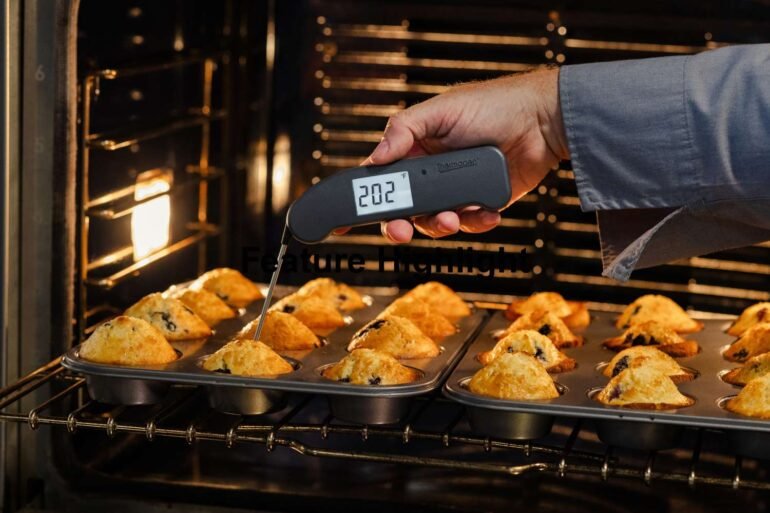
Because of my experience in kitchens, the question friends and family ask me the most is, “can you come look if the chicken is done?” and my response is always to ask them where their meat thermometer is. The reality is that meat can look totally fine and still harbor unsafe bacteria. The only way to know for sure is to check the temperature. (A handy rhyme I learned in food safety training is “if it flies, 165,” meaning all poultry should be cooked to 165°F.)
Choice 8-Quart Standard Stainless Steel Mixing Bowl
Walmart
You forgot to put the frozen ground beef in the fridge to thaw last night — now what? The safest way to quickly thaw something in a sealed container is to put it in a large, non-reactive mixing bowl, like this 8-quart stainless steel model from Choice, and run cold water over it. It may seem odd to keep the tap running and let it overflow into the sink, and it might seem like hot water would get the job done quicker, but moving, cold water is the safest option to thaw food without bringing parts of it into an unsafe temperature zone.
Ateco 6-Inch Stainless Steel Wire Cake Tester
Walmart
I would always tuck a cake tester inside the pocket of my chef’s coat and reach for it constantly during service. Because the thin metal wire reacts so rapidly to heat, I learned to pierce items while cooking and lay the metal on the back of my hand. It’s a way to monitor the temperature in real time at multiple points throughout the cooking process without making a big hole in a piece of meat that would let juices leak out.
Scotch Blue 1-Inch Painters Tape
Target
If you look into my fridge right now, you’ll see rows of food storage containers all labeled with this blue painter’s tape, just like a restaurant walk-in fridge. Leftovers, half an onion, food that I’ve taken out of its original packaging — it’s all labeled with what’s in it and the date. This way, it’s easy to see that the soup from the other night is actually six days old, or remind myself to use the other half of a block of tofu from yesterday. Stock up on a few Sharpies, too, and keep both in a kitchen drawer so they’re always within reach of the fridge.
Nick DeSimone
2025-12-01 08:30:00