
:max_bytes(150000):strip_icc():format(jpeg)/How-to-Pair-Chocolate-and-Wine-FT-DGTL1125-7ae7c5361e0f4bdba652d5b854589e8a.jpg)
Pairing chocolate with wine has a reputation for being tricky. When juggling tannin, texture, structure, and sweetness, it can feel like there are countless ways to miss the mark. Leslie Sbrocco thinks otherwise. The award-winning author, television host, and longtime wine educator is known for turning “hard” pairings into aha moments with an entertaining, approachable style. As host of the James Beard– and Emmy-winning Check, Please! Bay Area, she’s built a following by making serious topics feel joyful and accessible.
At this year’s Food & Wine Classic in Charleston, Sbrocco’s seminar, Strange Bedfellows: Chocolate & Wine, aims to swap intimidation for curiosity — and dessert for discovery. “Don’t be afraid of pairing wine and chocolate,” she says.
Her method is sensorial and simple — taking into account four key levers: sweetness, tannin, bitterness, and texture. Each serves as a guide for every choice.
Match the sweetness, tannins, and texture
Sbrocco’s first rule is to match sweetness. “If the chocolate is much sweeter than the wine, the wine will come out thin,” she says. “If the chocolate is less sweet than the wine, it gets lost.”
Once sweetness is calibrated, tannin and texture fall into place. Intense cocoa solids and firmer textures invite wines with structure; silkier, sweeter chocolates call for wines with plush fruit or a touch of residual sugar.
Cream-forward white and milk chocolate behave one way; high-cacao 70% to 80% dark chocolate behaves another. Sbrocco loves to demonstrate that logic by zigging around tradition.
“Traditionally, with a vintage or ruby Port, you can do dark chocolate,” she says. “But I like to look to tawny Port, which is smooth and rich and kind of spicy. It’s beautiful with caramel sea salt milk chocolate.”
Leslie Sbrocco, author, television host, and wine educator
“If the chocolate is much sweeter than the wine, the wine will come out thin. If the chocolate is less sweet than the wine, it gets lost.”
— Leslie Sbrocco, author, television host, and wine educator
The nutty, oxidative depth of tawny — its baking-spice warmth and integrated sweetness — melts into the caramel and sea salt, while milk chocolate’s creaminess mirrors the wine’s texture.
When the chocolate swings bitter and intense, Sbrocco meets it with red wines that bring backbone without losing fruit-forward generosity.
“One of my favorite pairings is Malbec with darker chocolate,” she says. “You get a little more bitterness in a high-cacao-percentage chocolate, less creamy but still a lot of structure. Malbec offers structure and tannin, nice acidity, but it’s balanced by big, rich fruit.” It’s that ripe blue-and-black-fruited core that keeps the cocoa from turning austere.
She’s similarly bullish on Zinfandel, especially when fruit is part of the confection — say, dark chocolate with raspberry filling. Old-vine Zin’s brambly berry profile and gentle spice meet raspberry’s tang and chocolate’s bitter snap halfway.
Look beyond red wines
Sbrocco doesn’t stop at reds. “You absolutely can pair white wines and chocolate. Don’t be afraid of it,” she says.
She points to Riesling Spätlese as a perfect option for white chocolate. Higher natural acidity keeps things from cloying, while orchard-fruit flavors wrap around cocoa butter’s plushness.
The same logic opens the door to bubbles, particularly those with a whisper of sweetness.
“It’s also fun to pair with sparkling wines,” says Sbrocco. “Off-dry wines are a great option, like Lambrusco.” A lightly sweet Lambrusco, served well chilled, refreshes between bites of milk chocolate, and the gentle fizz scrubs richness from the palate. For a lighter lift, she likes a blanc de blancs sparkling wine with a little sweetness, which threads citrus, apple, and cream through milk chocolate’s silk.
Wines to avoid when pairing with chocolate
If there’s a style Sbrocco avoids for dessert, it’s not because it’s “wrong,” but because the experience can feel angular. “I try to stay away from high-acid, lean wines, which go great with other types of food,” she says. “With chocolate, I try to stay with wines that have textural richness.”
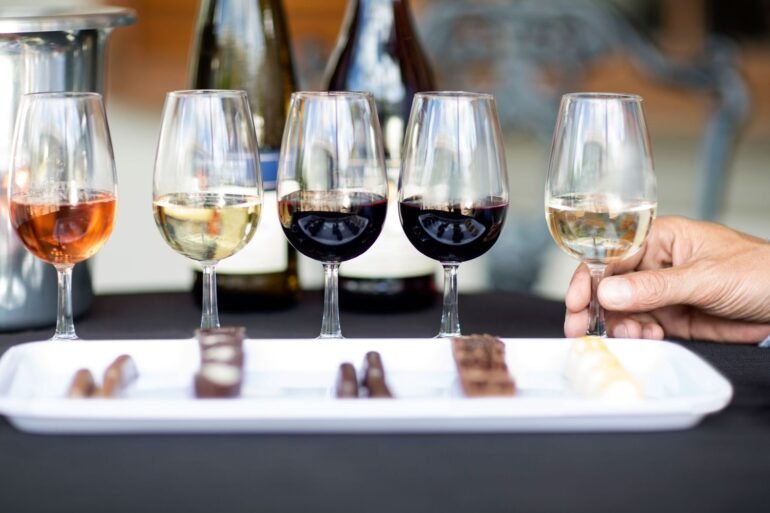
Guests can expect a table that moves from milk chocolate to dark, from filled to salted, and a pour list that hops from Malbec and Zinfandel to Lambrusco, Riesling, and the tawny-versus-ruby debate. In the end, Sbrocco’s tasting is designed to encourage play. “We’re going to mix and match as we go along,” she says. “It’s really about playing with your food and having an open mind.”
By the end, the “strange bedfellows” won’t feel strange at all. They’ll feel like options — smart, craveable, and within reach — anchored by one elegant idea: match sweetness, mind texture, and let fruit, spice, and bubbles be your bridge.
Jessica Dupuy
2025-11-07 20:31:00