
When war erupted in Europe in 1939, Switzerland remained neutral. This proved a boon for the industry. Demand for watches by the warring powers provided a lucrative business opportunity, and Louis Erard profited from the casing business during the war years. This period offered the Swiss industry enormous growth opportunities as other nations — such as the United States, Great Britain, and Germany — saw their industries taken over by the war effort. While many other nations saw their watchmaking facilities decrease after the war, Swiss dominance became firmly entrenched.
In 1956, Louis Erard began manufacturing its own movements — an enormously impressive step from what began as a casing maison. In under thirty years, Louis Erard had grown from a watchmaking school to a full-fledged manufacturer capable of performing a staggering amount of in-house work. As with all stories of this period, however, a shadow looms over the near future — quartz.
The introduction of the quartz wristwatch in 1969 sent shockwaves through the industry. As quartz technology rapidly progressed, the cost of manufacturing dropped, sending the Swiss industry into a full-on panic. Established brands collapsed as they could no longer fend off the competition, and many were left destitute as they scrambled for ways to survive in an irrevocably changed world.

Louis Erard survived. However, it was the beginning of the end. The brand continued to innovate into the 1980s, where it began experimenting with the Peseux 7001, adding a power-reserve indicator and even modifying it to work as a regulator. The brand was forced to leave La Chaux-de-Fonds in 1992 due to financial hardships. A new headquarters was established in Le Noirmont in the Jura Mountains. It proved too little, too late. After over sixty years, the doors were closed in 1993.
The Louis Erard name lay dormant for a decade. In 2003, a group of private investors purchased the company and relaunched it in its adopted home of Le Noirmont. The modern incarnation of Louis Erard had grasped onto the same message as its predecessor: creating high-quality wristwatches. An independent brand, Louis Erard has produced over 200,000 units in the last two decades since its relaunch. The brand initially focused on a more premium price point, replicating the quality for which Louis Erard built its name.
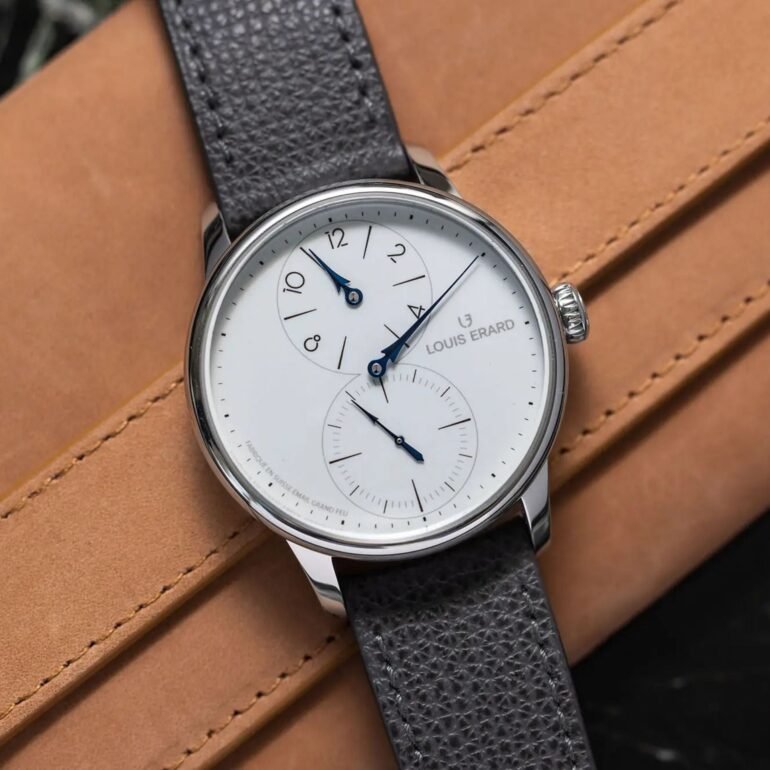
In 2009, however, they underwent a fundamental shift in audience. The brand’s goal became more complex, seeking to offer high-end métiers d’art — that is, traditional artisanal crafts like enameling, hand guilloché, and grand feu enamel work — at a more accessible price point, as they are typically cost-prohibitive for many enthusiasts.
Jacob Van Buren
2025-11-07 17:00:00