
:max_bytes(150000):strip_icc():format(jpeg)/FW-Drink-Visionaries_3-2-Ann-William-02-72ba2ee29dc4474daa161ed2d2fadb3c.jpg)
Without grain — corn, rye, barley — there would be no whiskey. Yet for many distillers, the actual grain is an afterthought; barrel aging and blending are seen as the sources of flavor. And the provenance of the grain is at best a minor afterthought.
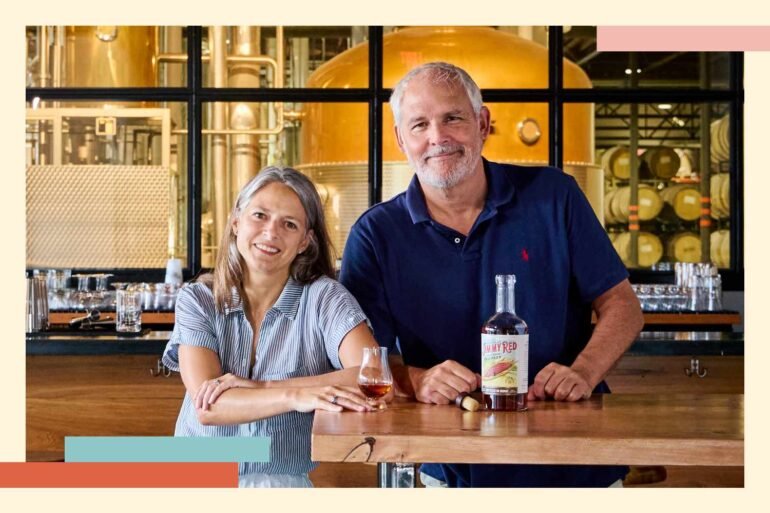
At High Wire Distilling in South Carolina, founders Ann Marshall and Scott Blackwell both had backgrounds in fine cuisine and agriculture, and knew that for them, basic grains weren’t going to cut it.
“Being a food person, it always starts with the ingredient,” says Blackwell.
By approaching whiskey the way a chef would a dish, they created Jimmy Red Bourbon, a spirit that reflects South Carolina’s rich culinary heritage through use of Jimmy Red corn, a near-extinct local variety.
“People kept talking about the flavoring grain,” says Blackwell, who was new to distilling when he cofounded High Wire. (The principal ingredient in bourbon is corn, usually supplemented with a “flavoring grain,” typically either rye or wheat.) “‘What’s your flavoring grain? Wheat or rye?’ And I thought, Well, why can’t corn be the flavoring grain?”
Peter Frank Edwards
At the same time, Charleston’s culinary scene was rediscovering local, heritage varieties of rice, peas, and corn. Led by Glenn Roberts of Anson Mills and chef Sean Brock of Husk, the area had become a hub for the revitalization of local Southern ingredients.
Jimmy Red, the red-kerneled heirloom corn that Marshall and Blackwell chose for their whiskey, was once widely grown on James Island, south of Charleston, but it was nearly extinct. “Initially, there wasn’t enough for us to produce a single batch of bourbon,” recalls Marshall. “Glenn Roberts at Anson Mills was selling 5- to 10-pound bags to restaurants. He called us ‘grain hogs’ because we told him we needed 1,000 pounds of it.”
Marshall and Blackwell had to convince local farmers to grow Jimmy Red corn at a much higher volume, and through careful planning and partnerships with those farmers, they’ve now helped to expand its cultivation to four more farms across South Carolina.
“We had to home in on the right people,” says Marshall. “We wanted to encourage farmers not only to care about it but to try to be open-minded, do a better job, and not think conventionally about it. In the end, we pay five to seven times what we’d pay for commodity grain for Jimmy Red.” But the result is worth it.
High Wire’s first, two-barrel batch of Jimmy Red whiskey came out in 2016, and the response was intense. “Both barrels sold out in about ten minutes,” says Blackwell. High Wire’s capacity has grown since then — today, Marshall and Blackwell have about 6,000 barrels of whiskey in their warehouse.
But the crucial point is this: By embracing traditional Southern agriculture, Marshall and Blackwell have created a distinctive whiskey that fits perfectly within the vibrant home-cooking and culinary traditions of South Carolina. And thanks to their passion, the cultivation of Jimmy Red corn is the biggest it has been since the grain’s initial revival.
“The work becomes more and more important every year that we do it,” says Marshall. “And every barrel that gets filled is another victory.”
Food & Wine’s Drinks Visionaries program showcases the people who have changed how we drink, from bartenders and restaurant owners to distillers, winemakers, and beyond. Discover the rest of 2025’s honorees here.
Dylan Ettinger
2025-11-06 13:59:00