
Why Hotel Operations Feel More Complex Today
Hotel operations haven’t grown more complicated because service standards suddenly shifted or guests became more demanding. The real challenge is that guest communication has accelerated while execution models have failed to keep pace. Messages now arrive instantly across multiple channels, yet fulfillment still moves slowly, passed from department to department, shift to shift.
The consequences extend far beyond slower service. Fragmentation creates friction, drains revenue, and erodes guest confidence. The root cause is clear: hotels continue to treat guest communication as a messaging task, when in fact it is an operational function at the very core of execution.
Why This Matters Now
Advertisements

Hospitality today leaves little margin for inefficiency. Labour shortages persist, cost pressures demand leaner teams, asset owners expect longer lifecycle performance, and guests expect immediate acknowledgement. Technology in the guest’s hand has permanently reshaped expectations: response time is no longer flexible, availability is assumed, and silence feels like failure.
Yet instead of redesigning workflows, many hotels have simply added more tools: messaging platforms, apps, emails, chat, and QR requests. They coexist but rarely connect. Each channel opens another entry point into operations without solving how execution should flow once the request arrives.
The challenge isn’t volume. It’s speed, coordination, and accountability behind the scenes.
Where Operations Break Down
The pattern is predictable. A guest request enters through a channel disconnected from operational systems. One role sees it, then forwards it manually. Context is lost. Priority is unclear. Ownership shifts across departments and across time. By the next shift, the request is either duplicated, delayed, or forgotten.
This fragmentation creates invisible risks: missed requests, repeated follow‑ups, and inconsistent service. These aren’t isolated incidents; they’re symptoms of an operating model that separates communication from execution.
This isn’t a front‑office issue. It’s a back‑of‑house operating problem.
The Required Shift: From Messaging to Execution
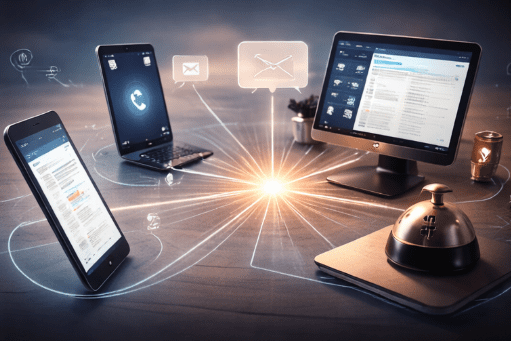
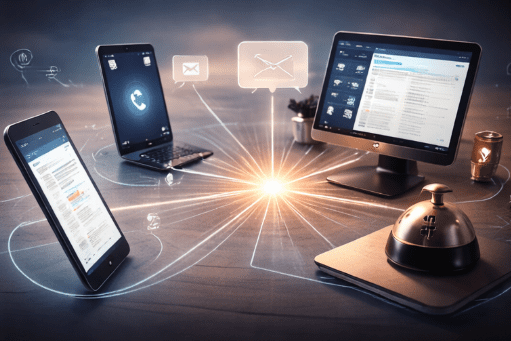
The solution is clear: embed guest communication directly into the operational engine of the hotel. One workspace. One source of truth. Every request routed automatically to the right department with defined ownership, priority, and visibility against service‑level expectations.
What This Looks Like in Practice
In a functioning model, all guest requests, no matter where they originate, enter a single operational inbox connected to every department. Each request carries full context: guest profile, room status, preferences, asset history, and prior interactions.
Every department, housekeeping, engineering, front office, and F&B, works from the same view. Any team member can act immediately without losing information in handovers. Escalation rules are clear. Nothing relies on memory alone or informal follow‑up.
The impact is tangible. Engineering receives requests with asset context instead of vague notes. Housekeeping prioritises based on real‑time occupancy pressure. Duty managers see risks before they become complaints. Shifts hand over facts, not assumptions.
Every interaction becomes operational data, not for reporting theatre, but for better decisions. Patterns emerge. Bottlenecks become visible. Asset strain is identified early. Staffing decisions become evidence‑based.
The Forward View
Hotels that continue bolting new communication channels onto outdated operating models will collapse under the weight of fragmentation. By contrast, those that redesign execution around speed, clarity, and ownership will eliminate surprises and earn lasting guest trust.
The real challenge isn’t adopting more technology, it’s deciding what truly belongs at the operational core. The mandate is clear: rebuild guest communication as an execution system. Anchor it where operations live. Measure success not by messages sent, but by outcomes reliably delivered.
Let’s Talk & Connect
Drop a comment. Start a conversation. The future of hotel operations isn’t just digital — it’s intelligent.
Guest Contributor
2026-02-20 00:45:00