
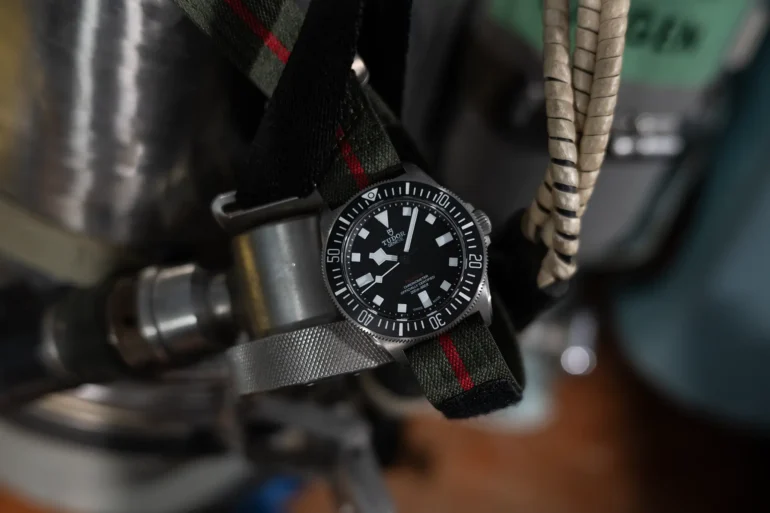
Tudor turns 100 this year. The same age as Dick Van Dyke and American Airlines. Anniversaries like this are a big deal in the watch industry – we’ve just been through a year where both Vacheron Constantin and Breguet celebrated major milestones, each with a series of special releases. That’s the playbook for a watch brand: milk the year for as long as possible with new releases that feel special. It’s a sensible strategy given that it inherently leans into heritage and prestige, both ideas that have been proven to sell watches successfully for years.
This isn’t meant to be a prediction of what might be in store for Tudor this year – plenty of outlets and watch media figures have already weighed in on that topic. We don’t have any inside information, of course, so any guesses as to what Tudor might do would be just that. My hunch, though, is that we won’t see obviously anniversary inflected pieces dropped throughout the year in the same way we saw from the likes of Vacheron and Breguet in 2025. It doesn’t feel like that’s part of the Rolex DNA that Tudor shares. I expect we’ll see some very subtle 100 year mentions in Tudor marketing, a special watch or two that is not explicitly tied to the anniversary but as recognized as honoring it just the same, and perhaps something a little more celebratory around Watches & Wonders or an athletic event that Tudor is involved in (there will of course be many of those throughout the year).

What I’m much more interested in, at least right now, is thinking about Tudor’s place in the watch world in 2026 as the brand reaches this milestone. It’s a fascinating thing to consider, because while Tudor has existed for 100 years, they’ve really only been at the forefront of the enthusiast’s consciousness for the last decade or so. The brand was famously not available in the United States for long stretches of time, and the pre-Black Bay image of the brand for the general consumer was effectively Rolex-lite: a series of watches largely modeled after Rolex references (even using genuine Rolex components, at times) but with inexpensive off the shelf movements and an overall design sensibility that lacked the Crown’s simple and straightforward refinement.
Through that lens, Tudor’s rise is remarkable. The Black Bay and Pelagos are dual sports watch icons at this point that launched Tudor as the premier maker of enthusiast sports watches for an entire generation. It’s easy to poke fun at Tudor for the endless iterations on a theme (sizes, dial colors, etc) but it’s hard to deny their success. While they’re a core enthusiast interest, they’re also a mass market phenomenon, giving a broad range of customers exactly what they want. And while Tudor doesn’t have the same household name recognition of Rolex (does anyone?) they honestly aren’t terribly far off. The brand has become a known quantity outside of watch enthusiasm. That’s a big deal for a watch brand and exceedingly rare.
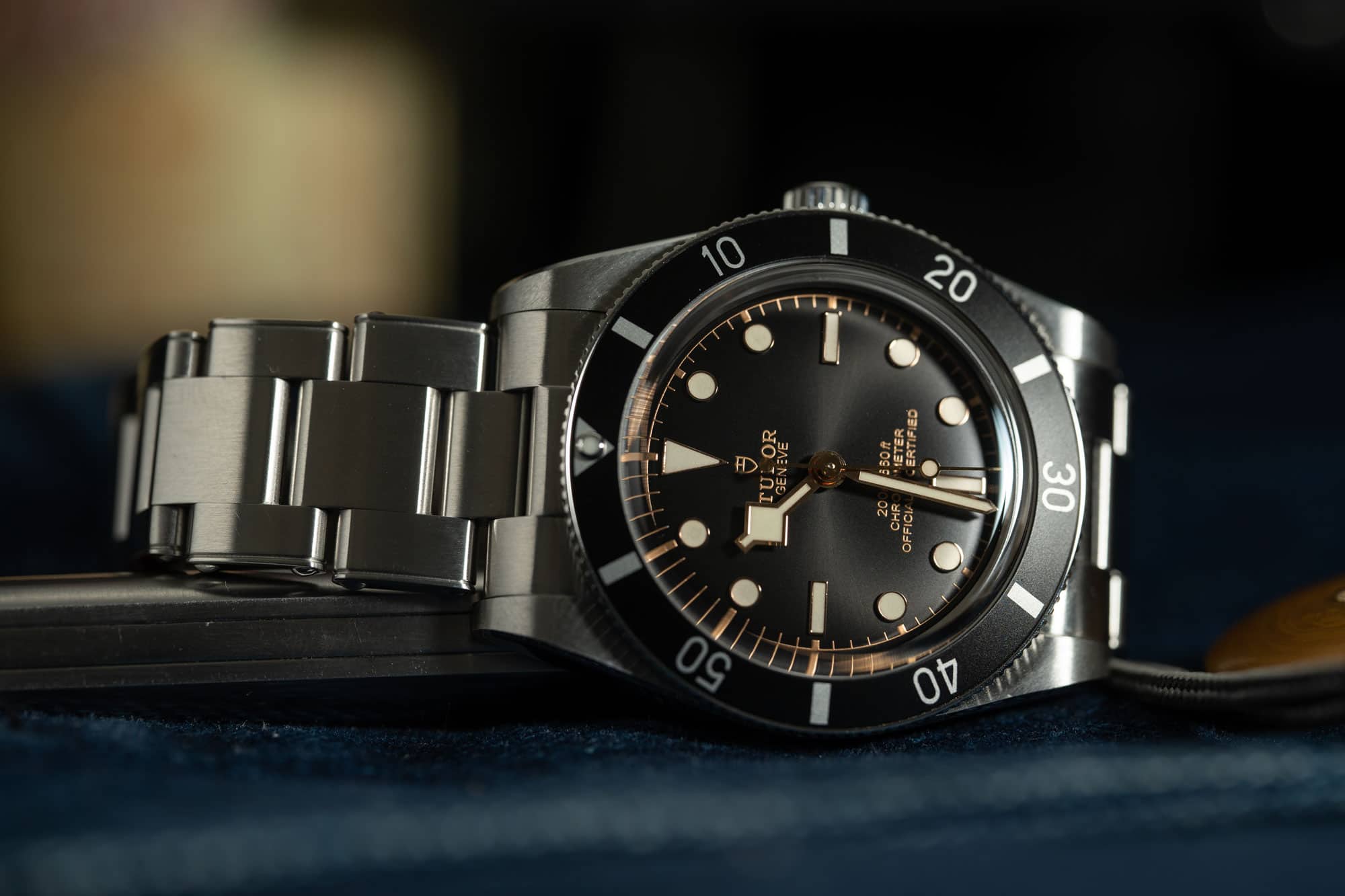
If you listen to podcasts on the Ringer network you’re probably familiar with a Bill Simmons-ism widely adopted there, which is the idea of who has “the belt” in a category. Best director working today? Maybe Paul Thomas Anderson has the belt. Best fast food restaurant? Clearly Taco Bell holds the belt for their boundless creativity. You get the idea. If you apply this to watches and ask who has the belt as the most influential consumer brand, I think you’ve got to consider Tudor.
Rolex has crept up a little too high in price and is simply not readily available enough, and Seiko is great but in terms of overall quality there are just too many options that are as good or better for the price. Tudor, though, delivers a remarkably consistent high end product for a fair price that is actually available. They are, for many, the new aspirational purchase that is actually realistic. Not a grail, but a goal.
I’ve written about my own Tudor Black Bay plenty of times so won’t rehash all that this watch means to me here, but will just say that it remains a key watch in my collection, one that makes me feel connected to both the enthusiast community and the broader watch world (a very different thing). No other watch I own really does that, because, let’s face it, most of the watches I own are weird indies or microbrands that don’t have a real relationship to casual watch ownership. The Tudor grounds me. It reminds me of what normal people who just want a nice watch (and are hopefully finding sites like ours) are looking for and capable of finding in a watch that will last them forever. At the same time, it’s a symbol of the predominant trend in our industry that has existed for most of my time working in it, as well as being a prime example of an enthusiast favorite. To use a phrase I swore I’d try to avoid, it checks a lot of boxes.
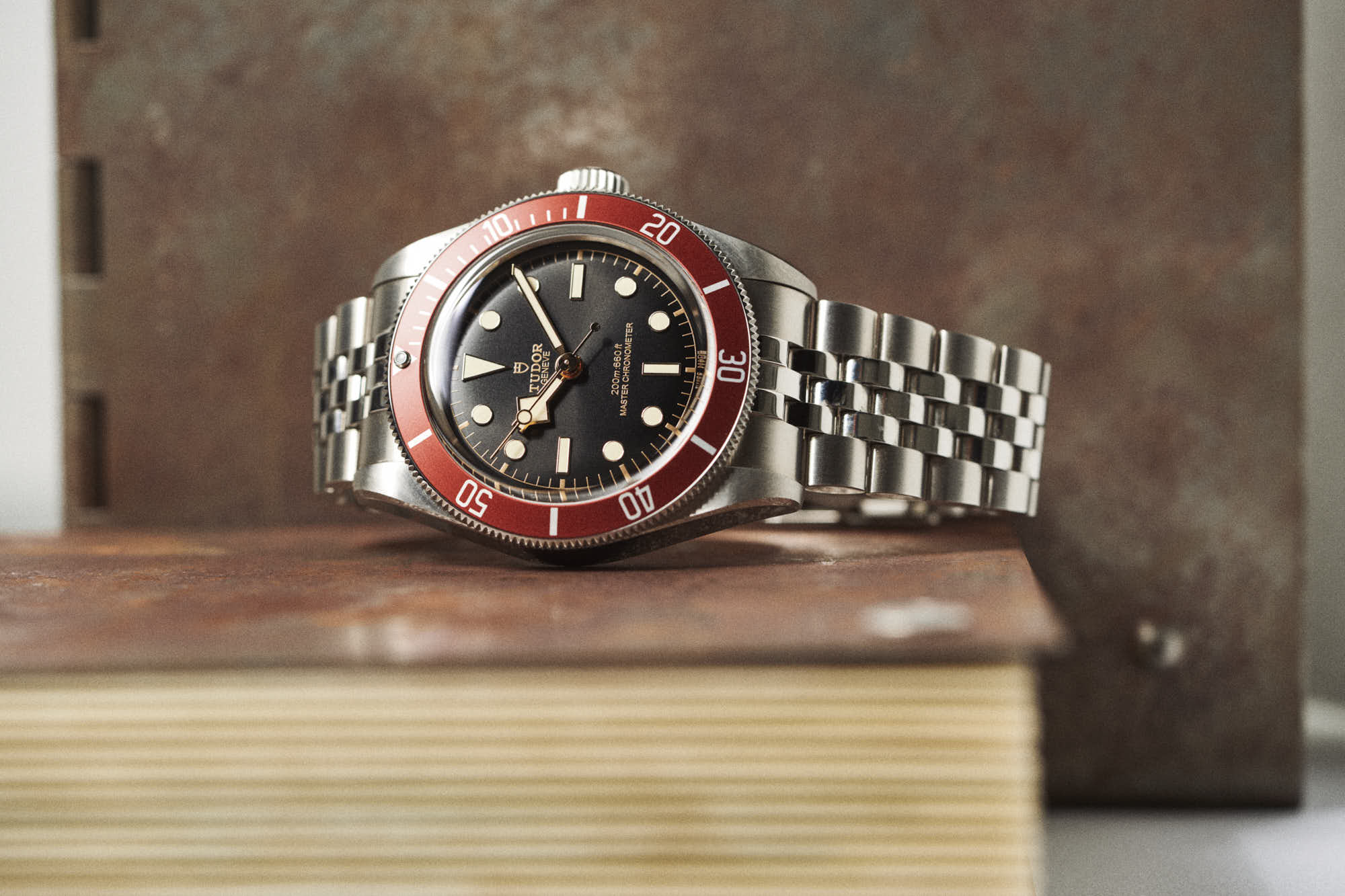
It’s a cliche, perhaps, to say that Tudor sits at a crossroads at 100. Maybe they do, and maybe they don’t. The industry certainly feels like it’s at an inflection point of sorts, and brands like Tudor are about to grapple with an issue that could radically change how people perceive them: pricing. It was announced recently that Tudor’s prices are heading up. No surprise there as it tends to happen annually or even more often for many Swiss brands who do businesses with the Swiss Franc. To this point, though, Tudor has largely steered clear of much of the criticism levied at brands like Omega and Grand Seiko, other affordable and value oriented alternatives to Rolex that have frankly been priced more and more like Rolex as the years have pressed on. Even more than those brands, Tudor has a certain image to protect via their pricing, so it will be interesting to see how this plays out as Tudor hits 101, 102, and beyond.
Tudor at 100 is in a powerful position in the watch industry, perhaps the most powerful position of any brand not named Rolex, Patek Philippe, or Audemars Piguet. No other brand, at least for us, garners the same “stop the presses!” reaction from our staff when a new watch is announced. I’ve lost count of the number of times our editorial calendar has been blown up to accommodate a new Tudor drop. To borrow another phrase from Bill Simmons, you could say that Tudor has reached their “Apex Mountain,” a time where they have the most influence across the industry as they ever have.
Zach Kazan
2026-01-13 19:00:00