
:max_bytes(150000):strip_icc():format(jpeg)/Champagne-Country-Ham-Pairing-FT-DGTL1125-56680b2c755d47c6b433ffcb0bbcfbe0.jpg)
- At the upcoming Charleston Food & Wine Classic, sommeliers Femi Oyediran and Miles White of Graft Wine Shop will lead a seminar exploring the surprising yet natural pairing of grower Champagne and Southern country ham.
- Each artisanal product reflects a deep sense of place — the salt-cured complexity of country ham meets the bright acidity and minerality of Champagne for a refined balance.
- The pairing underscores a larger movement to honor Southern ingredients as expressions of terroir and tradition on par with Europe’s most celebrated foods.
At first glance, Champagne and country ham don’t seem like natural partners. One conjures visions of crystal flutes and caviar, the other of biscuits and red-eye gravy. But in Charleston, South Carolina, sommeliers Femi Oyediran and Miles White are once again proving that the most joyful pairings often come from putting the haute and the humble on the same plate.
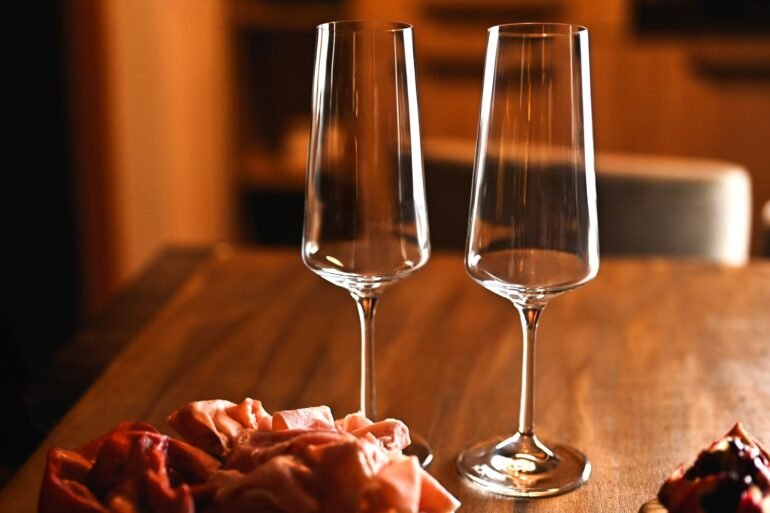
At this year’s Charleston Food & Wine Classic, the duo — co-owners of Graft Wine Shop — are leading a seminar that pairs grower Champagne with Southern country ham. It’s a combination that feels both surprising and inevitable: two artisanal products, each deeply tied to place, tradition, and patience. “We love the kind of high-brow, low-brow pairings,” White says. “Not because it’s kitschy, but because those things really do taste better together.”
A Southern staple meets French luxury
Country ham has long been a staple of Southern kitchens, often fried and served with gravy. But in recent years, chefs and artisans have begun treating it with the same reverence as prosciutto or jamón, slicing it paper-thin and showcasing its nutty, savory complexity.
“It’s America’s prosciutto,” says ham expert and author Steve Coomes. “Properly cured, it’s robust, deeply flavored, and every bit as terroir-driven as Europe’s most celebrated hams.”
That terroir is literal. The flavor of country ham shifts depending on the breed of hog, what it eats, and how it’s cured. Lady Edison hams from North Carolina can taste delicate and clean, while Tennessee’s Benton’s is smoky and assertive. Edwards in Virginia leans nutty and savory. “Every producer has a different style,” White says. “That variability is part of the fun.”
Grower Champagne, meanwhile, is having its own moment. Unlike the big houses that blend for consistency, grower-producers bottle wines from their own vineyards, highlighting vintage variation and terroir.
“It’s the same philosophy,” Oyediran says. “These are small farmers making something expressive of place. That’s why it resonates with country ham.”
Salt, fat, and fizz: Why country ham and Champagne work
From a sensory perspective, the pairing makes perfect sense. Country ham is salty, fatty, and umami-rich. Champagne brings acidity, bubbles, and minerality. “It’s like caviar and Champagne,” White says. “Salt makes everything taste better, and Champagne resets your palate with every sip.”
Coomes frames it in terms of pairing theory: complementary, contrasting, and elevating. “Acidity contrasts the richness of ham, mousse scrubs the palate, and minerality can elevate the flavors into something entirely new,” he explains. “That’s when you get the ‘aha’ moment.”
From celebration to everyday table
For Oyediran and White, the Charleston panel is less about rigid rules and more about creating space for discovery. “We don’t want to force a romantic story that isn’t real,” Oyediran says. “This is the kind of thing we’d actually do at home — bring some ham, open Champagne, and see what happens.”
That spirit of play is what makes the pairing so adaptable. You don’t need artisanal ham or a ticket to Charleston to try it. A grocery-store Honey-Baked, a smoked holiday ham, or even prosciutto can all find their match in the right bottle. “Most Champagne will taste pretty good with most ham,” White admits. “But the fun is in finding the combinations that really sing.”
A broader story of Southern foodways
The pairing also speaks to a larger cultural moment. Southern food traditions, once dismissed as humble or provincial, are increasingly recognized as central to America’s culinary identity. “It would be a disservice to host a festival in Charleston and not highlight something like country ham,” White says.
Coomes believes country ham could become a global ambassador for Southern foodways, much like bourbon has for Kentucky. “It’s every bit as good as prosciutto,” he argues. “The more chefs and sommeliers treat it that way, the more people will see it as a delicacy.”
A toast to the unexpected harmony of opposites
At its heart, Champagne with country ham is a pairing that embodies both joy and depth. It’s playful — luxury meets lunchbox — but also profound, a reminder that terroir and tradition can be found in a barn in Appalachia as easily as in the chalky soils of Champagne.
And for readers at home, the lesson is simple: Don’t overthink it. Buy a bottle of Champagne (or another bright, acidic sparkling wine), slice some ham, and taste. The magic is in the contrast, the surprise, and the laughter that comes when something so unlikely just works.
As Oyediran puts it, “The goal is just to have fun.”
| Ham and wine pairing cheat sheet | ||
|---|---|---|
| HAM | WINE PAIRING | PAIRING NOTES |
| Country ham | Extra brut or Chardonnay-driven grower Champagne | Acidity and bubbles cut through salt and fat |
| Honey-baked ham | Rosé Champagne or off-dry Chenin Blanc | Fruitiness balances the honeyed glaze |
| Smoked ham | White Burgundy or oaked Chardonnay | Roundness and subtle wood complement smoke |
| Baked ham | Albariño or Spanish Garnacha | Bright fruit and acidity refresh the palate |
| Prosciutto or jamón | Northern Italian whites (Arneis, Gavi) or vermouth spritz | Crisp, herbal notes echo the delicacy of the meat |
Gina Pace
2025-11-06 17:01:00