
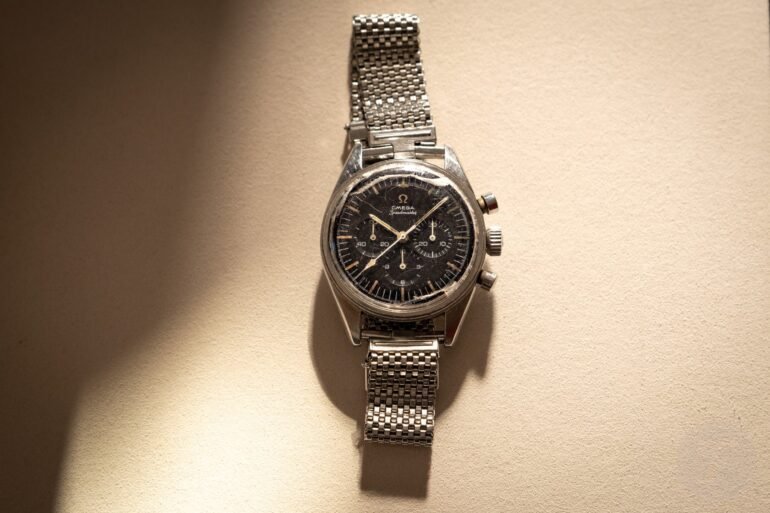
On April 27th, 1976, NASA made 55 out of 97 of its Omega Speedmaster chronographs available to the National Air & Space Museum (NASM) in Washington, DC. Then and now, these Omega watches were considered a collection with significant artifactual value!
This article is a contribution by space and watch enthusiast Philip Corneille, founder of the Moon Watch Universe platform. He brought to our attention that it was 50 years ago that the Omega Speedmaster watches used by NASA during the Apollo missions were made available to the National Air & Space Museum.
Neil Armstrong’s Speedmaster (n° 46) from Apollo 11 — Image: National Air & Space Museum
Five decades ago, the NASM received 55 Speedmasters from NASA
Of the 97 watches NASA received from Omega over the years, 55 were made available to the NASM in April, 1976. About a year later, NASM finally received, documented, and categorized these NASA-issued Omega Speedmaster chronographs. From then until 1985, NASA kept the remaining Speedmaster chronographs for astronaut use during training for the Space Shuttle program. By 1978, NASA had received the first batch of radial-dial Omega Speedmaster 145.022-78 chronographs. The agency proceeded to use these from 1981 until 1995 (shuttle missions STS-2 to STS-73).
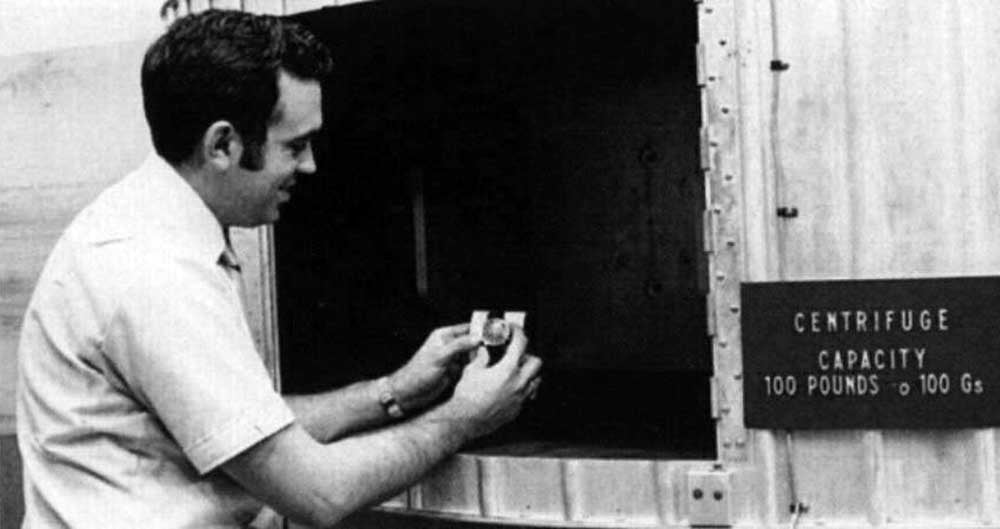
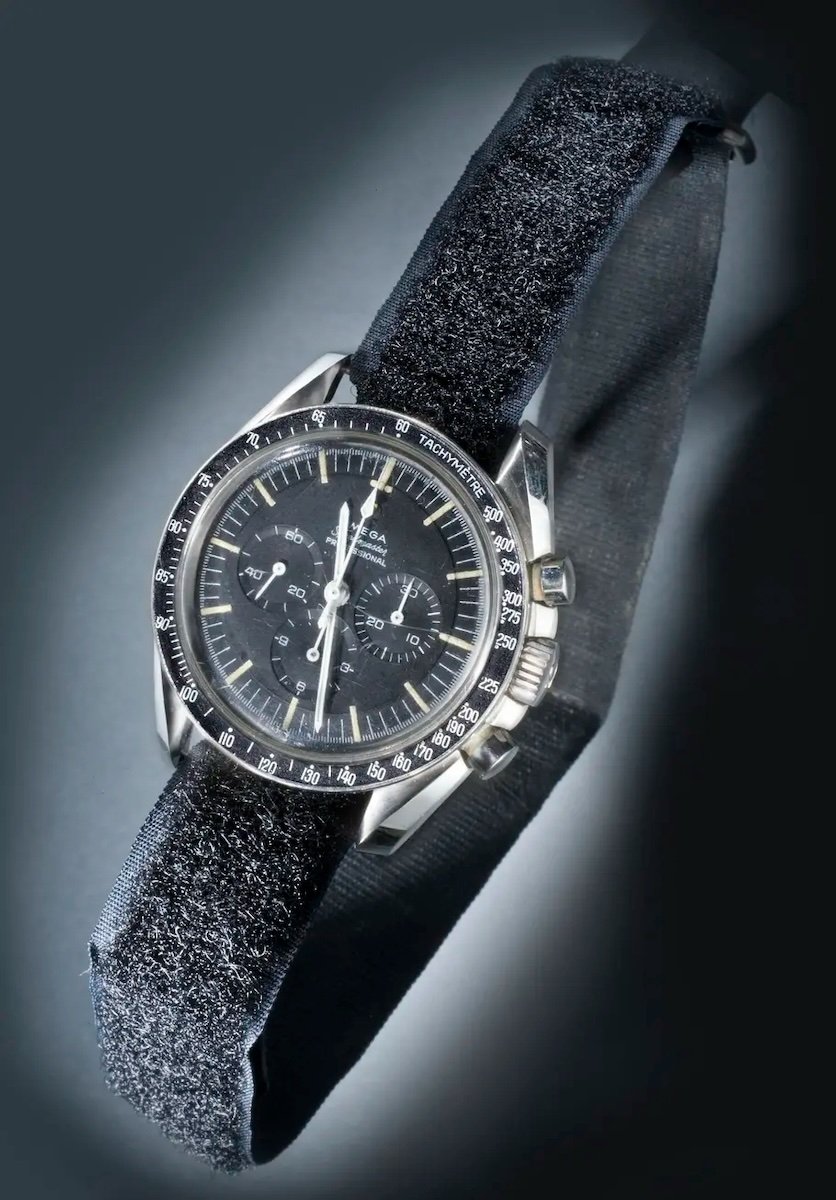
NASA engineer James Ragan testing the Speedmaster 105.003 — Image: NASA
NASA received 100 Speedmaster watches in total
Between April 1965 and December 1968, NASA received five deliveries of Omega Speedmaster chronographs, totaling 97 wristwatches. Taking the three NASA-tested Speedmasters (105.003) into account, the total becomes 100 Omega Speedmaster chronographs. To this day, it is unclear whether these three NASA-test-surviving Speedmaster chronographs received a NASA number. NASA gave all watches a unique number to easily identify (and register) them.
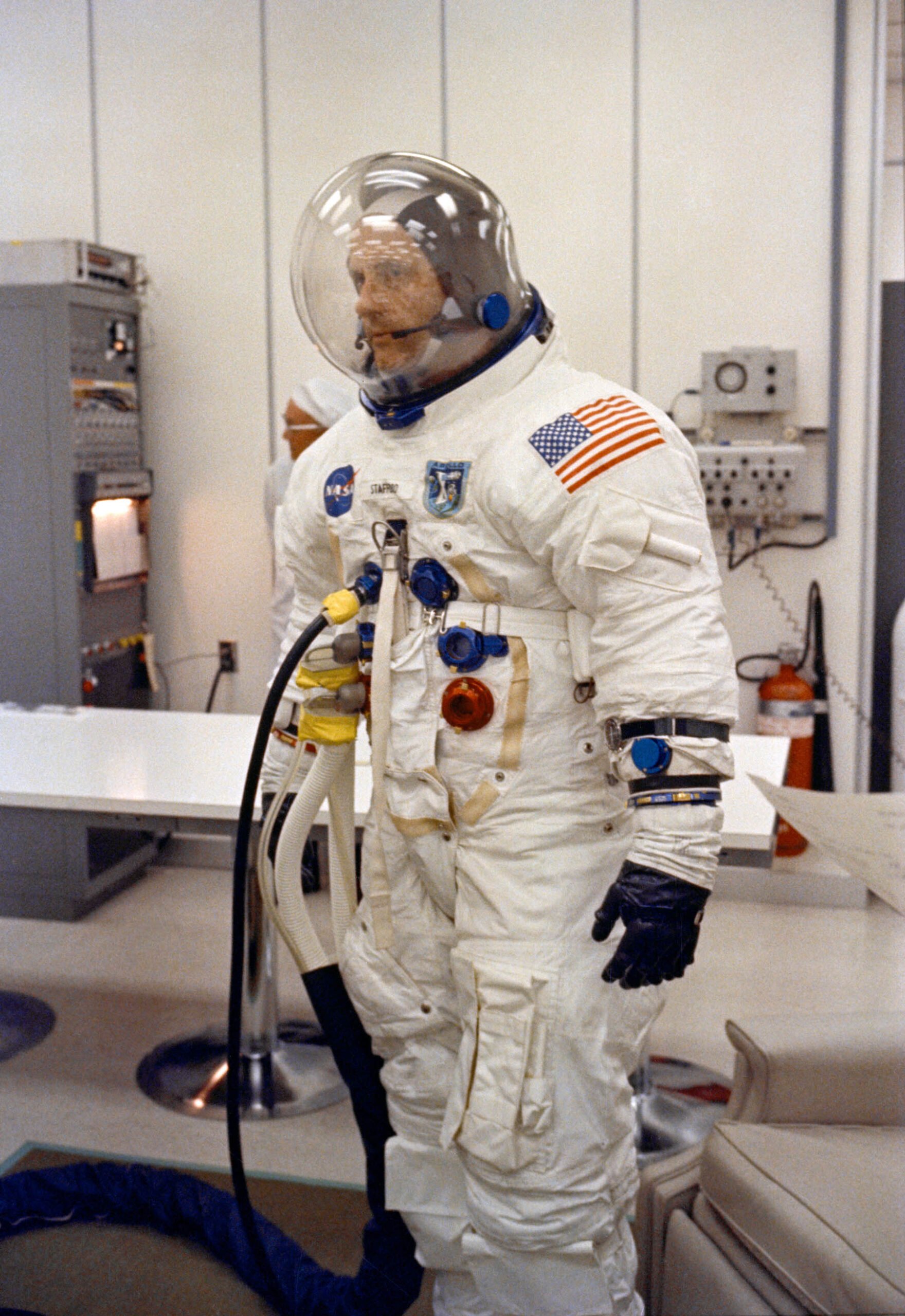
Astronaut Thomas P. Stafford, Apollo 9 commander, suited up at the Kennedy Space Center for a countdown demonstration test during preparations for the scheduled Apollo 10 lunar orbit mission — Image: NASA
A total of 71 Speedmaster watches were used for spaceflight missions
Between 1965 and 1975, 71 (two NASA test models included) of these 100 saw action in actual spaceflight missions (23 Speedmaster ref. 105.003s, 38 Speedmaster ref. 105.012s, and 10 Speedmaster ref. 145.012s). Publishing numbers helped keep track of NASA-issued Speedmasters that flew several times. For example, Eugene Cernan wore his n° 28 three times (during the Gemini IX-A and Apollo 10 and 17 missions), while Thomas Stafford (n° 27) and Richard Gordon (n° 12) wore theirs twice.
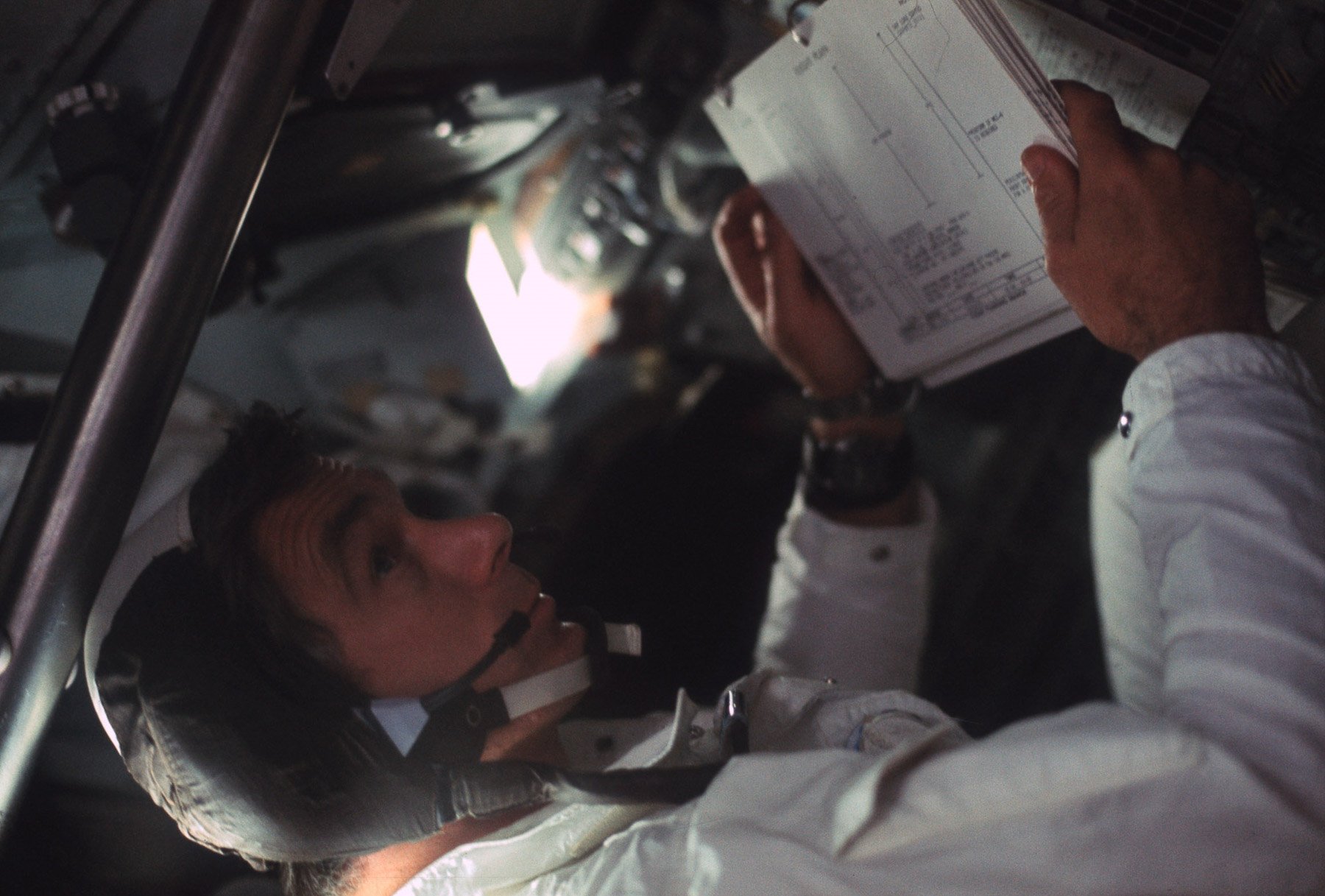
Image: NASA
In the photo above (December 1972), Apollo 17 Commander Eugene Cernan is checking the Flight Plan checklist on the way to the Moon. Note both Speedmaster chronographs, NASA n° 28 and n° 67. After the June 1966 Gemini IX-A mission, Cernan considered his NASA-issued Omega Speedmaster 105.003-64 n° 28 a good-luck charm, so he wore it as a second wristwatch on a steel mesh JB Champion bracelet underneath the spacesuit on Apollo 10 and on Apollo 17.
The NASM received nearly all space-flown Speedmasters
NASA handed over nearly all space-flown Omega Speedmaster chronographs to the NASM. Over the years, the NASM has sent several of these NASA chronographs to international exhibits and museums.
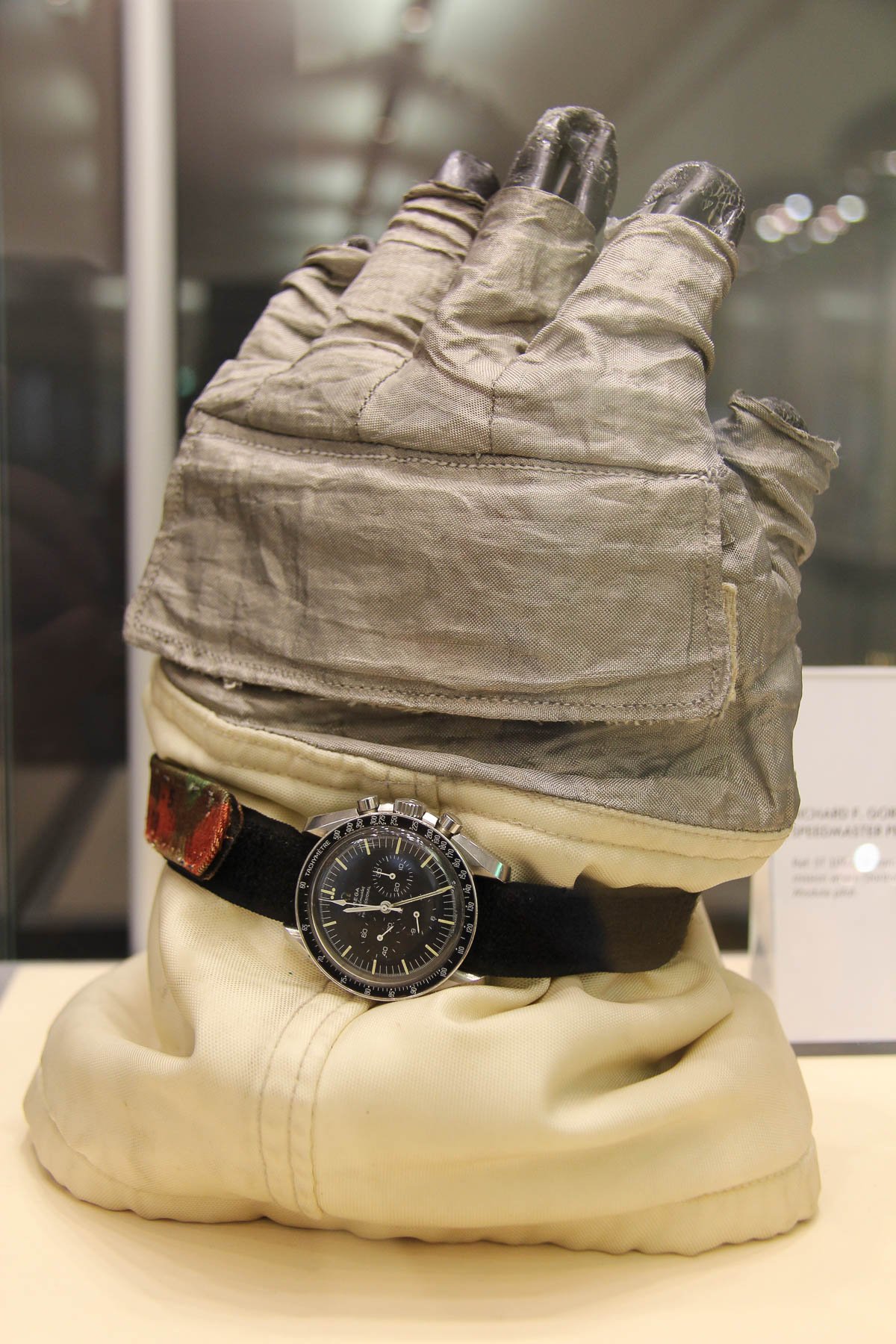
Apollo 12 CMP Richard Gordon’s spaceflown Speedmaster 105.012-66 CB NASA n° 57 on display at the Omega museum in 2016 — Image: Moon Watch Universe
Stolen Speedmaster watches
However, during these five decades, six NASA-issued Speedmaster chronographs on loan abroad have been stolen. Only one of these has been recovered, NASA n° 34, which was one of a pair of space-flown Speedmasters worn by Donn Eisele during the Apollo 7 mission in October 1968.
A recovered Speedmaster 105.012-65
In October 2017, space-history enthusiasts helped recover a space-flown Speedmaster 105.012-65 by providing authorities with information about the chronograph’s status and location as it appeared on eBay nearly three decades after its theft from a museum in Ecuador. You can read more about the recovery of this stolen Speedmaster here.
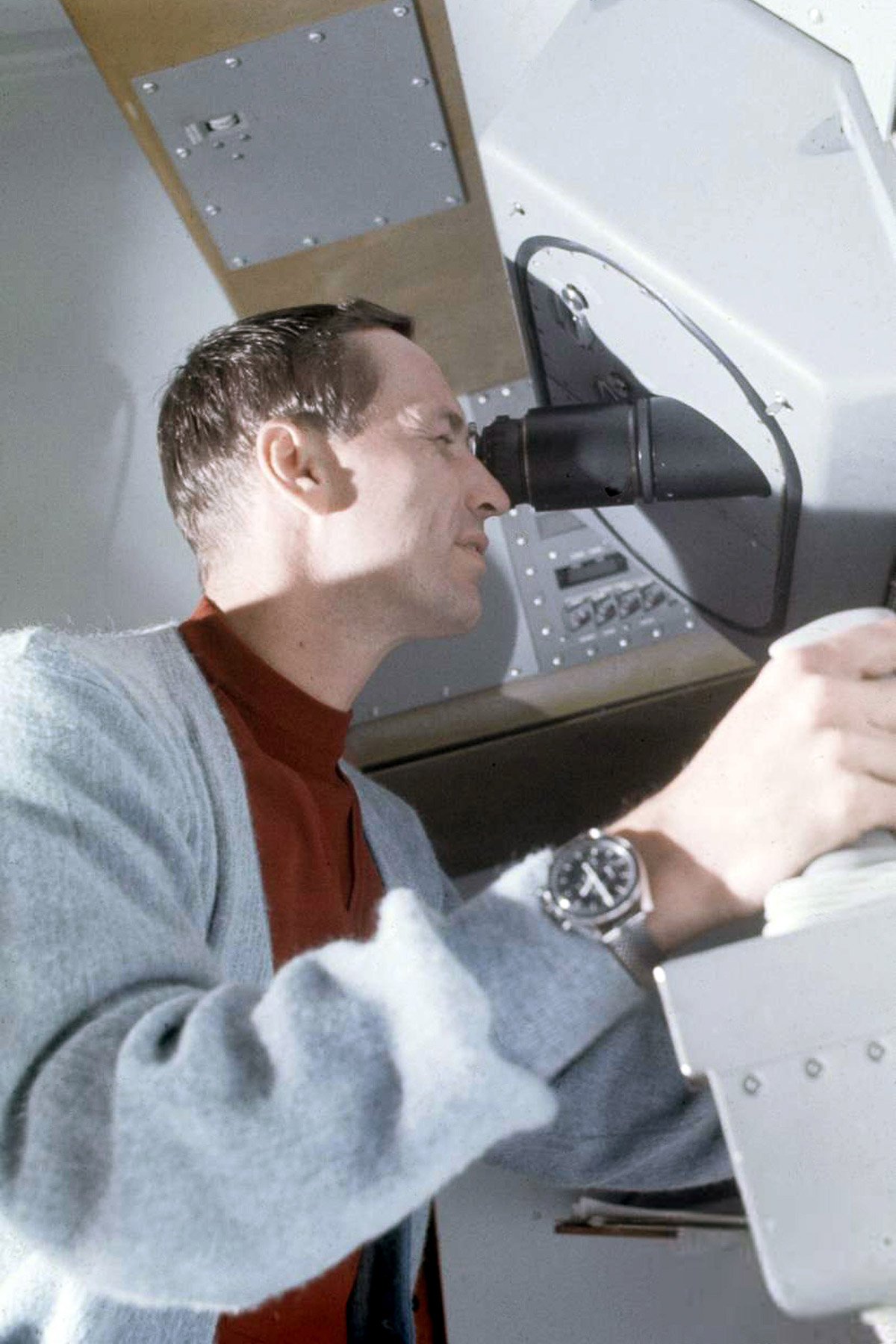
Image: NASA
The photo above (August 3rd, 1967) shows astronaut Donn Eisele during training in the Apollo Command Module simulator in Houston, Texas. Note the steel mesh Jacoby Bender Champion bracelet. Announced in late 1966 as backup for the Apollo 1 crew, the Apollo 7 astronauts were among the first to receive NASA-issued Omega Speedmaster 105.012 versions.
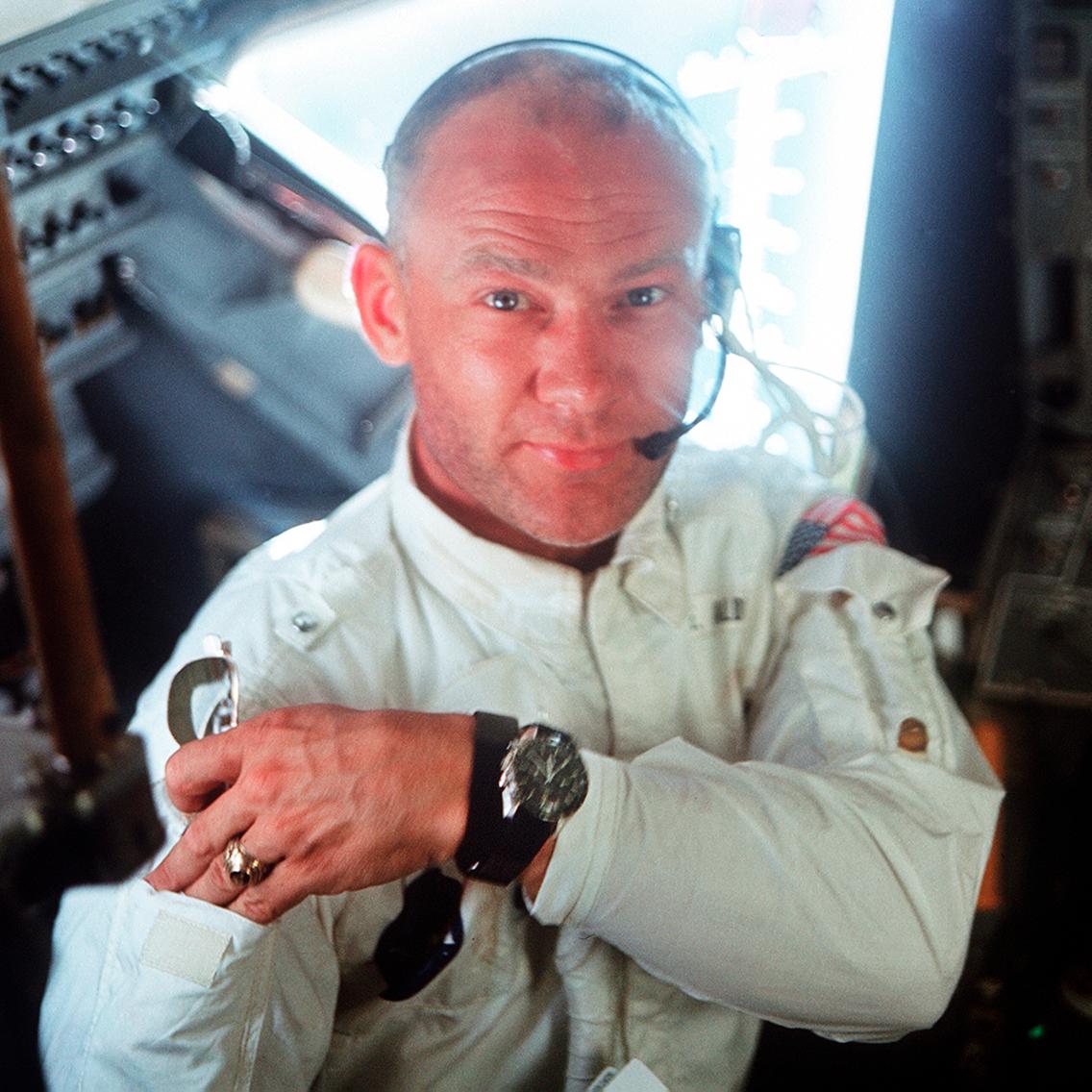
Edwin “Buzz” Aldrin and his Speedmaster 105.012 — Image: NASA
Where is Buzz Aldrin’s Omega Speedmaster?
Today, besides the famous NASA n° 43, the Omega Speedmaster 105.012-65 worn by Edwin Buzz Aldrin during Apollo 11 (lost during transfer between the NASA & NASM), another five NASA-issued Speedmaster chronographs are still “out there.”
For decades, Moon Watch Universe has been reviewing multiple sources, contemporaneous notes, photograph collections, and speaking with astronauts to corroborate and cross-reference all available data on NASA-issued Omega Speedmaster chronographs from the Gemini-Apollo era.
Esoteric research isn’t always a boring exercise. In this case, it gives us an idea of how NASA received, maintained, and distributed the Omega chronographs to astronauts on active flight status.
A strict return policy
Until December 1968, NASA never had enough Speedmaster chronographs to issue one to each astronaut. Consequently, the common practice was to issue a Speedmaster as soon as an astronaut received his assignment as either a primary or backup crew member for an upcoming mission. Returning the space-flown chronographs post-mission was sometimes difficult. Donald Deke Slayton often threatened to cut flight time on the NASA T-38 supersonic “astronaut taxi” for astronauts who didn’t return their Speedmasters in time. Apollo 15 Command Module Pilot Alfred Worden told me this story during an event in January 2019.
Astronauts Alan Shepard and Thomas Stafford also wore their NASA-issued Speedmaster while serving as chief of the Astronaut Office.
The most battered chronographs
Besides reserving and preparing Speedmaster chronographs well in advance for a spaceflight mission, NASA also put half a dozen Speedmasters aside exclusively for altitude chamber testing. NASA had such a training facility in Houston, Texas, and at Cape Canaveral in Florida. Word of mouth seems to indicate certain numbers (e.g., n° 13 & n° 24) were used for this purpose. If NASA applied this modus operandi, these Speedmaster watches must have been the most battered NASA chronographs!
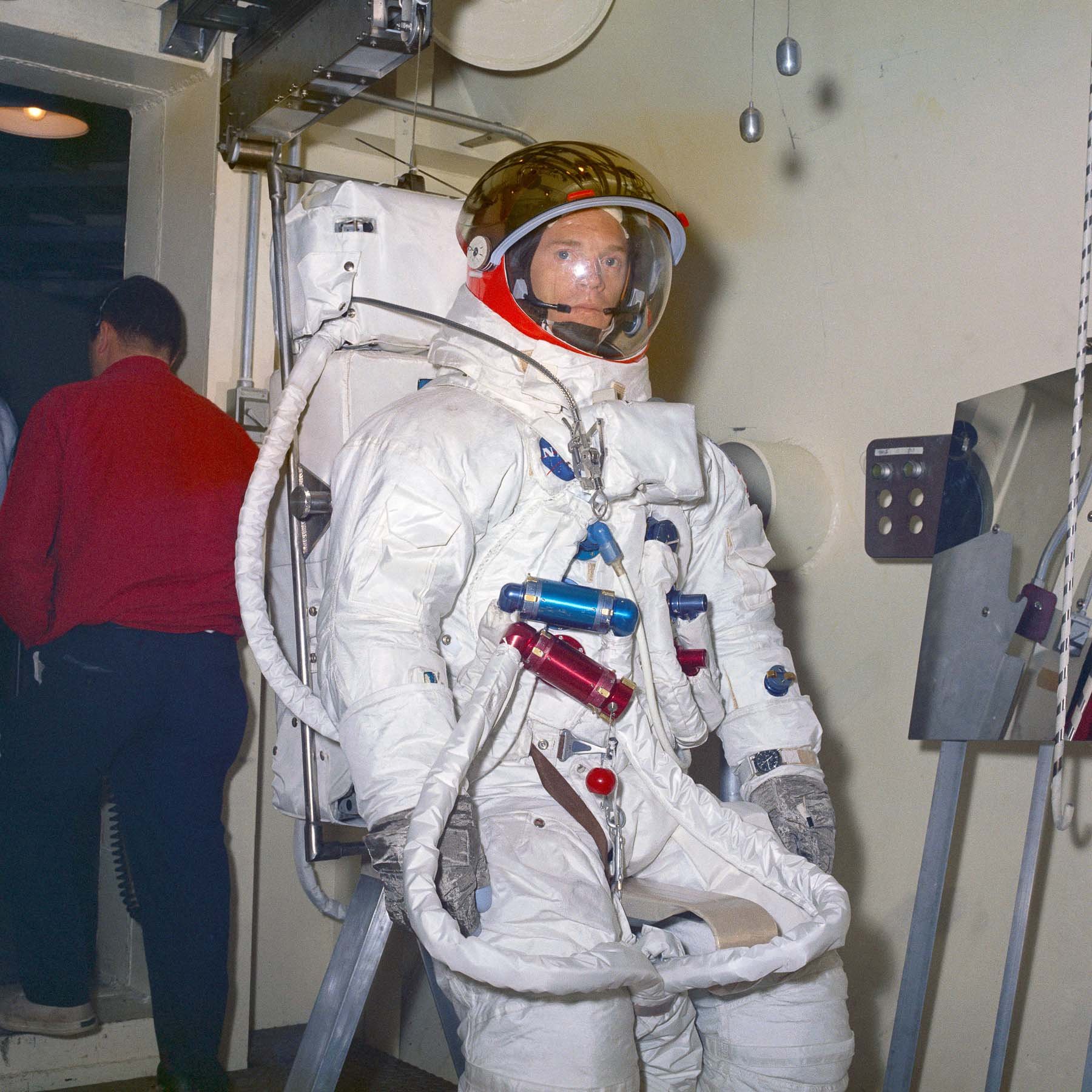
Image: NASA
In the photo above (December 11th, 1968), Apollo 9 astronaut Schweickart is in a full space suit with PLSS backpack working in the thermal-vacuum altitude chamber in Houston, Texas. Schweickart, wearing a NASA-issued Omega Speedmaster 105.012, was training during a real space environment simulation of the spacewalk he would perform between the Command Module “Gumdrop” and Lunar Module “Spider” in low Earth orbit.
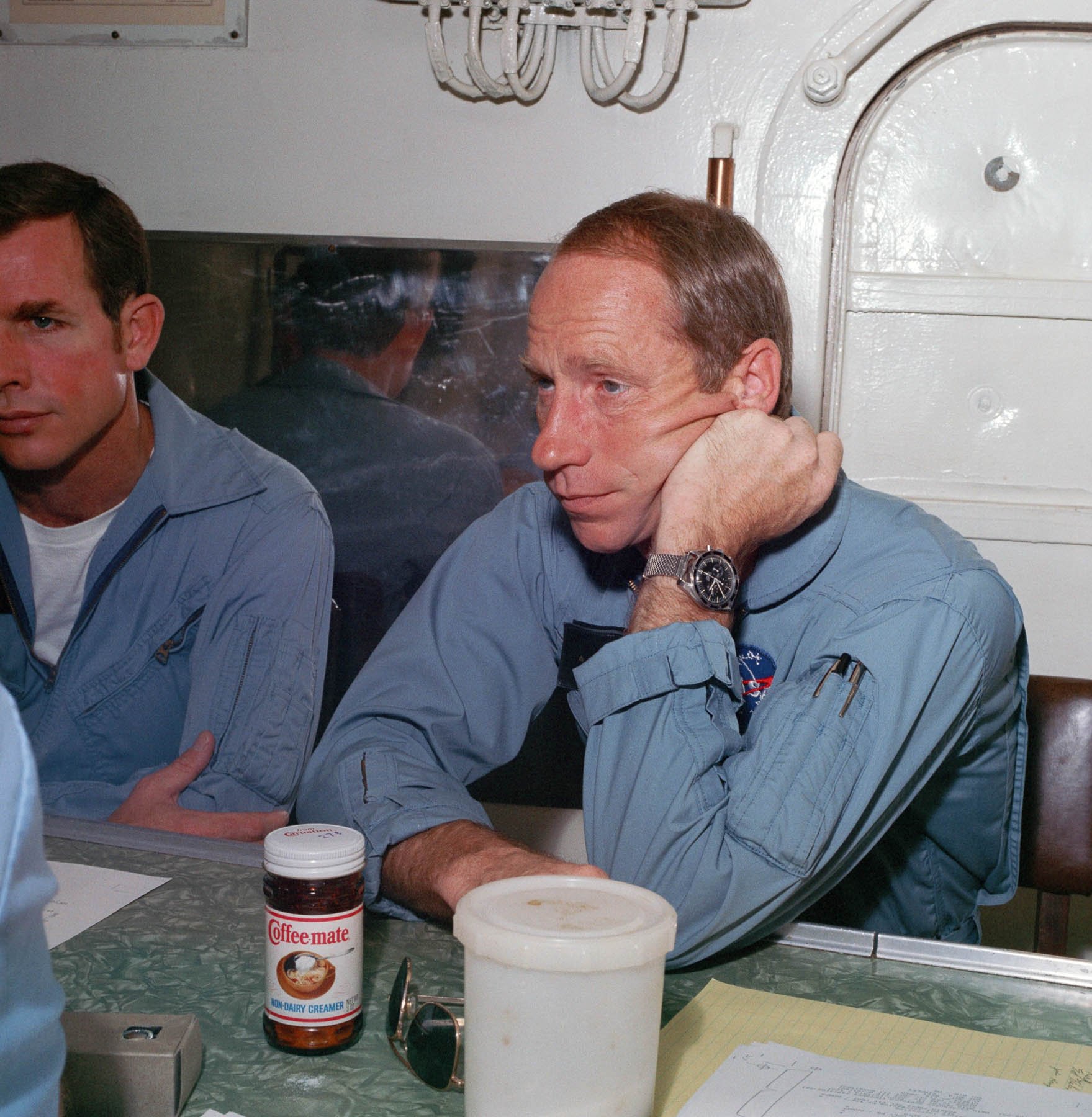
Image: NASA
A different bezel scale
Finally, in 1971, the Apollo 15 crew received a NASA-issued Speedmaster with a bespoke 60-second bezel, but NASA had already reserved the Speedmasters with the regular tachymeter scale bezel for the actual mission.
The photo above (May 6th, 1971) shows Apollo 15 Command Module Pilot Alfred Worden during water egress training briefing onboard NASA vessel MV Retriever in the Gulf of Mexico. Note the practical 60-second bezel on the Speedmaster 105.012, as the astronauts requested it for their chronographs. However, NASA had already reserved tachymeter-bezel Speedmasters for the actual mission.
Moon Watch Universe brings this preliminary research, and we’re looking forward to hearing from the Speedmaster community, hoping to trigger further (esoteric) research!
A big thank you to Philip Corneille for sharing these interesting historical facts with our readers and us.
Fratello
2026-05-12 13:00:00