
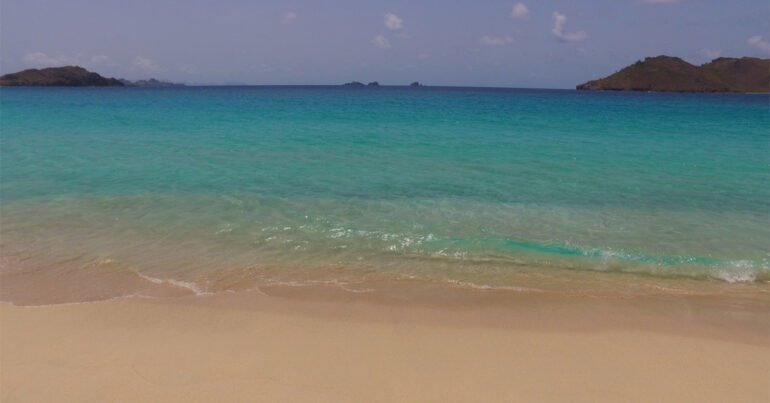
You notice the quiet first, not as absence but as space — the same hills rising above the water, the same white-sand beaches, the same steady, clear sea, just without the compression that defines the island in peak season.
By June, St. Barth holds its form but releases the pressure around it. Fewer cars move across the hills, fewer arrivals stack into the same afternoon window, fewer tables are already claimed before the evening begins. The island remains exactly what it is known to be — one of the Caribbean’s most precise, polished destinations — but the experience opens up in a way that feels immediate.
The winter version is familiar: Gustavia Harbor filled with yachts, restaurants booked days in advance, beach clubs operating at full capacity from midday. None of that disappears completely. What changes is the demand around it.
You drive into town and find parking without circling. You walk into dinner and sit down. You arrive at a beach and settle where you want. Everything stays available, just without the negotiation that usually comes with it. That shift defines summer here — not a different island, but a more usable one.
Where You Stay Shapes The Entire Trip
Summer on St. Barth favors places that let you remain in one place long enough to fall into a routine. Les Ilets de la Plage, set directly along St. Jean Beach, reflects that version clearly. The property stays small, with a mix of beachfront bungalows and villa-style residences, all positioned within a few steps of the sand, arranged in a way that keeps movement minimal and time spent outside constant.
Arrival happens quickly. There’s no extended process, no separation between check-in and the rest of your stay. Within minutes, you’re at your door, and the beach is already part of what you see and hear. The design is direct — kitchens that function the way you need them to, terraces that hold most of your time, interiors that stay simple enough to keep your focus outside. The villas extend that further, offering more space for longer stays, but the approach remains the same: you’re here to stay put, not circulate.
Your day starts just right. A basket arrives at your door — fresh pastries, bread — delivered directly to your bungalow or villa. You take it outside, set it down on the table, and breakfast happens there, with the sound of the water just ahead. It’s a detail that removes the need to plan the start of the day, and it sets the pace for everything that follows.
How The Day Actually Unfolds
Time stretches differently here in summer, and the difference shows up in how little you need to organize. You wake when the light fills the room, step outside, and the beach is already in front of you. Breakfast moves slowly, usually outside, followed by time on the sand that extends without interruption. A swim happens when it feels right, not because it’s scheduled into the day.
At some point, you make your way to Super U, the island’s central market and one of its most defining stops. Inside, the shelves carry fresh baguettes, French cheeses, charcuterie, prepared foods, wine, everything you need to shape the rest of the day. You gather what you want — lunch, something for later, something cold — and head back. The routine becomes familiar quickly, not as a plan but as something you fall into.
Afternoons settle into the same pattern. Time at the beach, time on the terrace, stretches of reading that last longer than expected because nothing interrupts them. The day doesn’t divide into segments. It holds as one continuous block of time, shifting gradually with the light.
The Beaches In Summer Feel Different
The beaches themselves don’t change. What changes is how you experience them.
Saline Beach opens wide after the short walk over the dunes, a long stretch of white sand facing open water. In summer, there’s space between everyone. You choose where to settle and stay there as long as you want. The view remains uninterrupted, the sound consistent, the time unstructured.
Gouverneur Beach carries the same clarity — calm water, steady light, and fewer people arriving at once. The conditions hold, but the urgency disappears. You’re not working around anyone else’s schedule.
St. Jean Beach, where Les Ilets de la Plage sits, becomes part of your daily routine almost immediately. You step out and you’re already on the sand. Planes descend in the distance, restaurants line portions of the beach, and the water remains calm enough to stay in for extended periods. You don’t plan to come here. You’re already here. This hotel is one of our favorites on the island, and it’s in large part because of its quality and its authenticity.
L’Orient Beach stretches further, with sections that include beach clubs and others that remain open and quiet. In summer, the space feels more continuous. You walk, you stop, you stay.
Across all of them, the defining detail is access. You arrive and settle. Nothing requires adjustment.
Villa Life Without Leaving The Property
St. Barth has always been shaped by villa living, and summer brings that into focus even if you’re not in a standalone house. At Les Ilets, the villa-style accommodations carry that same approach — kitchens used regularly, outdoor spaces that become the center of the day, meals that happen on your own time.
Lunch might come from Super U, set out on your terrace with whatever you picked up earlier. Dinner might follow the same pattern, or you head into town, because you can. There’s no need to commit early. You decide as the evening approaches.
The difference is in how little you move. You don’t rotate through locations. You stay in one place long enough for it to feel natural.
Dining Without The Usual Friction
One of the clearest advantages of St. Barth in June is how easily you move through its restaurants. Gustavia, St. Jean, and L’Orient continue operating at a high level, but without the intensity that defines peak season.
You decide where to go in the moment. You arrive and sit down. The meal unfolds without the sense that you’re working within a limited window.
Places like Caribbean To Go fit naturally into that rhythm — a small, reliable stop for takeout that works when you want something simple. You bring it back, eat outside, and stay where you are.
Other nights stretch longer. The flexibility remains.
Time Slows In Ways You Notice
What stays with you most is how time opens up. You read more, not because you planned to, but because you remain in one place long enough to do it. You stay at the beach later into the afternoon. You skip a dinner plan because the evening feels better where you already are.
Nothing feels urgent. Nothing pulls you away.
That’s the difference between seasons. In winter, St. Barth can feel like something to keep up with. In summer, it becomes something you settle into.
Getting Around Becomes Effortless
Driving across the island changes as well. The roads — narrow, winding, steep in places — remain the same, but the volume drops. You move from Gustavia to St. Jean, from Saline to Gouverneur, without delay. Parking opens up. Short drives stay short.
That shift changes how you explore. You don’t group stops together. You go to one place, spend time there, then decide what comes next.
The island feels more direct.
Why June Is The Moment To Go
June holds a specific balance. The crowds have eased, but everything is still open. Restaurants are serving, beach clubs are active, hotels are operating fully. Later in the season, some places begin to close. June avoids that window.
The weather stays consistent — warm, steady, with wind that keeps the temperature manageable. The water remains clear. Conditions hold throughout the day.
It’s the version of St. Barth that feels most accessible without losing what defines it.
Why This Version Of St. Barth Feels Complete
Nothing about the island changes at its core. The beaches remain among the best in the Caribbean. The food stays rooted in its French influence. The villas continue to shape how people spend time here.
What changes is how much of it you can actually use.
At Les Ilets de la Plage, that becomes clear quickly. You wake up, breakfast arrives — pastries, coffee, bread at your door — and the day begins without effort. You step onto the sand. You stay there. You return to your terrace. You repeat the same rhythm the next day.
The island doesn’t ask anything from you.
And in that space, you begin to see it differently — not as a destination defined by its busiest season, but as a place that holds its shape even when everything slows down.
That’s why summer works here. What you get is something closer to the soul of St Barth. The real soul, the core.
How To Get There
Getting to St. Barth is part of the experience, and the route you choose shapes the tone of the trip before you even arrive. The most seamless option is flying Tradewind Aviation from San Juan, which remains the best way to get to the island, and it isn’t really close. From the moment you arrive in San Juan and head up to the airline’s private VIP lounge, it’s almost like you’re already on St Barth diplomatic territory. That’s how I always feel, anyway.
It’s a luxury aircraft, a short flight, and a direct approach into St Barth’s Airport, where the runway meets the hillside and the descent happens quickly. This is the route I always take. It removes the extra steps, keeps the timing tight, and places you on the island without the usual complications. By the time you step off the plane, you’re already in it — no long transfers, no drawn-out connections, just a direct arrival into St. Barth’s rhythm.
Lori Chase
2026-05-02 02:02:00