
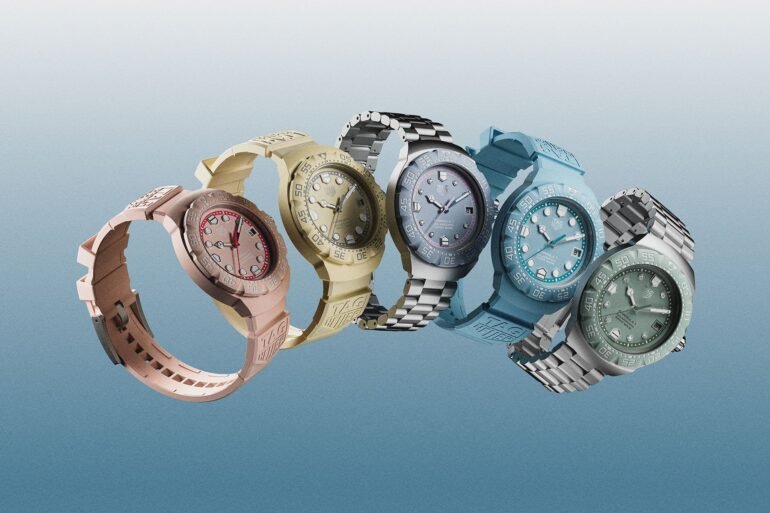
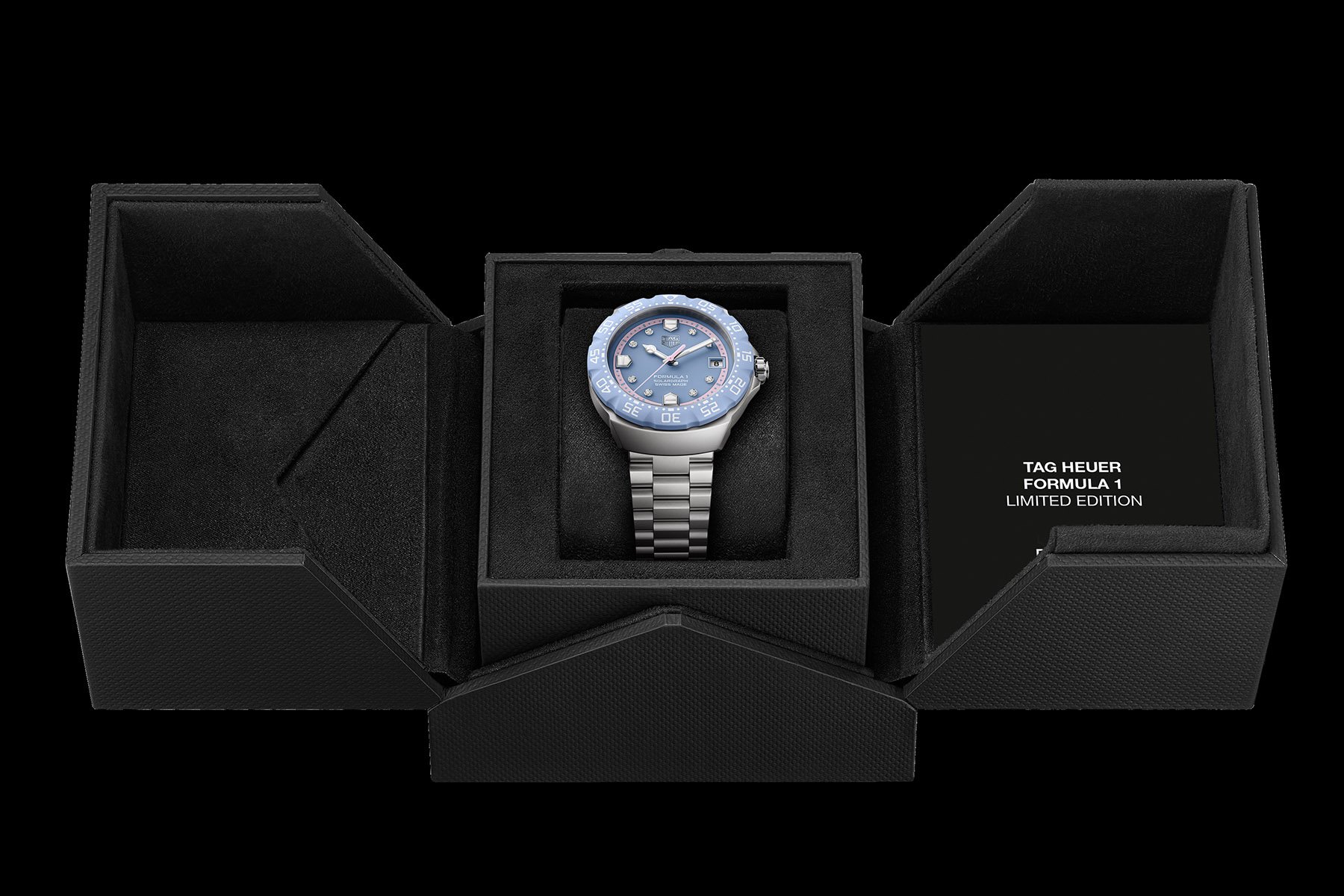
After an unplanned break caused by suspended Middle Eastern races in Bahrain and Saudi Arabia, Formula 1 returns next weekend in Miami. To match the Grand Prix’s high-voltage color, TAG Heuer expands its revived Formula 1 Solargraph 38mm range with fresh pastels. The new lineup includes five models, with three featuring classic layouts in beige, pink, and blue. Two more limited editions elevate the mood with pastel green and lavender blue dials, finished with diamond hour markers. This year marks four decades since the Formula 1 became the first watch to carry the TAG Heuer name. With 38mm watches back in favor and TAG Heuer serving as F1’s timing partner, the moment feels spot on. Bright colors, compact sizing, and quartz practicality make this a timely celebration.
Formula 1 never does subtle in Miami. The event leans hard into spectacle and beachside fantasy. Palm trees, turquoise water, and tropical attitude drive the visual narrative. Never mind that the race happens in the Hard Rock stadium parking lot, 10 miles from the coast. F1 even installs a faux marina, complete with painted water and static boats. Broadcasters join in with floral shirts and loud styling. Despite the spectacle, last year’s racing delivered genuine excitement. With a long gap since Japan in March, anticipation is running high. TAG Heuer launching these playful Solargraph 38mm models now feels perfectly judged.
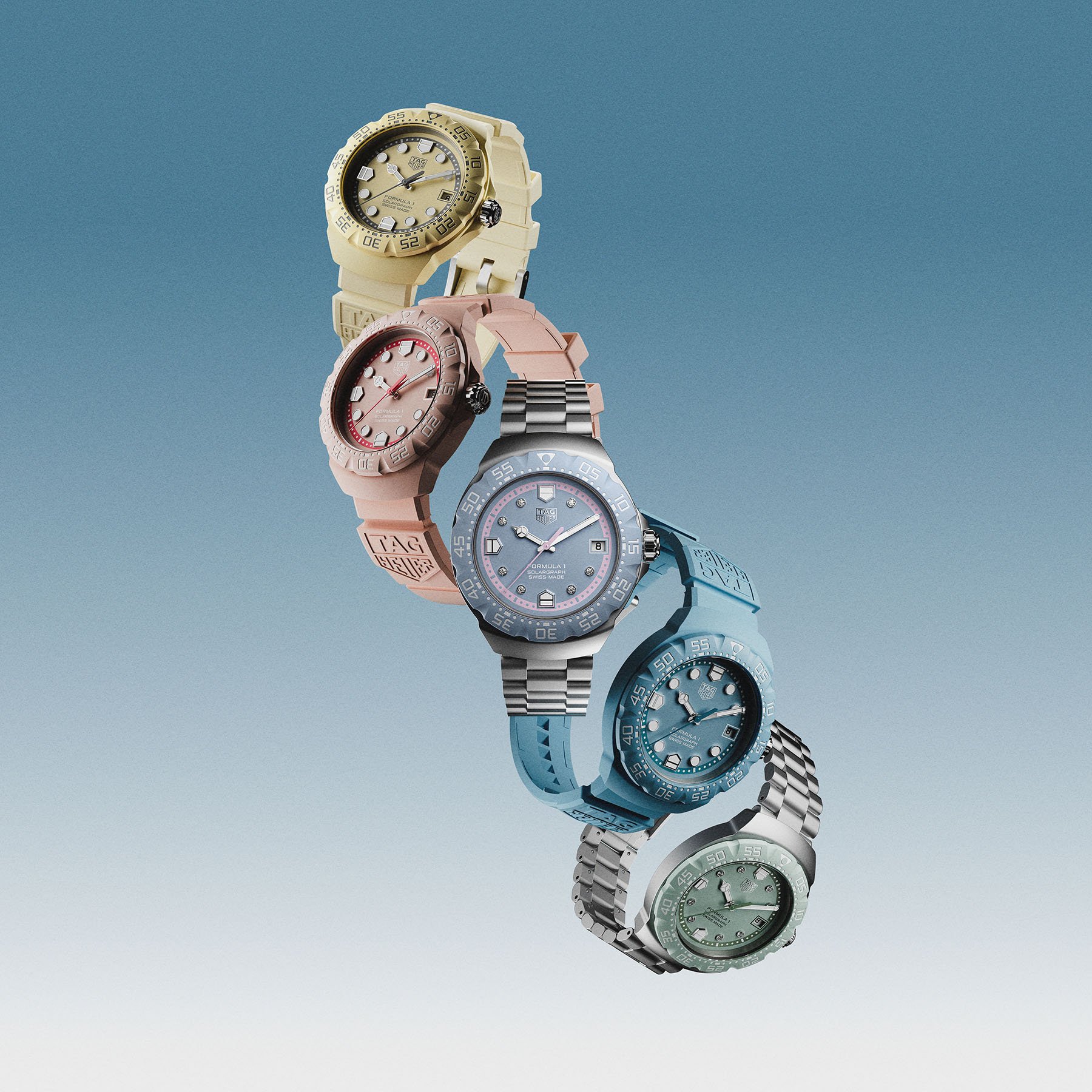
TAG Heuer Formula 1 Solargraph Pastel Collection
A softer palette defines the Formula 1 Solargraph Pastel Collection, but the tech stays familiar. Each model uses the TH50‑00 Solargraph movement introduced last year. Powered by natural and artificial light, two minutes of direct sun delivers a full day of power. Just 40 hours of exposure fully charge the watch for up to 10 months of autonomy, even in darkness.
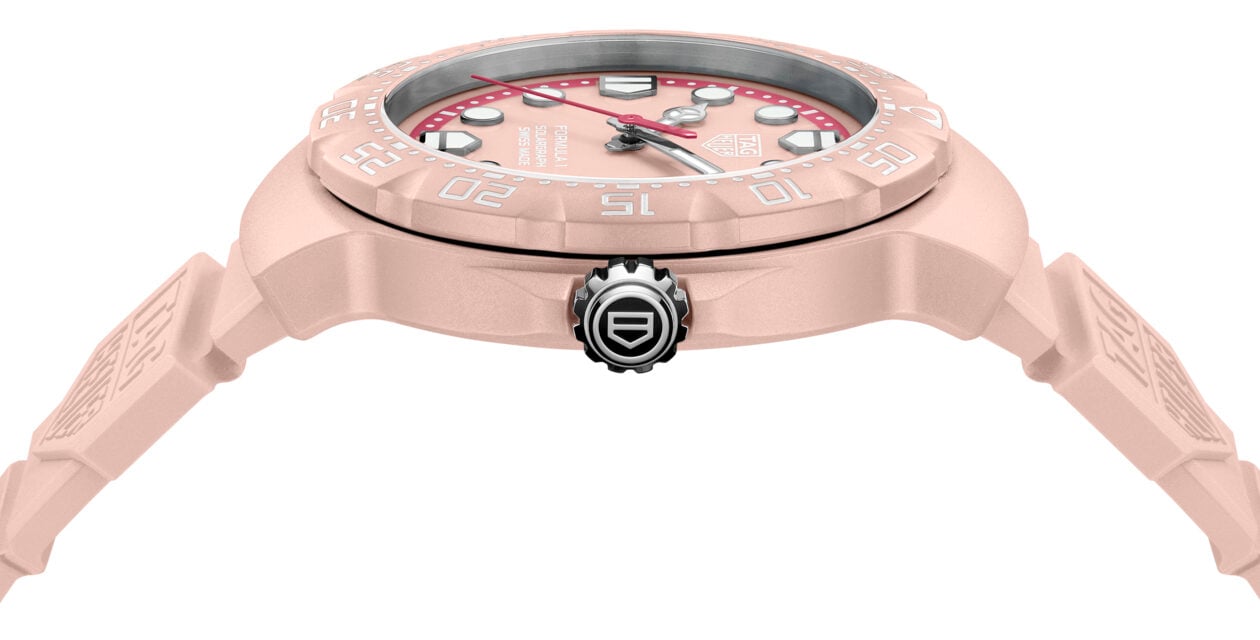
The first three limited editions use TAG Heuer’s TH‑Polylight case. This lightweight plastic feels smooth and has a matte finish. The beige opaline version channels Miami Beach sun and sand, paired with a gray minute track. It is limited to 3,500 pieces. Pastel blue and pink mirror a Florida skyline, with bolder tracks reinforcing their color. Blue is limited to 3,000, pink to 2,500. Each watch comes on a color‑matched rubber strap with a signed stainless steel pin buckle. Pricing is €1,950 / US$1,950 / £1,650. Sales begin May 1st, 2026, just ahead of the Miami Grand Prix.


The two diamond‑index models dial up the flair. Sandblasted stainless steel cases and solid three‑row bracelets add instant polish. The TH‑Polylight bidirectional bezel remains, complete with a 60‑minute scale. Still, the steel base elevates the overall refinement.


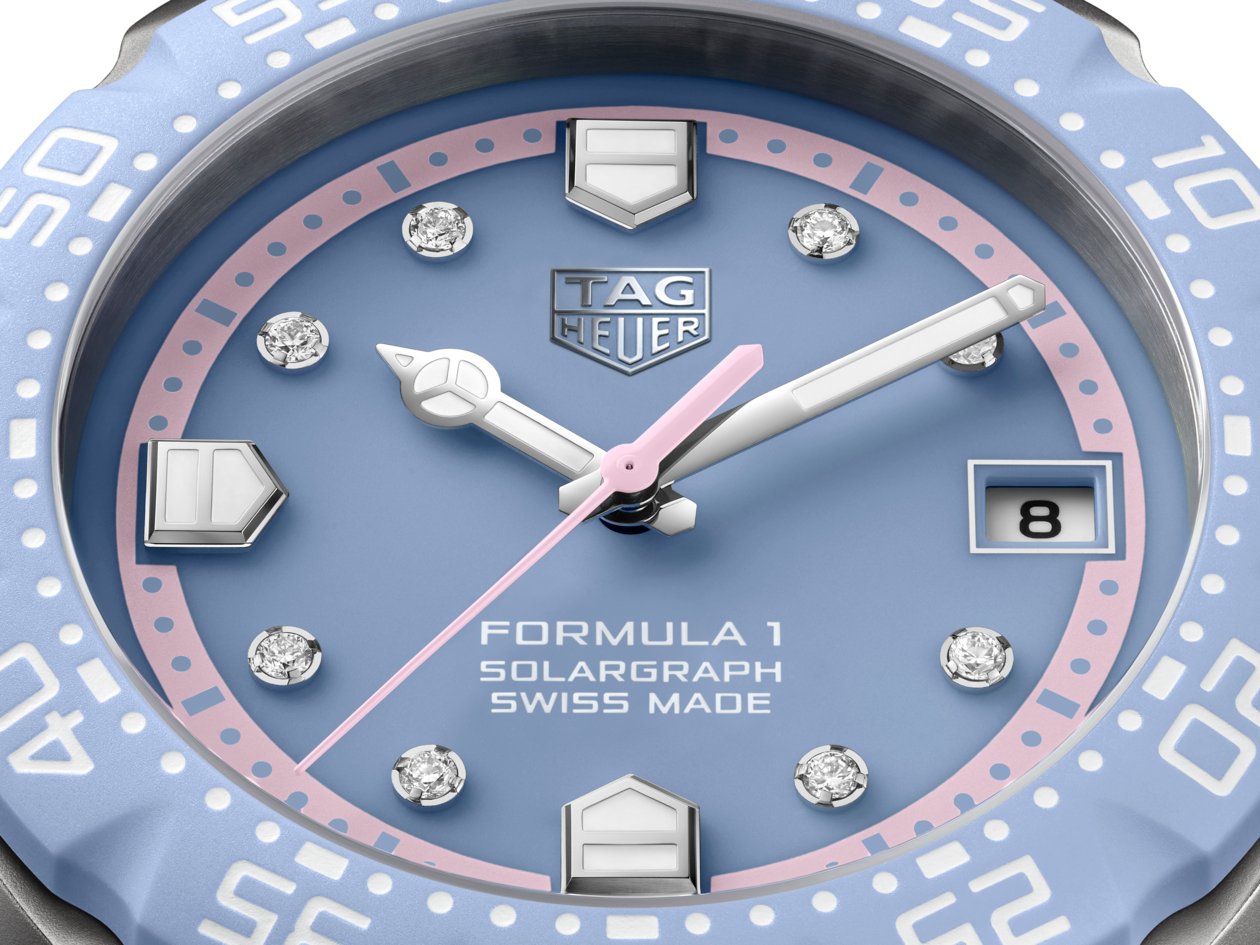
The real surprise sits on the dial. Eight VS diamonds replace the usual round hour markers. It’s a subtle flash of glamour that fits Miami’s indulgent spirit. Across the range, water resistance is rated to 100 meters, despite the non‑screw‑down crown. The 38mm pastel green version is limited to 1,500 pieces. Lavender blue is the rarest, with just 1,000 available. Both stainless steel models retail for €2,800 / US$2,800 / £2,350.
Final thoughts and specifications
As Formula 1’s official timekeeper, TAG Heuer carries serious responsibility. Its roots, however, lie in a pivotal shift in motorsport history. In the 1970s, Heuer helped formalize professional race timing. Before that, officials still relied on handheld stopwatches. Human reaction time left plenty of room for error. Introduced in 1974, Heuer’s Automatic Car Identification Timing System changed everything. Each car carried a transponder that triggered timing loops at the start line and around the circuit. The result was impartial precision, a principle still used today.
These pastel Formula 1 Solargraph models don’t lean heavily into that legacy. Still, the original ’80s Formula 1 was a gateway watch for many collectors. Pricing, however, feels more divisive. The versions in stainless steel with diamonds are expensive but defensible due to rarity. The TH‑Polylight models are harder to justify. At under $1,000, they would be irresistible. Just under $2,000 feels ambitious for plastic‑cased quartz watches in experimental colors, especially as Formula 1 itself grows ever more expensive.
What do you think of the pricing? Let me know in the comments below. To learn more, visit the TAG Heuer website.
Watch specifications
Model
Formula 1 Solargraph
Reference
WBY1164.FT8114 (beige) / WBY1163.FT8113 (blue) / WBY1165.FT8115 (pink) / WBY111B.BA0042 (green, steel) / WBY111C.BA0042 (lavender, steel)
Dial
Beige, blue, pink, green, or lavender with applied rhodium-plated indexes filled with Super-LumiNova, date window at 3 o’clock; green and lavender include eight VS diamond indexes
Case Material
TH-Polylight (beige, blue, and pink) or sandblasted steel with TH-Polylight bezel (green and lavender)
Case Dimensions
38mm (diameter) × 45.2mm (lug-to-lug) × 9.9mm (thickness)
Crystal
Sapphire with antireflective coating
Case Back
Stainless steel, screw-in
Movement
TH50-00 (La Joux-Perret base): solar-powered quartz, 10-month power reserve on full charge (40 hours in sunlight), 15-year battery
Water Resistance
100 meters
Strap
Case-matching rubber with steel pin buckle (beige, blue, and pink) or stainless steel three-row bracelet with push-button folding clasp or rubber strap with steel pin buckle (green and lavender)
Functions
Time (hours, minutes, seconds), date, 60-minute bidirectional bezel
Price
€1,950 / $1,950 / £1,650 (TH-Polylight) | €2,800 / $2,800 / £2,350 (stainless steel)
Ben Hodges
2026-04-26 09:00:00