

Certain watches quietly sit in the sweet spot of the collector market. They’re not hyped, not aggressively marketed, and not yet pulled into the gravitational field of speculative pricing. The IWC Pilot’s Watch Mark XVI Spitfire ref. IW325502 is one of them.
Produced in the mid-2000s, this neo-vintage pilot’s watch captures something that feels increasingly rare — a traditional aviation design paired with modern wearability and a movement that any competent watchmaker can service. For collectors who appreciate practicality as much as heritage, the Mark XVI Spitfire might just be one of the most compelling entry points into the IWC pilot lineage. Let’s explore why.
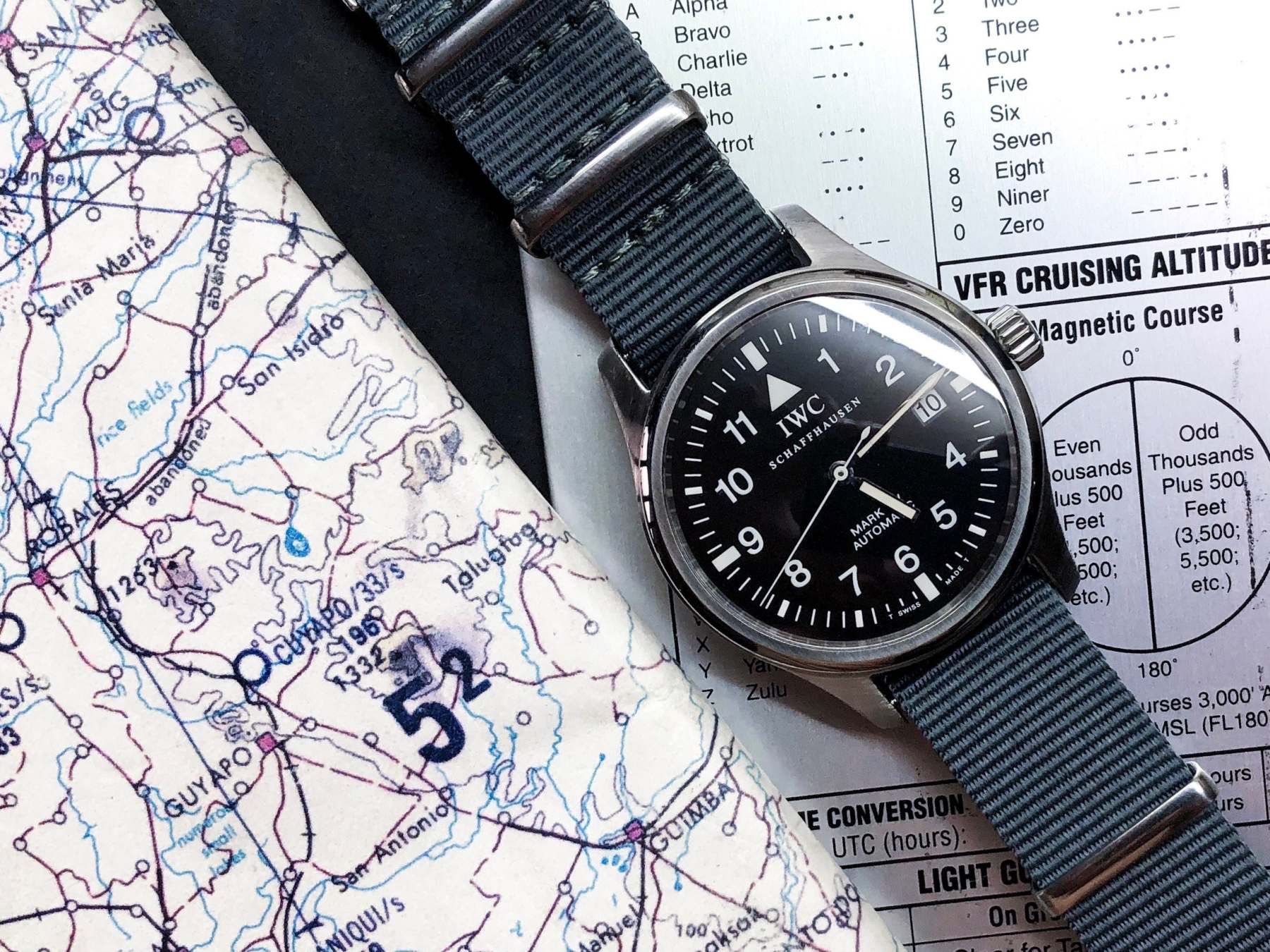
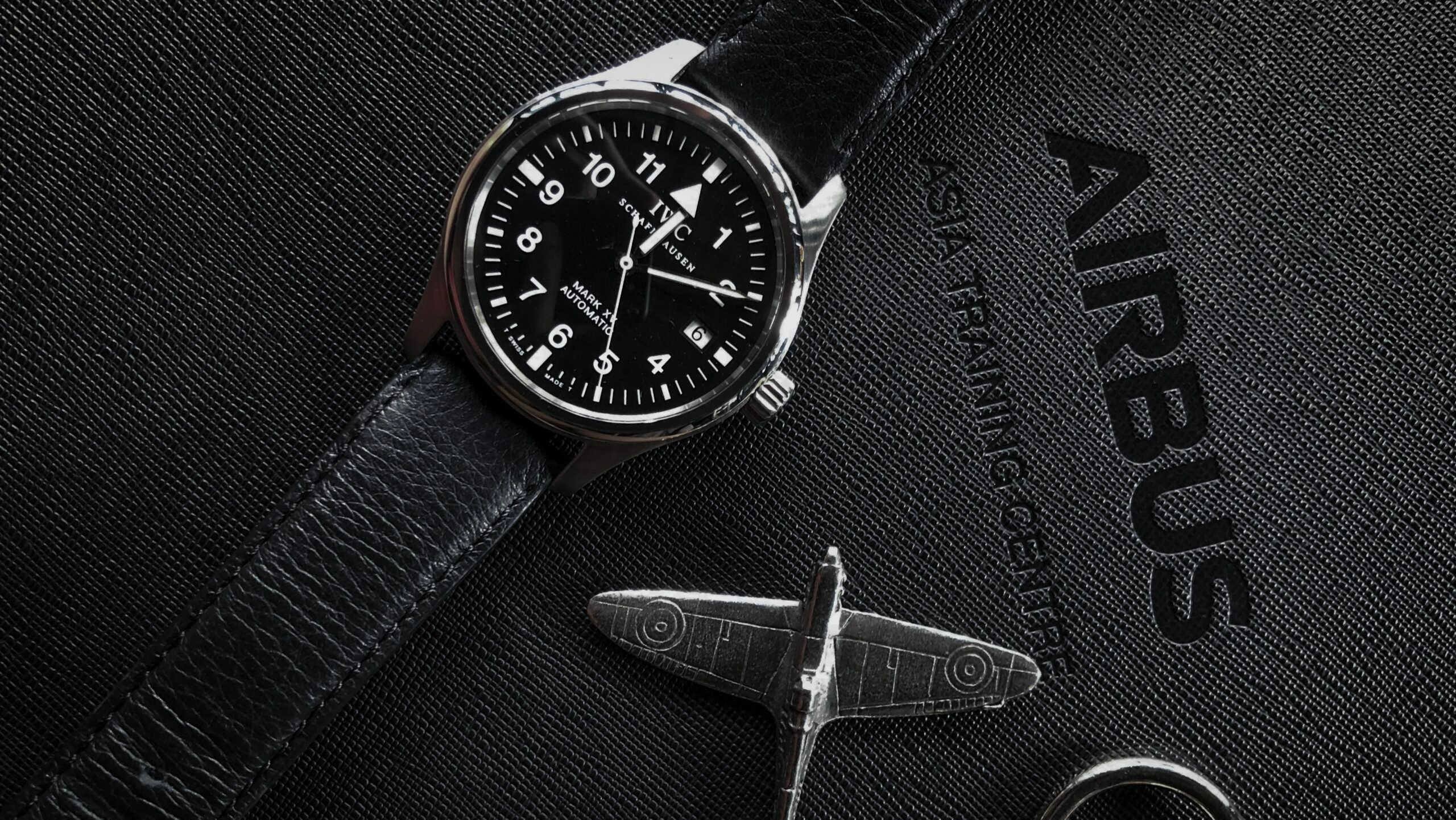
An IWC Mark XV
The Mark series: One of aviation’s great watch families
IWC’s Mark series traces its roots back to military-issued navigation watches of the mid-20th century. Built around legibility, durability, and antimagnetic protection, these watches became archetypes for the modern pilot’s watch. The Mark XVI, introduced in the mid-2000s, was a subtle evolution of the Mark XV rather than a radical redesign. It increased the case diameter slightly to 39mm, improving modern wearability while maintaining the restrained proportions that made earlier Marks so beloved. It did introduce new design choices that represented a departure, including a shift in the handset design and blockier numerals.
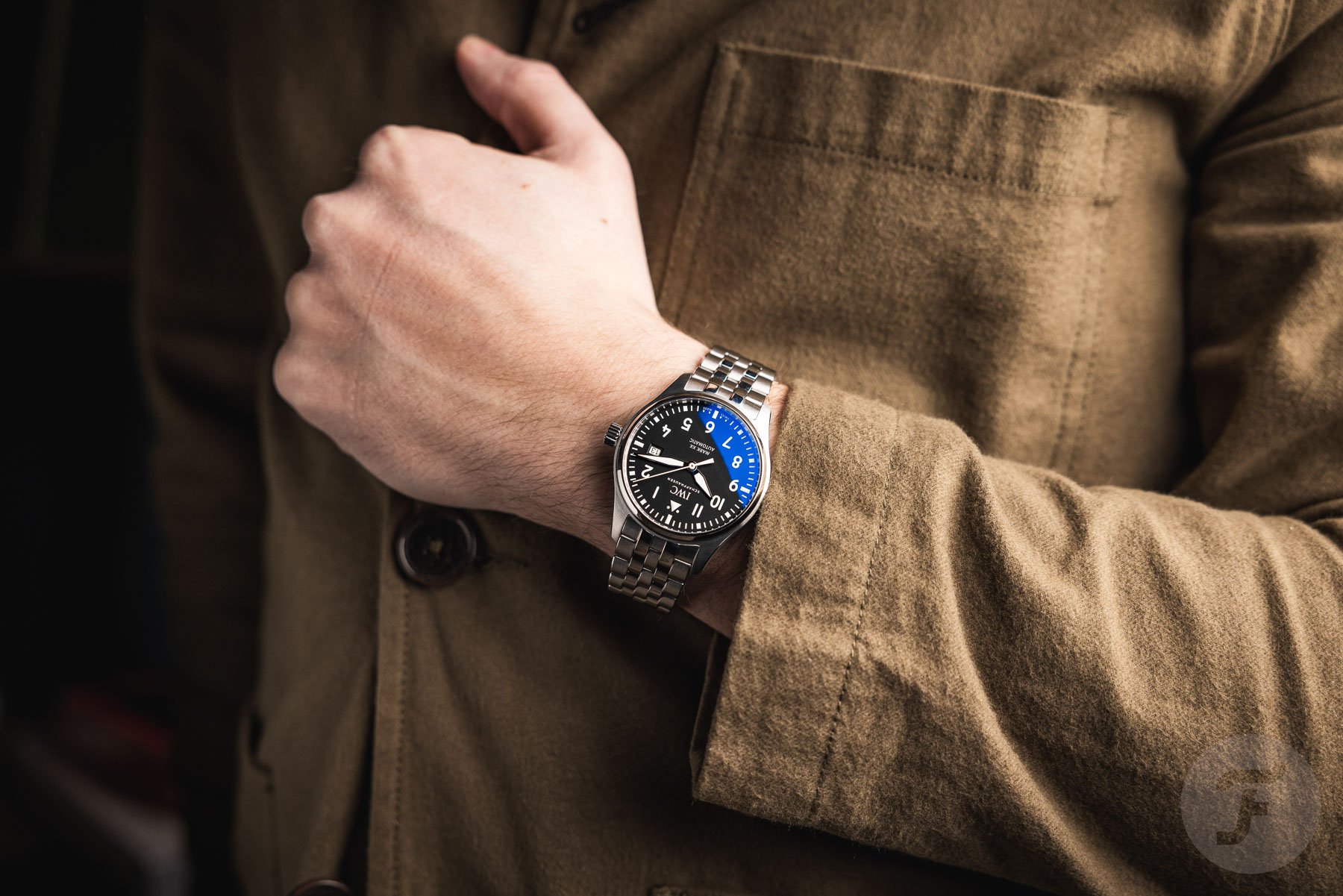
An IWC Mark XX
What makes the Spitfire variant especially appealing is its aesthetic shift. While most Mark models feature stark black instrument dials, the Spitfire introduces a more refined silver surface. It’s still unmistakably a pilot’s watch, but it has a touch of elegance. The dial creates a bullseye effect, and that subtle twist is precisely why it stands out today.
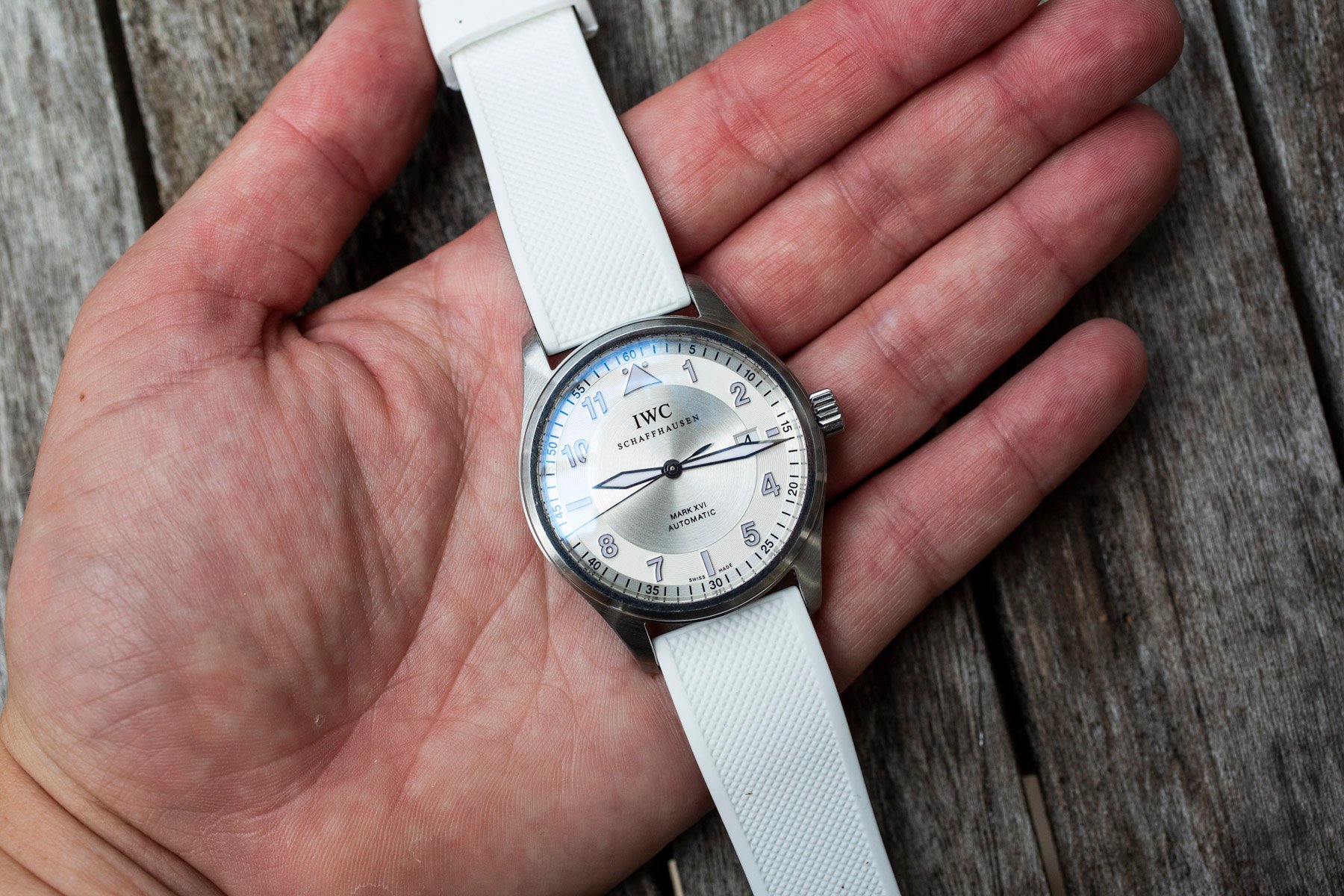
The dial that makes this IWC watch
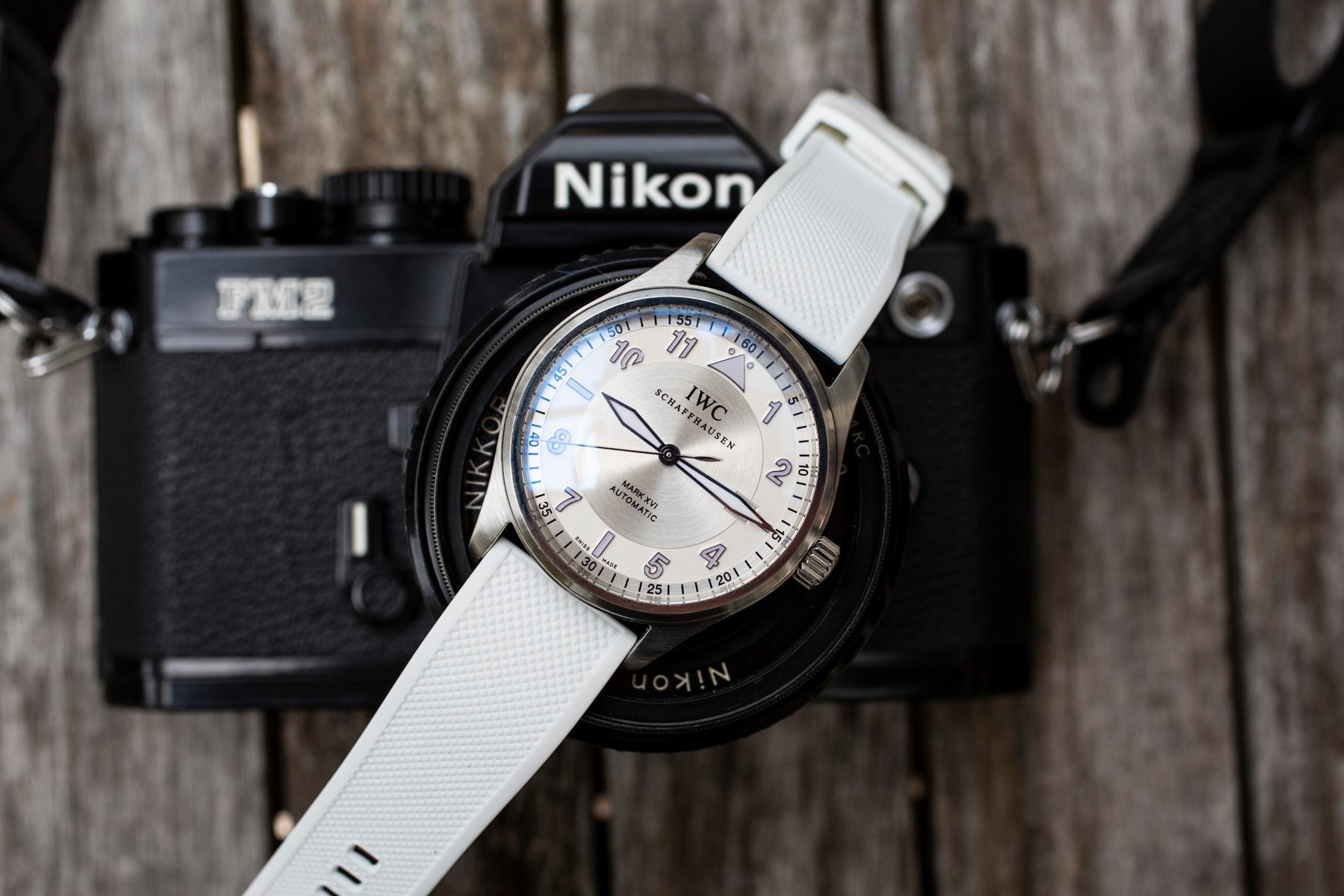
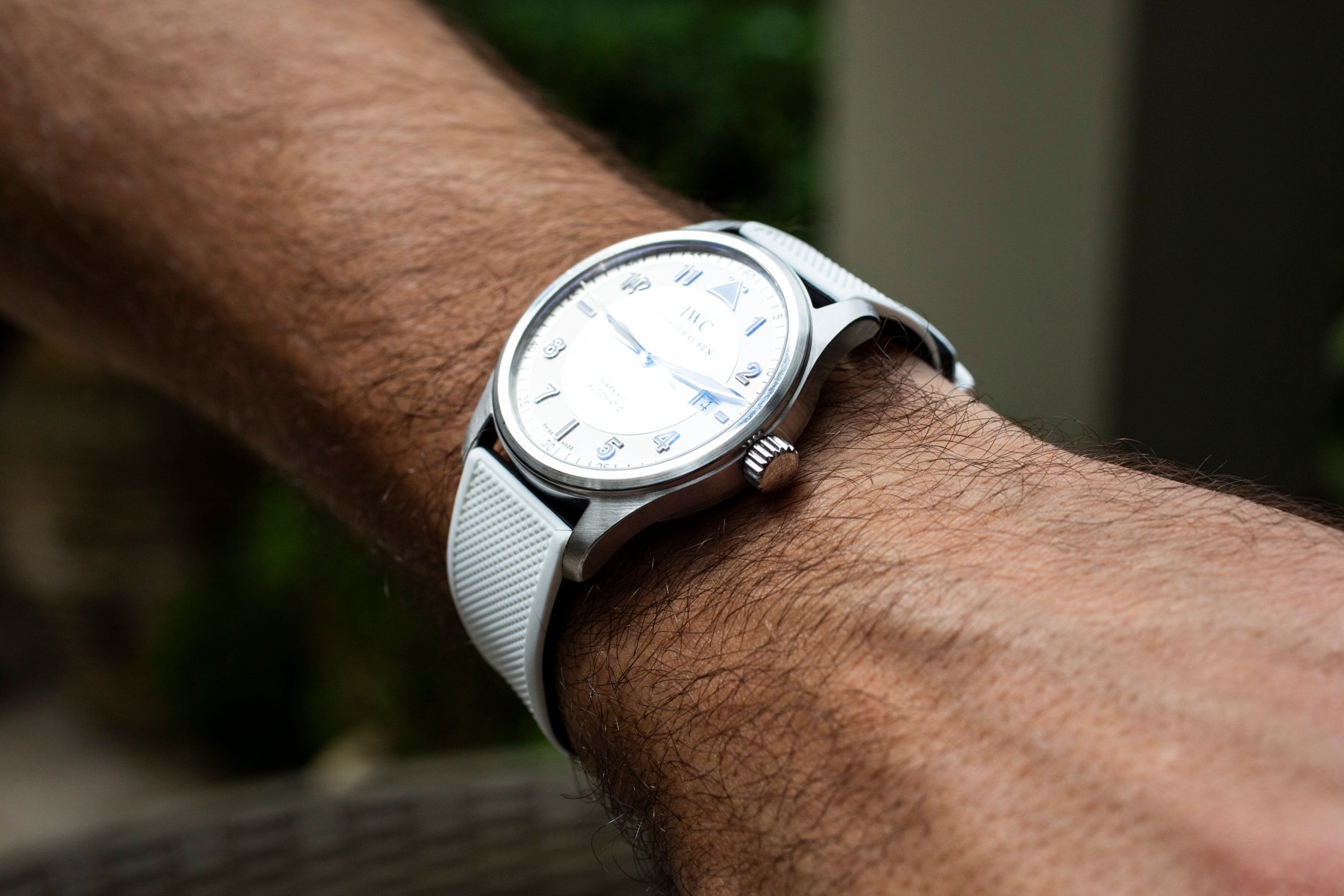
The silver dial of the Mark XVI Spitfire is arguably its defining feature. Instead of the utilitarian matte black common to aviation watches, the Spitfire uses a two-tiered silver dial with applied Arabic numerals and luminous hands. The result is a pilot’s watch that retains excellent legibility but feels far more versatile. It is a dressier watch, to be sure.
The metallic brushing catches the light beautifully, shifting from cool silver to a warmer tone depending on the angle. It’s an effect that gives the watch a sense of depth without resorting to unnecessary design flourishes. Collectors often talk about watches that can transition effortlessly between settings. The Mark XVI Spitfire genuinely does.
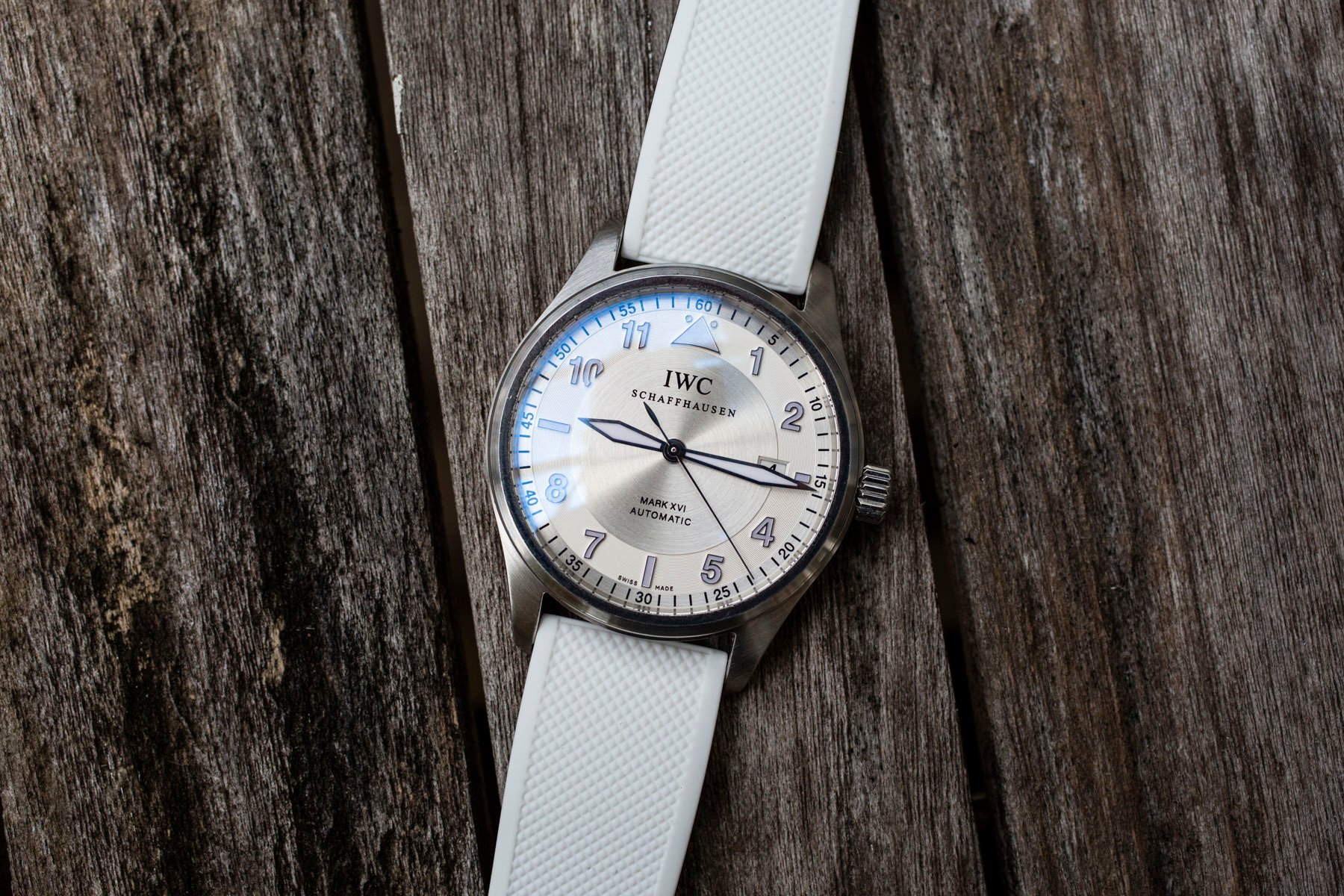
The perfect neo-vintage case size
In today’s watch world, case dimensions have become a major point of discussion. Watches have swung from oversized statements to the current return to more restrained proportions. The Mark XVI landed in the sweet spot long before this trend cycle began.
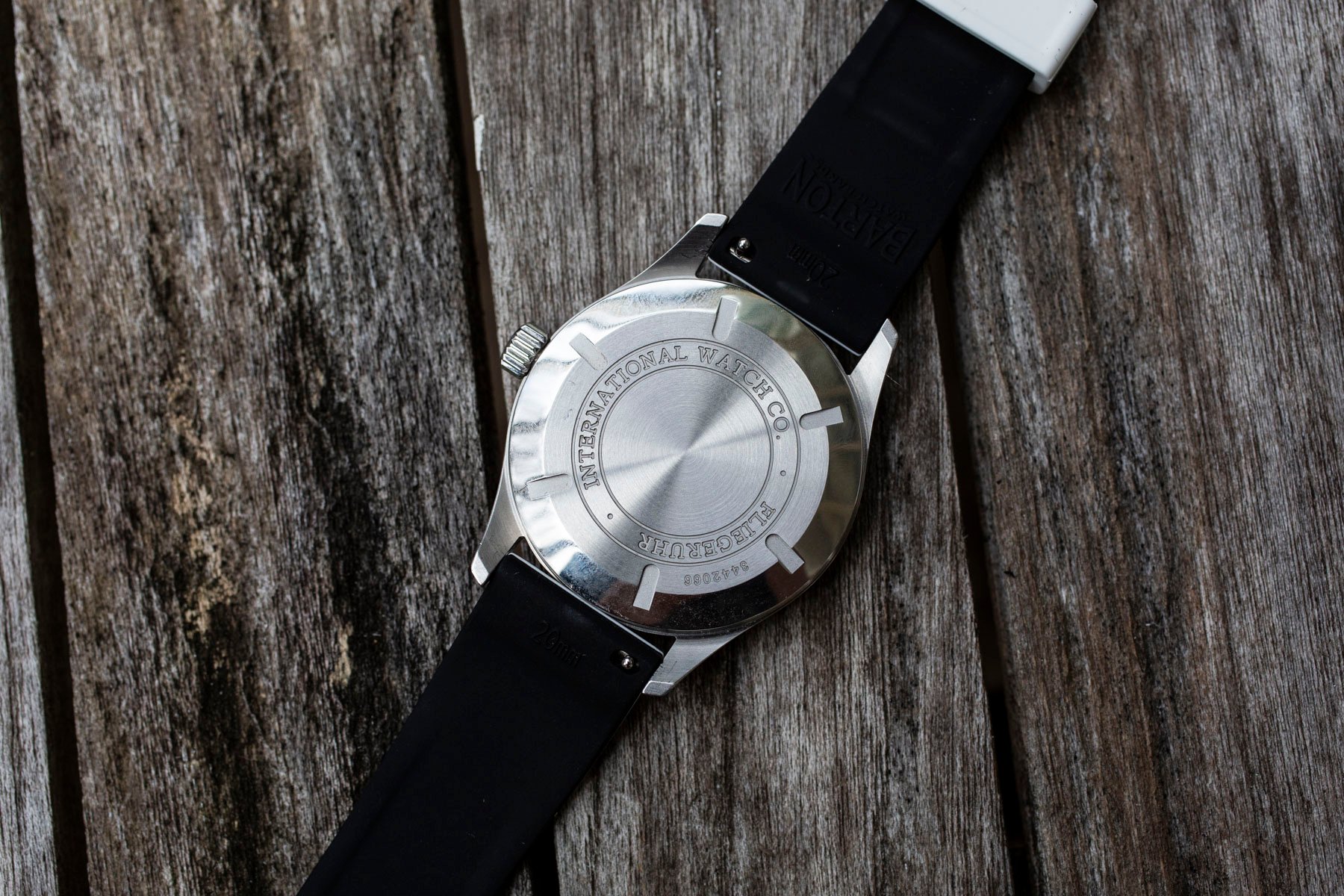
With its 39mm and roughly 11.5mm profile, the watch feels modern without being oversized. While it has enough wrist presence to satisfy contemporary tastes, it also remains slim enough to slide under a shirt cuff. Equally important is the case design itself. The brushed steel surfaces are clean and functional, with just enough polishing on the bevels to add visual interest. The screw-down crown and solid case back maintain the tool-watch character, while the soft-iron inner case protects the movement from magnetic fields, a traditional feature of IWC pilot’s watches. It’s a thoughtful, purpose-driven design that hasn’t aged badly at all.
The benefit of the ETA 2892
Now we arrive at the part that seasoned collectors quietly appreciate — the movement. Inside the Mark XVI Spitfire beats the IWC caliber 30110, which is based on the ETA 2892-A2. In today’s environment, the phrase “ETA-based” can sometimes be unfairly dismissed by those obsessed with in-house movements. But for anyone who has owned and serviced watches over the long term, the ETA 2892 is one of the industry’s unsung heroes. Here’s why.
The 2892-A2 has been produced for decades and is widely regarded as one of ETA’s most refined automatic movements. Running at 28,800 vibrations per hour with a power reserve of around 42 hours, it delivers smooth performance and consistent accuracy. More importantly, it’s proven.
This is not a movement still working through early production quirks. It’s a mature caliber with millions of operating hours behind it. Perhaps the biggest advantage is serviceability. Unlike proprietary/in-house movements that require brand-specific tools and component pipelines, the ETA 2892 can be serviced by almost any competent independent watchmaker. Parts are easily accessible, and the architecture is familiar across the industry. For those planning to keep a watch for decades, which is often the point of buying a mechanical watch, that matters enormously. Lower service costs, shorter turnaround times, and wider service access make ownership much more straightforward. In other words, the Mark XVI Spitfire is not just a collectible watch; it’s also a practical one.
A watch that still feels like a tool
Despite the more refined dial, the Mark XVI Spitfire ref. IW325502 never loses its utilitarian roots. The applied Arabic numerals and hands are filled with lume for nighttime visibility, and the outer minute track reinforces the instrument-panel aesthetic. The date window at 3 o’clock is clean and unobtrusive, maintaining the symmetry of the dial without disrupting legibility.
Even the crystal reflects IWC’s practical philosophy. The watch uses a sapphire crystal with antireflective coating and pressure-drop resistance, ensuring it stays secure under changes in air pressure — another nod to aviation heritage. These details may seem small, but together, they reinforce the watch’s identity. This is still, fundamentally, a pilot’s instrument.
An IWC Mark XV
Why neo-vintage watches like this are so appealing
The term “neo-vintage” typically refers to watches from the mid-1990s through the 2000s. Such pieces are modern enough to wear daily but also generally old enough to represent a different era of watchmaking. The Mark XVI sits perfectly in that category. It offers several advantages collectors increasingly value, including a good case size, a traditional, reliable, and easy-to-maintain movement, and high-quality finishing without extreme pricing. In many ways, watches from this era represent a balance that has since shifted. They were built with modern manufacturing quality but without the marketing emphasis on in-house movements or hyper-luxury positioning. The result? Watches that feel honest.
One of the most compelling aspects of the Mark XVI Spitfire today is its position in the secondary market. Despite its heritage, build quality, and brand recognition, the watch remains relatively accessible. Pre-owned examples often appear around €3,000 or slightly above, depending on condition and completeness, placing the reference IW325502 within reach for many enthusiasts. Considering what modern IWC pilot’s watches now retail for, the Mark XVI starts to look like an exceptional value.
Final thoughts: The neo-vintage sweet spot
In an era when watch releases are dominated by limited editions and price increases, the Mark XVI Spitfire represents something different. It’s a watch designed to be worn, serviced, and enjoyed over decades. No exaggerated dimensions. No complicated marketing narrative. Just a well-proportioned pilot’s watch with a beautiful dial and a movement you can trust.
And that’s exactly why I would argue collectors are beginning to rediscover it. The Mark XVI Spitfire ref. IW325502 may not be the loudest piece in IWC’s history. In many ways, though, it embodies the spirit of the Mark series better than many modern successors. For those exploring the neo-vintage market, this watch offers history, practicality, and understated charm in equal measure. Sometimes the best pilot’s watches aren’t the ones shouting for attention. They’re the ones quietly waiting on the runway.
But what do you think, Fratelli? Does the dial design of this IWC Spitfire appeal to you? Let me know in the comments.
Henry Black
2026-04-18 05:00:00