
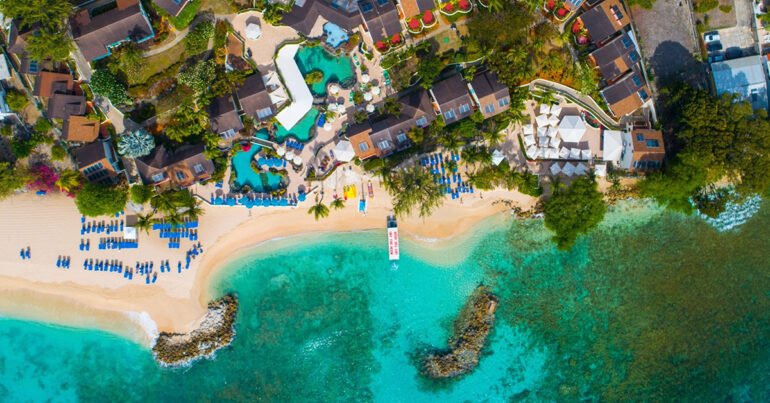
The first thing you feel in Barbados is the light. It hits the west coast in a soft wash over white sand and calm water, then sharpens on the east coast where the Atlantic rolls in steady lines toward rugged cliffs. Fishing boats pull up on the sand in Oistins. Early swimmers cut through the water in Carlisle Bay. Rum shops open their shutters along village roads. Barbados has an energy all its own, grounded in history and driven by a strong sense of identity.
This is an island that delivers more than a beach vacation. You come here for food that carries generations of influence, for a deep-rooted cultural calendar, for charming hotels alongside family-run guesthouses, and for an energy that feels distinctly Barbadian.
A Coastline With Two Personalities
Barbados gives you options within a short drive.
On the Platinum Coast along the west, the Caribbean Sea is clear and calm. Beaches like Paynes Bay and Mullins Beach offer steady swimming conditions, with catamarans gliding offshore and sea turtles moving just below the surface. You can book a snorkeling sail out of Holetown and spend the afternoon drifting over shipwrecks and coral gardens before returning in time for dinner along the water.
Head east and the mood changes. Bathsheba and the wider Scotland District face the Atlantic, where waves crash against rock formations and surfers paddle out at the Soup Bowl. The sand is broader here, the wind stronger. You walk along the shoreline past tide pools and limestone outcrops, then stop at a rum shop or roadside grill before the drive back across the island.
In the south, along the stretch between Hastings and St. Lawrence Gap, you find a blend of both. Boardwalk paths trace the shoreline. Small coves open between rocky points. By night, St. Lawrence Gap fills with music drifting out of bars and restaurants.
A Culinary Capital of the Caribbean
Barbados has built a reputation as one of the Caribbean’s leading food destinations, and it holds up.
In Oistins, Friday night fish fry is a weekly ritual. Grills line the open-air market, sending up smoke from marlin, mahi-mahi and flying fish. You order at a counter, take a seat at a shared table and listen to soca playing from nearby speakers. Locals and visitors mix easily here.
For a more refined evening, west coast restaurants like The Cliff and QP Bistro serve fresh seafood with uninterrupted sea views. In Holetown, The Tides pairs Caribbean flavors with a polished dining room and a waterfront terrace. Bridgetown and its surroundings continue to see new chef-driven concepts, blending local ingredients with global technique.
Rum remains central. Barbados is the birthplace of rum, and a visit to Mount Gay Rum Distillery in St. Lucy gives you a clear look at the island’s centuries-old production history. Tastings walk you through expressions that range from light and crisp to aged and complex. At St. Nicholas Abbey, a restored plantation house in the island’s interior, you tour the grounds before sampling small-batch rum produced on-site.
Culture That Runs Deep
Bridgetown and its Garrison are a UNESCO World Heritage Site, and the island’s British colonial past is visible in its architecture and street layout. Parliament Buildings stand along the waterfront. Cricket grounds host regional and international matches that draw serious crowds.
Crop Over, Barbados’ annual summer festival, remains one of the Caribbean’s most dynamic cultural celebrations. The season builds over weeks of music events and parties before culminating in Grand Kadooment, when masqueraders fill the streets in elaborate costumes. Even outside festival season, live music is easy to find, from beach bars to dedicated venues showcasing calypso and reggae artists.
Art galleries and small studios across the island highlight local painters and sculptors, while community events and food fairs provide regular entry points into daily life.
Hotels With Range and Character
Barbados offers a wide spectrum of accommodations, from large beachfront resorts to intimate boutique hotels and private villas.
On the west coast, Sandy Lane remains one of the Caribbean’s most recognized luxury resorts, with 3 golf courses, a sprawling spa and a long stretch of beachfront. Nearby, Fairmont Royal Pavilion delivers beachfront rooms where you step directly from your terrace onto the sand.
There’s also the newly-reopened all-inclusive, Crystal Cove.
For something smaller, Little Good Harbour in Shermans pairs cottage-style suites with a well-regarded restaurant, The Fish Pot, set inside a former fort overlooking the water.
On the south coast, O2 Beach Club & Spa offers all-inclusive convenience with multiple pools and direct access to Dover Beach. Sea Breeze Beach House combines a relaxed setting with easy access to the nightlife of St. Lawrence Gap.
Beyond traditional hotels, the island’s villa market is strong, particularly along the west coast. Private homes come staffed with cooks and housekeepers, making them a popular choice for families and groups traveling together.
Easy to Reach, Easy to Navigate
Barbados maintains strong air connections from major cities in the United States, Canada and the United Kingdom, along with regional Caribbean service. Grantley Adams International Airport sits about 20 to 30 minutes from most major hotel areas.
The island’s road network makes it simple to explore on your own. You can drive from the calm west coast to the rugged east in under an hour. Taxis and private transfers are widely available, and guided island tours cover everything from historic sites to rum tastings and coastal drives.
Why Barbados, Now
Barbados delivers consistency. The beaches are clean and swimmable. The food scene is established and still evolving. The cultural calendar runs deep. The hospitality sector spans luxury resorts, boutique hotels and locally owned guesthouses, all operating within a compact, accessible island.
You can plan a trip that leans into relaxation, filling your days with beach time and long lunches. Or you can move constantly, driving the coastline, touring distilleries, attending live events and sampling restaurants across parishes.
Barbados combines infrastructure with identity. It feels organized without losing character. You get polished service alongside roadside grills, UNESCO-listed history alongside beach bars.
That balance is what brings travelers back.
Caitlin Sullivan
2026-02-27 22:12:00