
When guests arrive at a Caribbean resort, everything seems effortless.
Luggage appears at their room shortly after check in. Fresh towels are delivered by the pool. Landscaped gardens look perfectly maintained. Golfers glide quietly between holes with ocean views in the distance.
It all feels seamless.
But behind the scenes, running a large Caribbean resort is closer to operating a small city than a hotel. Moving people, supplies, maintenance crews, and equipment across large properties requires a sophisticated transportation system that most guests never notice.
At the center of that system is a fleet of small vehicles quietly moving across the resort from sunrise to late evening.
The invisible mobility system of a resort
Many Caribbean resorts cover dozens, sometimes hundreds of acres. Between guest rooms, villas, restaurants, beaches, golf courses, spas, and staff facilities, daily operations depend on constant movement across the property.
Large resorts commonly operate fleets ranging from 40 to more than 150 vehicles.
Housekeeping teams use utility vehicles to move linens and supplies across different sections of the property. Engineering teams respond to maintenance requests throughout the day. Landscaping crews maintain tropical grounds that stretch for miles. Food and beverage teams transport inventory to beach bars, restaurants, and event spaces. Security teams patrol the property to ensure guest safety.
Every hour hundreds of small operational trips take place across a resort.
Guests rarely notice them. But without these vehicles the guest experience would slow down quickly.
Much more than a golf cart
Visitors often refer to these vehicles as golf carts, but within the hospitality industry they have become something much more important. They are operational infrastructure.
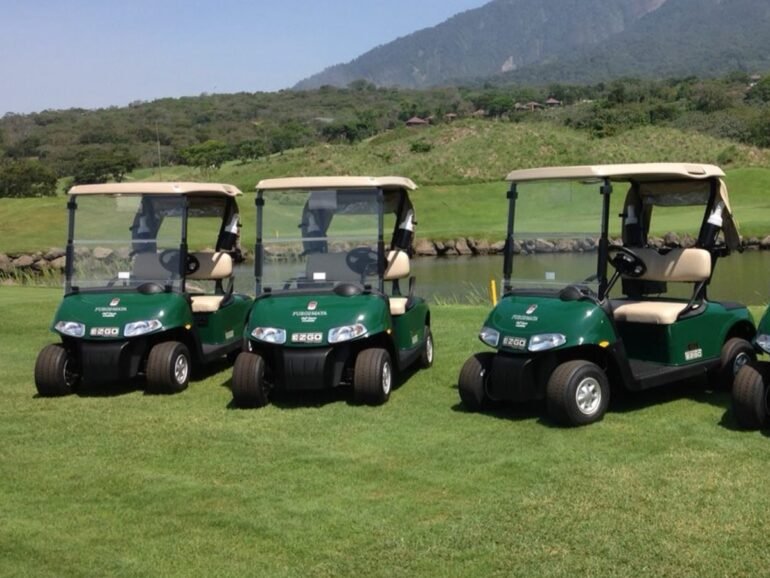
Modern resort fleets include passenger shuttles for guest transportation, utility vehicles for engineering and landscaping teams, cargo vehicles for food and beverage logistics, and golf fleets supporting resort courses that host thousands of rounds each month.
Across the Caribbean one brand has become particularly common at resorts and golf courses throughout the region. E Z GO has long been known within the hospitality industry for vehicles that perform reliably in demanding resort environments where heat, humidity, salt air, and constant daily use can challenge equipment.
For operators managing large fleets, reliability becomes one of the most important factors.
The electric transition across the Caribbean
In recent years Caribbean resorts have been accelerating a shift toward electric vehicle fleets.
Sustainability is one reason. Many properties are working toward environmental initiatives that reduce emissions and protect fragile island ecosystems.
But operational advantages are just as important.
Electric vehicles operate quietly, which helps preserve the peaceful atmosphere guests expect from luxury resorts. They also require significantly less routine maintenance than gas powered vehicles. That becomes especially important in island environments where parts and servicing can take longer to source.
Advancements in lithium battery technology are also helping resorts improve fleet efficiency by providing longer run times, faster charging cycles, and longer battery life.
The supply challenge unique to island resorts
Fleet planning in the Caribbean involves a set of challenges that mainland operators rarely face.
Production timelines for new vehicles can range from six to twelve weeks, depending on factory schedules and vehicle specifications. After production, vehicles must still be shipped to island destinations where customs procedures, import duties, and port logistics can add additional time.
Shipping rates and tariffs can also change frequently, requiring careful coordination when resorts plan fleet upgrades or replacements.
“Tropical resort environments are demanding on equipment, and planning ahead becomes critical,” says Cristian Liani, Caribbean Sales Manager at Tropicars, told Caribbean Journal. “Many Caribbean properties operate fleets of dozens or even more than a hundred vehicles. Resorts have to think about reliability, service support, and long term planning so operations never slow down.”
A regional support network
Helping resorts manage these fleets requires experience operating across multiple islands and logistics environments.
Based in Miami, Tropicars has been supporting resorts, golf courses, and hospitality developments throughout the Caribbean since 2010. The company works with hospitality operators across dozens of destinations, helping them source vehicles, plan fleet upgrades, and maintain equipment used in daily resort operations.
For many properties, the right fleet partner is essential, Liani said.
When a vehicle goes down on an island property, replacing it is rarely as simple as driving to a local dealership.
The future of resort mobility
Caribbean tourism continues to expand with new luxury developments, larger resort footprints, and growing visitor numbers across the region.
As properties grow more complex, efficient internal transportation becomes even more important to maintaining the seamless guest experience that Caribbean resorts are known for.
Guests may never notice the fleets quietly moving behind the scenes. But from transporting linens and luggage to maintaining championship golf courses and sprawling beachfront properties, these vehicles are one of the essential systems that keep Caribbean hospitality running smoothly.
Because in paradise, even the smallest details matter.
Caribbean Journal Staff
2026-04-13 16:33:00