
When Convenience Starts Undermining Control
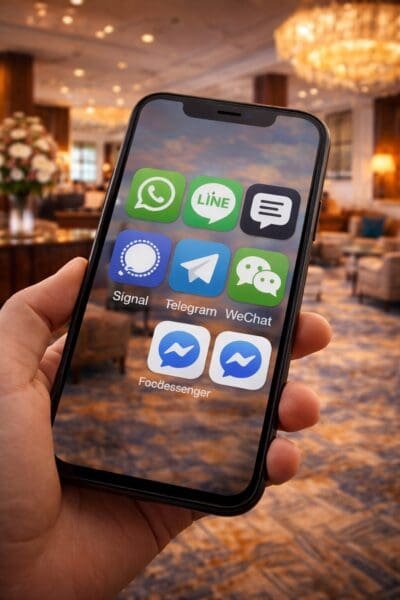
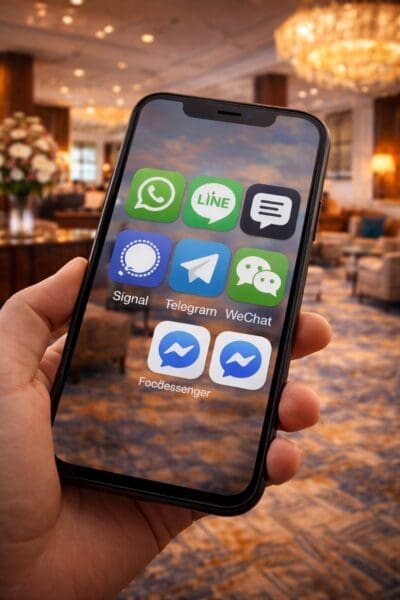
Walk into any hotel today and you’ll likely find operations running through WhatsApp, LINE, Signal, Botim, etc. Housekeeping updates room status. Maintenance shares quick fixes. Front office flags guest requests. It feels fast, familiar, and efficient.
But behind the speed lies a growing problem. Conversations are fragmented, critical updates are buried between casual messages, and operational clarity depends on who happened to read what and when.
What begins as a convenient workaround often becomes the backbone of daily operations, without the structure needed to sustain it.
Advertisements

Why This Has Become a Legal and Operational Risk
Beyond inefficiency, there is a rising legal dimension that many hotel leaders underestimate: data privacy.
Under regulations like GDPR in Europe and similar data protection laws across Asia-Pacific, the use of consumer messaging apps for business operations has already been challenged. Several hospitality and service businesses have faced regulatory scrutiny and fines for sharing guest data over unsecured or non-compliant channels like WhatsApp, LINE, Signal, Botim, etc.
In one widely cited case, a European hotel group was penalized after guest personal data, including booking details and contact information, was shared across staff Chat applications groups without proper consent or safeguards. Regulators argued that such practices violated data minimization and security principles.
The risk is clear:
- Guest data is often shared informally
- Access is uncontrolled when staff leave or change roles
- Conversations are stored on personal devices
- No audit trail exists for compliance reviews
What seems like harmless coordination can quickly become a compliance breach.
Where Operations and Accountability Break Down
The operational issue is not communication, it’s the absence of structure.
A Consumer messaging APP does not provide:
- Task ownership or deadlines
- Status tracking or escalation
- Centralized visibility across departments
- Secure, role-based access to sensitive data
A typical scenario: a guest complaint is shared in a group chat. It’s acknowledged, buried under new messages, and forgotten during shift change. The next team has no visibility. The issue resurfaces only when the guest escalates.
At the same time, sensitive guest details like room numbers, preferences, even personal requests may be circulating across unsecured threads.
This creates two parallel risks:
- Operational failure (missed tasks, poor service)
- Compliance exposure (uncontrolled data sharing)
Purpose-built operational systems solve both by centralizing tasks, assigning ownership, and securing information within controlled environments.
The “We’ve Always Used It” Mindset
Many leaders acknowledge these gaps but hesitate to act. The common belief: “WhatsApp works for us. We just need to use it better.”
But this overlooks a fundamental truth:
Messaging tools are designed for conversation, not execution or compliance.
No amount of discipline can turn a chat thread into:
- A task management system
- A secure data environment
- A reliable operational record
As operations scale, what once felt flexible becomes unpredictable, and increasingly risky.
From Informal Chats to Structured Operations
Hotels that are improving performance, and reducing risk, are making a clear shift: from messaging to systems.
They are adopting platforms that:
- Capture every task with clear ownership
- Provide real-time visibility across departments
- Secure guest data within compliant environments
- Create traceable records for both operations and audits
This is not about eliminating communication. It’s about elevating it and transforming conversations into structured, trackable, and secure workflows.
For hotel decision-makers, the question is no longer whether WhatsApp is convenient. It’s whether it’s exposing your operation to missed tasks, inconsistent service, and growing data privacy risk.
Because in modern hotel operations, what isn’t structured isn’t controlled, and what isn’t controlled will eventually fail.
Let’s Talk & Connect
Drop a comment. Start a conversation. The future of hotel operations isn’t just digital — it’s intelligent.
Guest Contributor
2026-04-01 01:14:00