
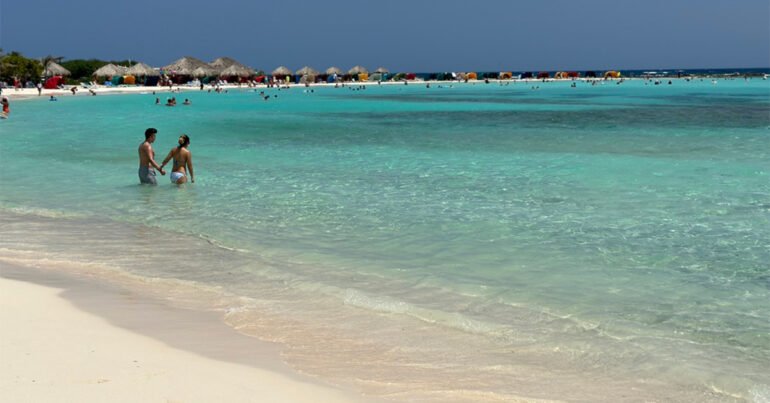
You’re standing in line at Zeerovers in Aruba, watching fishermen carry in what was pulled from the water that morning, the smell of fried snapper cutting through the trade winds. Later, you’re on a hard-packed stretch of sand near Eagle Beach where locals are deep into a game of beach tennis, the ball snapping back and forth in the wind. By the next morning, you’re in the water at Malmok, floating over coral and scattered reef fish in clear, shallow sea, and by the afternoon you’ve made your way to Arashi Beach, where the sand runs wide and the water stays calm enough to stay in as long as you want.
That’s Aruba in sequence — not a checklist, just how the days tend to go. Now there’s a more consistent way to get there. JetBlue is now flying between Fort Lauderdale and Aruba three times a week, with year-round service that adds a steady, repeatable connection from South Florida to one of the most dependable destinations in the Caribbean.
What’s new on this route
JetBlue’s Fort Lauderdale–Aruba flights now operate three times weekly — typically on Tuesdays, Thursdays and Sundays — and they stay in place throughout the year. This isn’t a seasonal add or a winter-only window. The schedule holds steady across the calendar, so you can plan without checking whether service drops off in quieter months. Aruba becomes something you can book in late spring, early fall or early winter with the same level of access. The flight time is around 3 hours, which keeps the trip within easy reach even if you’re only going for a few days. That short distance is part of what makes this route different. You’re not committing to a full travel day. You leave South Florida and arrive in Aruba with enough time left to get to the beach before the afternoon settles in.
Why this changes how you plan Aruba
Aruba has always been easy once you land. This update makes getting there just as straightforward. Three weekly departures give you enough range to build a trip around your own timing instead of forcing it into a narrow window. A Thursday departure and Sunday return lines up cleanly. A Tuesday flight opens up a midweek arrival that keeps you ahead of heavier weekend traffic on the island. That flexibility matches how people actually use Aruba. It’s a repeat destination. You go once, then again, because the experience holds steady. The water stays clear. The beaches remain wide and maintained. Restaurant scenes stay active without feeling overextended. You don’t need to rebuild the itinerary every time you return. You already know where you’re going, and the island delivers on it.
Fort Lauderdale’s role keeps growing
Fort Lauderdale continues to strengthen its position as a Caribbean gateway, and JetBlue is adding more lift from the airport as part of that push. If you’re in South Florida, the airport is already part of your routine, with quick access and a layout that moves efficiently from curb to gate. If you’re connecting, it’s often a smoother option than larger hubs, with shorter distances between terminals and fewer delays tied to congestion. That positioning matters for a route like Aruba. It keeps the trip simple from the start. You’re not navigating multiple layers of travel just to get to a short flight. You’re moving through one airport and onto a direct route that delivers you to the island without interruption.
Beyond the beach: a different side of Aruba
Aruba’s reputation is tied to its west coast beaches, but the island opens up in a different way once you move past that stretch. Drive east or head south and the terrain changes quickly. The coastline becomes rougher, with waves hitting rock instead of rolling into calm shoreline. In Arikok National Park, dirt roads cut through cactus fields and low hills, leading to spots like the Natural Pool, where water collects inside a rock formation and breaks against the edge in steady bursts. You can hike sections of the park, climb up to viewpoints that look out over the coast, or drive through in a 4×4 and stop along the way. It’s a different pace from the resort areas, and it adds a second dimension to the trip if you want it.
Back in town, Oranjestad gives you another shift. The capital runs along the harbor with rows of Dutch-Caribbean buildings in bright colors, but the experience is less about landmarks and more about movement. You walk between shops, stop for coffee, step into small boutiques, then move back out toward the waterfront. Retail ranges from international brands to local jewelry and artisan goods, and the compact layout makes it easy to cover on foot. Cruise traffic moves through during the day, but outside of those windows, the streets open up and feel easier to navigate.
The food scene has expanded well beyond beach bars and casual spots. You’ll still find those, but there’s a growing number of chef-driven kitchens across the island, including tasting-style dinners where menus change regularly and meals run in a more structured format. Chef’s table concepts have taken hold in smaller venues, where seating is limited and the focus stays on multi-course experiences rather than à la carte ordering. It adds a different option to the usual rotation of beachfront dinners.
There’s also a newer push into locally produced spirits. A small-batch rum distillery on the island has started producing and bottling its own expressions, with tours and tastings that walk through the process from fermentation to aging. It’s not a large-scale operation, but it adds another stop if you’re looking to move beyond beach time and into something more local.
All of this sits alongside the core Aruba experience. You can spend the morning in the water, head inland in the afternoon, and end the night at a restaurant that feels more curated than casual. The island supports both without requiring long travel times between them.
The rhythm of a shorter stay
With a flight this short and a schedule this consistent, Aruba becomes easier to approach as a quick trip instead of a longer, more structured vacation. Three or four days can feel complete. You land, clear the airport quickly and reach your hotel within a short drive. There’s no long transfer cutting into your first day. You’re in the water or at a restaurant within hours of arrival. The pace holds steady across the stay. You’re not spending time coordinating transportation or navigating long distances. Everything stays within reach. You move between beach, water and dining without needing to overplan, and that simplicity is what allows shorter trips to feel full rather than rushed.
Where to stay
Where you stay shapes how the trip feels, and Aruba gives you distinct options within a compact area. Embassy Suites by Hilton Aruba Resort provides a newer, full-service setup near Eagle Beach, with suite-style rooms that give you more space to spread out. The included breakfast adds a layer of convenience that matters on shorter trips, letting you start the day without leaving the property. The pool area stays active, and the proximity to the beach keeps transitions simple. You can move from your room to the shoreline without a complicated plan. A short drive places you within reach of Palm Beach dining and other parts of the island. Boardwalk Boutique Hotel Aruba offers a different approach, with individual casitas arranged across a landscaped property a short walk from Palm Beach. Each unit includes its own outdoor area, giving you a private place to sit or dine outside. The property’s beach setup keeps things organized when you head to the water, with reserved space that removes the need to search for a spot. The atmosphere stays quieter and more contained, which can make a shorter trip feel more settled. Both properties keep you within easy reach of the airport and the island’s main beach areas, reinforcing how little time you spend in transit once you arrive.
Why Aruba keeps getting more flights
Airlines continue to add service to Aruba because demand holds steady across the year. The island doesn’t rely on a single season. Travelers arrive in winter for warmth, in spring for consistency, and in fall for quieter conditions and more flexible pricing. That steady flow supports year-round routes, and it’s why JetBlue is maintaining a consistent schedule from Fort Lauderdale instead of limiting service to peak months. Aruba fits into airline networks as a dependable destination, one that travelers return to and one that performs reliably across different travel windows.
The takeaway
With JetBlue now flying three times a week from Fort Lauderdale, Aruba becomes easier to reach — particularly from the airline’s broad network of connections around the US.
Prices on the FLL-Aruba flight
Flights are hovering around $507, which is pretty good considering the current fuel climate.
Karen Udler
2026-03-18 02:02:00