
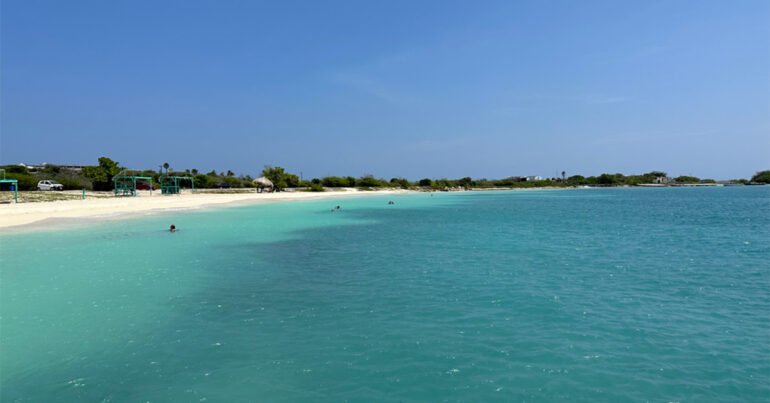
You step off the plane and feel it immediately — the air is warmer, the light sharper, the pace different. The terminal doors open and you’re outside in minutes, heading toward a beach that’s already filling with travelers who made the same decision: leave winter behind and come here.
That’s exactly what’s happening across the Caribbean right now.
New data from Allianz Partners, based on an analysis of more than 1.3 million travel itineraries, shows that American travelers are choosing the Caribbean in large numbers for Spring Break 2026, with several destinations ranking among the most-booked international trips this season.
The takeaway is clear: demand is strong, and the region’s core destinations are once again leading the Spring Break map.
The Caribbean Destinations Leading the List
Four Caribbean destinations stand out in this year’s data: Punta Cana in the Dominican Republic, Oranjestad in Aruba, Nassau in The Bahamas, and the U.S. Virgin Islands.
Each one offers a different version of the same promise — direct flights, warm water, and a travel experience that’s easy to plan and easy to execute.
In Punta Cana, the draw starts with access. Major U.S. airlines continue to operate frequent nonstop service from cities across the East Coast, Midwest, and South, making it one of the simplest Caribbean trips to book.
Once you arrive, the experience is built around large beachfront resorts. Properties like Hard Rock Hotel & Casino Punta Cana, Hyatt Ziva Cap Cana, and Secrets Cap Cana Resort & Spa anchor the high-demand corridor, delivering all-inclusive packages that bundle accommodations, dining, and activities into a single booking.
The result is consistency. Travelers know what they’re getting, and that reliability keeps Punta Cana near the top of every seasonal demand cycle.
In Aruba, the focus shifts to walkable resort zones and steady weather.
Oranjestad continues to serve as the gateway, with quick transfers to the island’s main hotel areas along Palm Beach and Eagle Beach. Resorts like the Ritz-Carlton, Aruba, Hyatt Regency Aruba Resort Spa and Casino, and Bucuti & Tara Beach Resort remain central to the market, offering a mix of full-service luxury and adults-focused stays.
Aruba’s appeal is tied to predictability. Travelers can expect dry conditions, calm water, and a resort strip where restaurants, beach bars, and casinos are all within close reach.
In Nassau, the appeal starts with proximity.
Flights from Florida take about an hour, and even from the Northeast, travel time remains manageable. That accessibility has kept Nassau in constant rotation for short-stay trips, especially during peak travel windows like Spring Break.
The destination’s hotel product continues to evolve. Atlantis Paradise Island remains a major draw, particularly for families, while Baha Mar — with Grand Hyatt Baha Mar, SLS Baha Mar, and Rosewood Baha Mar — has reshaped the high-end segment with a large-scale resort district that includes restaurants, pools, a casino, and beachfront access.
The combination of short travel time and a wide range of accommodations continues to drive demand.
The U.S. Virgin Islands offer a different kind of advantage.
Travelers can visit St. Thomas, St. John, and St. Croix without a passport, which simplifies planning and removes a common barrier to international travel. That ease has helped keep the territory in steady demand, particularly among travelers booking closer to departure.
In St. Thomas, areas like Charlotte Amalie and Red Hook serve as hubs for both resorts and ferry access to neighboring islands. Properties like The Ritz-Carlton, St. Thomas and Bolongo Bay Beach Resort anchor the hotel landscape, while villas and short-term rentals play a growing role.
Across the territory, the mix of beaches, boating access, and flexible accommodations continues to attract a wide range of travelers.
What to Expect This Season
Spring Break travel is already underway, and the outlook across the Caribbean points to a busy season.
Occupancy levels are rising in key markets, particularly in Punta Cana and Nassau, where large resorts are filling rooms across peak weeks. In Aruba and the U.S. Virgin Islands, demand is spread across both hotels and vacation rentals, with availability tightening as travel dates approach.
That has implications for booking behavior.
Travelers planning trips for late March and April are finding fewer last-minute options, especially for beachfront properties and larger room categories. Flights are also filling quickly on high-demand routes, particularly from major East Coast cities.
The pattern is consistent with what the Allianz data suggests: demand isn’t just steady — it’s concentrated.
What It Means for Your Trip
If you’re planning a Spring Break trip to the Caribbean, timing is becoming a bigger factor.
Booking earlier gives you access to the widest range of flights and accommodations, particularly in destinations like Punta Cana and Nassau, where inventory moves quickly during peak periods.
Flexibility also helps.
Traveling midweek instead of on peak weekend departure days can open up more options, both in airfare and hotel availability. Looking beyond the most in-demand resorts can also lead to better pricing, especially in destinations with a wide range of accommodations.
What hasn’t changed is the core appeal.
The Caribbean continues to deliver exactly what Spring Break travelers are looking for: warm weather, clear water, and destinations that are easy to reach and easy to enjoy.
And based on this year’s numbers, that combination is as strong as ever.
Caribbean Journal Staff
2026-03-18 19:44:00