
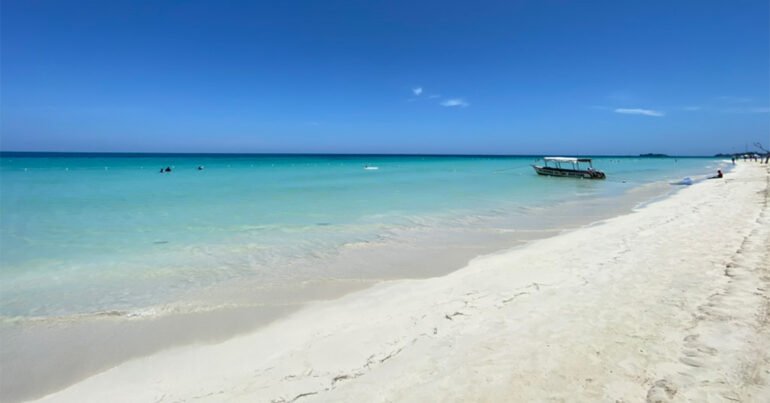
There’s almost always something going on in Negril. A reggae bassline drifts out of a beach bar. A catamaran drops anchor offshore. Someone carries a tray of Red Stripe through a crowd gathered around a sunset bonfire. On the sand, barefoot travelers move between jerk stands, rum punches, and the steady rhythm of the water.
That’s the everyday energy along Seven Mile Beach, the long ribbon of white sand that has defined Jamaica’s west coast for generations.
The beach runs for miles (not really seven, but why quibble?) along Negril’s shoreline, with calm Caribbean water on one side and a continuous line of hotels, restaurants, and beach bars on the other. Walk a few minutes and the scene shifts. A quiet stretch of sand. A beach grill sending out the smell of jerk chicken and grilled lobster. The sounds of Miss Lily’s.
Seven Mile Beach has always drawn travelers looking for the classic Caribbean beach trip — warm water, open sand, and easygoing nightlife. What keeps people coming back is the atmosphere. Negril feels loose, social, and constantly in motion. Music starts early and continues late. Boats pass all afternoon. Sunset brings a daily crowd gathering along the shoreline.
You arrive for the beach. You stay for the energy that fills it.
Why Seven Mile Beach Still Defines Negril
Seven Mile Beach begins just south of Negril’s town center and stretches south toward the Long Bay area. Despite the name, the uninterrupted sand actually runs a little shorter than seven miles, but the length still gives it one of the longest continuous beaches anywhere in the Caribbean.
The sand stays soft and bright white, and the sea remains shallow and calm along much of the shoreline. Offshore reefs protect the coast from strong waves, keeping the water clear and easy for swimming.
Walking the beach becomes part of the experience. You can cover long distances without leaving the sand, passing beach bars, small boutiques, and hotels along the way.
One stretch brings you to Margaritaville Negril, where music and beach chairs fill the sand during the afternoon. A few minutes farther, the atmosphere shifts to quieter hotel frontage and shaded loungers.
That contrast defines the beach. Every traveler can find a section that fits the trip they want.
Some visitors spend hours floating in the warm water just offshore. Others settle under an umbrella with a rum punch and watch boats glide past. The beach attracts travelers from all over the world, but the pace still follows Negril’s relaxed rhythm.
You can move between energy and quiet simply by walking.
The Water: Calm, Clear, and Made for Swimming
Seven Mile Beach stands out for one reason travelers quickly notice the moment they step into the sea: the water stays calm.
Protected by offshore coral reefs, the shoreline rarely sees rough surf. The sea slopes gradually from the sand, creating long shallow sections where you can walk far into the water before it deepens.
That calm surface draws swimmers, paddleboarders, and kayakers throughout the day.
Catamarans regularly anchor offshore for snorkeling stops. Glass-bottom boats pass along the coastline offering short reef excursions. Many travelers choose to swim out toward the boats anchored nearby, drifting in the clear water while music carries across the bay.
The visibility often stays excellent on calm days. Fish gather near reef sections farther offshore, where snorkeling tours stop throughout the afternoon.
But the water doesn’t need an activity to hold your attention. Standing waist-deep with the sun reflecting across the surface becomes its own reason to stay in the sea.
Beach Bars, Food Stands, and the Negril Soundtrack
Food and music shape the experience along Seven Mile Beach as much as the sand.
Beach vendors move between umbrellas offering coconut water, patties, and grilled seafood. Small jerk stands send smoke drifting over the sand as cooks turn chicken and pork over charcoal.
At beach bars, bartenders mix rum punch and frozen cocktails while reggae moves steadily through the speakers.
Some afternoons feel like an open-air street festival. Locals and travelers gather around beach stages where live bands set up near the water. On other days, a simple Bluetooth speaker and a cooler of Red Stripe creates the entire scene.
Walking the beach means encountering that soundtrack again and again. One bar leans into roots reggae. Another pushes dancehall through the late afternoon.
When the sun begins dropping toward the horizon, the crowd shifts. Travelers drift toward the shoreline. Drinks refill. Phones come out for photos. The light softens over the water and the sky moves through orange and gold.
Sunset has always been a daily ritual in Negril.
Seven Mile Beach becomes the front row.
A Beach Made for Long Walks
The best way to understand Seven Mile Beach is simply to walk it.
You start near one hotel and keep moving south, the sand stretching in front of you with very few interruptions.
The beach stays wide enough for easy walking most of the year. Palm trees line sections of the shoreline while hotels set their loungers farther back on the sand.
Along the way you pass beach massage tents, small craft stalls, and vendors selling handmade jewelry and paintings.
Every few hundred yards another beach bar appears.
You can stop for a drink, step back into the water, then continue walking again.
Travelers who stay several days often develop a routine — a morning walk along the sand, a swim, lunch at a beach grill, then another walk later in the afternoon before sunset.
The beach rewards that kind of slow exploration.
No two stretches feel exactly the same.
Negril’s Cliffside: The Other Side of the Experience
While Seven Mile Beach delivers Jamaica’s most famous stretch of sand, Negril’s western cliffs offer a completely different setting only a short drive away.
The limestone cliffs rise directly above the Caribbean Sea, where small boutique hotels and restaurants line the edge of the rock.
Instead of sand, the view focuses on deep blue water below the cliffs. Ladders descend into the sea, and cliff jumpers gather at popular spots like Rick’s Café to dive into the water below.
The atmosphere feels quieter and more intimate compared with the beach. Many travelers split their trip between both areas — beach days on Seven Mile Beach, sunset dinners along the cliffs.
It’s one of the reasons Negril remains one of Jamaica’s most distinctive destinations. Two completely different coastal landscapes exist within minutes of each other.
You can spend the morning swimming in shallow beach water, then watch sunset from a limestone cliff above the Caribbean.
Few places deliver that contrast so easily.
How to Get There
Getting to Seven Mile Beach starts with a flight into Sangster International Airport in Montego Bay.
From the airport, the drive to Negril takes about 90 minutes along Jamaica’s north coast highway and then south through the countryside toward the island’s western tip.
Many hotels arrange private transfers directly from the airport. Taxis and shared shuttle services operate throughout the day, carrying travelers directly to Negril’s beachfront resorts and boutique hotels.
The drive itself introduces Jamaica’s west coast landscape. Roadside fruit stands appear along the highway, selling fresh mango, pineapple, and coconut water. Small villages pass by as the road moves toward the coast.
As you approach Negril, the Caribbean Sea appears again.
Soon after, the road runs parallel to Seven Mile Beach, where hotels and beach bars stretch along the shoreline.
Most travelers reach the sand within minutes of arriving in town.
Where to Stay
Several hotels line Seven Mile Beach, offering everything from large all-inclusive resorts to smaller boutique properties.
Two stand out for travelers looking for distinctive stays in Negril.
The Cliff Hotel
Located along Negril’s dramatic limestone cliffs, The Cliff Hotel provides a quieter retreat overlooking the Caribbean Sea.
The boutique property features just over 30 suites and villas, many with private terraces facing the water. The design blends Caribbean architecture with contemporary interiors, creating an atmosphere that feels polished without losing the relaxed pace of Negril.
Guests gather around the hotel’s infinity pool overlooking the sea, where the horizon stretches wide across the water.
Dining centers around Zest Restaurant, the property’s signature venue serving Caribbean and international dishes prepared with local ingredients. The restaurant’s open-air terrace places diners directly above the water, where sunset colors reflect across the sea.
A spa, yoga pavilion, and oceanfront lounging decks round out the experience.
Travelers who stay at The Cliff often split their days between the hotel’s calm cliffside setting and visits to Seven Mile Beach just a short drive away.
Sandy Haven Resort
Back on Seven Mile Beach, Sandy Haven Resort offers a boutique beachfront stay in the center of the action.
The property features around 35 rooms and suites, each designed with modern Caribbean interiors and balconies overlooking the beach or gardens.
Steps from the lobby, the hotel’s beachfront area opens directly onto the sand. Lounge chairs line the shoreline, where guests spend afternoons swimming or relaxing beneath umbrellas.
Dining focuses on Bongos Beach Bar & Restaurant, where seafood, Jamaican classics, and tropical cocktails arrive directly to beach tables.
The setting keeps guests close to everything that defines Seven Mile Beach. Walk a few minutes in either direction and you reach beach bars, shops, and live music venues along the sand.
Many travelers choose Sandy Haven for its central location — quiet enough for relaxing, close enough to step directly into Negril’s beach scene.
The Bottom Line
Seven Mile Beach remains one of the Caribbean’s most iconic shorelines for a reason.
The beach stretches for miles. The water stays calm and clear. Music moves through the air from beach bars and restaurants scattered along the sand.
Every afternoon, boats drift across the horizon and the sun drops slowly toward the sea.
Negril keeps the energy going long after sunset.
Seven Mile Beach keeps travelers returning for another walk along the sand.
Guy Britton
2026-03-10 21:02:00