
Every hotel leader knows the feeling of walking into a shift already behind. The arrivals list has changed overnight, two room attendants called in sick, a VIP is requesting early check-in, and the restaurant is short on staff due to unexpected group demand. Decisions must be made quickly, often with incomplete information.
In many properties, critical data sits across separate systems, spreadsheets, or messaging apps. By the time a clear picture emerges, the opportunity to prevent service disruption has passed. Operational Intelligence closes that gap between what is happening on the floor and what leadership can see in real time.
Why Real-Time Visibility Has Become Urgent
Margins are tighter than ever. Labor costs continue to rise, guest expectations are shaped by seamless digital experiences, and online reviews amplify every operational inconsistency. At the same time, hotels face staffing shortages and increasing pressure to deliver personalized service.
Advertisements

Daily operations can no longer rely on yesterday’s reports. A General Manager reviewing performance the next morning cannot undo a poor check-in experience or a delayed room release.
What today’s environment demands is immediate operational awareness that allows leaders to:
- Adjust staffing levels during the shift, not after it
- Reprioritize housekeeping based on live arrivals and departures
- Anticipate service bottlenecks before guests feel them
- Align departments around the same real-time operational priorities
The speed of decision-making now directly impacts guest satisfaction and revenue.
Turning Data into Coordinated Action
Most hotels already generate enormous amounts of data through their PMS, POS, housekeeping systems, revenue platforms, and engineering logs. The challenge is not access to information, but transforming it into actionable intelligence.
When occupancy forecasts are not aligned with housekeeping productivity, rooms are not released on time. When sales confirms group bookings without visibility into operational capacity, service levels suffer. When engineering data is reactive rather than structured, recurring issues quietly erode guest trust.
In engineering, Operational Intelligence extends to asset lifecycle management. Tracking maintenance trends, equipment performance, and replacement timelines allows hotels to move from reactive fixes to planned interventions. This reduces downtime, protects capital expenditure, and prevents guest-facing failures.
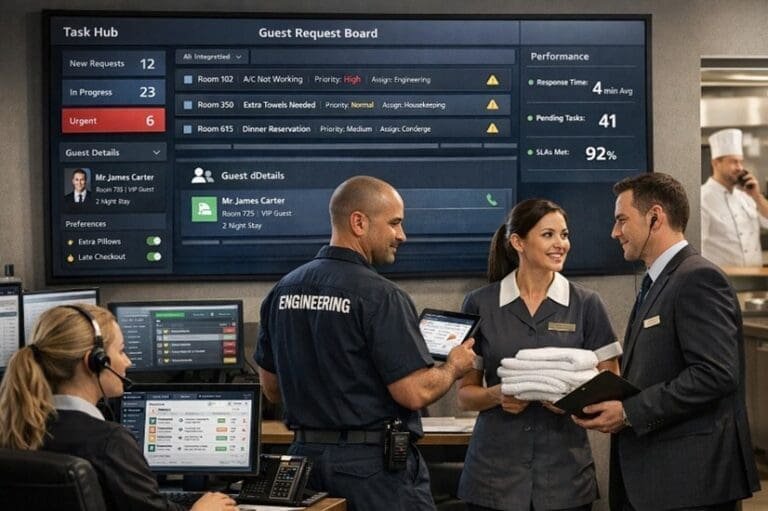
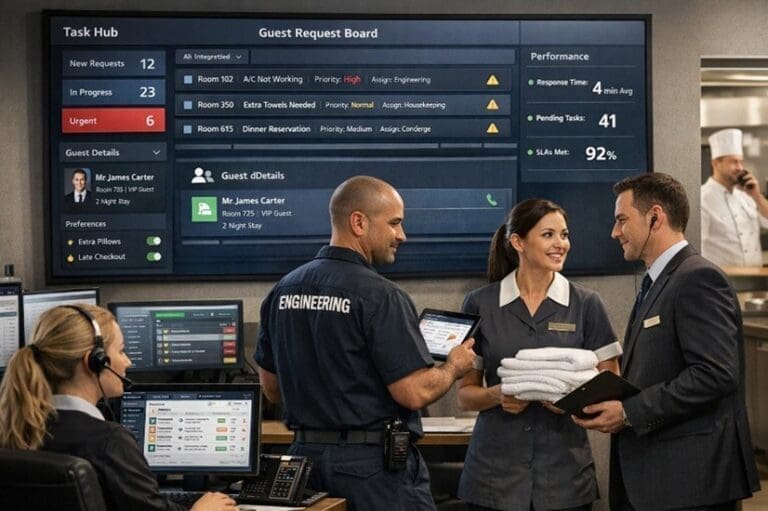
A unified, real-time dashboard showing arrivals, room status, maintenance tickets, restaurant covers, and staffing levels changes the game. If late check-outs spike, housekeeping schedules can be adjusted immediately. If restaurant demand exceeds forecast, supervisors can reassign staff before service slows. If maintenance issues cluster around specific assets, preventive action can be triggered before rooms go out of order.
The value lies not in more reports, but in faster, coordinated decisions while the shift is still in motion.
Intelligence Strengthens Leadership, It Doesn’t Replace It
A common assumption is that Operational Intelligence replaces managerial instinct. In reality, it strengthens it.
Experienced leaders often sense when something feels off, whether in guest sentiment, pacing at the front desk, or team morale. Intelligence systems provide validation and clarity. They reduce dependence on fragmented communication and manual reconciliation.
Rather than spending hours compiling figures, department heads can focus on coaching teams, solving guest issues, and maintaining service standards.
This approach is not limited to large chains. Independent hotels, often operating with leaner teams, may benefit even more. With fewer buffers, every staffing decision and maintenance delay has a magnified impact. Real-time visibility becomes a stabilizing force.
Lead the Operation. Don’t Chase It.
Hospitality is decided in moments. A delayed room release, a slow engineering response, or misaligned staffing can shape a guest’s entire perception of your property.
Operational Intelligence gives leaders control over those moments. It replaces uncertainty with clarity and reaction with direction.
The difference between average and exceptional performance is not effort. It is visibility. The hotels that outperform are not necessarily those with the largest budgets, but those that see problems first, act fastest, and align every department around live priorities.
If you cannot see your operation as it unfolds, you are not leading it. You are chasing it. Now is the time to demand real-time clarity across your property, modernize reporting habits, and build a culture where decisions are driven by live operational insight. In today’s hospitality landscape, operational intelligence is no longer optional. It is the foundation of resilience and sustainable growth.
Let’s Talk & Connect
Drop a comment. Start a conversation. The future of hotel operations isn’t just digital — it’s intelligent.
Guest Contributor
2026-03-05 00:34:00