
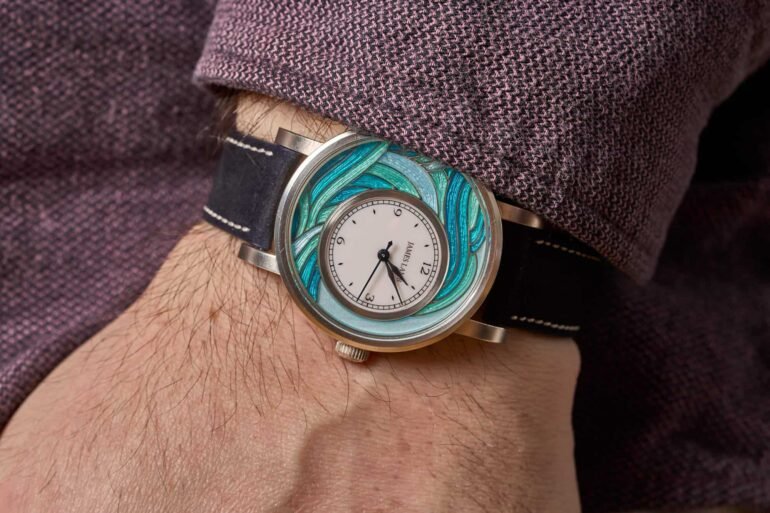
It’s a fair assumption that if you’re the kind of enthusiast that’s interested in independent watchmaking, the allure of something a little different isn’t lost on you. The independent watch space is a wildly diverse one that’s full of outsider artisans, but even in a field of outsiders, English watchmaker James Lamb is something of an anomaly.
Lamb’s watches genuinely don’t look like anything else on the market. While they’re all time-only affairs, they feature an offset sub-dial layout that frees up the outer portion of the dial to be used as a decorative space. With his Origin Series, Lamb applies strikingly colorful enamel work to the outer dial section. With his latest release, the Linea Edition, Lamb has collaborated with one of the UK’s most respected ornamental engravers, Joanne Ryall, to create a line of watches with beautifully hand-engraved titanium and gold outer dials.
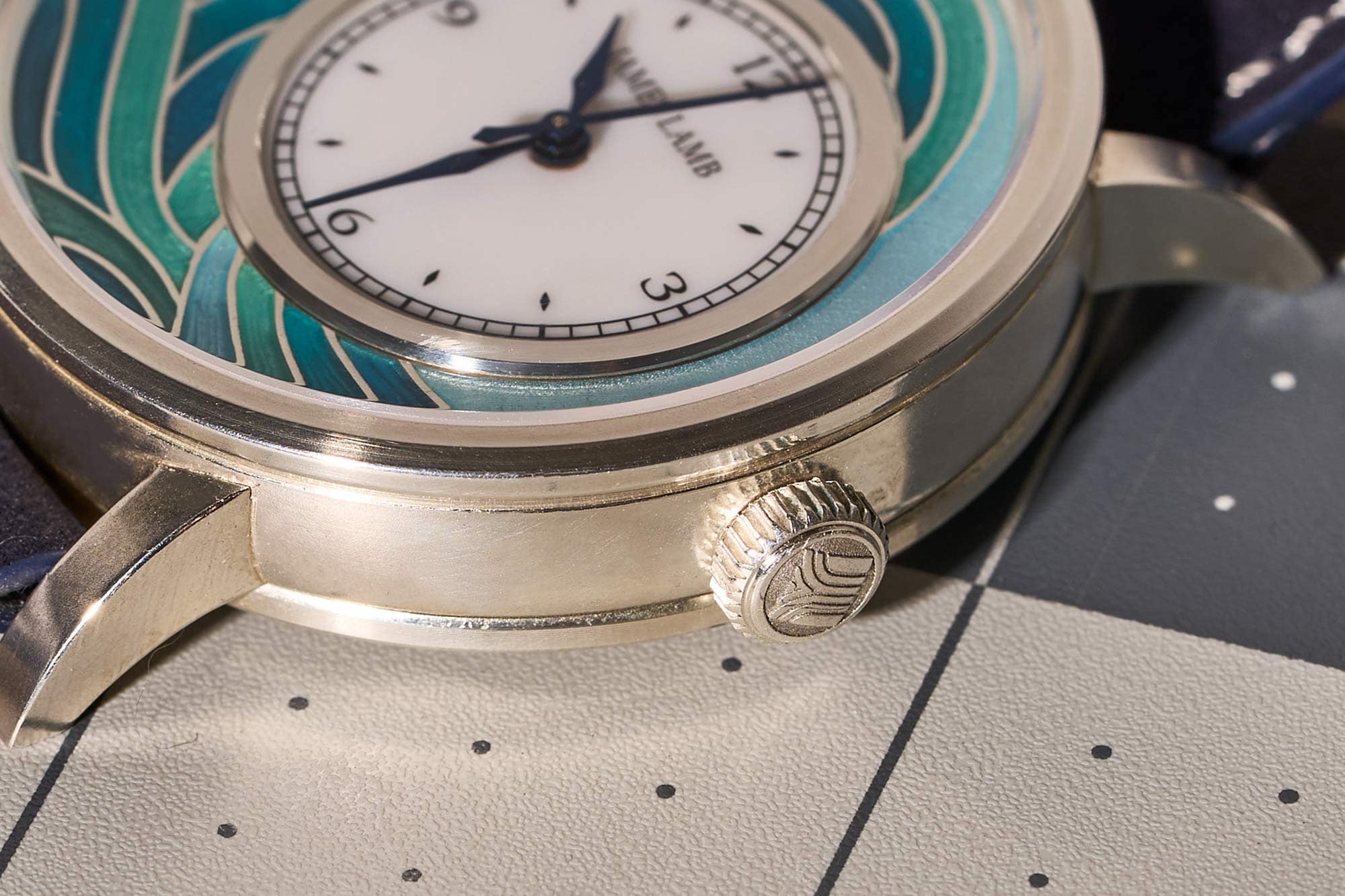
While the dials are showstopping displays of handcraft, Lamb’s watches also feature completely handmade cases (read: no CNC machines used), which he crafts out of Argentium silver. Lamb’s case designs are robust and understated; they do a fabulous job of grounding the watch’s bold dial designs, but the craftsmanship that goes into them is something serious horology enthusiasts fawn over. For Lamb, a self-proclaimed watch industry isolationist, doing things like crafting his cases entirely by hand is kind of the whole point of making watches.

Lamb deliberately avoids the industry’s fanfare and claims he isn’t caught up on the current trends in watchmaking in general. As a former prototype engineer, Lamb’s trip in watches is ultimately about the craft itself, the challenge of the work, and satisfying his own desire to hone his skills as a watchmaker and a man addicted to precision. Watchmaking is certainly James Lamb’s calling, but it’s one that’s oddly divorced from the culture of watches for him.
In the following interview, Lamb brings Worn & Wound into his philosophies as a watchmaker, his origins in the business, and explains how the exciting new Linea Edition watches came to be.

I know you have an engineering background. How did you end up becoming an independent watchmaker?
I always wanted to do something with watchmaking, but I like creating more than repairing. I found the repair side of watchmaking depressing when I had a repair business to get my certifications. When I first decided I was going to make a watch, I had an idea for this spectacular watch that was going to blow the watchmaking world away with its extraordinary abilities, but I realized I didn’t have the time or money I’d need to do it the right way. This was around 2010, so the independent watchmaking world wasn’t the thing that it is now and there really wasn’t a market for the watches I was dreaming of making. So I put that dream aside for a bit, but I had this nagging thought that I’ve simply got to do it.
So around 2019, I took out two enormous bank loans and I got my first commission for a wristwatch from a collector friend who I’d worked with on a crown for a J.N. Shapiro watch when I was working on crowns for them.
He had a budget of around 5,000 pounds, which wasn’t how I thought I was going to start making watches. I knew I couldn’t make my own movement on that budget, but there were a lot of other ideas I had that I could incorporate. I’d started teaching myself silversmithing in the context of case making and I was quite interested in that because it combined a little bit of mechanics with an artistic or sculptural craft. A watch case can be three-dimensional art, but functional. So I thought I’d teach myself how to be a casemaker and because I’d already started with silversmithing, I decided I’d make the case for this watch out of Argentium silver.
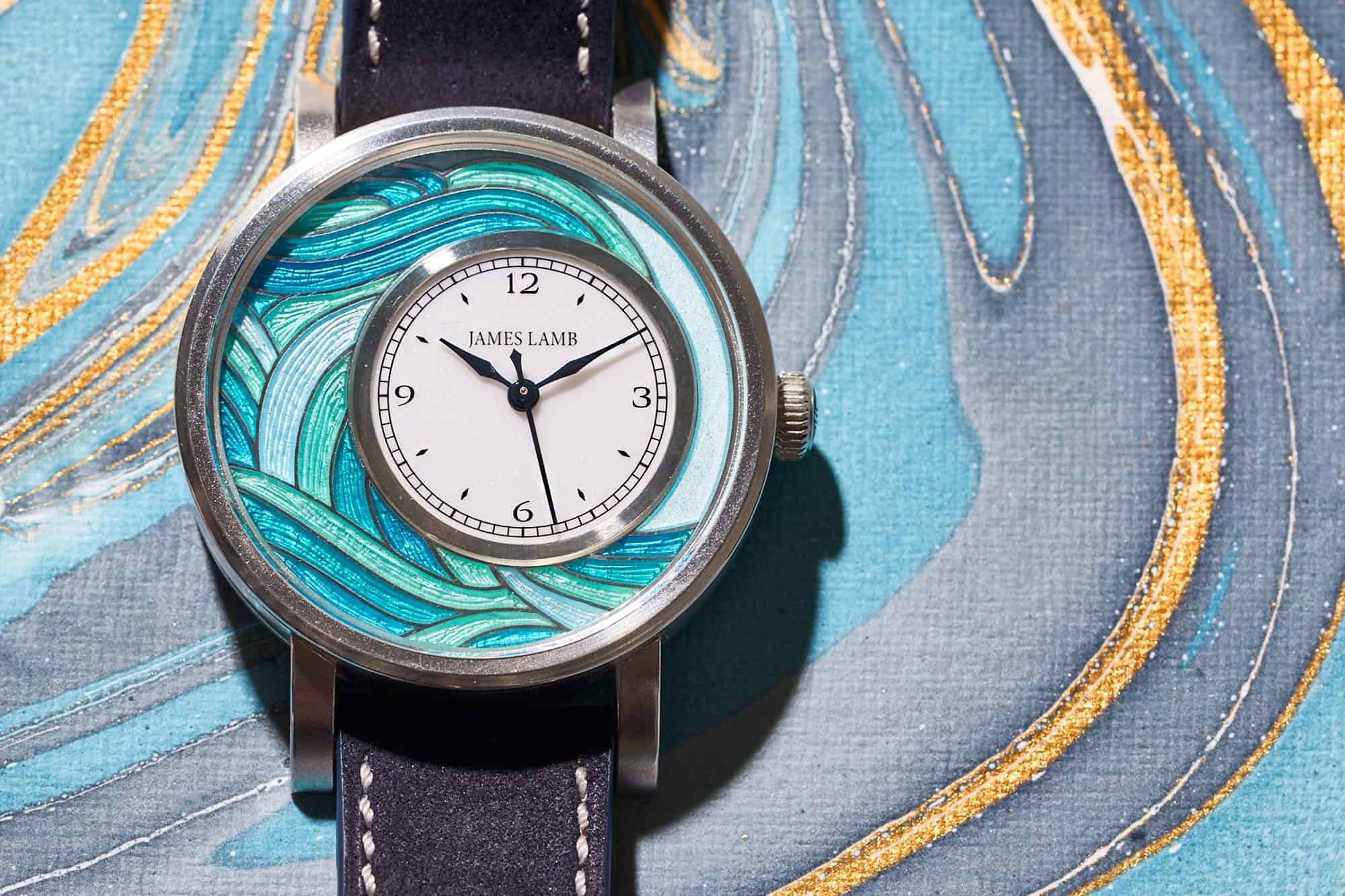
The offset dial aesthetic of your watches is very unique. Could you tell me a bit about where that concept came from?
The offset dial idea came about because I want to have a separate canvas to work with away from the timekeeping part. I think legibility is fairly important and a lot of watches have an awful lot of stuff going on behind the hands, where you can’t even easily tell what time it is. I look at watches like that and feel that they’re failing at their primary function as timekeepers. So I thought I’d put the time bit separately and then the dial could be a background idea. So while I was coming up with this first watch for this client, I’d offer him dial options and one was to put the timekeeping portion of the watch offset to the right hand side. That was what we went with and really how the offset dial idea started.
I’m curious what inspires you as a designer outside of watches? Your designs are unlike anything else on the market that I personally know of.
I’m attracted to precision, accuracy, and fine detail–more in an engineering sense than an ornamental sense. I have always obsessed over the tiniest details, even when I was young and I would draw things. I would draw a lot, but I dropped art as soon as I could in school because I enjoyed physics a lot more.
It sounds like art was never a matter of self-expression so much as a way to explore precision and control.
Yeah, that’s right. It was more “Can I do it?” Knowing it was going to be difficult, but having not seen anyone else do it and wanting to try to answer that question. That’s been a recurring theme for me–trying to make life harder for myself.
There’s a real human touch to your watches, but they’re very precise. What defines a James Lamb watch’s personality in your eyes?
Even if I defined that now, it probably wouldn’t stand in five years. It’s hard for me to do that because I’m always working so far ahead of myself–so the watches I’m releasing now are kind of already the past in my mind because I’ve made them. The Linea Edition watches have been done, so what’s next is what occupies an awful lot of my brain time. They’re quite different projects compared to what I’m doing right now and are going to take years to develop, but what I’m going to have at the end of is something that I don’t think has been done before. And something that people won’t necessarily associate with me and the watches I’m doing now. I’d also have to think really hard about what I’ve produced up until now to really define what a James Lamb watch is.
You don’t strike me as someone that looks back much.
Never.
So in an abstract and more philosophical sense, what do you want people to take away from the watches you make?
Definitely an individual approach to watchmaking. I have kind of an isolationist approach to watchmaking. I don’t really do anything for the industry like watch fairs or meetups, and that’s deliberate. I’m never going to follow the trends and I don’t even know about them to tell you the truth. I want people to understand that whatever I do is very much the product of the inside of my head. I spend my time strategizing what I’m going to do, rather than trying to understand what the market wants.
My takeaway is that you’re a process guy, not a product guy. It’s about solving a problem and coming up with something unique, but you’re not really that interested in the thing itself once it’s created.
Yeah, it’s about the craft. I love the process of turning a thought into a physical item that you can touch. That process is borderline magical. For me, I never get bored of that. The process, for me, is everything and I love honing skills, often by doing it wrong until I can do it right. I’ll design things that I don’t know how to make, and my wife always asks why I agree to do something that I don’t know how to do, and I say “because I will know how to do it.”
If eventually I’m considered a good watchmaker, that’s great. I’d like to be considered a good casemaker, as well. I think being able to do everything yourself is good and that’s the intention here. It’s the end goal–but it has to be worth it. There’s no point in you spending two years making your own caliber if it’s gonna cost a gazillion pounds and no one’s going to buy it. You have to lead up to those things and the watches have to command a certain price to justify that work. That’s the process that I’m working through right now, but I’m doing it by enhancing and refining what I do endlessly, and introducing things like gold and more enameling. This next year I’ll be releasing a couple of things and probably be near 30,000 pounds and that will perhaps ease the way for me to sell watches where I make everything myself at about 50,000 pounds.
David Von Bader
2026-03-05 20:00:00