
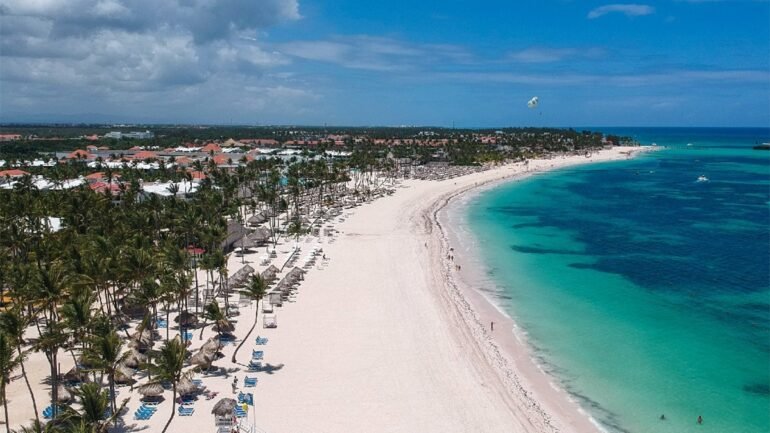
The Dominican Republic’s tourism boom has brought record visitor numbers, new resorts and continued expansion across destinations like Punta Cana. Now the country is investing in something equally important to the sector’s growth: its workforce.
The Dominican Republic has officially opened the Gabriel Escarrer Juliá School of Hospitality and Tourism, a new training center in Bávaro designed to prepare future tourism professionals and strengthen the country’s hospitality sector.
The project is the result of a collaboration between Meliá Hotels International and the National Institute for Technical and Professional Training (INFOTEP), combining private-sector experience with public-sector education resources.
The inauguration ceremony was led by Dominican Republic President Luis Abinader and Tourism Minister David Collado, along with senior officials and executives from Meliá Hotels International.
A New Training Hub for Punta Cana’s Tourism Industry
The new school arrives in one of the fastest-growing tourism areas in the Caribbean.
Located in Bávaro, part of the broader Punta Cana tourism corridor, the training center was designed to support the region’s expanding hospitality sector by preparing workers with specialized technical skills.
Tourism Minister David Collado said the initiative reflects a broader strategy to strengthen workforce development as the destination continues to grow.
According to Collado, the project emerged following discussions with President Abinader about the need to reinforce training for tourism professionals in an area that accounts for a significant share of the country’s visitor arrivals and hotel development.
The minister called the project a milestone because it represents the first technical training school located within a hotel complex in the Dominican Republic.
How the School Will Train Future Hospitality Professionals
The Gabriel Escarrer Juliá School of Hospitality and Tourism has the capacity to train up to 800 students each year, offering a mix of theoretical and practical instruction.
The facility includes 11 classrooms equipped for specialized hospitality training, with programs covering key hotel operations including reception, culinary arts, restaurant service, maintenance, bar operations, English-language instruction and computer skills.
Students will learn inside a hotel-school environment, giving them access to training that reflects real hotel operations.
The center also includes fully equipped training areas for front desk operations, restaurant service, kitchen training and housekeeping, along with computer labs and administrative offices for instructors and program staff.
INFOTEP will provide instructors and part of the equipment required for the programs, while Meliá Hotels Internationalcontributes the facilities, additional resources and operational expertise drawn from its international hotel portfolio.
Officials say the goal is to create a training model aligned with the real needs of the hospitality industry, ensuring that graduates are prepared for the operational demands of hotels and resorts.
Opening Opportunities for Local Communities
The school will serve not only Meliá employees but also residents from surrounding communities.
Programs will be open to family members of hotel employees and residents of La Altagracia province, including communities such as Verón and nearby areas that form part of the Punta Cana tourism zone.
Officials say the project is designed to expand access to employment opportunities within the tourism sector while strengthening technical training across the region.
The model allows students to develop skills directly connected to the hotel industry, helping bridge the gap between classroom training and real-world hospitality operations.
The initiative also reflects a broader effort by the Dominican government and private-sector partners to build a stronger workforce pipeline for tourism.
Honoring a Pioneer of Spanish Hospitality
The school carries the name Gabriel Escarrer Juliá, the founder of Meliá Hotels International, who played a major role in the expansion of Spanish hotel brands across global tourism destinations.
During the inauguration, Gabriel Escarrer Jaume, chairman and chief executive officer of Meliá Hotels International, said naming the school after his father carries deep significance for the company.
He said the project reflects his father’s belief that tourism can create opportunities and open pathways for future generations.
Escarrer noted that linking his father’s name to a training center dedicated to educating young professionals represents a meaningful tribute to that legacy.
The initiative also forms part of Meliá’s broader social responsibility strategy through its Travel for Good program, which focuses on community development, training and employment opportunities in destinations where the company operates.
A Focus on Human Capital in Tourism
During the ceremony, Dominican officials emphasized that workforce development remains central to the country’s tourism success.
President Luis Abinader highlighted the importance of human talent in maintaining the Dominican Republic’s leadership as one of the Caribbean’s top tourism destinations.
Infrastructure, promotion and hotel investment all play key roles in the industry, he said, but the quality of service ultimately defines the visitor experience.
Abinader noted that training programs and education initiatives are critical to ensuring the continued growth of tourism while creating opportunities for Dominican workers.
He also pointed to the rapid expansion of INFOTEP’s training network, which has grown from eight training centers to 67 nationwide during his administration, supporting workforce development across tourism, manufacturing, agriculture and other sectors.
The new school in Bávaro adds another major facility dedicated specifically to tourism training.
Tourism Remains a Pillar of the Dominican Economy
The Dominican Republic continues to rank among the Caribbean’s most visited destinations, driven largely by resort areas like Punta Cana, La Romana, Samaná and Puerto Plata.
Tourism remains one of the country’s most important economic sectors, supporting hundreds of thousands of jobs and generating billions in economic activity each year.
Officials say initiatives like the new hospitality school are designed to ensure that the country’s workforce evolves alongside the rapid development of hotels, resorts and tourism infrastructure.
By strengthening training programs and expanding access to technical education, the government and private-sector partners hope to maintain the country’s competitive position within the regional tourism industry.
The opening of the Gabriel Escarrer Juliá School of Hospitality and Tourism marks another step in that effort — combining education, industry expertise and community opportunity in one of the Caribbean’s most dynamic tourism destinations.
Caribbean Journal Staff
2026-03-04 21:26:00