
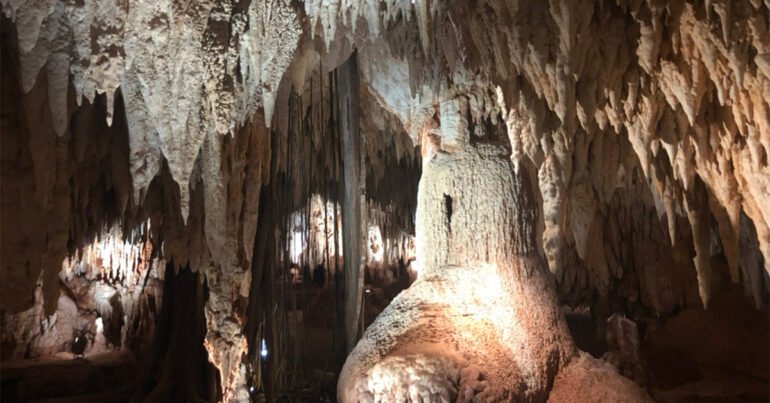
You step from bright Caribbean sun into cool, filtered air. The path narrows. Limestone rises on either side, rough and pale, streaked with mineral lines. A guide switches on a light and the cave opens in front of you — stalactites hanging in long, uneven points from the ceiling, stalagmites rising from the floor, columns formed over thousands of years where the two have met.
This is the underground side of Grand Cayman.
The Cayman Crystal Caves, located in the island’s North Side district, offer a guided walk through a network of limestone caverns formed by slow mineral deposits and shifting water tables. Most visitors know Grand Cayman for Seven Mile Beach and clear-water snorkeling. Few expect what sits beneath the surface.
If you’re building a Caribbean bucket list beyond beaches, this belongs on it.
The Experience
The tour begins with a short walk through tropical forest. Silver thatch palms and broad-leaf trees line a raised wooden path leading to the cave entrance. Guides explain the geological history of the island — how coral limestone and ancient reef systems formed the base of what is now dry land.
Then you descend.
Inside, the temperature drops slightly. The air feels still. Rock formations appear in layers — thin soda-straw stalactites, thicker draped mineral curtains, and solid columns built over centuries by slow dripping water rich in calcium carbonate.
Lighting is subtle, placed to illuminate formations without flattening them. Reflections shimmer in small underground pools. Some chambers feel compact and enclosed; others open wider, with higher ceilings and broader stone formations.
The guided format keeps the pace steady and controlled. You don’t rush through. You stop at key formations, look upward, and trace mineral shapes formed over thousands of years.
It’s accessible, and just active enough. The paths are maintained, and while there are steps, the tour is manageable for most visitors in reasonable physical condition.
Why It Belongs on Your List
Grand Cayman’s brand is built on water — snorkeling, diving, sandbars, reef walls. The caves show you the island’s structure from the inside out.
This is not a theme park attraction. It’s geological time made visible. The formations have been shaped slowly, drop by drop, long before the island became a tourism capital.
It also shifts your rhythm. After days of salt air and sun, the quiet interior of the cave recalibrates your senses. Sound is muted. Light is controlled. Your focus narrows to rock texture, water droplets and shadow.
For travelers who like adding one unexpected experience to a beach trip, the Crystal Caves provide contrast without requiring technical skill or specialized equipment.
When to Go
Morning tours tend to be quieter and slightly cooler before midday heat builds. The caves operate year-round, and because much of the experience is underground, it’s a strong option if you want an activity that doesn’t depend on sea conditions.
If cruise ships are in port, aim for earlier time slots to avoid larger group overlap.
The Bottom Line
Grand Cayman’s reputation rests on what happens offshore. The Crystal Caves remind you that the island has depth in more ways than one.
One morning underground — walking beneath limestone ceilings shaped over millennia — adds dimension to a Caribbean trip that might otherwise stay in the sun.
If your Caribbean bucket list includes at least one experience that takes you below the surface, this is the one
Karen Udler
2026-03-01 17:38:00