
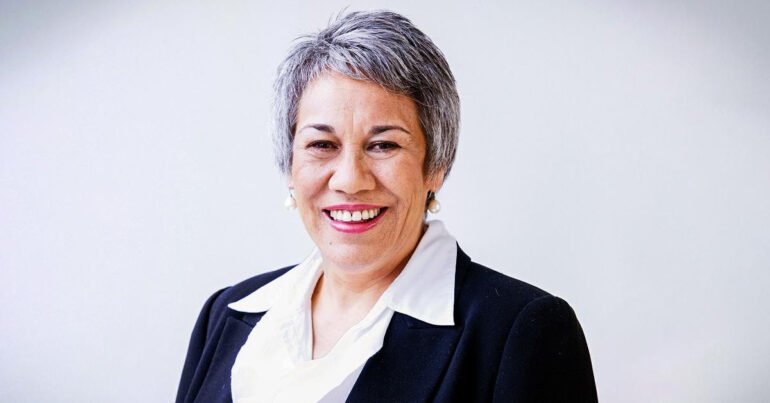
The Caribbean Tourism Organization has named a global indigenous tourism leader as the keynote speaker for its next major sustainability gathering in Belize.
Dame Pania Tyson-Nathan, Chief Executive of New Zealand Māori Tourism, will deliver the keynote address at the 17th Caribbean Conference on Sustainable Tourism Development, known as STC 2026. The conference is scheduled for April 27-30, 2026, in the coastal town of San Pedro on Ambergris Caye, Belize.
The conference will follow up the CTO’s recent high-level aviation summit in Bermuda.
The event will be held under the theme “Tourism in Full Color: Integrating Blue, Green, Orange and Beyond Economies,” a framework the CTO says is designed to connect environmental protection, cultural industries and inclusive economic growth into a more cohesive regional strategy.
A Global Indigenous Tourism Leader
Dame Pania is widely recognized for advancing indigenous-led tourism development in Aotearoa New Zealand. Since 2009, she has led a values-based investment model that places cultural identity, guardianship and community well-being at the center of tourism’s economic performance.
Under her leadership, Māori values — including stewardship and intergenerational sustainability — have been embedded into New Zealand’s broader tourism framework. Her work has focused on aligning commercial growth with cultural preservation and long-term environmental responsibility.
Her appearance at STC 2026 signals what organizers describe as a strengthening connection between Caribbean and Māori approaches to tourism development, particularly around the concept of the “purple economy,” where cultural values, social cohesion and inclusive growth intersect.
“We are honored to welcome Dame Pania to the Caribbean stage at such a pivotal time for our industry,” said Dona Regis-Prosper, Secretary-General and Chief Executive Officer of the Caribbean Tourism Organization. “Her groundbreaking work in ‘culturalizing commerce’ aligns seamlessly with our ‘Tourism in Full Color’ vision. Dame Pania’s insights will challenge us to move beyond fragmented planning and embrace integrated models that honor our heritage while safeguarding our environmental and economic future.”
Tourism in Full Color Framework
The 2026 edition of STC is being hosted in collaboration with the Belize Tourism Board. Organizers say the conference is structured to examine the intersections among several key economic pillars that increasingly shape tourism policy across the region.
The Blue and Green economies will focus on marine conservation, climate resilience and low-carbon development strategies, issues that remain central for small island and coastal destinations confronting rising sea levels and extreme weather events.
The Orange economy will spotlight the region’s creative and cultural industries, including heritage, music, art and community-based enterprises that contribute to tourism’s broader value chain.
The conference will also address what the CTO refers to as “beyond economies,” including the purple economy, which emphasizes indigenous knowledge systems, social cohesion and regenerative prosperity as core components of tourism development.
By framing the conversation across multiple economic lenses, the CTO aims to encourage regional governments and private sector stakeholders to integrate environmental, cultural and social priorities rather than treating them as separate policy tracks.
Belize as Host Destination
Belize will serve as the host country for the four-day conference, with sessions taking place in San Pedro on Ambergris Caye, one of the country’s most prominent tourism hubs.
Anthony Mahler, Belize’s Minister of Tourism, Youth, Sports and Diaspora Relations, said the country’s indigenous heritage and natural assets make it a fitting setting for the 2026 gathering.
“As a nation where indigenous heritage and the richness of our natural landscapes together shape who we are, Belize is deeply honored to host STC 2026,” Mahler said. “From the enduring legacy of the ancient Maya to the UNESCO-recognized traditions of the Garifuna people, and from our forests to our Barrier Reef, our story is woven from the resilience of these communities and the lands they have long cared for. By welcoming global leaders like Dame Pania to our shores, we underscore that Indigenous wisdom is not merely part of our past — it is an essential blueprint for a sustainable, regenerative future for Caribbean tourism.”
Belize’s tourism product is closely tied to its natural and cultural assets, including the Belize Barrier Reef, Maya archaeological sites and Garifuna heritage, positioning the country as a case study for discussions around conservation, community engagement and heritage-driven tourism.
A Career Spanning More Than Three Decades
Dame Pania brings more than 30 years of experience in tourism and business leadership to the conference stage.
Her accolades include recognition as one of the Top 50 Global Tourism Innovators in 2021. In 2022, she was inducted into the New Zealand Business Hall of Fame. In 2024, she was appointed a Dame Companion of the New Zealand Order of Merit for services to Māori and business.
Her keynote is expected to address the integration of indigenous values into national tourism strategies, as well as investment approaches that balance commercial returns with cultural and environmental priorities.
Four Days of Dialogue and Field Engagement
Beyond the keynote address, STC 2026 will feature ministerial roundtables, master classes and field-based learning experiences. Organizers say the agenda is designed to give delegates direct exposure to Belize’s sustainable tourism initiatives, complementing policy discussions with on-the-ground examples.
The Caribbean Conference on Sustainable Tourism Development is the CTO’s flagship sustainability event and has historically drawn tourism ministers, policymakers, private sector leaders, academics and development partners from across the region and beyond.
With sustainability pressures intensifying across Caribbean destinations, the 2026 conference is positioned as a platform for recalibrating regional tourism models around integrated economic, cultural and environmental priorities — with indigenous leadership taking a more central role in the conversation
Caribbean Journal Staff
2026-03-01 02:33:00