
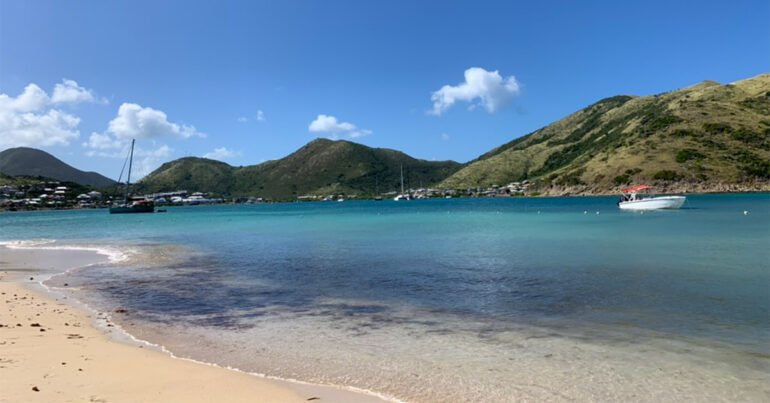
The road climbs fast out of Philipsburg, past pastel storefronts and rum shops, into green hills that smell like wet leaves and salt. Roosters dart across narrow lanes. A trailhead sign points toward the interior. By the time you reach the first lookout, the harbor is a bright strip below, cruise ships docked on one side, open water stretching toward Anguilla on the other. Trade winds push through the trees. This is St. Maarten, and the island feels different once you step off the beach and start moving.
Most travelers know this 37-square-mile island for white-sand strands and long lunches. Spend a day inland or out on the water under your own power and a second identity comes into focus. Hills, reefs, open channels and steady wind turn this dual-nation island into one of the most active destinations in the northeastern Caribbean.
Here’s how to do it.
Into the Hills: Rainforest and Ridgeline Trails
Start early on the Dutch side at Rockland Estate, home to the Rainforest Adventure park. You can ride the steep Sky Explorer chairlift to the top of Sentry Hill, the island’s highest point at 1,125 feet, then follow marked trails through thick vegetation. Tree frogs cut through the quiet. Iguanas cling to branches above the path. From the summit platform, you see both the Caribbean Sea and the Atlantic in one sweep.
Serious hikers head for Pic Paradis on the French side. The trail climbs through dry forest and shaded ravines before reaching 1,391 feet, the highest point on the island. The final stretch narrows and steepens. At the top, there’s no railing-heavy overlook, just open rock and a wide view across Grand Case, Orient Bay and neighboring islands in the distance. Bring water. Wear real shoes. The terrain is uneven and the sun is direct once the canopy thins.
Closer to the coast, the Seaside Nature Park near Cay Bay offers guided horseback rides along dirt tracks and shoreline. You move through cactus and scrub before emerging onto a quiet curve of sand with no hotels in sight. The ride stays steady and controlled, suitable for beginners, but the setting feels remote.
The Steepest Zip Line in the World
St. Maarten claims serious bragging rights in the air. At Rainforest Adventure at Rockland Estate, you’ll find The Flying Dutchman, widely billed as the steepest zip line in the world. The experience starts with the Soualiga Sky Explorer chairlift, which carries you to the top of Sentry Hill, the highest point on the Dutch side at 1,125 feet above sea level. From the summit platform, you get clear, 360-degree views stretching across Philipsburg, Great Bay and neighboring islands.
Then you clip in.
The Flying Dutchman runs roughly 2,800 feet in length and drops about 1,050 feet in elevation, sending you down the mountainside in a seated harness at high speed. The hillside falls away quickly, the harbor coming into sharp focus as you descend toward the base of the estate.
Back at ground level, you can walk through the Emilio Wilson Museum, housed in a restored plantation building that details the island’s cultural and historical story. A few steps away, Emilio’s Restaurant serves Caribbean-influenced dishes in a stone-walled dining room overlooking the hills.
Cross to the French side and the terrain shifts again. Near the top of Pic Paradis, the island’s highest peak at 1,391 feet, Loterie Farm combines zip lines, hiking trails and elevated obstacle courses within thick tropical forest. The Fly Zonecourse moves across multiple lines and suspended bridges set into the hillside canopy. Platforms are tucked into dense greenery, and the runs vary in length and speed, making it suitable for both first-timers and more experienced riders.
Wind and Water: Sailing the Open Channel
St. Maarten’s maritime reputation is earned. The island hosts the annual St. Maarten Heineken Regatta, drawing competitive crews from around the world, and the same conditions that challenge professionals are available to you year-round.
Charter a day sail out of Simpson Bay. Monohulls and catamarans depart daily, many with small groups capped at 12 to 20 passengers. Within 30 minutes, the coastline thins and the water shifts from turquoise to deep blue. Crews typically set a course toward Tintamarre or Pinel Island on the French side, dropping anchor off empty beaches where you can snorkel over coral heads and sea fans (Pinel has a nice little hike, too).
If you want control of the helm, several operators offer half-day and full-day bareboat charters, provided you have the experience. The channels between St. Maarten, Anguilla and St. Barths deliver steady wind and rolling swells. You feel the boat heel. Lines tighten. Salt spray hits your forearms as you trim the sails.
Sunset sails are calmer but still kinetic. The catamaran motors out past Maho Beach as planes descend low over the sand, then turns west toward open water. The shoreline glows gold, then fades. Music stays low. The focus is forward, on the horizon.
Adrenaline on the Atlantic Side: Kitesurfing and More
Orient Bay on the French side is the island’s wind corridor. By late morning, colorful kites fill the sky. The beach here is wide and white, the water shallow near shore before dropping off farther out. Several certified schools offer beginner and intermediate kitesurfing lessons with radio-equipped helmets and jet ski support.
First-timers start on the sand learning kite control. Once you enter the water, the wind does most of the work. The pull is immediate and physical. When the board planes and you find balance, the shoreline begins to slide past quickly. More advanced riders launch small jumps just offshore, boards flashing in the sun.
Windsurfing and wing foiling have gained traction here, too, particularly during the winter trade wind season. Equipment rentals are straightforward, and instructors tailor sessions to your level.
On calmer days, head to Mullet Bay or Dawn Beach for stand-up paddleboarding and kayaking. Paddle along the rock edges and you’ll spot sea urchins and small reef fish below. The water clarity is strongest in the morning before boat traffic increases.
Below the Surface: Reefs and Wrecks
Divers find variety in a compact area. The island’s Dutch and French marine parks protect several reef systems and wreck sites, accessible within short boat rides from Simpson Bay and Oyster Pond.
The Proselyte Reef, formed around a 19th-century British warship wreck, sits in 15 to 40 feet of water, making it accessible for beginners while still interesting for experienced divers. Coral growth has covered much of the wreckage. Schools of blue tang and sergeant majors cluster near the structure.
For something deeper, sites like The Bridge and Man of War Shoal bring you down along coral ridges where nurse sharks and southern stingrays are occasional visitors. Visibility often exceeds 60 feet. Dive operators run two-tank morning trips, returning before early afternoon.
Snorkelers can access healthy reef just offshore at places like Little Bay and Creole Rock near Grand Case. Bring your own mask for flexibility, or join a guided snorkel sail that combines multiple stops.
Two Nations, One Playground
The island’s split personality adds range. Cross from the Dutch side to the French side in minutes, no passport control required. Philipsburg’s boardwalk is flat and busy, ideal for a long run at sunrise before cruise passengers disembark. Marigot’s waterfront offers a different cadence, with fishing boats unloading near the market and ferries departing for Anguilla and St. Barths.
Cyclists tackle the hills between Cole Bay and Oyster Pond, though traffic requires confidence and visibility gear. Mountain biking groups occasionally organize guided off-road rides on interior tracks and less-developed routes.
If you prefer engines to endurance, ATV tours run through inland dirt paths and along less-traveled coastal stretches. Guides lead small groups, stopping at overlooks and quieter beaches where you can swim before riding back.
Where to Stay Between Outings
After a day outside, location shapes your recovery.
On the French side, Grand Case Beach Club (one of our favorite hotels anywhere in the Caribbean) places you steps from calm water and a short walk from the restaurants of Grand Case Boulevard. Rooms open to balconies facing Anguilla. You can swim laps in the bay in the morning, then drive 10 minutes to Pic Paradis for an afternoon hike. And then there’s the brand-new pool deck and bar.
On the Dutch side, Sonesta Ocean Point Resort in Maho delivers quick access to Simpson Bay marinas for sailing departures. The adults-only all-inclusive property includes oceanfront suites, three pools and Azul Restaurant for dinner after a long day on the water.
The Takeaway
You can spend a week in St. Maarten without repeating a single beach. Add elevation, wind and open water, and the island expands. In one trip, you can hike to the highest point, sail across an international channel, dive a historic wreck and learn to control a kite in steady trade winds.
Pack running shoes alongside sandals. Bring reef-safe sunscreen and a dry bag. The beaches are still here. So are the hills, the wind and the open water just beyond the harbor.
Guy Britton
2026-02-28 03:02:00