
I’ve been coming to St. Barth for nearly a decade, long enough to know its patterns and its comforts. I know where the water stays calm, where the boats collect, where lunch stretches easily into the afternoon.
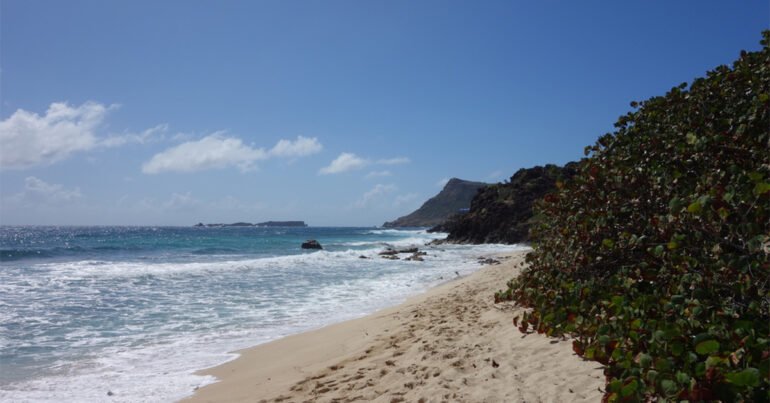
On the eastern edge of the island, the road drops toward an Atlantic-facing beach called Toiny. It stretches long and open below low brush and scattered rock, the sand white, the water darker and more active than elsewhere on the island. There is nothing offshore to slow what comes in. Wind crosses the beach steadily. Waves break close to shore, fast and heavy.
For years now, this has been the island’s center of gravity for surfing. While most of St. Barth turns inward toward calm water, Toiny stays open to the Atlantic, and that exposure is what makes it work. When swell arrives, this is where surfers come first, watching from the sand before paddling out. It’s not a scene, and it’s not consistent every day, but when conditions line up, Toiny delivers some of the most reliable breaks on the island, drawing a small, experienced crowd that understands this coast.
This side of the island feels removed from the harbors and protected bays most visitors know. Boats are gone. Swimming isn’t the point. The water stays loud, working constantly. When the surf is up, boards appear on the sand and surfers wait along the shoreline, watching sets and timing their entry. On quieter days, people sit farther back from the water, following the movement.
The beach changes often. After rough conditions, seaweed collects along the high tide line. After calmer stretches, the sand smooths out again. Nothing stays fixed for long. The shoreline shifts according to weather and tide, without much interference.
The Atlantic Side of the Island
Most of St. Barth faces inward, shaped by coves and reefs that keep the water calm and close. I’ve spent plenty of time on those beaches, too. Toiny faces outward. The Atlantic sets the conditions here. The water stays deep blue and unsettled, and the surf arrives in steady intervals. Swimming is limited and, at times, unsafe, which turns attention back toward the shoreline itself.
From the sand, the scale of the ocean registers quickly. Salt and spray carry inland on the wind. Waves fold over themselves close to shore, leaving little pause between sets. Surfers study the water from land, reading currents and swell direction before paddling out. When conditions line up, Toiny produces fast, powerful waves that draw experienced surfers who know this coast well.
Standing here feels closer to open ocean than to the image most people associate with the island.
A Beach Without Distractions
There is no village behind Toiny, no strip of shops or cafés edging toward the sand. Staying longer means arriving prepared, with water, shade, sunscreen, and something heavy enough to stay in place when the wind picks up.
The sand feels coarser underfoot, darker where the tide reaches higher. Behind the beach, vegetation stays low and tough, shaped by constant exposure. Clouds move quickly overhead, shifting the light on the water in short intervals.
Even when others are present, the beach absorbs them easily. Toiny runs long enough that people spread out without effort. Voices stay low. Walking feels unhurried. Time here follows weather more than schedule.
Rugged by Nature
There are no seawalls or breakwaters holding the shoreline in place. After heavy weather, the beach shows it. After calmer periods, it settles again. The Atlantic leaves visible traces of its reach and then pulls them back.
I keep coming here because nothing feels managed. The waves are often too strong for swimming, but their presence is constant. You hear them, feel them through the ground, watch the way the shoreline shifts beneath them. On an island known for polish, Toiny remains exposed, physical, and unchanged.
Where to Stay
Above the beach, set into the hillside, is Le Toiny Hotel and Beach Club. The property sits back from the shoreline, giving you distance. From the villas, you look out over the Atlantic without sitting directly in its path. It’s a place that understands the conditions below, giving you access to Toiny without asking you to live inside its wind and surf all day.
Much of this side of the island is also defined by private villas, tucked into the hills behind the beach. Staying nearby works best if you value quiet and separation, and if you’re comfortable driving to reach calmer water or the island’s busier centers. Even close by, Toiny never becomes a beach you stumble onto. You decide when to go, check the conditions, and spend as much time as the weather allows.
Why Toiny Stays With You
After time at Toiny, the rest of St. Barth feels more clearly drawn. The calm beaches feel calmer. The harbors feel more protected. You notice how much of the island depends on shelter, and how rare it is to find a place that leaves itself this open.
I don’t come to Toiny every day when I’m on the island. I don’t stay long when conditions turn sharp. But I always come back at least once. It reminds me that St. Barth still has edges — places shaped by weather, tide, and exposure. Toiny doesn’t ask for much. It simply shows you what the island looks like when it meets the Atlantic head-on.
Lori Chase
2026-02-04 23:54:00