
:max_bytes(150000):strip_icc():format(jpeg)/Ports-Second-Coming-is-Here-FT-DGTL1225-Symington-Graham-2-a4e2be1b37024140b5c37c41b3638dd5.jpg)
Of all the drinks in this wide, wild world, port is the one whose fate is most clearly tied to the shifting whims of culture and the zeitgeist. Its latest act may be port’s most interesting and broad-ranging of all.
Port was “invented” in the 17th century. British merchants sought to ensure that the still wine they shipped in from the Douro could withstand the long, arduous journey across the sea, so they fortified it with brandy. The liquor stabilized the wine, and also made it more powerful, sweeter, and to many, better.
“Port has evolved considerably since then, both in the way it’s made and in the way it’s perceived,” says George Sandeman, seventh-generation of the storied Sandeman port house, and a consultant for Sogrape after the company acquired Sandeman in 2022. “If you look at bourbon and sherry, they’ve been through similar cycles of change, reduction, and resurgence. Any product that has been around for more than 250 years is going to go through that.”
As port evolves, it represents an increasingly diverse range of experiences and products.
“Inexpensive items like Fonseca Bin 27, which retails for $25 a bottle, versus Taylor Fladgate 1896 Port, which retails for $5,000 a bottle, will have very different consumers,” says Adrian Bridge, managing director and chairman of Taylor Fladgate, established in 1692. “And in recent years, we’re seeing the use of port in cocktails explode. Mixologists and bartenders love the way port can transform a cocktail by adding body and sweetness without added sugar. Many younger consumers are now being introduced to port through cocktails, instead of as the after-dinner drink their parents or grandparents enjoyed.”
Port can be fun and cheap, rarefied and chic, and a dancing partner in the glass with tonic, whisky, cognac, and more. What’s not to love?
Courtesy of Sandeman Sogrape
Porto becomes a gateway for port
Port’s somewhat capricious position as a sought-after collectible and a fun ingredient in innovative cocktails may be due in part to Porto’s incredible tourism boom.
“We opened the Yeatman Hotel 15 years ago in 2010, with the intention of drawing more luxury tourists to Porto and introducing them to port,” says Bridge. “At that point, there were just about 50,000 visitors from the U.S. to Porto. Now, there are around 2.5 million.”
Visits to Porto from around the world, and especially the U.S., have surged, according to numbers from the Instituto Nacional de Estatística in Portugal. In May, the tourist sector registered 3.2 million guests that generated more than $639 million in hotel room revenue, an 8.9% increase year over year. U.S. tourists increased about 6% during that time.
Bridge insists that the increase in tourism correlates to the current and future success of port.
Courtesy of Sandeman Sogrape
“While they’re in Porto, staying at the Yeatman, which was the first luxury hotel with a wine spa and two Michelin-star restaurants, visiting the World of Wine cultural district, which we opened in 2020 after a $116 million investment, or the many other hotels and Michelin-star restaurants that have sprung up around us in the years since, they are introduced to port,” says Bridge. “And they bring that experience home with them.”
David Orellana, beverage director at New York City’s Grand Brasserie, says that an introduction and context for port is essential for young people who are unfamiliar with it.
“Port needs context and a guided sell,” says Orellana. “Once guests understand its range, they realize how versatile it can be. I often compare the oxidative depth of a tawny to sherry, or the structure of a vintage port to Bordeaux. That connection helps. Pairing seals the deal: a tawny alongside foie gras or blue cheese for example. Once framed with intention, port stops feeling old-fashioned and starts feeling relevant.”
Orellana says that while few guests request it, “once we tell the story, and they are introduced to port’s origin and craft, they discover that port fits beautifully within modern dining.”
Courtesy of The Fladgate Partnership
Collectible and single quinta bottles surge
Younger people, once introduced to port, are just as likely to gravitate toward the rare and collectible bottles as their parents.
Luxury goods like rare ports, broadly, are of increasing interest to Millennials and Gen Z despite economic and political instability. Millennials are forecast by Bain & Co. to represent 40% of all luxury goods purchased this year.
The commodity market for port has been in decline for 25 years, says Bridge.
But the top end of “‘special category’ ports has been in growth mode, with collectable bottles expanding the market,” he says. “The growth in quality of these offerings, the rise in tourism to Porto, and globalization, which has spread wealth across the world, means that while collectable bottles make up just 25% of our volume, they account for 50% of our profit.”
Only a certain segment of wine lovers are fluent in the intricacies of port. However, the general understanding of terroir — the culmination of vintage, soil, climate, and elevation — has made certain sectors of rare port increasingly compelling for younger collectors, says Sandeman.
Photo by Sam Legg
Rui Ribeiro, market manager for Symington Family Estates, which owns four port houses — Graham’s, Dow’s, Warre’s, and Cockburn’s — says that the appetite for “single vineyard, single releases, which are pure expressions of terroir, are a great way of showing some of the best quintas and keeping port relevant in the marketplace.”
Symington and others are pushing out increasingly rare bottlings, including a Graham’s Single Harvest 1952, released in 2012 to commemorate Queen Elizabeth II’s Jubilee. In 2016, it received a special authorization by the Port Wine Institute to release a 90-year-old tawny to celebrate the queen’s birthday.
“This was followed by other houses releasing very old ports, which didn’t necessarily meet the category classification from the Port Wine Institute,” says Ribeiro. “It triggered the creation of two new categories: 80-year-old and Very Very Old Port (VVOP). These categories and ports contribute to the business, not just by the value they represent, but also by communicating the history, craft, and dedication that are part of every bottle of port.”
Photo by Martin Morrell
Redefining cocktail culture
But port lovers and producers may be more excited by the opportunity that the cocktail culture renaissance presents to port and a new generation of potential collectors.
The primary reason that mainstream commodity ports that sell for $8–15 have fallen off the radar is that “consumers have been trending away from sweet, dessert-style wines for a long time,” says Annie Edgerton, wine expert and consultant at New York City’s Flatiron Wines & Spirits. “Port’s fortification also places it in a high-alcohol category, which many consumers avoid, too.”
But that double whammy is turned on its head when port is used in cocktails.
“Port can be used to lower the total alcohol of cocktails, and its inherent sweetness and fortification mean no additional sweetener needs to be added, making it an attractive option for somewhat health-conscious drinkers,” says Edgerton.
Symington is so bullish on port’s versatility, it opened a cocktail bar, restaurant, wine club, and general temple to dedicated to it this year in Porto, dubbed Matriarca.
Photo by Martin Morrell
Cocktails include Veludo, which is tawny port with rum, Earl Gray tea, pomegranate, hazelnut, and spice.
Releases of port with bold labels, like Cockburn’s Tails of the Unexpected, are specifically designed to be “transformed into cocktails, [and] are also part of our objective to make port more visible and appeal to a younger cohort,” says Ribeiro.
Sandeman says that his group has been “pushing cocktails like White Port and Tonic since 1993. It’s a great way to introduce port in a different way and get people to think of port as not something their parents and grandparents drink. But the process takes time. I think we are finally gathering speed and changing people’s minds.”
Port is the Cate Blanchett of your bar cart. It can perform any number of roles flawlessly. It’s hard to believe that port can be an after-dinner delicacy that can be sometimes worth thousands of dollars, represent almost a century of dedicated work, and also be a fabulous, fun cocktail ingredient you can pick up for under $20.
But it is. Thirsty?
Courtesy of Sandeman Sogrape
Five ports to buy and try now
Drinks pros David Orellana, of Grand Brasserie, and André Ramos, wine specialist at Portugalia Marketplace in Fall River, Massachusetts, share their favorite bottles to sip and share.
For those willing to invest in a “masterclass in time and patience,” Orellana recommends Taylor Fladgate Very Old Tawny, Kingsman Edition. Presented in a bespoke crystal decanter, it was created for connoisseurs. Only 700 bottles have been produced.
For a “mid-range option that delivers elegance and depth and can hold its own against any fine dessert wine,” Orellana recommends Graham’s 20-Year-Old Tawny. Seasoned oak casks, it showcases port’s complexity when given a few decades.
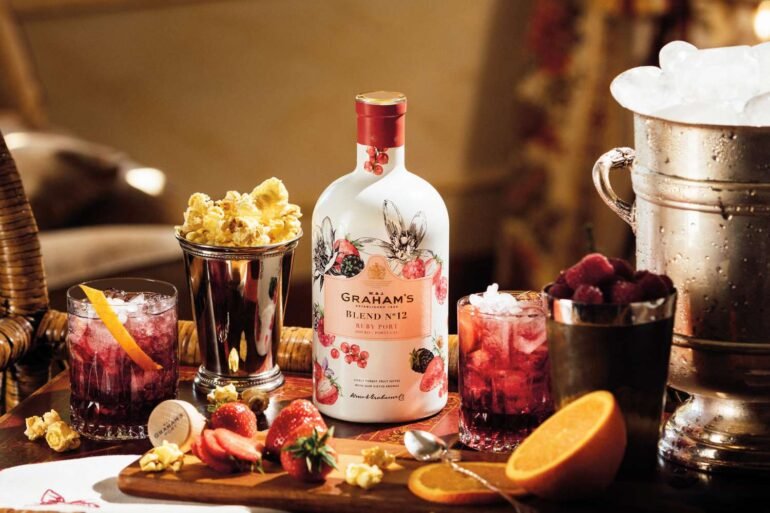
For a fun and completely unexpected pairing with barbecue, sausage, and burgers, Ramos recommends a chilled Ruby port like Symington’s No 12. It can be sipped solo or in cocktails, and it delivers fruit-forward flavors of cherries and plums.
White port is where it’s at when mixed in a simple Port and Tonic, says Ramos. He recommends Van Zeller’s White Port, creamy and delicate, mixed with a bracing pour of zesty tonic water and served over ice.
For a lively and fine-textured port with notes of honey and vanilla, Orellana recommends Cockburn’s Tawny Eyes, which lends itself to experimentation and cocktails like the Tawny & Ginger. “It’s a great example of how port can adapt to contemporary drinking culture while retaining its DNA of craftsmanship,” he says.
Kathleen Willcox
2025-12-03 14:29:00