
:max_bytes(150000):strip_icc():format(jpeg)/Classic-Korean-Sweets-Seollal-FT-DGTL1225-hero-5282446e74bc40b99c032b5270c12684.jpg)
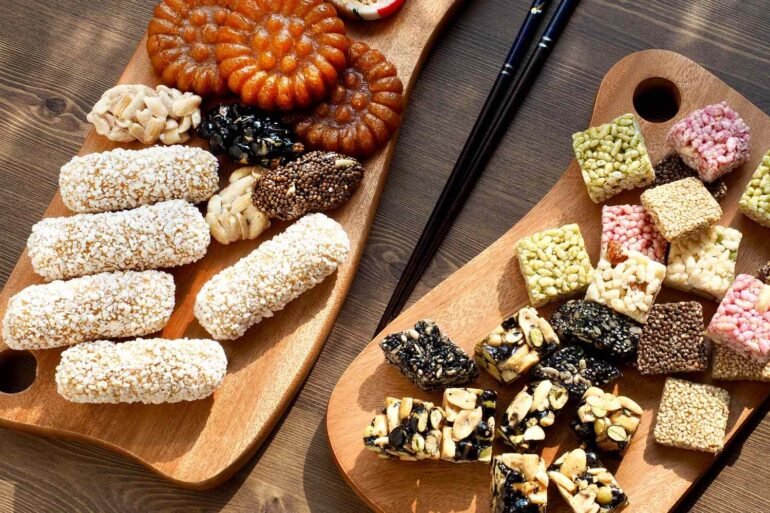
Holiday cookies aren’t the only goodies on our minds this season: from sticky, mosaic-like squares of yaksik to intricately patterned dasik, the crunchy, chewy, syrup-soaked world of Korean confections is not to be missed. The traditional treats, called hangwa, are a fixture of national holidays like Seollal (the Korean Lunar New Year), when they’re seen on ancestral rites tables, gifted to friends and family, and enjoyed with loved ones after a gloriously bountiful New Year’s feast. Their reach — and relevance — extend far beyond just a few days out of the year.
For many who grew up in Korea, there is a strong nostalgic connection to these storied sweets. 2023 F&W Best New Chef Eunji Lee holds fond memories of visiting her grandparents in the countryside and helping her grandma make all sorts of hangwa from scratch (while sneaking samples in between). “Every time she toasted all the grains for making gangjeong and yugwa, it smelled really good,” remembers Lee, who says these formative experiences provided inspiration for some of the creations at her own pastry shop, Lysée, in New York City.
Yoonjung Oh, corporate pastry chef at Hive Hospitality, which includes Jônt and Bresca in Washington, D.C., recalls the excitement of digging into a pretty gift box of hangwa during the holidays. “Personally, I’ve always loved them, even when I was little,” Oh says. “Adults used to laugh because I preferred these old-school desserts over typical kid snacks.”
Hangwa Handbook
Here are some common sweets enjoyed during Seollal (and beyond):
- Dasik: These delicate, vibrantly hued tea cookies are formed by pressing a paste-like dough (made by mixing seed, grain, or nut powders with honey or syrup) into a specialty mold.
- Gangjeong: “Honestly you can make [gangjeong] with anything that you want to put,” says Lee of the crunchy, versatile sweet that can incorporate any manner of nuts, seeds, puffed rice, and dried fruit. The ingredients are mixed with a hot syrup and pressed or spread to the desired thickness before being cut into bite-sized pieces.
- Yakgwa: These chewy honey cookies are fried and soaked in a ginger-spiked syrup. The circular, rippled shape is iconic, though yakgwa comes in a variety of shapes and sizes, and can be found everywhere from Korean grocery stores to specialty pastry shops.
- Yaksik: This sticky sweet rice is packed with ingredients like pine nuts, chestnuts, and jujubes, and flavored with a sweet-and-savory combo of honey and/or brown sugar, soy sauce, and sesame oil. The name — which translates to “medicine food” — reflects the ancient belief in honey’s health-promoting qualities.
- Yugwa: Made from glutinous rice flour dough, these crisp-chewy confections are fried, rolled in syrup, and coated with toppings like puffed rice or sesame seeds.
Oh and Lee have both found ways to put their own spin on these sweets while paying homage to their roots. “I’ve reimagined hangwa into things like granitas, plated desserts, [and] petit fours — I really enjoy taking traditional elements and giving them a contemporary twist,” shares Oh. At Lysée, Lee riffs on yakgwa, a fried honey cookie, with her nickel-sized sables laced with sesame oil and ginger. “When you fry [yakgwa], sometimes the next day or days later it can be a little bit oily, so we prefer to bake it instead and then soak [it] into the syrup,” she explains of the melt-in-your-mouth bites.
The time-honored treats may be centuries old, but hangwa remains deeply embedded in Korea’s cultural fabric — it’s still common practice for locals to pick up packages of sweets from department store food courts or mom-and-pop rice cake stores ahead of the holiday frenzy.
“There is a deep value in things that have been preserved for generations,” notes Oh. “I think it’s a part of our culture that we share the sweets with family,” adds Lee, who likens Korean confections to something as customary as pie is for Thanksgiving in America. “After the meal, we always have some hangwa with tea or coffee and talk about ‘when are you going to get married?’ or ‘where are you going to university?’”
And they’re trendier than ever, too. Even outside of major holidays like Seollal, visitors to Korea can find excellent hangwa all year long, whether it’s to grab a souvenir-worthy gift set or savor a sit-down experience in a traditional hanok cafe. Here are three standout spots in Seoul to indulge in past-meets-present treats:
House of Shinsegae Heritage Dessert Salon
On the fifth floor of a renovated bank building, this sleek cafe is a great place to sip and savor classic offerings with modern flair. “Seo Myung-hwan [is] one of the artisans for traditional Korean sweets and they have everything, from dasik [and] yakgwa [to] juak [fried rice cakes],” says Lee, who highly recommends the salon at Shinsegae. “They are also serving tea that they selected and all the beautiful dishware from Korean artists as well.”
Golden Piece
Everything from the warm wood flourishes to the immaculate packaging at this trendy, celebrity-loved yakgwa shop screams “premium.” The moist, chewy trademark treats boast a scalloped, Biscoff cookie-like shape and come in a wide range of interesting flavors — think black sesame, coffee, green tea, and more. Can’t decide? Grab a curated assortment or build your own yakgwa box, which doubles as a stunning gift.
Tteulan
Take a break from the hustle and bustle of the city at this delightfully homey tea house in Ikseon-dong, a century-old hanok village known for its historic Korean architecture and thriving cafe culture. Choose from an impressive tea menu — from fermented to floral options — and pair your beverage with the three-in-one set of yakgwa, yugwa, and sesame gangjeong. For the full experience, get comfy on a floor cushion at one of the traditional low tables.
Joy Cho
2025-12-01 12:57:00