
We have some thoughts on the GPHG. Watchmaking’s biggest night is in the rearview mirror, winners have been named, and we’ve all had an opportunity to digest not just who won and lost, but what, if anything, the results signify about the state of the watch industry. Here, Zach Weiss, Griffin Bartsch, and Zach Kazan share their opinions on the winners, the show itself, and if we should pay much attention to it at all.
Let us know in the comments below if you have any thoughts on the GPHG results, we’d love to hear them.
Zach Weiss
I’m never quite sure how to feel about the GPHG awards. On the one hand, it’s pageantry rather than an accurate assessment of the most recent year’s releases, as not all brands (very few, actually) participate, and fees are associated with it. On the other hand, it can be a great marketing tool for younger, smaller independent brands if they get nominated, or better yet, win – and there is just something fun about it. This is a luxury industry after all, so an event to celebrate itself is hardly out of the ordinary. As a member of the academy (pats self on back), being part of the voting process also has its entertainment value.
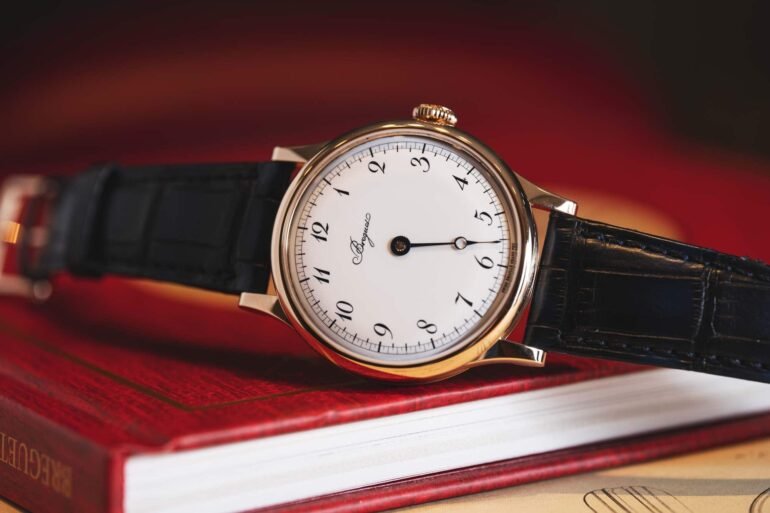
But at the end, seeing who won is always a bit of a surprise. Not knowing what goes on in the final round of judgment, held by the elusive and annually rotating jury, the actual final results are still unexpected. And this year… well, it felt like a very tame selection that mostly celebrated brands that seem to always win, or current industry darlings, on the upper end. That is, save the winner of the big kahuna, the Aiguille D’or, which went to Breguet for the Classique Souscription 2025.

A finalist in the “Iconic” genre, the Classique Souscription 2025 is a remarkably straightforward, perhaps even pointedly straightforward watch for the award, which typically goes to highly complicated pieces such as the IWC Portugieser Eternal Calendar in 2024 and the Audemars Piguet Code 11.59 Ultra-Complication Universelle RD#4 in 2023. A single-handed watch, it’s about as far from those other two pieces as one can get, which couldn’t be a coincidence. And while a perfectly lovely watch, even if the case was a bit of a strange departure from Breguet’s typical style (for more on my thoughts, check out my article from when it was launched), does it really feel like the watch of the year? Or is the fact that it’s the 250th anniversary of the eponymous brand of the most significant horologist of all time a large factor? Perhaps. And, perhaps the jury does consider such things.
Moving on, I was glad to see the Zenith G.F.J. win for chronometry. A sleeper of a watch in many regards, it was one of the most beautiful releases from Watches & Wonders (though I constantly forget about it). The chronometry award is a curious, yet not inappropriate, category for it to win, as the Caliber 135 within celebrates the brand’s entry into observatory trials in the mid-twentieth century and is regulated to within +/-2 seconds a day. What’s a bit curious about it is that it does so without employing any complications or technologies, like a constant force mechanism or tourbillon, like previous winners such as the Grand Seiko Kodo, which won in 2022. Like the Breguet, perhaps the tribute to a simpler form of horology was the point.
Other standouts? Well, the Greubel Forsey Nano Foudroyante is insane, so no surprise it won the Mechanical Exception prize. I was pleased to see the Angelus Chronographe Télemetre win the Chronograph category, not because it’s such an exceptional mechanism (I mean, few chronos compare to that GF), but rather because it’s simply gorgeous. The steel version was another of my under-the-radar favorites from Watches & Wonders this year. LVMH’s revived Daniel Roth won the Time Only award, no surprises, and Urban Jurgensen won the Men’s prize, which I find to be a silly category (women are not allowed!). I would have put money on these two winning, given the hype around them.

Jumping to the most relevant and exciting categories, I was pleased, though not surprised, to see the M.A.D. Editions M.A.D.2 Green win the Petite Aiguille. I’m not sure if a GPGH can go by without Max Buesser getting an accolade, and shockingly, no MB&F won this year. That said, it beat out the Habring2 Josef, which does sting a little as an owner. Finally, Dennison won the Challenge category, which covers watches, including smart watches, under 3,000 CHF.
A very competitive category, the Dennison Stone Tiger Eye in Gold was the least expensive of the finalists and the only quartz. Once again, I can’t speak to the final reasoning of the jury, but Dennison’s success over the last year is largely due to the fact that their watches exude an elegance and confidence that belies their price point. Going back to the hypothesis that simplicity was the key factor, I can see a case being made that the same rationale was applied here.
Griffin Bartsch
We’re not done with nostalgia yet, at least not if this year’s GPHG awards have anything to say about it. And I’m not talking about the fact that the Aiguille d’Or was won by a brand celebrating its 250th anniversary. No, I’m talking about the simple truth that, of the 20 awards handed out at the GPHG awards (19 of which went to watches, and one of which was a Special Jury Prize awarded to Alain Dominique Perrin), five of them went to watches from recently revived brands — four of whom have only seen their revivals come since 2023. That number rises to six if you also include Zenith’s excellent G.F.J. and its revived calibre 135 movement.
Why is this even interesting? I mean, vintage revivals have been the name of the game for the last decade and a half, so why wouldn’t they pop up as part of the watch world’s largest awards show? Well, because, at least for the last few years, they haven’t been. Despite vintage revival having been a significant driver for design and source of inspiration for the watch industry since at least the mid-to-late ‘90s, revived brands and revival watches have been shockingly underrepresented on GPHG prize lists, at least relative to the sheer number of revival releases we see each year.

On some level, this isn’t entirely shocking — after all, the GPHG is far from a definitive evaluator of the watch industry — but this year saw more golden hands go to reissues and revivals than the last several years combined, and that seems like it’s worthy of some consideration. You could easily chalk this up as a one-off occurrence, one predicated on a standout year of revivals of unimpeachable quality.
After all, it’s not hard to see that GPHG-favorite watchmaker Kari Voutilainen has done something special in Urban Jürgensen, or that LVMH is on to something with their attempts to resurrect the Gérald Genta and Daniel Roth brands. Nor is it difficult to understand the seemingly universal appeal of the new watches from Dennison or the latest Angelus chronograph releases, but none of that really seems to satisfy my curiosity about the success of these watches at the GPHG.
I say that because the GPHG has, for the most part, celebrated the “new” in watchmaking. Reimagined complications, upstart brands, and exciting independents have all historically done well at “watchmaking’s biggest night.” At times, that’s felt in stark contrast to the reality of the watch world around us, where vintage revivals have overwhelmed and at times exhausted us. Now, I’m starting to wonder if that seeming disconnect isn’t actually fundamental to the existence of a group like the GPHG.
Like most awards shows, the GPHG is less a perfect representation of the culture and work it celebrates, and more a vague snapshot of a particular perspective taken at a particular moment. It’s easy to say the GPHG gets it wrong — especially if, like me, you’re speaking from the perspective of someone outside the organization — but I’m not sure there’s actually a way for an organization like the GPHG to get it right. Instead, maybe the critical function of an organization like the GPHG is to point us in the direction of different, to highlight the novel in a world focused on revival, and to shine the spotlight on revival when our collective focus has moved towards the novel.

Obviously, I’m not arguing that the broad trend of vintage revival has gone anywhere. It hasn’t, and the success of models like the Black Bay 54 proves it, but I am wondering if, in a world where MB&F, De Bethune, and Rexhep Rexhepi are firmly established, and brands like Otsuka Lotec, Space One, and Berneron can properly break through at any moment, we’ve gotten past some of the handwringing that vintage reissues seem to elicit. And I’m wondering if, in recognizing that, we’ve created a little more space for us all to celebrate watches that look back without worrying if it means we’re about to run out of good ideas. It’s clear that we’re not.
Zach Kazan
One of the most remarkably consistent things about the GPHG is that year in and year out, there are complaints from watch media types, enthusiasts, and other observers that there is something inherently askew with the way the awards themselves work. There’s never any shortage of people ready to remind you that, yes, brands submit themselves for consideration to the GPHG, and yes there are fees associated with those submissions that cover the cost of the event itself and other expenses. Almost always, this is brought up as a means to undermine the integrity of the awards handed out that night.
I can remember when I first learned of this process, which resembles a pay-for-play model that many understandably bristle at, I felt similarly. How could a body defy the sanctity of…luxury watches? But the more I’ve thought about it, the more I’ve come to believe that if you accept the kind of silly premise of an award for the best watches in the first place, the knowledge that brands choose to participate and pay for the privilege is actually not so problematic.

Because here’s the thing, and I say this as a member of the GPHG who truly enjoys the voting process and thinking through the watches I liked the most in a given year: awarding art and craft is an absurd thing on its face. Pitting watches and brands against each other, even if it’s in the spirit of fun and expanding the reach of the watch industry, is counter to why people get involved in the watch industry in the first place. To put it another way, I’ve never met someone at a brand who told me the thing that motivates them most in their career is eviscerating another brand on awards night. But I’ve met many, many people at watch brands who seem to root for one another to succeed, and understand that the success of one is a success for everyone.
I have a similar outlook on awards for other things I enjoy. I’m a big movie fan, and I pay very close attention to the Academy Awards every year. But a deep truth runs through all of the handicapping and conversations with fellow movie fans that lead up to the Oscars, and that’s that I ultimately don’t really care at all who actually wins. I just want to see a good show, for movies themselves to be celebrated. The pomp and circumstance of the evening is its own variety of entertainment, and while I have favorite movies and opinions on who should win, I never feel that I have a horse in the race. I guess you could call me a disinterested observer.
And so it goes for the GPHG. Obviously there are watches I love that I’d enjoy seeing celebrated by the entire industry on a night when all eyes are on watchmaking. But looking at what the awards actually are instead of what you want them to be frees you up to appreciate them in a different light. It’s not so much about one brand winning over another, but about an industry acknowledging its own achievements. The pay-for-play stuff matters less when you realize the awards themselves are almost incidental, at least for the casual observer.
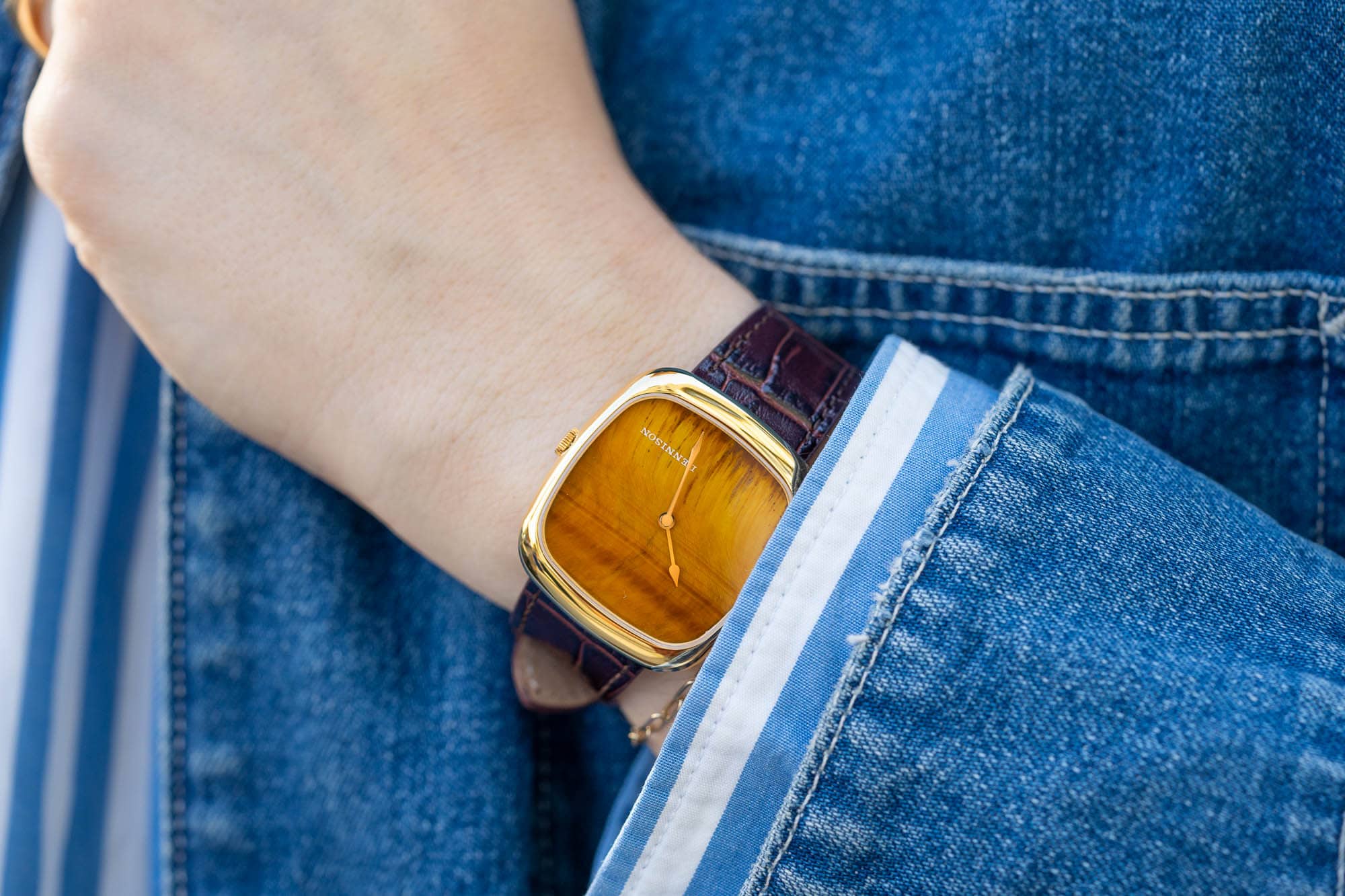
There’s an argument to be made, though, that the awards are not incidental for the winning and nominated brands. There’s real value, I’m assuming, in putting that GPHG badge on your website signifying a victory. And I admit, I do enjoy seeing a brand that might otherwise not have this type of exposure get their flowers. Dennison winning an award this year was a nice moment. The watches are a legitimately incredible value, and they won in the single category designed to celebrate great value. But like the Oscars, most of my personal favorites either didn’t make it out of the first round, or were long shots to win. There’s an old adage that winning Best Picture at the Academy Awards is a red flag to serious movie fans. Forrest Gump winning over Pulp Fiction is exhibit A. It’s not quite the same with the GPHG, but if the watches you’re making fit a very specific niche, there’s a certain badge of honor, perhaps, in not winning. It’s cooler because the supposed mainstream hasn’t yet adopted it as its own. Does anyone really want to be a Deadhead sticker on a Cadillac?
Worn & Wound
2025-11-26 21:00:00