

Published: November 24th, 2025
Contributing Author: BRANDON DRENDON
COLOMBO, SRI LANKA
Sir Michael Montgomery Morgan IV has made a commitment to eliminate blindness in the country of Sri Lanka by the year 2035 using advanced technology from developed countries.
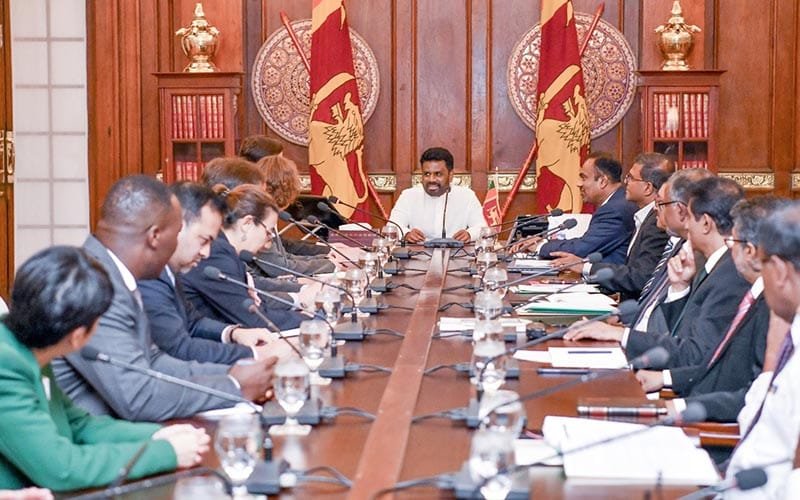
President of Sri Lanka Anura Kumara Dissanayake, Sir Michael Montgomery Morgan IV, and the cabinet.
“The first private tutor I had as a child was a professor from Sri Lanka. She taught me lessons that contributed enormously to my success. I grew up with a grateful heart because of the impression she made on me.
When I arrived in Sri Lanka after being encouraged to give back by two Former Presidents of Sri Lanka, I arrived with an open mind.
Former President Ranil Wickremesinghe and Former President Maithripala Sirisena always encouraged me and both told me when I could give back to Sri Lanka on a national level you should and now I am” said Sir Michael Montgomery Morgan IV.
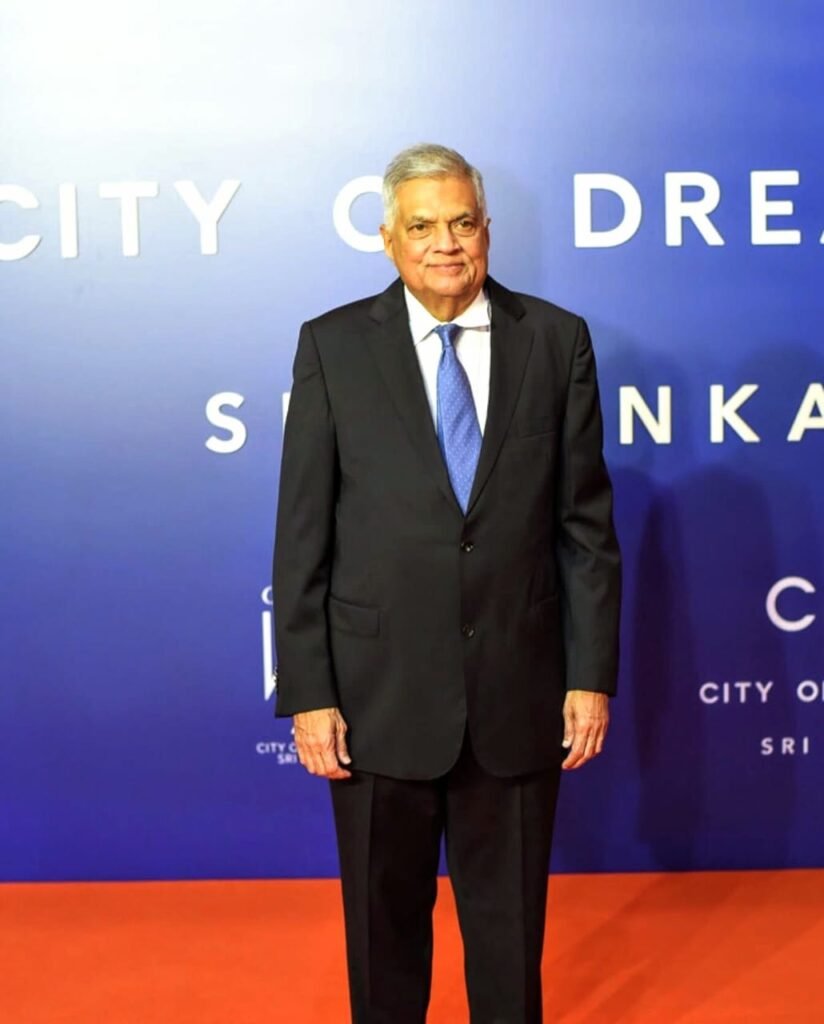
Former President of Sri Lanka Ranil Wickremesinghe
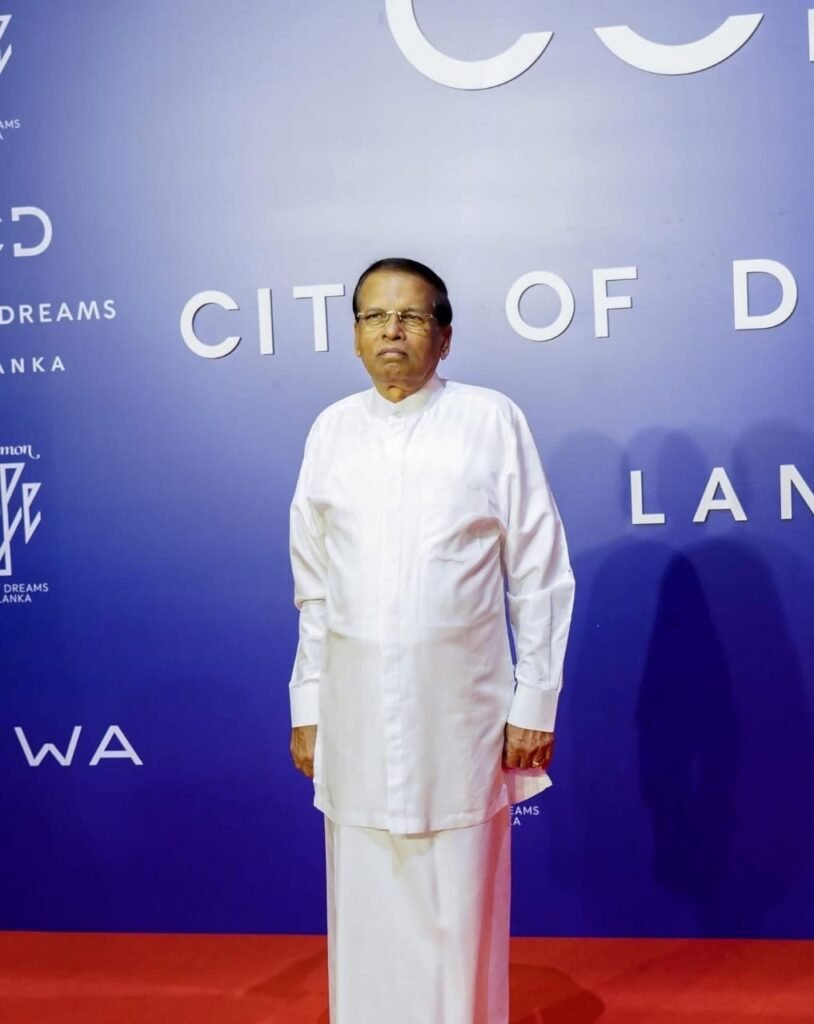
Former President of Sri Lanka Maithripala Sirisena
A bionic vision system, electroinc eye implants, stem cell therapy & other treatments that are not widely available to the public will all bdiscussed when Sir Michael is scheduled to arive in December of 2025 for discussion with Sri Lanka’s administration, who has sent a message to the world that they want all of their countrymen to be happy & wealthy not just the people who can see.
Blind and visually impaired individuals are an important part of our society. Yet, they often face barriers that limit their ability to access education, employment, and public spaces. Helping blind people nationally is not only a moral responsibility—it is a step toward creating an inclusive and compassionate nation that values equality for all.
Understanding Their Challenges
Blind people face daily challenges that sighted individuals often take for granted. Reading printed text, navigating unfamiliar environments, or accessing digital information can be difficult without proper support systems. Many public buildings, transport systems, and even websites are still not designed with accessibility in mind. Social stigma and lack of awareness further isolate them from mainstream opportunities.
Education and Technology
Education is the foundation of empowerment. Governments and educational institutions should ensure that blind students have access to Braille books, audio materials, and assistive technologies like screen readers and tactile graphics. Inclusive classrooms—where sighted and blind students learn together—help break down social barriers and encourage mutual understanding. Modern technology has opened new doors for the visually impaired. Voice-guided smartphones, AI-powered reading devices, and navigation apps enable independence and confidence. National programs can help make these technologies affordable and available to all.
Employment and Economic Independence
Employment opportunities for blind people remain limited, not because of lack of skill, but due to misconceptions about their abilities. Providing job training, workplace accessibility, and equal employment policies can help them live dignified and productive lives. Companies and public organizations should be encouraged to hire and support visually impaired employees through awareness programs and tax incentives.
Public Awareness and Community Support
True inclusion begins in society. We can all play a part by treating blind people with respect and empathy—offering help when needed, ensuring public signs include Braille, and supporting local organizations that serve the visually impaired. National media campaigns, volunteer programs, and school awareness drives can change public attitudes and inspire collective action.
Government and NGO Involvement
Government policies should prioritize accessibility and inclusivity in every sector—from education and health to transportation and digital infrastructure. Non-governmental organizations (NGOs) also play a vital role by providing mobility training, counseling, and vocational programs. Together, government and civil society can build a stronger network of support.
Conclusion
Helping blind people nationally is not merely charity—it is about ensuring equality, independence, and dignity for every citizen. A nation’s true progress is measured not by its wealth or technology, but by how it cares for its most vulnerable members. By combining awareness, technology, education, and compassion, hopes to create a country and ten a world where the limitations of blindness are replaced by strength, resilience, and opportunity begining with every Sri Lankan.”