
:max_bytes(150000):strip_icc():format(jpeg)/Quit-Job-Taste-Whiskey-Living-FT-DGTL1125-e9a0bac3432f46368820a09385d1e023.jpg)
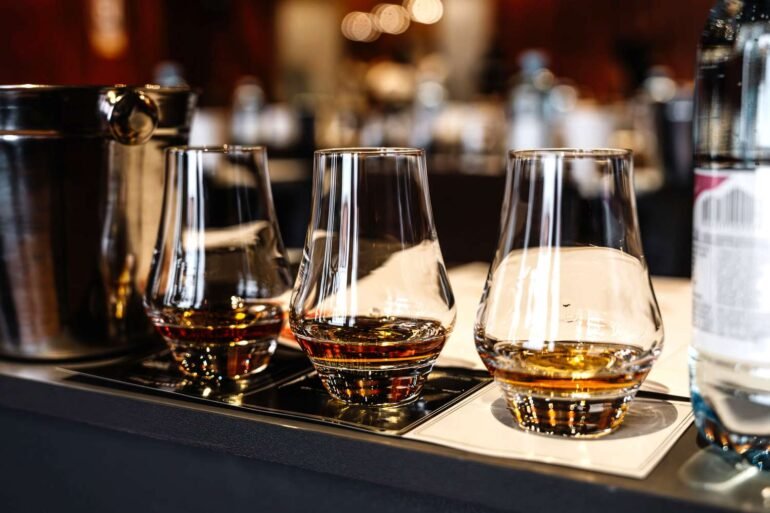
- While there’s may not be an official “professional whiskey taster” role, careers in blending, writing, importing, or brand ambassadorship can all involve serious whiskey sampling.
- While whiskey tasting sounds idyllic, professionals emphasize that success requires years of training, palate development, and often plenty of time spent on spreadsheets rather than sipping.
- The path to a whiskey-tasting career is rarely straightforward, blending passion, persistence, and expertise across writing, hospitality, and spirits production rather than a single defined job title.
Heather Greene resigned from her job a few months ago so she could devote herself to sampling whiskey full-time. The job she quit? CEO of Milam & Greene, a respected whiskey producer in Blanco, Texas.
“Being a CEO is much more about long-term strategy, P&Ls, hiring, firing, and a lot of PowerPoint and Excel,” says Greene, who simultaneously served as her distillery’s master blender. “It requires a skill set that I was good at. But as we scaled up, I wasn’t able to do justice to the whiskey making.”
So, she stepped back from juggling numbers to spend more time crafting blends with whiskey distilled in-house as well as spirits sourced from around the country. That means a lot of tasting to dial in body and nuance for each bottle.
If you can spot zero flaws in the idea of a career spent sipping whiskey, here’s the rub: there is no job category called “professional whiskey taster.” Even people who sip whiskey for a living, like master blenders, have plenty of other duties. (Greene also leads classes for bartenders, retailers, and others.)
The good news: there are several routes by which you can build a life where someone pays you to taste a lot of whiskey — at least some of the time. “There are so many doors and windows into this house,” says Joshua Hatton, cofounder of Single Cask Nation, an independent bottler. Just be prepared to log a lot of hours building expertise.
Career paths that lead to tasting whiskey for a living
Hatton and his business partner, Jason Johnstone-Yellin, were both whiskey bloggers when they decided in 2011 to start buying, bottling, and selling whiskey. It was mainly scotch to begin with, but they’ve since expanded into American, Irish, and other whiskeys. They now buy and bottle roughly 85 casks per year.
Selecting the right casks requires a lot of sampling. “Any day spent tasting whiskey is a good day,” says Johnstone-Yellin. But he warns that as the business grows, time with the glass shrinks while time with the spreadsheet expands. “It’s a design flaw, really.”
Sean Josephs, who founded Pinhook Bourbon in 2011, agrees that perception rarely matches reality. He compares it to his days as a sommelier at New York City’s Chanterelle and Per Se restaurants. “Everyone thinks you have the best job,” he says. “They see you opening a nice bottle. They don’t see the other 90% — receiving product, changing the wine list, updating the POS system, training the staff.” Sampling whiskey is similar. “The one thing I say to everyone is, I’ve spat far more whiskey than I’ve drunk.”
Becoming a whiskey writer is another route to days of tasting. There’s less paperwork than for importers or distillers — but it comes with a major catch. “The pay is awful,” says Lew Bryson, former editor of Whisky Advocate and author of the new American Whiskey Master Class.
Bryson emphasizes you can’t just parachute in. You need to build real expertise, which requires time and a lot of your own money to train your palate. “Be prepared to do it as a hobby for a few years, at least,” he says. “And find a niche. Mine turned out to be understanding complex processes and explaining them in engaging ways.”
Sean Josephs, founder Pinhook Bourbon
“The one thing I say to everyone is, I’ve spat far more whiskey than I’ve drunk.”
— Sean Josephs, founder Pinhook Bourbon
U.K.-based Becky Paskin has been writing about drinks for two decades, was editor of The Spirits Business, and recently launched the Substack newsletter Drink This with Becky Paskin. Her advice: “First learn how to write and structure an article (I’m afraid not everyone has that skill), understand what makes a really great story (spoiler: it has nothing to do with you), and taste as much as you can.”
Another option is to become a brand ambassador, which means late nights, constant events, and tasting with bartenders and distributors. Ambassadors are often recruited from among high-profile bartenders. You’ll need stamina. But be forewarned: you’ll mostly be sampling your own product, over and over.
You could also open a whiskey bar. If it’s successful, you’ll attract a steady flow of brand reps offering samples. Or open a distillery, although that’s for the brave: distilleries are currently closing at a rate of roughly one a week after a two-decade boom. You can find discounted used distilling equipment, but you’ll face headwinds in the market. And again: even if you beat the odds, you’ll mostly be tasting your own product, over and over.
“It’s not all butterflies and rainbows,” says Johnstone-Yellin. “But the highs are really high.” If your dream is to be paid regularly to taste whiskey, his advice is straightforward: “Be passionate, be authentic, and find your own path.”
Wayne Curtis
2025-11-12 15:00:00