
:max_bytes(150000):strip_icc():format(jpeg)/New-Experimental-Hops-FT-DGTL1125-John-Holl-927327137b7045c3bfa9e5d58547ff4a.jpg)
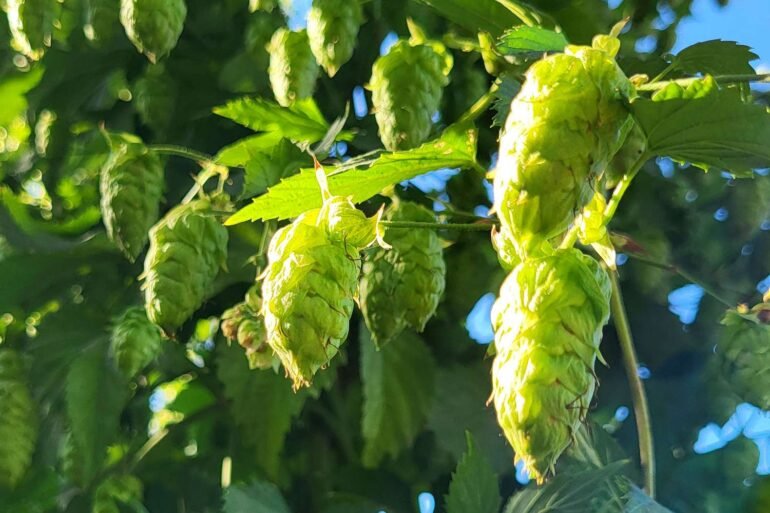
- The 2025 hop harvest yielded exciting new varieties, with vibrant tropical and fruit-forward aromas that appeal to modern brewers.
- Hop breeding programs are shifting focus from bitterness toward complex flavor and aroma profiles.
- Brewers are also revisiting subtle, noble-style hops such as Contessa, Delta, and the new HBC 1134 to craft nuanced lagers and pilsners.
Water is the most important ingredient in beer — it makes up 90% to 95% of the beverage. Malt gives beer body, structure, color, flavor, and aroma. Yeast turns the malt sugars into alcohol. Hops, however, get the most love. The bitter, aromatic flower lights up a brewer’s passion, gets consumers’ attention, and helps fuel the interest in craft beer.
The hops industry has poured countless dollars into innovation over the last 20 years. Breeding programs have helped create new varieties. In the beer space, names like Citra, Mosaic, El Dorado, and Krush are well known by brewers and drinkers. Each has its own aromas and flavors that complement specific beer styles.
Before the hops are named, however, and when they are still in trials and just part of small acreage on farms, they are given group and number distinctions. This can include Hop Breeding Company (HBC) or Hop Quality Group (HQG), which are partnerships between farms, the USDA, hop companies, and others. Sometimes it is a company name like Hopsteiner (HS).
Hop harvest occurs in the United States in late August and early September. During this period, the hop growers are collecting experimental varieties, processing them, and getting them into the hands of brewers around the country for small trial brews. The hop companies are looking for feedback on aromatics, efficiency, and whether a still-unnamed hop has the juice to go from trial to the main stage.
The standout hops of the 2025 harvest
Following this year’s harvest, hop growers in the Pacific Northwest offered some insight into this year’s crop, what they’re hearing from brewers about recently commercialized varieties, and the ones still in trial.
Courtesy of Crosby Hops
“For us, the standout is HQG4, the first soon-to-be-released public hop from the Hop Quality Group and USDA partnership,” says Christine Clair of Crosby Hops in Oregon. “We showcased it during selection this year, and the feedback was overwhelmingly positive. With its high thiol profile (compounds that provide tropical fruit aromatics), HQG4 produces beers that are both complex and intensely flavorful.”
For a long while, hops were prized for alpha acids, which provide bitterness. In small doses, these are prized in lagers; in larger amounts, they are a hallmark in West Coast India pale ales. Over the last decade, as hazy IPAs have become popular, brewers have been seeking out hops that rely less on bitterness and more on aromas and flavors.
These include tropical aromas like pineapple, mango, guava, and fruit notes like blueberry, peach, and strawberry.
John Holl
Hopsteiner (HS) has been pushing two of its newer varieties — Alora (HS17701), which has flavors of peach, apricot, sweet melon, and yuzu fruit; and Erebus (HS16660), which features blueberry, citrus, candied fruit, and floral rose.
“Demand came swiftly for Alora, as we ran out of Crop 24 Alora in February of ’25,” says Darren Stankey, marketing manager at Hopsteiner. “Erebus was released in October 2024, and the same problem/good fortune would have happened with Erebus had we not staggered availability for 2025.”
John I. Haas, a company of “farmers, hop breeders, scientists, researchers, brewers, and beer lovers,” has been big on several new varieties, including Dolcita, formerly known as HBC1019. They have been described as bringing uniquely vivid layers of peach rings, caramelized pineapple, ripe orange, and creamy undertones evoking tropical Daiquiris and dark rum.
Courtesy of Crosby Hops
Brewers from Kentucky to Utah have utilized Dolcita in numerous beers. During fresh-hop season this year, Seattle’s Holy Mountain Brewing used Dolcita in its seasonal IPA.
More frequently, brewers are talking about and turning to Krush. Formerly known as HBC 586, this hop variety has big flavors of orange, guava, peach, mango, berries, and resin.
“Several brewers are embracing the new go-to third leg of a Citra/Mosaic/Krush trio,” says Jeremy Ragonese of Haas.
Down Under, Hop Products Australia is looking to HPA-033 for possible commercialization. With flavors of marmalade and mango, the company says it has been in brewing trials since 2012 and is well-suited for hazy IPAs.
What brewers look for in new hop varieties
While many U.S. breweries are looking for hops with big aromas and flavors that enhance IPAs, others are seeking more subtle varieties with floral, spicy, and pleasingly bitter notes that enhance lagers and pilsners. Classically, these noble hops have been grown and harvested in Europe.
Courtesy of John I. Haas
Haas calls HBC 1134 an American twist on the classic noble character. “It was bred specifically as a modern lager hop, with noble elements and flavors of floral, woody aromatic, herbal, and a hint of citrus,” says the company.
Chicago’s Revolution Brewing recently made a Czech-style amber lager with 1134 and noted that it provided crisp bitterness and herbal aromatics to the finished brew.
Stankey says Hopsteiner has also seen a resurgence in interest in the Contessa and Delta hop varieties over the past two years.
“These two hop varieties are particularly useful when added to lagers for their unique noble-like characteristics and chemical makeup,” he says. “Both hop varieties are older, but generationally speaking, have not necessarily made acquaintance with many craft brewers entering the modern craft lager trend taking shape.”
John Holl
2025-11-10 12:27:00