
:max_bytes(150000):strip_icc():format(jpeg)/Oak-Gives-Wine-Whiskey-Character-FT-DGTL1125-01-60061b2ae48347a68a3c33e0c05f6bdc.jpg)
- Oak barrels are more than storage—they actively shape wine and whiskey by adding flavor, texture, and structure through slow oxygen exchange and the release of tannins.
- Winemakers favor oak for its breathability and subtle influence, which can enhance texture, promote lees contact, and develop complexity without overwhelming fruit character.
- For distillers, especially those making bourbon, new charred American oak is essential; it transforms clear spirit into richly colored whiskey with layered flavors.
Not every winery or distillery ages in oak, but when they do, the barrel becomes more than storage — it’s a silent collaborator, adding character and complexity to wine and whiskey alike. That’s why, even in an era of stainless steel tanks and concrete eggs, oak remains the benchmark against which other vessels are measured, imparting distinct characteristics to beverages.
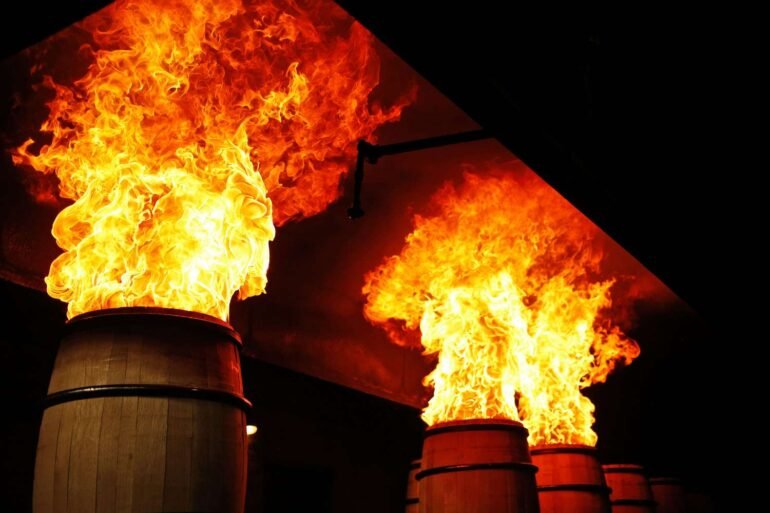
Oak is a hard yet pliable wood that has been pivotal in the production of wine and spirits since the earliest versions were crafted. Nearly all whiskey worldwide is aged in some type of oak, and U.S. federal law requires bourbon to be aged in new, charred American white oak barrels. While wine can be aged in other vessels, oak remains supreme and is the most popular type of wood for wine casks.
Noah Rothbaum, author of The Whiskey Bible, says it’s a common misconception that barrels used for aging simply hold a spirit or wine until it’s ready to bottle up. In fact, it’s quite the opposite. Wood barrels turn a simple liquid into something remarkable that deserves a spot in your glass by adding flavor, altering its texture, and strengthening its structure through tannins. While both drinks are transformed by the use of oak, wine and whiskey draw different characteristics from the barrel.
“It’s not just a vessel, and it’s not just a container,” Rothbaum says. “Depending upon who you ask, up to 80% of a spirit’s flavor comes from the barrel, so barrels are an incredibly important part of the production of whiskey. Wine, on the other hand, benefits from the exchange, but some wines don’t ever come in contact with a barrel.”
Since winemakers and distillers look to oak for different reasons, we tapped a few experts presenting at the Food & Wine Classic in Charleston in each category to learn more about how oak influences their beverage to define each bottle of wine and whiskey.
What winemakers get from aging in oak
Before wine was even bottled in glass, it was sold in wooden barrels for consumption. Wood is central to winemaking and there are a few main reasons that winemakers opt to age wine in oak in particular.
Many people may associate wine aged in oak barrels with rich, buttery Chardonnay, but Steve Matthiasson, the winemaker at Napa Valley’s Matthiasson Wines, says oak has so much more to give than that oftentimes overpowering flavor profile. New oak is the only type of wood that imparts strong flavors of vanilla, clove, and spice. Used barrels, though less aromatic, remain valuable tools: They allow slow oxygenation, encourage lees contact, and can lend delicate secondary notes without overwhelming the fruit. That gentle exchange of oxygen through the pores of oak helps smooth a wine’s texture and guide it toward maturity.
Cavan Images / Getty Images
“The breathability and shape of oak are integral to traditional winemaking,’ says Matthiasson. “Oak is traditional for a reason because it allows slow oxygen exposure that’s very measured to mature the wine to the point where it’s ready to bottle and delicious. We’ve always been a winery that happily relies on used oak barrels.”
Matthiasson notes that beyond the material, barrels have other benefits for winemakers. The shape of a barrel allows wine to rest more easily on the lees, or dead yeast cells, which produces a creamy mouthfeel. Because barrels come in a range of sizes, from puncheons to standard formats, they make it easier for winemakers to age and later blend wines from different harvests — something less practical in large stainless steel or concrete tanks.
Color and character: oak’s alchemy in whiskey
For whiskey, the oak barrel is even more essential. If the combination of grain, yeast, and water never interacted with an oak barrel, it wouldn’t be whiskey at all.
Unlike wine, which may be aged in used or lightly toasted barrels, many whiskies — especially bourbon — gain color and flavor from new, charred American oak; other styles use a mix of charred, toasted, or previously used casks. The wood also adds the element of a rounder mouthfeel to the spirit as it does for wine, but Ann Marshall and Scott Blackwell from Charleston’s High Wire Distilling say they primarily see charred oak as a flavor driver.
“When we first set out, we were so fired up about proving the point that the grain mattered,” says Blackwell. “But I do believe oak is an important ingredient. The liquid is kind of like a standard white mushroom you’d buy at the store; it’s going to pick up whatever else you add to the pan.”
When the liquid that will become whiskey is first distilled, it’s a clear, high‑proof spirit known as “new make.” Depending on the distillery, it can taste fruity, malty, or smoky, but it lacks the color and layered flavors associated with mature whiskey. Those qualities develop over time in oak barrels: Bourbon, by law, must spend at least two years in new, charred American oak, while Scotch and Irish whiskey require a minimum of three years in cask. In practice, most whiskies are matured far longer, allowing the spirit to take on the amber hue and complex flavors that make it distinctive.
Liz Provencher
2025-11-09 15:01:00